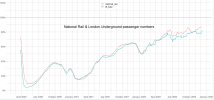
The UK cities simply couldn't cope without railways and public transport in general. One of the reasons the congestion charge was introduced in Central London and other places was to reduce the number of cars on the road.
Indeed, however for those willing to pay the charge it also meant that their personal journeys improved as there was less traffic on the roads and their journeys were much faster.
I once drive through central London, traffic was a nightmare up to the congestion charge boundary and then it was a breeze, with no congestion and only limited delays due to traffic lights.
There's a challenge that I like to set people, look at the dream car companies sell - when watching an advert for cars how many vehicles are seen?
The vast vast majority only show the car being sold driving through city streets with no congestion, there are a few which will show 2 or 3 however there's no traffic, rarely parked cars, etc.
The inferred message is that this car will give you the freedom to drive. The reality is far far from this picture perfect city (or even country side) where you can drive and it's enjoyable.
The reality is that for the vast majority of people driving a car is a chore, one which a few times a year may well fun, however one which comes at a cost which few fully account for as they never fully count up the cost.
You put in £40 here, £50 there for fuel, you pay £165 for VED, you pay £2 here £4 there for parking, you servicing is £165 in one month, you pay £80 for a new tyre several months later, after selling your old car your new car cost £5,000, you'll repeat this again in 3 years time. Whilst the last cost is thought about a lot it is seen as a sunk cost which means the rest of your travel is less.
However, whilst that maybe true for the fuel costs, often the other costs soon add up, meaning the average car costs over £3,500 a year (source for this is below):
Get your free credit score and credit report and be ClearScore sure. Check them as often as you like - it won’t affect your score.

www.nimblefins.co.uk
Whilst you may disagree with some of the costs, the two largest amounts are:
Purchase/Depreciation per year£1,104
Petrol and Diesel£1,435
Whilst it is possible to reduce either of these by some margin, you either run the risk of higher maintenance costs or you're doing less than the average number of miles.
On the £3,500 figure the typical per mile cost is 50p, however if you reduce the purchase cost to £500/year and the fuel costs to £750 (reducing the total to £2,150) but with 3,500 numbers traveled then the cost per mile actually increases to 60p per mile.
However at 3,500 numbers a year that's about 16 miles a day (assuming only commuting use) which is starting to be the point where using an ebike may well be a cheaper option (and as someone who walks to work the number of days or trains is quite a lot higher than the number of days that it rains on me - even then sometimes when it rains it's just heavy enough to need cars to have their wipers on constant but still not enough for me to bother print a coat on as my jumper won't be wet by the time I get to work).