• Our new ticketing site is now live! Using either this or the original site (both powered by TrainSplit) helps support the running of the forum with every ticket purchase! Find out more and ask any questions/give us feedback in this thread!

UK switching to electric vehicles discussion

Eyersey468

Established Member
Joined
14 Sep 2018
Messages
2,602
Batteries lasting 80,000 miles? People are estimating them to be good for up to a million miles, and then getting more life after that.

Warranties are often for 100,000 miles and while the capacity will drop, modern batteries won't decrease too much. Maybe 70-80% after a decent number of years (bear in mind they're not on a timer - their life is based on usage and charge cycles).

As for electricity generation, we all need to be generating as near to 100% green energy as possible, which isn't just an EV issue, and EVs remove pollution at street level to help the environment.
They are estimates though, the true life of the batteries won't be known for a long time
 
Sponsor Post - registered members do not see these adverts; click here to register, or click here to log in
R

RailUK Forums

AM9

Veteran Member
Joined
13 May 2014
Messages
16,061
Location
St Albans
They are estimates though, the true life of the batteries won't be known for a long time
Well manufacturers are confident enough to take the risk on failures during warranty periods in excess of this oft-quoted 80K miles/8 years life suggestion. Maybe one of the EV detractors here could provide the justifcation for the life period that they hang their arguments on?
 

Noddy

Established Member
Joined
11 Oct 2014
Messages
1,656
Location
UK
They are estimates though, the true life of the batteries won't be known for a long time

A review of a very high mile Tesla Model X. It’s not perfect but doesn’t seem to have any shorter lifespan then a typical ICE. How many cars make it to 300 000 miles?


This Model X got a battery replacement under warranty at 317,000 miles. That’s more than half a million kilometers.

Interestingly, the original battery pack wasn’t replaced due to battery degradation but because of an even greater problem with the pack.

Once the state-of-charge would reach around 40%, which normally would mean still over 90 miles of range, the capacity would quickly drop to 0.

As you can imagine, that’s a major issue and Tesla quickly proceeded with a free battery replacement under warranty, which is an 8-year and unlimited mileage warranty for the powertrain of this 2016 Model X.

While it was a major issue, it’s still impressive that the original battery lasted over 300,000 miles or 500,000 km.

Now the second battery pack on this Model X has almost 100,000 miles (160,000 km) on it and as previously mentioned, it is seeing a roughly 10% battery degradation.

I feel like 10% is high for ~100,000 miles.

Looking at the overall data, it looks like the average Tesla owner is at around 5% around the same number of cycles.

I know that there are several factors that can affect battery capacity, like how often you charge it to 100% or how often you DC fast-charge the vehicle, and since this vehicle was used by Tesloop for 400,000 miles, I am sure that it was heavily Supercharged to 100%.

That said, the overall dataset seems to be pointing to Tesla’s 90 kWh battery packs performing badly in general.

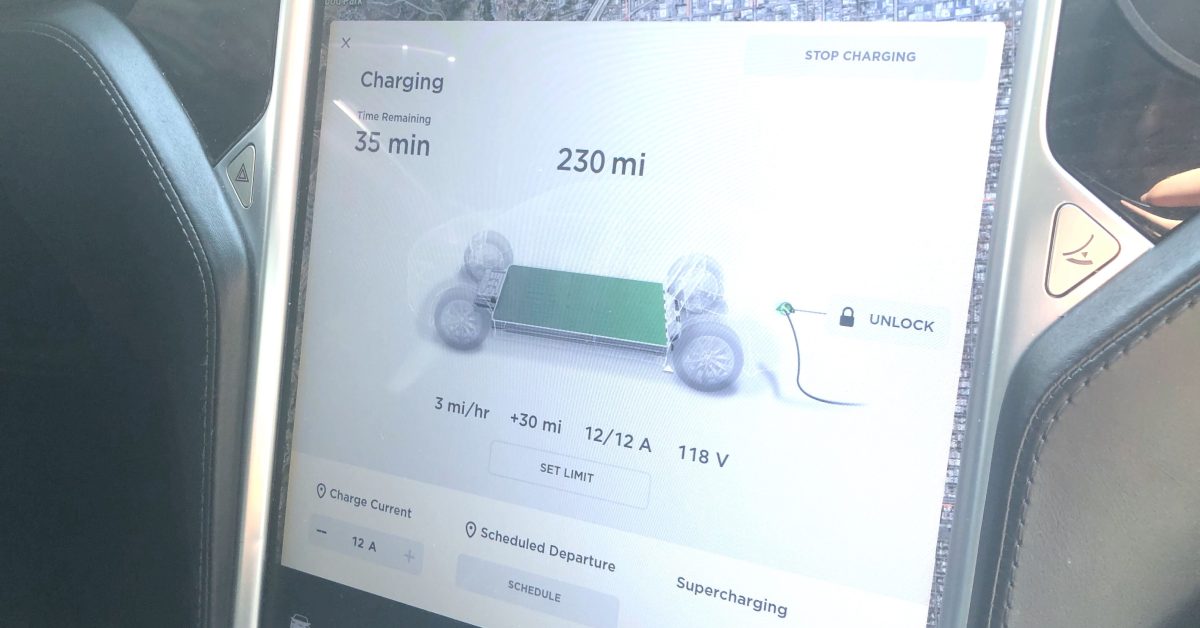
EDIT: I should point out there are many other articles on that website looking at how batteries are performing long term. And none of them indicate that the batteries will only last 80 000 miles.
 
Last edited:

Class 317

Member
Joined
7 Jul 2020
Messages
571
Location
Cotswolds
Once batteries are end of life for use in EV's the battery cells still have a lot of value and usage left in them for other uses. Modern EV batteries are designed for easier disassembly at end of life to allow both easier reuse or recycling. For example a car might use a battery for 10 years which then gets converted into a battery for back up energy storage and so on.

Batteries don't really have a end of life as such but become less effective overtime losing a percentage of their storage capacity with each charge / discharge cycle. The rate this occurs at depends on the duty cycle the battery is put through and how effective the battery management software is. Many electronic gadgets have built in obsolescence with battery management software designed poorly to encourage early replacement and drive sales.

I was at a conference for work which had a panel discussion on the future of rare earths supply and demand with some interesting discussion points. High prices are driving both much greater exploration for them, improved refining techniques to extract a higher percentage from ores and also battery producers to work on designing both batteries that use less or don't require them.
Recycling is also encouraged by higher prices. These trends are forecast to close the gap between supply and demand in the future.

They also made the point that COVID restrictions in China which is a big producer has reduced supplies this year temporarily tightening supplies.
 

reddragon

Established Member
Joined
24 Mar 2016
Messages
3,274
Location
Churn (closed)
The payback time of an EV is about 8 years or 80000 miles.
Which is also the lifetime of the batteries....

There is also the CO2 produced by burning gas and coal to produce the electricity to fuel your EV (some renewables are used, but 50% is still fossil fuels)
.
To say they eco friendly is a complete and utter fallacy.

This is a very interesting read, comparing the total emissions of the electric C40 and petrol XC40

That payback figure is utter lies from a debunked report. Volvo of all people just 'made it up' for some reason by taking worst case scenarios for EVs and best case for ICEs. The actual figure turned out to be 6000 miles.

80,000 mile battery life is utter bullsh*t. Older batteries are expected to last c 500,000 miles before becoming grid storage. The more stable LFP batteries are called million mile batteries, with grid storage to follow and a 100 year life.

The CO2 produced by oil dwarfs that of EVs and cannot be made cleaner. What they don't tell you is more electricity is used per mile for fuel in an ICE than an EV uses. Lots of pumping, transporting, heating, refining, cooling goes on. Whilst you cannot make burning stuff cleaner, electricity is rapidly getting cleaner and fossil fuels fell below 50% on the UK grid a while ago and is heading for zero. Also most EV drivers charge at night when the grid is much cleaner, or get notification to charge because the grid has spare clean leccy or as I do, charge off my own solar panels.

That Volvo report became a huge embarrassment to Volvo as it was utter lies. Easiest part to debunk was that ICE bodyshell had 8t of CO2 and the EV 24t of CO2. They were identical!
 

MotCO

Established Member
Joined
25 Aug 2014
Messages
6,132
That payback figure is utter lies from a debunked report. Volvo of all people just 'made it up' for some reason by taking worst case scenarios for EVs and best case for ICEs. The actual figure turned out to be 6000 miles.

80,000 mile battery life is utter bullsh*t. Older batteries are expected to last c 500,000 miles before becoming grid storage. The more stable LFP batteries are called million mile batteries, with grid storage to follow and a 100 year life.

The CO2 produced by oil dwarfs that of EVs and cannot be made cleaner. What they don't tell you is more electricity is used per mile for fuel in an ICE than an EV uses. Lots of pumping, transporting, heating, refining, cooling goes on. Whilst you cannot make burning stuff cleaner, electricity is rapidly getting cleaner and fossil fuels fell below 50% on the UK grid a while ago and is heading for zero. Also most EV drivers charge at night when the grid is much cleaner, or get notification to charge because the grid has spare clean leccy or as I do, charge off my own solar panels.

That Volvo report became a huge embarrassment to Volvo as it was utter lies. Easiest part to debunk was that ICE bodyshell had 8t of CO2 and the EV 24t of CO2. They were identical!
Do you have a source for the debunking of the report? The 'Volvo' report has been frequently reported - I am not aware of an independent scientific review dismissing the claims.

Also, whilst batteries may have many miles charge available when they are old, how much does the range reduce comparing a new battery and one that has done 100,000 miles?
 

trebor79

Established Member
Joined
8 Mar 2018
Messages
4,912
The payback time of an EV is about 8 years or 80000 miles.
Which is also the lifetime of the batteries....

There is also the CO2 produced by burning gas and coal to produce the electricity to fuel your EV (some renewables are used, but 50% is still fossil fuels)
.
To say they eco friendly is a complete and utter fallacy.

This is a very interesting read, comparing the total emissions of the electric C40 and petrol XC40

Batteries last way more that 80,000 miles. The warranty might stop at 80,000 miles for some makes, but that's like saying your ICE car is "worn out" when the warranty expires!

Even if all grid electricity was from fossil fuels, the EV would emit less pollution than ICE.
I drove Cardiff to Norfolk via Bristol yesterday and used about 80kWh electricity. That's energy content of about 8 litres of petrol, enough to get me just 80 miles in my 208 second car.

That Volvo report is utter nonsense as already pointed out by others.

== Doublepost prevention - post automatically merged: ==

Also, whilst batteries may have many miles charge available when they are old, how much does the range reduce comparing a new battery and one that has done 100,000 miles?
It depends. But is treated sensibly (ie not rapid charged to 100% every day etc), about 90% of capacity should remain.
I have a Kia Niro EV, people with the eNiro previous version are reporting no noticeable degradation after a few years.
 

reddragon

Established Member
Joined
24 Mar 2016
Messages
3,274
Location
Churn (closed)
Do you have a source for the debunking of the report? The 'Volvo' report has been frequently reported - I am not aware of an independent scientific review dismissing the claims.

Also, whilst batteries may have many miles charge available when they are old, how much does the range reduce comparing a new battery and one that has done 100,000 miles?

Astongate: fake emission figures, an embattled carmaker and a sock puppet PR company​


Linked in thread on details for Volvo
 

cactustwirly

Established Member
Joined
10 Apr 2013
Messages
8,424
Location
UK
That payback figure is utter lies from a debunked report. Volvo of all people just 'made it up' for some reason by taking worst case scenarios for EVs and best case for ICEs. The actual figure turned out to be 6000 miles.

80,000 mile battery life is utter bullsh*t. Older batteries are expected to last c 500,000 miles before becoming grid storage. The more stable LFP batteries are called million mile batteries, with grid storage to follow and a 100 year life.

The CO2 produced by oil dwarfs that of EVs and cannot be made cleaner. What they don't tell you is more electricity is used per mile for fuel in an ICE than an EV uses. Lots of pumping, transporting, heating, refining, cooling goes on. Whilst you cannot make burning stuff cleaner, electricity is rapidly getting cleaner and fossil fuels fell below 50% on the UK grid a while ago and is heading for zero. Also most EV drivers charge at night when the grid is much cleaner, or get notification to charge because the grid has spare clean leccy or as I do, charge off my own solar panels.

That Volvo report became a huge embarrassment to Volvo as it was utter lies. Easiest part to debunk was that ICE bodyshell had 8t of CO2 and the EV 24t of CO2. They were identical!
Why would a car manufacturer lie about the impact of electric cars, when they are committed to being a fully EV manufacturer?
That doesn't make any sense!
 

reddragon

Established Member
Joined
24 Mar 2016
Messages
3,274
Location
Churn (closed)
Why would a car manufacturer lie about the impact of electric cars, when they are committed to being a fully EV manufacturer?
That doesn't make any sense!
I think like any large organisations there are competing forces. Whilst one part of the business pushes EVs another defends ICEs.

Utterly crazy and now that same internal wrangling is playing out within VW and BMW. The consequence for them will be they get replaced or bought out by China which would be a very sad outcome.
 

Harpers Tate

Established Member
Joined
10 May 2013
Messages
2,053
...8 years or 80000 miles....is....the lifetime of the batteries....
I believe that to be substantially inaccurate. Others have offered alternative suggestions which are, I believe, more accurate.

I hugely doubt any car manufacturer would offer a warranty (125k in my case) that has a high probability of a claim being made against it. Thus, I'd suggest my manufacturer genuinely believes that lifespan (on average) to be well in excess of 125k miles.

There is also the CO2 produced by burning gas and coal to produce the electricity to fuel your EV (some renewables are used, but 50% is still fossil fuels)

To say they eco friendly is a complete and utter fallacy.
Not considered: Central electricity generation can get, and is getting, less dependent on fossil fuel to produce and that trend will, I believe, only continue. So doing has absolutely no direct impact on the running of the vehicle; it doesn't care a jot where its power originates. Thus, central changes to power generation can have an immediate impact on the total (indirect) emissions of all EVs, without any modification to the vehicle. And this is taking no account of those who charge from domestic solar when they can. Meanwhile a fossil fuelled vehicle will continue to run for its entire lifespan on fossil fuels (give or take a few % of bio-ethanol or bio-diesel, noting in the case of bio-ethanol in petrol, a reduction in performance suggested by some) unless it is modified to run on something else.

Therefore, I can't share your "fallacy" assessment.
 

ainsworth74

Forum Staff
Staff Member
Global Moderator
Joined
16 Nov 2009
Messages
31,126
Location
Redcar
Batteries lasting 80,000 miles? People are estimating them to be good for up to a million miles, and then getting more life after that.

Warranties are often for 100,000 miles and while the capacity will drop, modern batteries won't decrease too much. Maybe 70-80% after a decent number of years (bear in mind they're not on a timer - their life is based on usage and charge cycles).

The warranty might stop at 80,000 miles for some makes, but that's like saying your ICE car is "worn out" when the warranty expires!
I thought I might have a little look at warranties. According to this article the top selling cars in the UK at the moment are the Nissan Qashqai, the Vaxhall Corsa and the Ford Puma:

When it comes to 2022’s best-selling cars, the Vauxhall Corsa has been knocked off the top spot for the first time this year, with the Nissan Qashqai taking the lead. Meanwhile the Ford Puma remains in third-place.

On consulting Nissan, Vaxhaull and Ford they offer warranties for three years or 60,000 miles on their new vehicles. So, seeing as apparently a 80,000 mile warranty is not good enough for the battery of an EV I can only presume that a 60,000 mile warranty on a whole car is really terrible and such vehicles are to be avoided as clearly they're hunks of junk that will fall apart within a handful of years!

Or maybe, just possibly, the length of a warranty is in fact a terrible way of working out whether or not the battery or the vehicle itself is going to fail in a handful of years...
 

skyhigh

Established Member
Joined
14 Sep 2014
Messages
6,894
The battery warranty on my car is 8 years or 100,000 miles. The manufacturer offers an extended warranty for years 8-10 at £25 per year. It's utterly mad to suggest that the battery will be dead beyond use at 8 years old. Not to mention, it's fairly easy to replace the individual cells if one is faulty at a tiny fraction of the cost of a new battery. There are companies who offer this service already, and it will only grow.
 

johncrossley

Established Member
Joined
30 Mar 2021
Messages
4,448
Location
London
Why are car batteries better than bike batteries? My friend got an electric bike circa 2013 but it was dead within 2 years and it cost £300 for a new one. That also died after another 2 years. He decided to get a normal bike after that. The electric bike market is more mature than the electric car market. In some countries electric bike sales already account for about half of bike sales.
 

reddragon

Established Member
Joined
24 Mar 2016
Messages
3,274
Location
Churn (closed)
Why are car batteries better than bike batteries? My friend got an electric bike circa 2013 but it was dead within 2 years and it cost £300 for a new one. That also died after another 2 years. He decided to get a normal bike after that. The electric bike market is more mature than the electric car market. In some countries electric bike sales already account for about half of bike sales.
e-bikes have a small battery like a laptop so has a limited life. EV batteries come with a BMS battery management system that protects the battery from the extremes that cause rapid degradation. Also, bigger the battery, wider the spread of load so smaller the impact on the individual battery cells.
 

trebor79

Established Member
Joined
8 Mar 2018
Messages
4,912
Why are car batteries better than bike batteries? My friend got an electric bike circa 2013 but it was dead within 2 years and it cost £300 for a new one. That also died after another 2 years. He decided to get a normal bike after that. The electric bike market is more mature than the electric car market. In some countries electric bike sales already account for about half of bike sales.
I suspect the answer is that the batteries in cheap electric bikes are cheap tat.
 

Bald Rick

Veteran Member
Joined
28 Sep 2010
Messages
35,942
The payback time of an EV is about 8 years or 80000 miles.
Which is also the lifetime of the batteries....

Nonsense, as others have said.


There is also the CO2 produced by burning gas and coal to produce the electricity to fuel your EV (some renewables are used, but 50% is still fossil fuels)

Also nonsense. The % of electricity generated in this country by fossil fuels hasn’t been 50% since 2016. In 2020 it was 36% (helped by Covid induced reduced demand and a windy / sunny year). This year it will be about 40%, although that is because instead of importing French nuclear electricity as in previous years, we have been burning gas and exporting it to them (as half their nuclear power stations are off line). The net effect of this has been to increase our fossil fuel ‘share’ by nearly 10%.


They are estimates though, the true life of the batteries won't be known for a long time

Sort of true. There‘s plenty of studies out there that give a good indication. There also plenty of 7-8 year old Tesla Model S for sale with 100k+ miles on the clock, selling for £30k-£40k. If the batteries and / or range were no good they would not be going for that price!


Modern EV batteries are designed for easier disassembly at end of life to allow both easier reuse or recycling. For example a car might use a battery for 10 years which then gets converted into a battery for back up energy storage and so on.

There’s no might about it, this is exactly what will happen. Indeed it already is.
 
Last edited:

Bletchleyite

Veteran Member
Joined
20 Oct 2014
Messages
113,752
Location
"Marston Vale mafia"
There's also that a reduced range (say 50 miles) is fine for a used urban runaround, most second car runarounds never leave the town or city they are normally parked in.
 

trebor79

Established Member
Joined
8 Mar 2018
Messages
4,912
There's also that a reduced range (say 50 miles) is fine for a used urban runaround, most second car runarounds never leave the town or city they are normally parked in.
It's not really, at least not at current prices. I don't understand why people are buying old Leafs with a knackered battery for several thousand pounds.
That 50 miles in winter will become 25 and that's very marginal for any kind of practical use.
 

Bletchleyite

Veteran Member
Joined
20 Oct 2014
Messages
113,752
Location
"Marston Vale mafia"
It's not really, at least not at current prices. I don't understand why people are buying old Leafs with a knackered battery for several thousand pounds.
That 50 miles in winter will become 25 and that's very marginal for any kind of practical use.

Yes, I more meant a fully usable 50. 25 would be rather low. 50 would be fine for most urban runarounds if charged daily.
 

johncrossley

Established Member
Joined
30 Mar 2021
Messages
4,448
Location
London
According to


Bosch batteries (which are considered to be a premium brand) have a Battery Management System but are only guaranteed for 2 years.

Bosch actually guarantees their batteries for 2 years or 500 charge cycles (whichever comes first). This doesn’t mean your battery will pack up after 2 years and 1 day. In fact, Bosch themselves state that the battery should be good for around 10 years or 1500 full charge cycles. After 1500 cycles the battery will still work, but any battery will age over time so it will start to lose capacity and therefore not power your electric bike as far.
The Bosch Battery is protected by its onboard BMS (Battery Management System). This means it’s protected for deep discharging, the BMS won’t allow the battery to run completely flat.
 

Bald Rick

Veteran Member
Joined
28 Sep 2010
Messages
35,942
Something has just struck me on this, which may have been mentioned earlier. (If so, apologies).

What are people’s views about how long the average person will keep an EV for? In my experience, most people change their car for one of three reasons:

1) their life circumstances have changed and they need a bigger / smaller vehicle
2) they just like to have a new (to them) car every x years, in many cases as a ‘fashion statement’
3) their car is getting to the point where it is becoming troublesome (in their opinion) and they therefore change the car to avoid what they expect to be upcoming expense.

Reasons 1 and 2 won’t be different in an EV world.

But reason 3 could be. There is much less to go wrong on an EV - no exhaust to fail, engine to go bad, cambelt to replace, water pump, clutch, etc etc etc. Therefore it is possible that the perception that big repair / maintenance costs may be imminent will be much reduced. And therefore people may keep their EVs for longer?
 

Bletchleyite

Veteran Member
Joined
20 Oct 2014
Messages
113,752
Location
"Marston Vale mafia"
According to


Bosch batteries (which are considered to be a premium brand) have a Battery Management System but are only guaranteed for 2 years.

Most domestic appliances are only guaranteed for 1 or 2 years but typically last much, much longer, often over 10.

== Doublepost prevention - post automatically merged: ==

But reason 3 could be. There is much less to go wrong on an EV - no exhaust to fail, engine to go bad, cambelt to replace, water pump, clutch, etc etc etc. Therefore it is possible that the perception that big repair / maintenance costs may be imminent will be much reduced. And therefore people may keep their EVs for longer?

Could we return to body corrosion being the reason a car gets scrapped?

Might also mean cars remain in the used market for longer, if they are reliable for longer. While mileage is much less of an issue than it was (1980s wisdom was that 100K meant it was knackered) age might be?
 

johncrossley

Established Member
Joined
30 Mar 2021
Messages
4,448
Location
London
You can take a petrol car to any garage to get it fixed or serviced. What about EVs? Do you have to take them to a main dealer? Do other garages know how to service and fix EVs?
 

skyhigh

Established Member
Joined
14 Sep 2014
Messages
6,894
Bosch batteries (which are considered to be a premium brand) have a Battery Management System but are only guaranteed for 2 years.
They do not have heating/cooling systems built in that keep the cells at an ideal temperature though
 

Bletchleyite

Veteran Member
Joined
20 Oct 2014
Messages
113,752
Location
"Marston Vale mafia"
You can take a petrol car to any garage to get it fixed or serviced. What about EVs? Do you have to take them to a main dealer? Do other garages know how to service and fix EVs?

In time they clearly will, as the other option is that they close. Some repairs may be more complex, though, for instance for welding and some other body repairs you need to power down and disconnect the battery.

DIY stuff certainly becomes higher risk. There are plenty of people who will service a car but not DIY home electrics. That said, most servicing becomes unnecessary anyway.
 
Last edited:

skyhigh

Established Member
Joined
14 Sep 2014
Messages
6,894
You can take a petrol car to any garage to get it fixed or serviced. What about EVs? Do you have to take them to a main dealer? Do other garages know how to service and fix EVs?
Any decent garage will service an EV. There is a 'HEVRA' network - a network of independent garages that have training on electric vehicles and a central technical support for more complex issues. On their website there is one registered in my relatively small town, and at least 6 in the nearest city. For anything that doesn't involve high voltage work it's exactly the same as any other car - replacing the brake pads for example on my Zoe is exactly the same as on a Clio.

== Doublepost prevention - post automatically merged: ==

In time they clearly will, as the other option is that they close. Some repairs may be more complex, though, for instance for welding and some other body repairs you need to power down and disconnect the battery.

DIY stuff certainly becomes higher risk.
Have a look at HEVRA - garages in their network do all sorts of bits. Stuff like resoldering in individual replacement components to charging units, and replacing bearings in electric motors. Stuff where the dealer would just change the whole component at massive cost. Exactly the same with petrol cars where Independents have learnt to change only the broken bits, not whole units that dealers would do.
 

jon0844

Veteran Member
Joined
1 Feb 2009
Messages
30,943
Location
UK
It's not really, at least not at current prices. I don't understand why people are buying old Leafs with a knackered battery for several thousand pounds.
That 50 miles in winter will become 25 and that's very marginal for any kind of practical use.
The second hand market now is crazy. Second hand ICE vehicles are also stupidly priced because of demand, but the supply chain issues are improving slowly and I think we'll soon see prices returning to normal.

I can't complain as I sold a car for almost £2k more than expected (via Motorway).

It's worth noting that before the chip shortage and other issues, a second hand Leaf was actually quite cheap.

I fully expect the prices to return to a point where a lot of people, who don't mind parking an old car on their drive, will be able to get a decent runaround that will be a far 'safer' investment than buying an equally old ICE vehicle.
 

bspahh

Established Member
Joined
5 Jan 2017
Messages
2,444
Have a look at HEVRA - garages in their network do all sorts of bits. Stuff like resoldering in individual replacement components to charging units, and replacing bearings in electric motors. Stuff where the dealer would just change the whole component at massive cost. Exactly the same with petrol cars where Independents have learnt to change only the broken bits, not whole units that dealers would do.
I think one thing that will force people to replace an old electric car will be whether you can charge it at a public charger, in a reasonable time and for a reasonable cost. If your car only charges slowly, then you might find that there is both a fee for the electricity that you use, and the time that you use the charger. As charging technology changes, someone will need to test and certify that a model of car will be safe to charge with that type of charger. If the manufacturer of your car has gone bust, or no longer supports the model that you own, you might find that your car is no longer supported.

You might be able to update your car to use a newer charger, but this might only be possible for cars were sold in enough numbers to make it economic to develop the upgrade.

You will be able to charge old electric cars at home for a long time, so some people might keep them for a long time as local runabouts.
 

Ediswan

Established Member
Joined
15 Nov 2012
Messages
3,459
Location
Stevenage
As charging technology changes, someone will need to test and certify that a model of car will be safe to charge with that type of charger. If the manufacturer of your car has gone bust, or no longer supports the model that you own, you might find that your car is no longer supported.

You might be able to update your car to use a newer charger, but this might only be possible for cars were sold in enough numbers to make it economic to develop the upgrade.
Is there any evidence for that ? Roadside chargers are relatively dumb. The smart part of the charging system is built into the car.
 

Top