
Islineclear3_1
Established Member
Masks have become mandatory in my workplace now... 
We're not allowed to do our own risk assessments any more...
We're not allowed to do our own risk assessments any more...

Not just the annual artic blast, but also scorching hot summers that will threaten to turn the UK into Death Valley. And to be fair, they will eventually be right, in about two billion years when the sun finally goes supernova...
From my work in the NHS many of the problems are caused by a raft of commercial managers being brought in to deal with a decade of austerity. Like closing down ITU beds for example and selling off hospital sites. It's likely a lockdown would have been avoided altogether if they hadn't been so short sighted. They were warned beforehand what might happen.Restrictionivists/maskivists are very keen for the mandatory wearing of flimsy loose fitting masks and other nonsense "measures" as soon as possible because they know that cases aren't far off peaking and they want masks to be given the credit for this.
On previous occasions in England, the introduction of masks has been followed by steep rises in infections, while the lifting of mask mandates has been followed by declining infection rates and a similar patterns have been observed in many countries.
The hard left know that this is a good opportunity for them to claim that masks are the catalyst for a decrease in cases, and are getting very frustrated that the opportunity will soon be lost.
I expect them to give up soon, once cases start reducing, but they will no doubt renew their efforts in the winter!
It really is appalling how the hard left are able to influence so many NHS trusts though; I am ruling myself out of ever working for the NHS again as I now see it as a very badly run organisation which has far too many militant virtue signallers in a position of influence for my liking.
Spot on - along with numerous , facile tales of "royal fans" / M25 traffic jams ....mind you ,as someone said , a cold snap reduces their diminishing readership.....
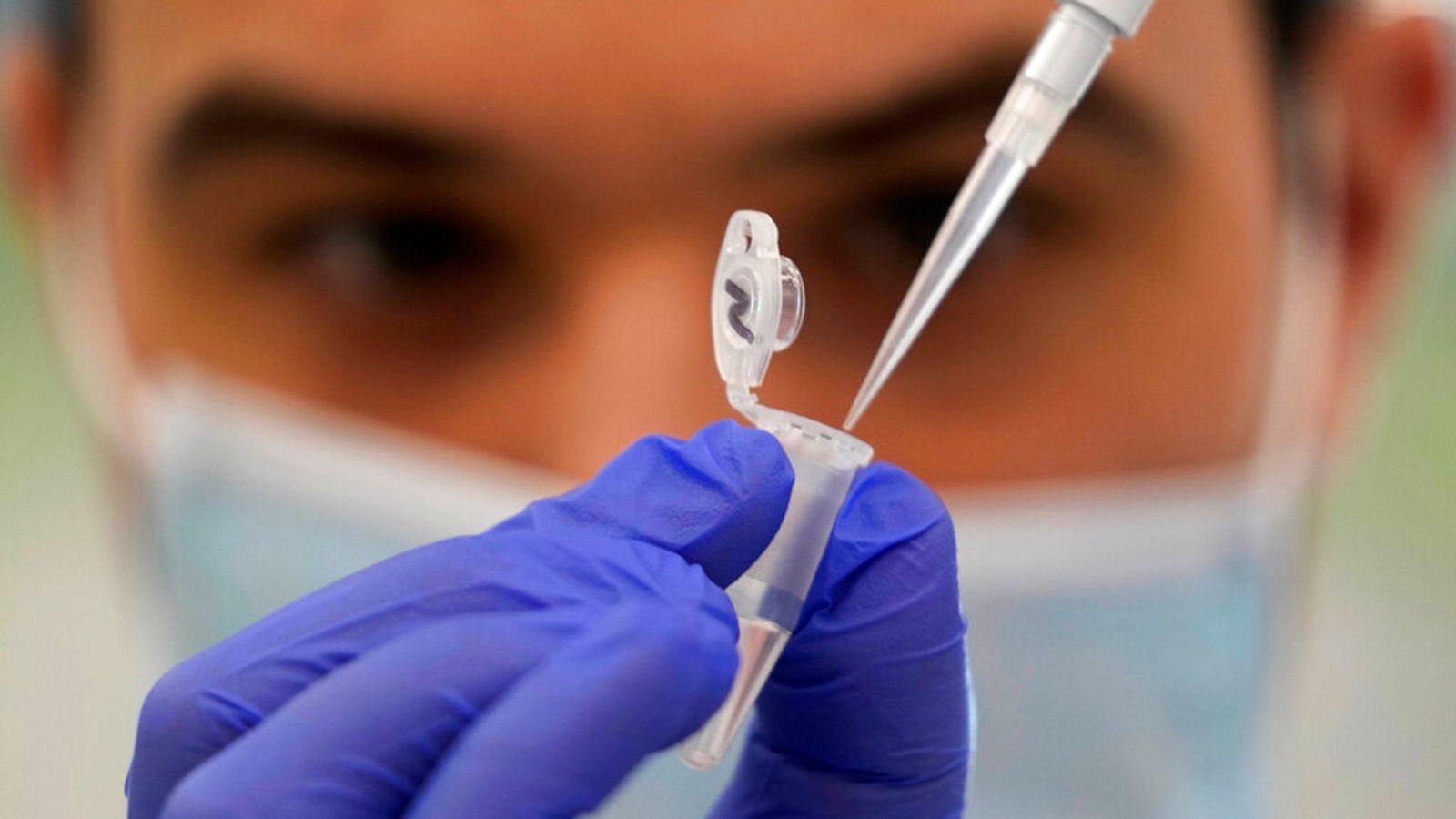
COVID-19: New wave of Omicron mutations spreading across Europe, EU Medicines Agency warns
The European Medicines Agency has said a second booster dose is being advised for people over the age of 60.
A new wave of Covid-19 is sweeping across Europe driven by Omicron mutations, an EU Medicines Agency official has warned.
Head of vaccines at the agency, Marco Cavaleri, has said "the increase in transmission among older age groups is starting to translate into severe disease".
The increase in the number of people testing positive is being driven by the BA.4 and BA.5 mutations of the Omicron variant.
In April, the EMA advised people aged over 80 to get a second vaccine booster. Now, they recommend people aged between 60-79 and medically vulnerable of any age to get the booster.
Mr Cavaleri said: "As this new wave is unfolding over the EU, it is essential to maintain protection of vulnerable groups and avoid any postponement of vaccination."
Most coronavirus restrictions have been dropped across Europe and many people are using the summer to take a holiday for the first time since the pandemic began
On June 30, the World Health Organisation said the number of new cases globally had risen 18% in the previous week, with more than 4.1 million cases reported.
Latest statistics from the ONS show that one in 30 people in the UK had the virus in the week to 24 June, which is an increase of 32% on the week before.
The UN health agency said in its latest weekly report on the pandemic that the worldwide number of deaths remained relatively similar to the week before, at about 8,500.
COVID related deaths increased in three regions: the Middle East, Southeast Asia and the Americas.

 www.bbc.co.uk
The number of Covid patients in hospital is currently still way below the record high of more than 34,000 in January 2021, during the wave of the Alpha variant of coronavirus.
Not all patients testing positive for Covid in hospital are being treated for it - some are there for another reason, but it can make their care more difficult.
This applies to about two-thirds of patients in hospital at the moment.
The BBC are trying to mislead and scare people, though they do grudgingly admit the truth:
Covid infections hit 2.7 million in UK
The latest figures show an estimated one in 25 people has the virus.
So, to be clear, there are only a third of the number of patients in hospital with Sars-CoV-2 than there was at the peak of hospitalisations; of that number, two thirds are in hospital for something else and merely happen to have tested positive incidentally.
Interesting that the BBC article initially says "some" and then goes on to admit it's "about two-thirds". Why not say "most"?
Whether or not someone who is asymptomatic or has very mild symptoms who happens to be in hospital for something else should count as a "Covid patient" is highly dubious. The BBC also does not want to admit that infection and disease are not the same thing, and are therefore keen to use terminology that erroneously suggests they are. This is typical BBC behaviour.
The BBC are also going on about "waning immunity"; of course they would interview a doctor who downplays the effectiveness of vaccines rather than one who speaks the truth! It's not correct to conclude that vaccine efficiency is waning, but because some doctors say this, the BBC goes with it, without quoting the alternative view. This is no doubt for political purposes as the BBC is keen to promote a particular narrative.

How long until Sir Keir wheels out his little pop up podium & union flags with video cameras to demand that something must be done? (Without saying what he would actually do)
270 people died with covid in the last week who are likely to be all over 80 years old and likely died of other illnesses, backed against 2.7m who caught covid.One in 25 people have covid and the world rumbles on as normal. Sounds like good news to me.
Plus, he’s been bitten by the need for politicians to be whiter-than-white squeaky-clean while advocating restrictions and opened himself to charges that he doesn’t really believe in them.robably a long time, or even never. He doubtless knows now that with Johnson's antics, the Tories are in a weak position. Therefore, I doubt that now, he would be silly enough to implement unpopular restrictionist policies. When he did adopt them, there was rather more support for restrictions amongst the population than there presumably is now.
Things do definitely seem more normal now then they were a few months, however things still are not quite normal.One in 25 people have covid and the world rumbles on as normal. Sounds like good news to me.
NHS England doesn't have control over it's total budget and has limited mechanisms for raising additional funding which leads to inevitable difficult decisions for managers. I can't speak for the local picture, but across England adult critical care beds in the 8 years prior to the pandemic increased by 16%. A slightly different definition to ITU, but most ITU beds are flexibly configured so numbers aren't as easily comparable as critical care.From my work in the NHS many of the problems are caused by a raft of commercial managers being brought in to deal with a decade of austerity. Like closing down ITU beds for example and selling off hospital sites. It's likely a lockdown would have been avoided altogether if they hadn't been so short sighted. They were warned beforehand what might happen.
The peak of hospitalisations had 1 out of 3 adult general & acute patients with covid, probably at least 1 in 4 would have been primarily covid. While it's good the numbers are far below that it's not a useful benchmark for capacity. The two-thirds figure is those not primarily being treated for covid, a proportion of those will be being treated for covid in combination with the primary diagnosis. There aren't figures for not being treated for covid but having tested positive.The BBC are trying to mislead and scare people, though they do grudgingly admit the truth:
Covid infections hit 2.7 million in UK
The latest figures show an estimated one in 25 people has the virus.
So, to be clear, there are only a third of the number of patients in hospital with Sars-CoV-2 than there was at the peak of hospitalisations; of that number, two thirds are in hospital for something else and merely happen to have tested positive incidentally.
Interesting that the BBC article initially says "some" and then goes on to admit it's "about two-thirds". Why not say "most"?
Whether or not someone who is asymptomatic or has very mild symptoms who happens to be in hospital for something else should count as a "Covid patient" is highly dubious. The BBC also does not want to admit that infection and disease are not the same thing, and are therefore keen to use terminology that erroneously suggests they are. This is typical BBC behaviour.
The BBC are also going on about "waning immunity"; of course they would interview a doctor who downplays the effectiveness of vaccines rather than one who speaks the truth! It's not correct to conclude that vaccine efficiency is waning, but because some doctors say this, the BBC goes with it, without quoting the alternative view. This is no doubt for political purposes as the BBC is keen to promote a particular narrative.
Things do definitely seem more normal now then they were a few months, however things still are not quite normal.
At work today in a meeting someone said he knew of a lot people testing positive but being asymptomatic. So clearly there are still some people testing themselves when they have no symptoms. I still do also sometimes hear some people mentioning they are avoiding certain activities due to Covid.
Indeed the figures are for Sars-CoV-2 positive; arguably we should really be at the point whereby healthy people are not tested. Covid is the name of the disease which went with the novel virus which at the time were quite different to the symptoms experienced in a population with good immunity; now most people who have Sars-CoV-2 are either asymptomatic or are very mildly ill with flu type symptoms.NHS England doesn't have control over it's total budget and has limited mechanisms for raising additional funding which leads to inevitable difficult decisions for managers. I can't speak for the local picture, but across England adult critical care beds in the 8 years prior to the pandemic increased by 16%. A slightly different definition to ITU, but most ITU beds are flexibly configured so numbers aren't as easily comparable as critical care.
The peak of hospitalisations had 1 out of 3 adult general & acute patients with covid, probably at least 1 in 4 would have been primarily covid. While it's good the numbers are far below that it's not a useful benchmark for capacity. The two-thirds figure is those not primarily being treated for covid, a proportion of those will be being treated for covid in combination with the primary diagnosis. There aren't figures for not being treated for covid but having tested positive.
Sorry, but no. She is clearly not the perfect person.The doctor they interviewed was Dr Mary Ramsay the head of immunisation at UK Health Security Agency with decades long involvement in national surveillance of vaccine preventable diseases. That sounds like the perfect person to comment on vaccine effectiveness and waning immunity.
I am seeing a ton of misinformation circulating so I thought it might be a good idea to make a thread on this. When you see “waning” or “evading vaccines” PLEASE KEEP IN MIND this is usually in regards to neutralizing antibodies ONLY. NOT PROTECTION AGAINST SEVERE DISEASE.
...It is not correct to conclude that COVID vaccine efficiency is waning. What is going down is protection against infection. Most human vaccines do not prevent infection. (2/3)...
I think it’s safe to say that the BBC is not a trusted news source, certainly in regard to covid.


She isn't denying the effectiveness of vaccines though and is consistent on that, take this blog post from November:Indeed the figures are for Sars-CoV-2 positive; arguably we should really be at the point whereby healthy people are not tested. Covid is the name of the disease which went with the novel virus which at the time were quite different to the symptoms experienced in a population with good immunity; now most people who have Sars-CoV-2 are either asymptomatic or are very mildly ill with flu type symptoms.
Sorry, but no. She is clearly not the perfect person.
An expert immunologist writes:
And one of the leading virologists in the world says:
Now, of course I am well aware that the BBC and yourself take a very different view to those experts, but surely even you can admit that if the BBC were going to publish a doom & gloom narrative regarding the effectiveness of vaccines, they should at least have got an alternative view in their article?
Edit: I find it really irresponsible that some senior people with a load of letters after their name are so keen to deny the effectiveness of vaccines; one of the things I've learnt during the pandemic is that highly qualified so-called experts can be completely and utterly wrong, and those who have powers and/or get quoted by the media appear to be much more likely to be wrong than those who quietly get on with their jobs! I don't know what motivates people like Dr Mary Ramsay to spread misleading information but it really isn't acceptable; she should know better!
To expand the brief quote from the BBC article the most recent comments on immunity and vaccines were:Vaccines work. They have played a critical role in breaking the link between infection and severe outcomes, and we should express our gratitude to the scientists who developed life-saving vaccines against COVID-19 and to those who work tirelessly every day to roll out the vaccine programme at pace, across the country.
In this blog I would like to explain how we use different data sets to look at the impact of vaccination in the population.
The UK Health Security Agency is committed to openness around data and has been at the forefront of publishing evidence to show the effectiveness of the UK vaccination programme. We were first to show that COVID-19 vaccines offer high protection against the Delta variant of the virus and this data has been regularly shared with policymakers and the public.
As well as this, the UKHSA publishes rates of cases, hospitalisations and deaths by vaccination status, and the data in our report shows that the rates of hospitalisation and deaths are substantially lower in fully vaccinated people, across all age groups. It is clear therefore that COVID-19 vaccines provide a high level of protection against severe outcomes.
Her claim is about serious illness and that the spring booster would have a substantial effect. Is that accurate or misinformation? Starting five tweets further into the first thread you linked uses the latest UKHSA vaccine surveillence report as a source for BA4/BA5 vaccine effectiveness compared to BA2. The statement 'When you see “waning” or “evading vaccines” PLEASE KEEP IN MIND this is usually in regards to neutralizing antibodies ONLY. NOT PROTECTION AGAINST SEVERE DISEASE' is undercut by table 4 on just the previous page (16) to the one they cite showing a reduction in real world effectiveness against hospitalisation over time.We continue to see COVID-19 case rates and hospitalisations rise in all age groups, with the largest increases in hospitalisations and ICU admissions in those aged 75 and older.
There is likely to be a substantial amount of waning immunity in older people who have not taken up the booster on schedule, so we can expect these rises to continue over the coming weeks and throughout July.
It’s reassuring that 79.8 per cent of people aged 75 and over in June have had a vaccine in the past 6 months but we urge the remaining 16 per cent to get their spring booster as soon as possible to help protect against serious illness – preliminary analysis shows that the vaccine is continuing to protect against severe illness and remains the best defence against severe disease and hospitalisation. This includes anyone who had their last vaccine more than 6 months ago, as well as those living in care homes or who are clinically vulnerable.
Vaccination remains the best defence against severe disease and we urge anyone who’s eligible for the spring booster to take it up. Remember that COVID-19 has not gone away and we should all keep up good hand and respiratory hygiene.
Ok she is pro vaccination but she appears to be denying the effectiveness of vaccines. That's still a dangerous message in my opinion. I don't see how anyone can deny that she is denying the effectiveness of vaccines when her quote us there for all to see.She isn't denying the effectiveness of vaccines though and is consistent on that, take this blog post from November:
To expand the brief quote from the BBC article the most recent comments on immunity and vaccines were:
Her claim is about serious illness and that the spring booster would have a substantial effect. Is that accurate or misinformation? Starting five tweets further into the first thread you linked uses the latest UKHSA vaccine surveillence report as a source for BA4/BA5 vaccine effectiveness compared to BA2. The statement 'When you see “waning” or “evading vaccines” PLEASE KEEP IN MIND this is usually in regards to neutralizing antibodies ONLY. NOT PROTECTION AGAINST SEVERE DISEASE' is undercut by table 4 on just the previous page (16) to the one they cite showing a reduction in real world effectiveness against hospitalisation over time.
Anyway, table 1 on page 10 is the more comprehensive with 3 different estimates of vaccine effectiveness by varying outcomes. The most specific one is Secondary Users Service (SUS - a recording system for hospital activity) for at least 2 days and either oxygen, ventilation or ICU, with Acute Respiration Infection (ARI) code in primary field. These patients are severely ill and how severe covid treatement would be coded. The peak effectiveness after booster for over 65s was 95.8 (91.3 to 97.9) after 15 weeks dropping to 86.8 (77.1 to 92.3) cutting the risk by over half. Due to the time period it's for earlier Omicron variants but early analsysis shows BA4/BA5 vaccine effectiveness is similar to BA2. This seems ample justification for her claim.
I disagree both that it's doom & gloom and over having an alternative view. I'm unaware of any expert who disagrees with the basis of the study above and having someone who skips over it to talk about theoretical B/T cell behaviour is unhelpful. If a study of antibody responses is discussed then yes that needs to be there, but not when it's against real world effectiveness figures. Similarly I suspect we'd agree having a vaccine sceptic anytime someone claims 'vaccines work' would be a terrible idea even if some disagree about their effectiveness.
It's seemed like no other illnesses exist for over 2 years nowBBC has became clickbaiting material as the Daily Express these days (Scottish Daily Express along lines of 1 in 17 Scots and COVID warning), seems to me the media seem to think no other illnesses exist these days or if they do it’s more clickbaiting than being factual with the truth, the UK media have reached passed gutter material it’s seeing how far the bottom of that barrel is getting scraped.
I don't see how you can deny the effectiveness of the vaccines by accurately stating the real world effectiveness of the vaccines. Would everyone like that the protection against severe illness remained constant, yes of course, but if the evidence is that there's a doubling of risk then we shouldn't hide that. The BBC quote is accurate, the expanded one just makes her views very clear.Ok she is pro vaccination but she appears to be denying the effectiveness of vaccines. That's still a dangerous message in my opinion. I don't see how anyone can deny that she is denying the effectiveness of vaccines when her quote us there for all to see.
The BBC quote is misleading; if your argument is that the details are more nuanced then fair enough but what they said is not an accurate reflection.
What is your solution? Boost everyone constantly? The cost of this is immense and you can only use the "waning immunity" argument so many times.
Everyone is going to be exposed to this virus multiple times in our lifetimes and in the vast majority of cases each exposure will give our immune system a boost. This is a natural process which occurred with similar viruses previously. Vaccinations played a huge role in generating a lot of immunity but they cannot prevent exposure/infection and we need to generate immunity against more than just the spike protein.
The idea that we should constantly boost, based on "waning" immunity is misguided.
The BBC are misleading people by providing quotes that have been called out by experts as being wrong / misleading.
It's seemed like no other illnesses exist for over 2 years now
She claims that immunity is "waning" but other experts have questioned these claims.I don't see how you can deny the effectiveness of the vaccines by accurately stating the real world effectiveness of the vaccines. Would everyone like that the protection against severe illness remained constant, yes of course, but if the evidence is that there's a doubling of risk then we shouldn't hide that. The BBC quote is accurate, the expanded one just makes her views very clear.
Yes and vaccinations were important, but you can't keep telling people that 3 doses isn't enough, 4 doses isn't enough, 5 isn't enough and so on.I care about accurate information particularly around statistics. It's not my role or expertise to advise organisations on vaccination policy. If I was required to give a solution I'd look at the costs, benefits and consequences of the various options. Hospital stays are magnitudes more expensive than vaccines and hospital resources are more constrained than staff suitably trained to do vaccinations.
Whatever your argument, it is misleading for her say there is a "substantial amount of waning immunity" when talking about people who have already had 3 doses of vaccine, and who are inevitably going to be exposed to and infected by the virus at some point, and who will need a natural exposure to develop the best possible immunity. Whatever excuses you want to make for her is your choice but it is misleading in the opinion of experts, including those who know more about viruses than she does.For those most at risk the reduction in hospitalisations alongside other expenditure saved may alone give a financial case. The spring boosters are available to roughly 6 million people about a third of the pre-pandemic flu cohort, so even if we had to give it 3 or 4 times a year it would be roughly the same as what we do for flu. As such I'd probably end up with something similar to the current policy and I'd be surprised if those responsible for the policy hadn't run a similar process themselves.
I'm not really sure what you are asking for but antibody levels are entirely expected to "wane" and it is not a cause for concern. By all means constantly boost people but not everyone who is eligible for constant boosters is going to agree to be constantly boosted and we have to respect that. There can be no further restrictions and people cannot be forced into constant boosters either.You appear to have skipped that one the experts you quoted skipped over the best available evidence for waning giving a substantial increase of risk of hospitalisation. If there is an expert who explains why that study or kind of study (about real world effectiveness not antibodies) is wrong/unreliable or comments on a similar study of comparable scale getting results showing no waning I'd be interested to read it.

In conclusion, while waning (neutralizing) antibody levels in patients previously infected with SARS-CoV-2 might render them susceptible to reinfection again, the induction of a robust memory immune response makes it entirely plausible that the majority of these patients are still protected from severe COVID-19 disease.

 www.theatlantic.com
Antibodies are supposed to peter out; that’s why they always do. Still, even as our antibodies are dwindling in absolute quantity, these scrappy molecules are enhancing their quality, continuing to replace themselves with new versions that keep improving their ability to bring the virus to heel. Months after vaccination, the average antibody found in the blood simply has higher defensive oomph. “That’s why I hate the word waning,” Jennifer Gommerman, an immunologist at the University of Toronto, told me.

Given true experts say we should not be using "Covid" positive (the name of the disease) to describe Sars-CoV-2 positive healthy people, and given true experts say we shouldn't be using terms such as "waning" immunity and that it is wrong to claim immunity is "waning" then I think we should all respect that.From an immunological standpoint, plasma neutralising antibody titres are expected to decay eventually following vaccination, but robust and long lived plasmablast and germinal B cell responses have been shown after mRNA vaccination, and memory B cells have been shown to increase over at least six months, improve functionally, and provide cross-variant protection.1213 Plasma neutralising antibody titres may predict some level of protection from symptomatic infection. However, understanding of the strength of this relation over longer periods remains limited.1415 Given reported differences in sustained effectiveness against severe disease versus infection, neutralising antibodies are unlikely to be the only mechanism of protection; cellular immunity is more important in long term protection against severe disease.6
Most importantly, the long term effect of boosters on reducing infection, transmission, and hospital admissions remains unknown. Although boosters increase plasma antibody levels and may temporarily extend antibody mediated protection, they have not been shown to augment the memory B and T cell responses expected to provide long term protection against severe disease for most immunocompetent people.16 In an observational study from Israel reporting benefit associated with a third dose of the Pfizer-BioNTech vaccine (BNT162b2),17 the follow-up period in the boosted group was just seven person days for severe disease and 12 person days for infection—too short to assess long term effectiveness. The findings were also highly vulnerable to confounding.17 Any potential benefit of additional doses, particularly against symptomatic and severe disease, should be assessed on long term data, ideally from randomised control trials.18
The BBC were at it again this morning on BBC Breakfast with Naga Munchetty interviewing some glum looking "expert" about the rise in covid cases.The BBC are trying to mislead and scare people, though they do grudgingly admit the truth:
The BBC were at it again this morning on BBC Breakfast with Naga Munchetty interviewing some glum looking "expert" about the rise in covid cases.
They then show footage of a hospital with elderly covid patients being treated by nurses with flimsy ill fitting masks on. If the latest variant is such a threat then why are nurses not wearing FFP3 masks?

