That was some constructive feedback. Please recognise it as that.If you're going to go out and wave pitchforks claiming timetable planners throw in the towel at the first opportunity, please consider who you might be talking to. There are many, many people in the industry who work their socks off to keep trains in the plan whilst engineering works happen.

-
Our new ticketing site is now live! Using either this or the original site (both powered by TrainSplit) helps support the running of the forum with every ticket purchase! Find out more and ask any questions/give us feedback in this thread!
You are using an out of date browser. It may not display this or other websites correctly.
You should upgrade or use an alternative browser.
You should upgrade or use an alternative browser.
Potential DfT/ORR Consultation On Diversionary Routes/Rail Replacement Bus Services?
- Thread starter TheBigD
- Start date
- Status
- Not open for further replies.
Sponsor Post - registered members do not see these adverts; click here to register, or click here to log in
R
RailUK Forums
Class 170101
On Moderation
- Joined
- 1 Mar 2014
- Messages
- 8,664
Unfortunately this is covered by the Equality Act 2010 (exemptions ended 01/01/2020 If I remember Correctly) and means everyone must change between bus and train at a suitable station not just those able to walk reasonably well and less mobile people removed at a bigger station to face the longer bus journey. What this means is that some stations can no longer be used for interchange between Bus and Train even though they are the most appropriate station for the block. Indeed I've seen an instance of a small station used because it complied with the Equality Act not because it was the most suitable station to handle passengers.What is your definition of a station where you cannot reliably undertake RR buses?
No chance I'm afraid, Single Line Working is a process but involves many human beings and unfortunately from time to time they make mistakes, whilst it remains available as an option it is not preferred and is discouraged. Secondly working on a closed line with adjacent line open limits the work that can actually be undertaken on the closed line to keep people apart from trains including losing their heads (literally), frankly NR prefer complete closure on Health and Safety Grounds, their motto, if it still applies, is, Everyone Home Safe Everyday.You don't need 'infrastructure' to turn trains back, you need a process. Far easier to fix that than achieve the pipe dream that we keep being promised - relaying on one track while trains keep running on the next.
There needs to be proportionality. The safest railway is one that is closed and lifted.Unfortunately this is covered by the Equality Act 2010 (exemptions ended 01/01/2020 If I remember Correctly) and means everyone must change between bus and train at a suitable station not just those able to walk reasonably well and less mobile people removed at a bigger station to face the longer bus journey. What this means is that some stations can no longer be used for interchange between Bus and Train even though they are the most appropriate station for the block. Indeed I've seen an instance of a small station used because it complied with the Equality Act not because it was the most suitable station to handle passengers.
No chance I'm afraid, Single Line Working is a process but involves many human beings and unfortunately from time to time they make mistakes, whilst it remains available as an option it is not preferred and is discouraged. Secondly working on a closed line with adjacent line open limits the work that can actually be undertaken on the closed line to keep people apart from trains including losing their heads (literally), frankly NR prefer complete closure on Health and Safety Grounds, their motto, if it still applies, is, Everyone Home Safe Everyday.
At the moment it sounds like the move is to ban so called red zone working. It will be a very controversial step if other doctrines result in what was red zone work suddenly becoming an avalanche of weekend long closures.
== Doublepost prevention - post automatically merged: ==
Sounds like more 'not invented here'.So you are presumably not a possession or train planner, and indeed do not work in any part of the railway industry, yet know far better than the insiders, both the railway professionals who have posted on here, and those who actually do the jobs mentioned, how things should be done .....
The reason for this consultation is that the message of consultations past have been ignored. That much is plain from some of the comments and attitudes here.
I genuinely find it depressing where people claiming expert status and xx years of experience but cannot identify any opportunities for improvement, or even recognise the need for change.
These days that is quite rare to find. The experienced and engaged experts are usually the most fertile ground for improving an organisation.
It is unlikely they are right, as their stakeholders are having consultation after report after consultation to try and get movement in this area.
Last edited:
zwk500
Veteran Member
Which bit was constructive feedback? The suggestion that diversions be done where possible and line closures be kept as short as practical where unavoidable isn't adding anything NR don't already know.That was some constructive feedback. Please recognise it as that.
The ban on Red Zone Working is happening. I can't remember how far it's rolled out now, but it's already in place over a wider proportion of the network. And, after numerous incidents where track workers tragically lost their lives, it is proportionate.At the moment it sounds like the move is to ban so called red zone working. It will be a very controversial step if other doctrines result in what was red zone work suddenly becoming an avalanche of weekend long closures.
Class 170101
On Moderation
- Joined
- 1 Mar 2014
- Messages
- 8,664
Something to be careful with, more blocks potentially equal more buses but roads don't exactly cover themselves in glory when it comes to the death and injury statistics.There needs to be proportionality. The safest railway is one that is closed and lifted.
At the moment it sounds like the move is to ban so called red zone working. It will be a very controversial step if other doctrines result in what was red zone work suddenly becoming an avalanche of weekend long closures.

Reported road casualties in Great Britain, provisional estimates: year ending June 2021
Personal injury accident and casualty statistics on public roads in Great Britain for the year ending June 2021.
From Gov.uk (web link above)
Figures for the year ending June 2021 show:
- there were 1,390 reported road deaths, a decrease of 11% compared to the year ending June 2020
- there were 119,850 casualties of all severities, a decrease of 9% compared to the year ending June 2020
When I see a possession that results in a block of Broxbourne to Stansted Airport and then north to the junction with the Kings Cross line that is quite hard to reconcile....Which bit was constructive feedback? The suggestion that diversions be done where possible and line closures be kept as short as practical where unavoidable isn't adding anything NR don't already know.
It is so long there isn't a single replacement bus from one end to the other.
Class 170101
On Moderation
- Joined
- 1 Mar 2014
- Messages
- 8,664
Do you mean a Broxbourne to Cambridge Bus?When I see a possession that results in a block of Broxbourne to Stansted Airport and then north to the junction with the Kings Cross line that is quite hard to reconcile....
Bus driver might well run out of hoursIt is so long there isn't a single replacement bus from one end to the other.
Peregrine 4903
Established Member
What an utter load of nonsense this post is. Honestly don't need to san anymore about how nonsensical this actually is.One point that these arguments might support is that the opportunity should be taken to stop investing in the Brighton line in the light of lower passenger numbers and the service be cut back to a much lower level that is consistent with the capability of the railway.
If a bare minimum approach were to be taken to maintenance and renewals from now onwards, would there be a resultant cost saving? Could Brighton's service be cut back to what it actually needs, that is perhaps two Thameslink 12-car 700s an hour for much of the day?
Such a move would remove the need for weekend closures and the buses.
Right, I'm going to try and explain the problems with your solution in more detail.There may well be a point about Soviet style production targets for why Network Rail are mandated to renew xx 5 chain lengths of earths works in their annual delivery plans. There are also many instances where too many trains are being operated.
The piecemeal nature of works past e.g. 1,000 yards of plain line renewal per weekend also risks condemning them to the same piecemeal approach to renewal of the same going forward, unless someone decides to think strategically.
== Doublepost prevention - post automatically merged: ==
It sounds to me like a minimum occupation blockade approach is better for north of Burgess Hill while via Lewes is less difficult to provide a viable train service without resorting to buses for through passengers.
Still too much readiness to reach for those buses as soon as challenges are encountered with the timetable. See previous consultations for more details.
== Doublepost prevention - post automatically merged: ==
The biggest problem is the attitude of experienced people who in other organisations would usually recognise weaknesses in their offer and be full of positive ideas on how to improve their product.
Is it genuinely depressing that doesn't come across here, far from it.
If you genuinely are so perfect that between you, you can offer no solutions or improvements then I should either take off my hat or remind you that almost no large organisation can make that claim with any honesty.
It is pretty rare to go into an organisation and find experienced people who can't or won't offer any opportunities for improvement and many of the culture related reasons for the latter don't apply here.
Lets start with Brighton Platform Capacity. If you are running 4tph from Brighton to London Victoria via the West Coastway platform capacity at Brighton is the biggest limiting factor. Trains to the West Coastway from Brighton can only use Platform's 1,2 and 3. Of those Platform 3 is only a 4 coach platform for West Coastway services meaning none of the London services could use it as they are all at least formed of 8 coaches with most formed of 12 coaches. This then leads to the situation you'd have. Long distance services at Brighton require 12 minute turnarounds. There is a 3 minute platform reoccupation for Brighton Platform's 1 and 2. That means if you were to have 4tph an hour you would have to say have a departure at xx:00, arrival at xx:03, departure at xx:15, arrival at xx:18, departure at xx:30, arrival at xx:33, departure at xx:45 and arrival at xx:48. This leaves you with utterly no slack for any late running. The Brighton - London services could not use both Platform's 1 and 2 at Brighton as say Platform 1 would be required for the Brighton to West Worthing/Littlehampton trains with Platform 3 being used for the Portsmouth/Southampton trains.
You would then have to rewrite the entire West Coastway timetable around this, which as I said before has significant impacts on the Wessex route. Your biggest issue would be the Brighton to Littlehampton stopping services, which are extended through to Littlehampton during this possession as otherwise both Durrington and Goring stations would have practically no service. You can't remove these trains as then you would leave stations such as Aldrington, Fishergate and East Worthing without a service. And while they are not major stations, I don't think it is fare for them not to have a train service just so some long distance diversionary services can be prioritised. It takes about 50 minutes for a Brighton to Littlehampton services calling at all stations on minimum dwell to run through to Littlehampton. A London Bound services that leaves Brighton 19 minutes after the stopper that calls at Hove, Shoreham and Worthing, will still run into this service at Angmering, so will need to pathed slightly to follow the stopper. As you can see, there is already a massive issue here as for there to be 4tph an hour you would need a 15 minute frequency to work with the platforming at Brighton. As you can see, the stopper is to slow and takes to long to get to Littlehampton meaning a 15 minute frequency would not be achievable. The only possible way you could get this to work would be to loop the stopper out of the way. However that is only possible in the up direction only at Worthing, and the only place you can do it in the down direction is at Hove, which given its proximity to Brighton would be utterly pointless and would achieve nothing.
And just to add basically your proposal woud lead to a situation like this. West Coastway has a 4 minute stopping headway, so London bound train depart Brighton at xx:00, Southampton/Portsmouth at xx:04 and Littlehampton stopper at xx:08. Your next London bound train for the 4tph would then need to depart at xx:15. This would literally run into the stopper before Shoreham, and would require a ridiculous amount of pathing time that by the time it got to Littlehampton, the journey would have been so slow it might as well just called at all stations anyway. It would not be a competitirve journey, and even worse your xx:30 London departure would also run into it at Worthing, thus slowing down that service even more.
I hope you understand now, just why what your suggesting just isn't impossible, based on the timetabling and infrastructure limitations on the West Coastway.
Last edited:

Have you considered that it might just be your idea that's being rejected, not because there are no opportunities for improvement but rather because your proposal isn't actually an improvement?I genuinely find it depressing where people claiming expert status and xx years of experience but cannot identify any opportunities for improvement, or even recognise the need for change.
zwk500
Veteran Member
You not understanding/appreciating the factors involved in a decision doesn't stop it from being the best solution to the expected problems.When I see a possession that results in a block of Broxbourne to Stansted Airport and then north to the junction with the Kings Cross line that is quite hard to reconcile....
It is so long there isn't a single replacement bus from one end to the other.
Sometimes there isn't a good option available, and it's about making what you have workable.
Falcon1200
Established Member
I genuinely find it depressing where people claiming expert status and xx years of experience but cannot identify any opportunities for improvement, or even recognise the need for change.
Perhaps that is because those with 'expert status and years of experience' therefore know that there is simply no other safe, realistic or achievable way of doing things ?
Being an interested and enthusiastic outsider is very, very different from being trained and qualified to do a job, as I myself rapidly discovered when I moved from a commercial to an operational role on the railway.
A few posts ago I said I would take two 9 day blockades of Three Bridges every 30 years and Christmas week and one weekend a year. The bit south of Burgess Hill looks easier to divert past.
Christmas week *every year?* not sure that’s a good idea.
what happens if, say there is a bow wave of renewals coming up? Or if there’s tunnels that need the drainage renewed or lining repaired?
Why did you start with something you knew wouldn't work?What an utter load of nonsense this post is. Honestly don't need to san anymore about how nonsensical this actually is.
Right, I'm going to try and explain the problems with your solution in more detail.
Lets start with Brighton Platform Capacity. If you are running 4tph from Brighton to London Victoria via the West Coastway platform capacity at Brighton is the biggest limiting factor. Trains to the West Coastway from Brighton can only use Platform's 1,2 and 3. Of those Platform 3 is only a 4 coach platform for West Coastway services meaning none of the London services could use it as they are all at least formed of 8 coaches with most formed of 12 coaches. This then leads to the situation you'd have. Long distance services at Brighton require 12 minute turnarounds. There is a 3 minute platform reoccupation for Brighton Platform's 1 and 2. That means if you were to have 4tph an hour you would have to say have a departure at xx:00, arrival at xx:03, departure at xx:15, arrival at xx:18, departure at xx:30, arrival at xx:33, departure at xx:45 and arrival at xx:48. This leaves you with utterly no slack for any late running. The Brighton - London services could not use both Platform's 1 and 2 at Brighton as say Platform 1 would be required for the Brighton to West Worthing/Littlehampton trains with Platform 3 being used for the Portsmouth/Southampton trains.
You would then have to rewrite the entire West Coastway timetable around this, which as I said before has significant impacts on the Wessex route. Your biggest issue would be the Brighton to Littlehampton stopping services, which are extended through to Littlehampton during this possession as otherwise both Durrington and Goring stations would have practically no service. You can't remove these trains as then you would leave stations such as Aldrington, Fishergate and East Worthing without a service. And while they are not major stations, I don't think it is fare for them not to have a train service just so some long distance diversionary services can be prioritised. It takes about 50 minutes for a Brighton to Littlehampton services calling at all stations on minimum dwell to run through to Littlehampton. A London Bound services that leaves Brighton 19 minutes after the stopper that calls at Hove, Shoreham and Worthing, will still run into this service at Angmering, so will need to pathed slightly to follow the stopper. As you can see, there is already a massive issue here as for there to be 4tph an hour you would need a 15 minute frequency to work with the platforming at Brighton. As you can see, the stopper is to slow and takes to long to get to Littlehampton meaning a 15 minute frequency would not be achievable. The only possible way you could get this to work would be to loop the stopper out of the way. However that is only possible in the up direction only at Worthing, and the only place you can do it in the down direction is at Hove, which given its proximity to Brighton would be utterly pointless and would achieve nothing.
And just to add basically your proposal woud lead to a situation like this. West Coastway has a 4 minute stopping headway, so London bound train depart Brighton at xx:00, Southampton/Portsmouth at xx:04 and Littlehampton stopper at xx:08. Your next London bound train for the 4tph would then need to depart at xx:15. This would literally run into the stopper before Shoreham, and would require a ridiculous amount of pathing time that by the time it got to Littlehampton, the journey would have been so slow it might as well just called at all stations anyway. It would not be a competitirve journey, and even worse your xx:30 London departure would also run into it at Worthing, thus slowing down that service even more.
I hope you understand now, just why what your suggesting just isn't impossible, based on the timetabling and infrastructure limitations on the West Coastway.
Try starting by defining the minimum viable service like I suggested, instead of manufacturing problems to try and prove that running buses was the best solution.
On Sunday the diversions were halved at the same time the Coastway service is halved, clearly there wasn't an effort to keep passengers off buses, for all the protestations about track capacity.
Peregrine 4903
Established Member
Um I started with that, because you suggested it yourself. How am I manfucaturing problems in anyway, when you were the one that suggested 4tph. So I explained in detail why it didn't work.Why did you start with something you knew wouldn't work?
Try starting by defining the minimum viable service like I suggested, instead of manufacturing problems to try and prove that running buses was the best solution.
On Sunday the diversions were halved at the same time the Coastway service is halved, clearly there wasn't an effort to keep passengers off buses, for all the protestations about track capacity.
The service is halved on Sunday, because there is always a less frequent service on Sunday on that part of the network.
It is ludicrous to suggest 1 diversion per hour on Sunday cannot be improved on.Have you considered that it might just be your idea that's being rejected, not because there are no opportunities for improvement but rather because your proposal isn't actually an improvement?
My proposal was to start by defining the minimum viable service that meant passengers did not need to use buses.
So far nobody has even managed that.
My principle for using trains not buses during engineering work is taken from the publicly expressed views of the top people at Network Rail and reflects the findings of numerous earlier consultations whose findings this new proposed consultation will only serve to reheat.
Unfortunately a lot of so called expert comment here doesn't even accept the principle that passengers often reject buses outright. Therefore they don't recognise this situation a failure they need to improve.
== Doublepost prevention - post automatically merged: ==
I offered a series of steps to follow to define a train plan that didn't involve thousands of passengers using buses.Um I started with that, because you suggested it yourself. How am I manfucaturing problems in anyway, when you were the one that suggested 4tph. So I explained in detail why it didn't work.
The service is halved on Sunday, because there is always a less frequent service on Sunday on that part of the network.
You chose to look very hard for a problem and not a solution.
The Sunday question destroys most of the track capacity argument and clearly demonstrates that putting thousands of passengers onto buses isn't seen as a problem, completely contrary to the findings of earlier consultations.
== Doublepost prevention - post automatically merged: ==
Christmas week is generally expendable as far as major and unavoidable engineering work goes.Christmas week *every year?* not sure that’s a good idea.
what happens if, say there is a bow wave of renewals coming up? Or if there’s tunnels that need the drainage renewed or lining repaired?
As you are fond of saying it is more than plain line renewals, you can outline all of the work needed in a 30yr timespan, with the occupations required from the minimum divisible unit, up to one week and then explain why this particular 13 miles of double track route with one tunnel and one viaduct (?) needs something like 15 days of closures in a single year?
== Doublepost prevention - post automatically merged: ==
There always another safe and realistic way. It is a dereliction of the management function and common sense to accept that.Perhaps that is because those with 'expert status and years of experience' therefore know that there is simply no other safe, realistic or achievable way of doing things ?
Being an interested and enthusiastic outsider is very, very different from being trained and qualified to do a job, as I myself rapidly discovered when I moved from a commercial to an operational role on the railway.
I set a challenge to define the minimum viable service that avoided doing London to Brighton on a bus.
Despite running half the number of diversions on Sunday when the Coastway is service is also halved, expert opinion would have me believe this is largely because of track capacity!
Last edited:

tbtc
Veteran Member
An epic thread of whataboutery, with no solutions.
I am pretty sure XC have done that diversion before. They have half hourly paths at either end and already operate a much reduced service since COVID. The reason crew route knowledge is such an obstacle has also been covered at length.
Without addressing points in minute details it looks like you are 'putting up flak' rather than offering anything worth engaging with.
If you are an 'insider' do consider yourself to be in scope of my identification of the primary problem as an unwillingness by some in the industry to recognise there is actually is problem that they need to address. None of the other challenges will ever get addressed until that happens.
We don't need another consultation to confirm that.
Ah, as expected, you're not wanting to discuss the practicalities (e.g. how many Derby - Birmingham services a week should be forced to divert via the slower Leicester route so that sufficient staff can retain their route knowledge?), you just want to cite a survey that said that "people prefer trains to buses" (of course they do, because these surveys tend to ask pretty meaningless questions with no trade offs)
Of course people would rather have a direct train service (than changing trains, or changing onto a bus) - what matters is how much you are happy for the railway to pay to ensure that.
There seem to be a number of people on here who assume that any inconveniences must be because The Powers That Be either don't notice the problems or "can't be bothered" to solve them, rather than understanding that sometimes it's the least bad option
Similarly, we could look at re-opening abandoned lines for the sake of "diversionary resilience" but is that worth hundreds of millions of pounds? In the real world, someone has to decide whether to spend the railway's budget on these things, when that comes at an opportunity cost
I don't think that you are the only one to have found this "problem" - we all know it's not ideal - but there are a lot of trade offs to be made - sometimes it's worth diverting trains and some times we have to accept that the costs outweigh the benefits
No doubt you'll ignore all of these points and just say something glib like "...but people prefer trains to buses" (which, whilst obviously true, is a bit meaningless when asked as a question with no trade offs)
Difficult to see how this is the best solution. The works with slightly different limits each week go on for 13 weekends, including Easter and May Bank Holidays, so really 29 days of closures and some of the busiest dates of the year at Stansted.You not understanding/appreciating the factors involved in a decision doesn't stop it from being the best solution to the expected problems.
Sometimes there isn't a good option available, and it's about making what you have workable.
The Anglia website says they will replace 11 sets of points, half a mile of track, and viaduct timbers, viaduct retailing and 'platform works' at Bishops Stortford.
Doesn't sound terribly productive to me and no doubt next year they will discover some more work to be done in the miles of line blockage that they weren't working on.
== Doublepost prevention - post automatically merged: ==
As I have said, I am pretty sure the diversion has been done before, so most of the obstacles you throw in the road have no merit. The industry is moving away from what their customers and stakeholders want.Ah, as expected, you're not wanting to discuss the practicalities (e.g. how many Derby - Birmingham services a week should be forced to divert via the slower Leicester route so that sufficient staff can retain their route knowledge?), you just want to cite a survey that said that "people prefer trains to buses" (of course they do, because these surveys tend to ask pretty meaningless questions with no trade offs)
Of course people would rather have a direct train service (than changing trains, or changing onto a bus) - what matters is how much you are happy for the railway to pay to ensure that.
There seem to be a number of people on here who assume that any inconveniences must be because The Powers That Be either don't notice the problems or "can't be bothered" to solve them, rather than understanding that sometimes it's the least bad option
Similarly, we could look at re-opening abandoned lines for the sake of "diversionary resilience" but is that worth hundreds of millions of pounds? In the real world, someone has to decide whether to spend the railway's budget on these things, when that comes at an opportunity cost
I don't think that you are the only one to have found this "problem" - we all know it's not ideal - but there are a lot of trade offs to be made - sometimes it's worth diverting trains and some times we have to accept that the costs outweigh the benefits
No doubt you'll ignore all of these points and just say something glib like "...but people prefer trains to buses" (which, whilst obviously true, is a bit meaningless when asked as a question with no trade offs)
I haven't actually suggested reopening lines for diversionary purposes, the only reason for flying that particular kite was so that you can shoot it down, as per others who enjoy finding problems and not solutions.
As you are fond of saying it is more than plain line renewals, you can outline all of the work needed in a 30yr timespan, with the occupations required from the minimum divisible unit, up to one week and then explain why this particular 13 miles of double track route with one tunnel and one viaduct (?) needs something like 15 days of closures in a single year?
No, I can’t, and neither can anyone over a thirty year time span. You can only plan the work that is known about.
But then neither can you set out how the work could be done better, because you don’t know.
The difference is I trust my rail industry colleagues to do a good job in planning the work.
Class 170101
On Moderation
- Joined
- 1 Mar 2014
- Messages
- 8,664
I believe a Blockade was considered whether it got anywhere looks unlikely from all the weekends of blocks. In terms of the length some will include strategic / cyclical maintenance as well as renewals and some of it is down to the fact you cannot reverse direction any closer despite what the track layout shown on the Quail maps will show you.Difficult to see how this is the best solution. The works with slightly different limits each week go on for 13 weekends, including Easter and May Bank Holidays, so really 29 days of closures and some of the busiest dates of the year at Stansted.
The Anglia website says they will replace 11 sets of points, half a mile of track, and viaduct timbers, viaduct retailing and 'platform works' at Bishops Stortford.
Doesn't sound terribly productive to me and no doubt next year they will discover some more work to be done in the miles of line blockage that they weren't working on.

miklcct
Established Member
My experience on SWR is that, it will try to offload passengers to GWR's service first whenever a GWR train serves the affected area, then try to use diversionary routes, and only use buses to the minimum absolute extent. When buses are absolutely necessary, they run to stations with good road connections.Something that I would like to know is how many instances are there where diversionary routes could be used, where they currently aren't, and would provide a meaningful service to passengers.
From my experience, diversions routes are ran where they make sense to. Other times, if buses are on, TOCs use the excuse to run less trains to save on costs and faff. This is my experience though. I can only thing of 1 instance where a diverted train would make any half decent impact to passengers.
Here are some examples:
When any section between Bournemouth - Southampton Airport is closed, fast buses will run between Bournemouth - Southampton Airport since these two stations are well connected to the road network just off the motorway and clearway since no diversionary route is possible, even trains still run to Brockenhurst from Bournemouth.
When any section between Southampton Central and Woking is closed, an hourly train between Weymouth - London Waterloo is diverted to Portsmouth Direct Line, and the other will terminate short of the block.
If Woking - Surbiton is closed, trains will reverse twice at Woking and Guildford to London Waterloo.
When the lines around Southampton Central is closed, the Salisbury - Romsey via Southampton trains will terminate at Romsey and not bother to divert to Chandler's Ford or Eastleigh, with passenger told to take GWR instead. As a result a passenger from the 2 intermediate stations to Southampton Airport will need to change twice (at Romsey to GWR then Eastleigh for a replacement bus) instead of going direct.
WideRanger
Member
- Joined
- 15 Jun 2016
- Messages
- 398
@jayah I'm not a rail professional, but I start from the assumption that the rail professionals who contribute to this forum want to run as many trains as possible within reason. Because their jobs depend on a sustainable railway existing. It's not in their professional or personal interests for there to be widespread substitution by buses.
I don't have any special insight into the technical issues, or the problems highlighted by some of the respondents. But it may be worth considering the following:
I don't have any special insight into the technical issues, or the problems highlighted by some of the respondents. But it may be worth considering the following:
- Clearly, closing lines for engineering or other reasons, such that people need to use bus substitutions, has a negative impact on passenger experience. Because, after all, if that weren't the case, the line wouldn't exist in normal times, because we would all be happier on buses.
- So anything that is done is going to be a less-than-satisfactory experience. But if you can imagine all of the scenarios that might be planned, then all of them will feel unsatisfactory, including the best option within the constraints of a proportionate budget spend, proportionate risk mitigation and the laws of physics.
- The problem we have here is that we have no way of knowing whether the option selected was the best of the less-than-ideal options available. Even the most experienced of professionals can never be 100% sure that there is no better way. But I would expect that their judgement, based on detailed analysis of the options, is likely to be better than mine. Yes, the solutions might be disappointing, but better than all of the other disappointing options. Many people say 'there must be a better way', when what they mean is 'I wish there was a better way'.
- In a number of your posts, you have implied that people are not trying to find better solutions. But have you ruled out the possibility that they have found the best possible solution given the inputs?
- It reminds me of classical set theory - where the task is to consider a set of potential inputs, use a function or an algorithm, and discover the full range of potential outcomes. In one of your posts you mentioned that the challenge is to define a minimum viable frequency to stop people needing to take buses, and then work out what would need to be done to achieve that. I can see the logic of this - to ensure that any countermeasures put in place are not excessive to serve the objective you desire. But there is a missing step - for any such function, it is essential to test whether that is a possible outcome based on the variables. Because, as you mention, it does need to be viable - not just viable in terms of its utility for the wider desired purpose (it will stop people needing to use buses) but also viable, as in possible to achieve.

markymark2000
On Moderation
I think that there is some merit in what is being said in a general sense but very few areas where it would be doable and I am speaking from a North West perspective. Infact, TOCs in the North West often use a small block as a reason to reduce service and I prop up the other areas which could otherwise suffer with staff shortages.
I'll use Chester for this example as there are lots of lines which come into it. will go around all of the potential options for diversions and any possible solutions
If Chester - Warrington is down, TFW will run buses straight through to Manchester Picc, no shuttle from Picc - Warrington as per should happen, they just bus it all. Northern sometimes bus people to Newton le Willows and then make them get existing slow train into Manchester (cutting back the normal train service to Victoria when it should run through) or sometimes run buses to Warrington then trains onwards. Chester - Manchester is not diverted via Mid Cheshire for some reason. Staff have route knowledge and whatever so really not sure why TFW don't divert or try to run any kind of train service if Chester - Manchester is off. I presume they don't run anything Manchester to Warrington as their staff and units are based the other side of the closure (why not work with an operator on the other side if they have staff) and don't run via Mid Cheshire because of the capacity constraint, low amount of passengers who would actually benefit as only passengers from stations prior to Chester and going to Manchester would use the route and there are existing diversions in place which would be sufficient (via Crewe is only 15 minutes longer than Mid Cheshire non stop)
If the Mid Cheshire line is off, the trains rarely shuttle either side, they run buses straight through.
If Chester - Crewe is off, Avanti may divert the Holyhead trains via Middlewich but any Chester shorts will not run and be replaced by a bus (Diversion takes as long as getting a bus. If the Chester shorts ran via Middlewich, you would need an additional train and staff etc so the costs don't work out. It'd be bonkers to spend more running on a diversion than you would on a normal service).
Chester - Shrewsbury. This is one which would help Jayahs point. Trains could and should run via Crewe instead of bussing people all the way. It would be subject to delays possibly getting through Crewe. It would only affect passengers travelling from any stations upto and including Chester travelling to Shrewsbury or any station beyond. Wrexham could generally keep a train service but then is there much point in a Chester - Wrexham shuttle when the majority of passengers board at Chester for the Wrexham - Shrewsbury stations and because of the train diversion, you would need an additional unit and additional staff versus a 'normal' service. The diversion via Crewe was something which was done on an emergency basis when Gobowen flooded however at other times, this isn't the case.
North Wales Coast has zero potential for diversion. The only thing that could be done is 'wrong line running' using the Bi-Directional signalling in place but this is very capacity restrictive (a barrier but not impossible to overcome) but then you have to have staff working next to an open train line which is being phased out.
While this may seem off topic, the point is to prove that some diversions are possible but aren't taken because it would be very resource intensive and significantly more so than a rail replacement bus, existing diversions exist via other means and people can get around the closure or TOCs simply use the lower requirements for staff and units to undertake maintenance, training or prop up other routes which if there were no disruptions, would possibly suffer from staff shortages or rely on a lot of overtime working.
I'll use Chester for this example as there are lots of lines which come into it. will go around all of the potential options for diversions and any possible solutions
If Chester - Warrington is down, TFW will run buses straight through to Manchester Picc, no shuttle from Picc - Warrington as per should happen, they just bus it all. Northern sometimes bus people to Newton le Willows and then make them get existing slow train into Manchester (cutting back the normal train service to Victoria when it should run through) or sometimes run buses to Warrington then trains onwards. Chester - Manchester is not diverted via Mid Cheshire for some reason. Staff have route knowledge and whatever so really not sure why TFW don't divert or try to run any kind of train service if Chester - Manchester is off. I presume they don't run anything Manchester to Warrington as their staff and units are based the other side of the closure (why not work with an operator on the other side if they have staff) and don't run via Mid Cheshire because of the capacity constraint, low amount of passengers who would actually benefit as only passengers from stations prior to Chester and going to Manchester would use the route and there are existing diversions in place which would be sufficient (via Crewe is only 15 minutes longer than Mid Cheshire non stop)
If the Mid Cheshire line is off, the trains rarely shuttle either side, they run buses straight through.
If Chester - Crewe is off, Avanti may divert the Holyhead trains via Middlewich but any Chester shorts will not run and be replaced by a bus (Diversion takes as long as getting a bus. If the Chester shorts ran via Middlewich, you would need an additional train and staff etc so the costs don't work out. It'd be bonkers to spend more running on a diversion than you would on a normal service).
Chester - Shrewsbury. This is one which would help Jayahs point. Trains could and should run via Crewe instead of bussing people all the way. It would be subject to delays possibly getting through Crewe. It would only affect passengers travelling from any stations upto and including Chester travelling to Shrewsbury or any station beyond. Wrexham could generally keep a train service but then is there much point in a Chester - Wrexham shuttle when the majority of passengers board at Chester for the Wrexham - Shrewsbury stations and because of the train diversion, you would need an additional unit and additional staff versus a 'normal' service. The diversion via Crewe was something which was done on an emergency basis when Gobowen flooded however at other times, this isn't the case.
North Wales Coast has zero potential for diversion. The only thing that could be done is 'wrong line running' using the Bi-Directional signalling in place but this is very capacity restrictive (a barrier but not impossible to overcome) but then you have to have staff working next to an open train line which is being phased out.
While this may seem off topic, the point is to prove that some diversions are possible but aren't taken because it would be very resource intensive and significantly more so than a rail replacement bus, existing diversions exist via other means and people can get around the closure or TOCs simply use the lower requirements for staff and units to undertake maintenance, training or prop up other routes which if there were no disruptions, would possibly suffer from staff shortages or rely on a lot of overtime working.
Quite difficult to set out how the work can be done better when nobody knows either for a weekend, a year or a lifecycle what work is actually needed.No, I can’t, and neither can anyone over a thirty year time span. You can only plan the work that is known about.
But then neither can you set out how the work could be done better, because you don’t know.
The difference is I trust my rail industry colleagues to do a good job in planning the work.
I will maintain that Christmas Week and one weekend a year is probably enough for 12 route miles and 15 days a year sounds like rather more than what is needed.
== Doublepost prevention - post automatically merged: ==
What exactly does strategic and cyclic maintenance involve? That implies it isn't event cyclic renewal that might happen to assets when they become life expired.I believe a Blockade was considered whether it got anywhere looks unlikely from all the weekends of blocks. In terms of the length some will include strategic / cyclical maintenance as well as renewals and some of it is down to the fact you cannot reverse direction any closer despite what the track layout shown on the Quail maps will show you.
It appears to be fully signalled to reverse passenger trains at Bishops Stortford, Stansted and Audley End.
Often it is possible to turn back at other places if special arrangements are made for what is a move not normally signalled for passenger trains.
Harlow Town is only 5mins normal running time into the possession so providing a half hourly service should not prove insurmountable if that was the constraint.
== Doublepost prevention - post automatically merged: ==
I can only judge as I find. A lot of people are very defensive, to the point of trying to shout down anyone who doesn't agree they are correct, and are much more keen on finding problems to justify the status quo than finding solutions or ways to improve.@jayah I'm not a rail professional, but I start from the assumption that the rail professionals who contribute to this forum want to run as many trains as possible within reason. Because their jobs depend on a sustainable railway existing. It's not in their professional or personal interests for there to be widespread substitution by buses.
I don't have any special insight into the technical issues, or the problems highlighted by some of the respondents. But it may be worth considering the following:
The thread is about using diversionary routes, and examining again the pros and cons against, for example rail replacement buses. This might prompt a re-evaluation of relative costs and benefits of one way over the other. And if given the instructions from the Government to spend more money to allow more diversions to take place, and reduce the number of rail replacement buses, I am sure people will be delighted to comply. But we do need to be realistic that money is going to be tight for a while.
- Clearly, closing lines for engineering or other reasons, such that people need to use bus substitutions, has a negative impact on passenger experience. Because, after all, if that weren't the case, the line wouldn't exist in normal times, because we would all be happier on buses.
- So anything that is done is going to be a less-than-satisfactory experience. But if you can imagine all of the scenarios that might be planned, then all of them will feel unsatisfactory, including the best option within the constraints of a proportionate budget spend, proportionate risk mitigation and the laws of physics.
- The problem we have here is that we have no way of knowing whether the option selected was the best of the less-than-ideal options available. Even the most experienced of professionals can never be 100% sure that there is no better way. But I would expect that their judgement, based on detailed analysis of the options, is likely to be better than mine. Yes, the solutions might be disappointing, but better than all of the other disappointing options. Many people say 'there must be a better way', when what they mean is 'I wish there was a better way'.
- In a number of your posts, you have implied that people are not trying to find better solutions. But have you ruled out the possibility that they have found the best possible solution given the inputs?
- It reminds me of classical set theory - where the task is to consider a set of potential inputs, use a function or an algorithm, and discover the full range of potential outcomes. In one of your posts you mentioned that the challenge is to define a minimum viable frequency to stop people needing to take buses, and then work out what would need to be done to achieve that. I can see the logic of this - to ensure that any countermeasures put in place are not excessive to serve the objective you desire. But there is a missing step - for any such function, it is essential to test whether that is a possible outcome based on the variables. Because, as you mention, it does need to be viable - not just viable in terms of its utility for the wider desired purpose (it will stop people needing to use buses) but also viable, as in possible to achieve.
In most large organisations the subject experts are full of ideas for how the current offer could be improved, but that is very different to what comes across here.
Fundamentally the consultation will be about buses and diversions. This subject has been consulted many times before and the results are well known. The quoted figure is 55% of rail passengers will not travel if a bus is involved.
Many comments in this thread from 'insiders' seem ignorant of those findings and there are still people failing to recognise this is a problem to be tackled, before even considering the actual challenges in reducing bus replacement.
This is particularly true if the bus is no slower than a diversion, and is exactly the sort of mindset that needs to change.
Sadly this and other aspects e.g. Sunday working show that it isn't actually necessary to provide a good service at weekends to maintain the workforce in gainful employment, as there is lavish compensation for operators and most people will return to using trains from Monday.
A lot of the motivations that exist in a more competitive marketplace simply don't apply here.
Last edited:
zwk500
Veteran Member
You are more than welcome to apply to Network Rail!In most large organisations the subject experts are full of ideas for how the current offer could be improved, but that is very different to what comes across here.
On thr contrary, based on some of the content of this thread:You are more than welcome to apply to Network Rail!
An organisation whose culture is to justify the status quo.
Attempts to use technical detail to shoot down ideas not invented here, rather than engage constructively.
Has fundamental shortcomings in knowledge of its customers needs.
Has little to contribute to what should be the continuous goal of improving the service for customers.
I'll pass.
In most large organisations the subject experts are full of ideas for how the current offer could be improved, but that is very different to what comes across here.
How do you know that the various "large organisations" involved here (Network Rail/TOCs/FOCs) don't have subject experts with good ideas? Hint: they do.
However, for a start they wouldn't be posting those ideas here, and secondly, the vast majority of good ideas are unworkable in practice - as so many people have done their best to try and explain over the past few pages.
Attempts to use technical detail to shoot down ideas not invented here, rather than engage constructively.
Has fundamental shortcomings in knowledge of its customers needs.
Interesting that factual data used to explain to you why certain things would not work, becomes the above. Seems pointless to engage with someone so blinkered, and I salute and admire those who have at least tried.
Quite difficult to set out how the work can be done better when nobody knows either for a weekend, a year or a lifecycle what work is actually needed.
It is difficult. That’s why we leave it to professional planners who know what they are doing. And they do a great job.
Class 170101
On Moderation
- Joined
- 1 Mar 2014
- Messages
- 8,664
Cyclic maintenance is where something is done on a regular and ongoing basis to keep asset(s) working. Strategic maintence is what I'd refer to as a possession being used to undertake maintenance alongside the main item within the possessionWhat exactly does strategic and cyclic maintenance involve? That implies it isn't event cyclic renewal that might happen to assets when they become life expired.
Correct. The work is at Bishops Stortford itselfIt appears to be fully signalled to reverse passenger trains at Bishops Stortford, Stansted and Audley End.
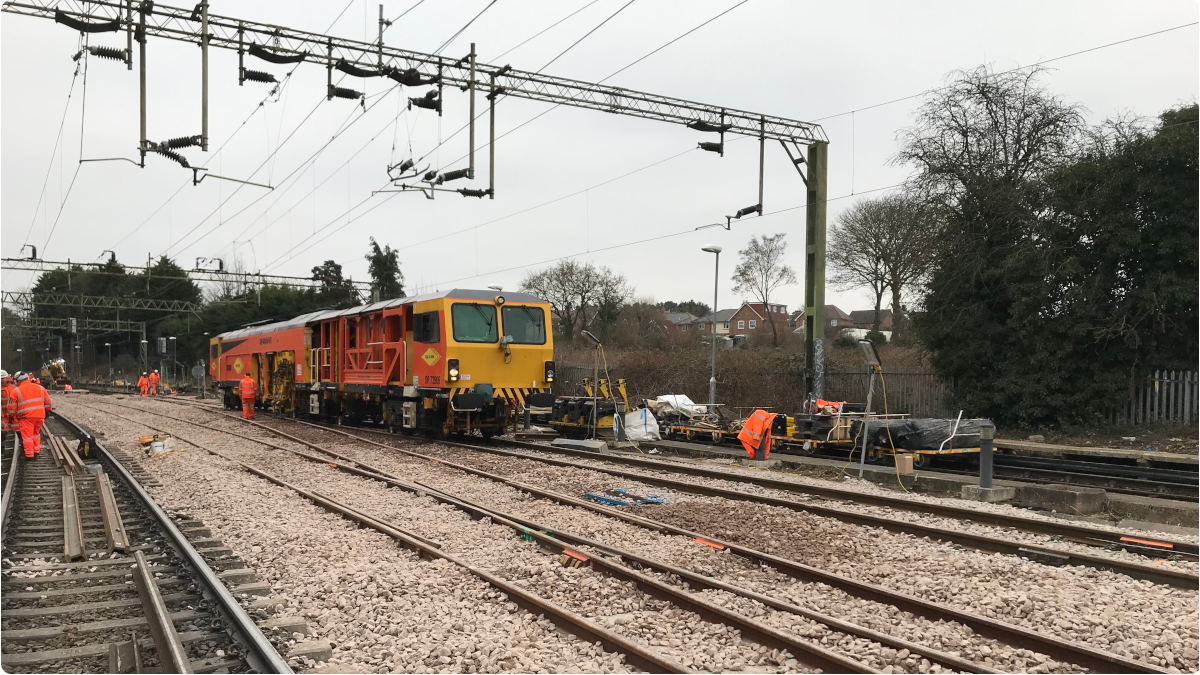
Rail improvement works on track at Bishops Stortford - Rail UK
Rail improvement works on track at Bishops Stortford - Permanent Way
 railuk.com
Rail improvement works on track at Bishops Stortford
Rail improvement works on track at Bishops Stortford
March 2, 2022
A quarter of a mile of track and five sets of points have been renewed at Bishops Stortford to reduce delays and improve reliability of rail services for passengers travelling between London and Cambridge, Stansted and Kings Lynn.
Unfortunately NR aren't keen on using these.Often it is possible to turn back at other places if special arrangements are made for what is a move not normally signalled for passenger trains.
But needs to use some of the special arrangements referred to above that NR aren't keen on including handsignallers and a groundframe operator.Harlow Town is only 5mins normal running time into the possession so providing a half hourly service should not prove insurmountable if that was the constraint.

Dr Hoo
Established Member
It is worth noting that quite a few additional 'turnback' main signals (not shunt/position light subsidiary signals) have been provided in recent years. Smethwick Galton Bridge (Low Level) springs to mind.
Also things like the extended Slow Line platform at Loughborough and additional Platform 3 at Chesterfield were justified very largely on additional flexibility for engineering work and reducing the need for RRBs.
Also things like the extended Slow Line platform at Loughborough and additional Platform 3 at Chesterfield were justified very largely on additional flexibility for engineering work and reducing the need for RRBs.
Falcon1200
Established Member
I will maintain that Christmas Week and one weekend a year is probably enough for 12 route miles and 15 days a year sounds like rather more than what is needed.
On what knowledge of the technical and operational issues do you base that assertion ? Do you think that if the work required could really be done with fewer days of disruption Network Rail would not be bending over backwards to achieve that !
Attempts to use technical detail to shoot down ideas not invented here
When it comes to maintaining a safe and reliable railway technical detail is actually rather important.
- Status
- Not open for further replies.