Trnsprt4Sctlnd
Member
pre-privatisation, individual Ltd companies operated public buses much in the same separated operations you see today, albeit many who remember these days will likely say it was “simply better”.
Between Glasgow City Council and SPT there are separate ideas and voices about what should happen with public transport in the West-Central Scotland area specifcially and it may seem as though there is underlying squabbling over who should take jurisdiction with those public transport services in the future, a separate thread has of course all ready been created on this matter, my honest fear is that both entities want to use this as a stream of revenue, much like the way Edinburgh City Council has used Lothian Buses profits, yet very little to no cash seems to have made it back to the benefit of the local bus service itselfs, with regards to it prioritisation etc.
My view becomes tainted of these authorities when you realise that municipal operators may be able to offer disproportionate advantages that many other areas may miss out on simply because of the higher population in urban areas and the subsequent revenue that can be taken there but also because they still favour private motorists, additionally because many who outlay an urban area often commute to work into a city centre via train, creating something which is disadvantageous to those living rurally and especially as the cost of both bus & especially train usage continues to increase as does the cost of living in general.
With Low Emission Zones bearing down on several cities in Scotland do we think that the current infrastructure including public transport fares will support any further restrictions governement or Local Authorities intend to impose?
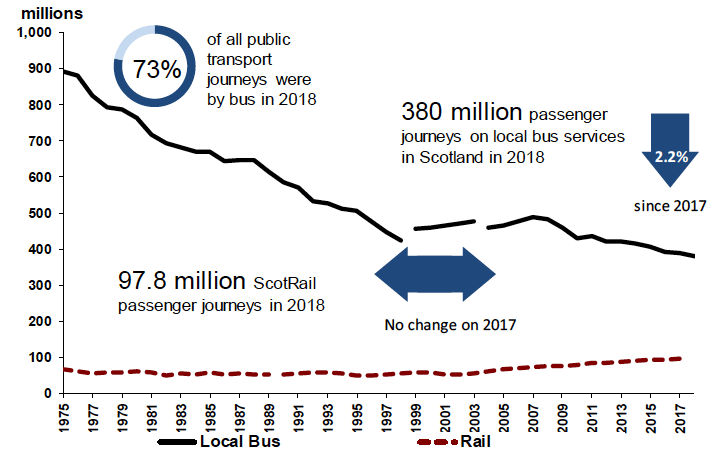
When you look back during the Pre-Privatised era, many of those nationalised & regulated operators were surely bound by better funding giving that all services were regulated of course and that revenue generated was placed back into maintaining sustainability, the current situation within the industry cannot be healthy nor sustainable in the long run for buses to be maintained.
Is the legacy of bus services something that is marked to eventually end?
Discuss.
Between Glasgow City Council and SPT there are separate ideas and voices about what should happen with public transport in the West-Central Scotland area specifcially and it may seem as though there is underlying squabbling over who should take jurisdiction with those public transport services in the future, a separate thread has of course all ready been created on this matter, my honest fear is that both entities want to use this as a stream of revenue, much like the way Edinburgh City Council has used Lothian Buses profits, yet very little to no cash seems to have made it back to the benefit of the local bus service itselfs, with regards to it prioritisation etc.
My view becomes tainted of these authorities when you realise that municipal operators may be able to offer disproportionate advantages that many other areas may miss out on simply because of the higher population in urban areas and the subsequent revenue that can be taken there but also because they still favour private motorists, additionally because many who outlay an urban area often commute to work into a city centre via train, creating something which is disadvantageous to those living rurally and especially as the cost of both bus & especially train usage continues to increase as does the cost of living in general.
With Low Emission Zones bearing down on several cities in Scotland do we think that the current infrastructure including public transport fares will support any further restrictions governement or Local Authorities intend to impose?
When you look back during the Pre-Privatised era, many of those nationalised & regulated operators were surely bound by better funding giving that all services were regulated of course and that revenue generated was placed back into maintaining sustainability, the current situation within the industry cannot be healthy nor sustainable in the long run for buses to be maintained.
Is the legacy of bus services something that is marked to eventually end?
Discuss.