• Our new ticketing site is now live! Using either this or the original site (both powered by TrainSplit) helps support the running of the forum with every ticket purchase! Find out more and ask any questions/give us feedback in this thread!

Do branch lines contribute much financially to the greater network?

Status
Not open for further replies.

Bletchleyite

Veteran Member
Joined
20 Oct 2014
Messages
113,794
Location
"Marston Vale mafia"
It's somewhat worrying how many 150s and 156s there are to replace which have at most a maximum operating life of 7-8 years left, and which really need to begin being withdrawn in 4-5 years. In Scotland there's at least an outline of a plan for how Sprinter replacement by 2030 is going to look. In England it's little more than a shrug of the shoulders.

It could well be that that is the "reckoning of the branch lines" - no more new DMUs, so you can keep anything that can be run with 170s or newer?

Trouble is, only one of the three* proper basket cases under discussion (Barton) is in England. So that's one 15x gone...it's the diesel commuter lines around the Northern cities and Birmingham that are the problem.

* OK, Heysham, but that doesn't require any units unless you were also proposing closure of Morecambe (as the Heysham run is basically** done by missing a round trip to Lancaster out), and if you were that is only one unit.
** Not quite that simple because of through running to Yorkshire but it's essentially that - when there's a Heysham run Morecambe drops from 2tph to 1tph in that hour. It caught me out once!
 
Sponsor Post - registered members do not see these adverts; click here to register, or click here to log in
R

RailUK Forums

Starmill

Veteran Member
Joined
18 May 2012
Messages
27,341
Location
Bolton
It could well be that that is the "reckoning of the branch lines" - no more new DMUs, so you can keep anything that can be run with 170s or newer?

Trouble is, only one of the three* proper basket cases under discussion (Barton) is in England. So that's one 15x gone...it's the diesel commuter lines around the Northern cities and Birmingham that are the problem.

* OK, Heysham, but that doesn't require any units unless you were also proposing closure of Morecambe (as the Heysham run is basically** done by missing a round trip to Lancaster out), and if you were that is only one unit.
** Not quite that simple because of through running to Yorkshire but it's essentially that - when there's a Heysham run Morecambe drops from 2tph to 1tph in that hour. It caught me out once!
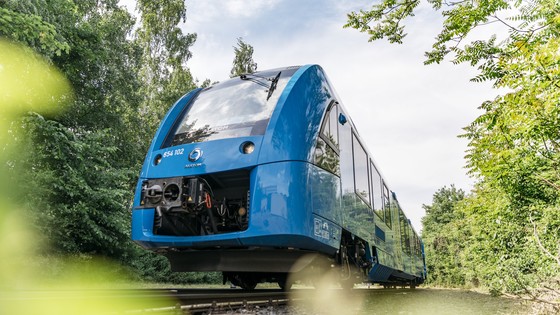
There is a start of a process this December when TransPennine Express take over some of Northern's current 195 work on Manchester Airport - Liverpool Lime Street services, and a requisite number of EMR 156s arrive at Northern (though who knows, their transfer may not be complete by December). But this may well not net release any Northern DMUs because of things like Clitheroe services going up to four car, and the Manchester Airport - Cumbria services may be strengthened to five or six car. It'll certainly be interesting to see.
 

Meerkat

Established Member
Joined
14 Jul 2018
Messages
9,276
Any branch that isnt suitable for a battery train is going to be in trouble if they stick to getting rid of the diesels. It could be the answer to one or the other problem - either the line gets binned or the line is used as a hostage for getting to keep some diesels!
 

Bletchleyite

Veteran Member
Joined
20 Oct 2014
Messages
113,794
Location
"Marston Vale mafia"
Any branch that isnt suitable for a battery train is going to be in trouble if they stick to getting rid of the diesels. It could be the answer to one or the other problem - either the line gets binned or the line is used as a hostage for getting to keep some diesels!

Scotland already has a plan to use hydrogen on the quiet long branches and electrify everything else that isn't battery suitable. This is what England needs to do, but is presently doing nowt.

There may however be some sort of reprieve in the use of biodiesel, I suppose - it's not pollution free but it is close to carbon neutral. I suspect things will end up going this way - DMUs with modern transmissions and low emission engines (i.e. 172, 195-197, FLIRT and converted 170s) continuing to run on "long, thin" routes like the S&C, potentially with battery running into the likes of Leeds and Carlisle, on the basis that biodiesel can be close to carbon neutral and there is nobody there to breathe the particulates in because the lines run through the middle of nowhere where farm equipment and heating homes will be kicking out more for the foreseeable.

It does however make it basically impossible for the railway to play the "green card" against electric buses and even cars.
 

Starmill

Veteran Member
Joined
18 May 2012
Messages
27,341
Location
Bolton
This is what England needs to do, but is presently doing nowt.
I agree that that's an approach which is, from a technology perspective, the most promising at the moment.

Of course the issue is the cost. The UK government is entirely unwilling to put up even a small proportion of the several hundred billion of capital spend on decarbonisation that England currently needs - and of course that also goes for bus replacement as well as rail, but there's a bit more progress there.

The Conservatives will probably never give in on their current 'no money' approach. So the only answer might be to wait for a wholesale change of government.
 

Meerkat

Established Member
Joined
14 Jul 2018
Messages
9,276
Scotland already has a plan to use hydrogen on the quiet long branches and electrify everything else that isn't battery suitable. This is what England needs to do, but is presently doing nowt.

There may however be some sort of reprieve in the use of biodiesel, I suppose - it's not pollution free but it is close to carbon neutral. I suspect things will end up going this way - DMUs with modern transmissions and low emission engines (i.e. 172, 195-197, FLIRT and converted 170s) continuing to run on "long, thin" routes like the S&C, potentially with battery running into the likes of Leeds and Carlisle, on the basis that biodiesel can be close to carbon neutral and there is nobody there to breathe the particulates in because the lines run through the middle of nowhere where farm equipment and heating homes will be kicking out more for the foreseeable.

It does however make it basically impossible for the railway to play the "green card" against electric buses and even cars.
Teeside is the English hydrogen live trial isn't it?
Not convinced at all about biodiesel - I reckon its green credentials will start to kick a proper kicking soon
 

A0

On Moderation
Joined
19 Jan 2008
Messages
7,751
Scotland already has a plan to use hydrogen on the quiet long branches and electrify everything else that isn't battery suitable. This is what England needs to do, but is presently doing nowt.

There may however be some sort of reprieve in the use of biodiesel, I suppose - it's not pollution free but it is close to carbon neutral. I suspect things will end up going this way - DMUs with modern transmissions and low emission engines (i.e. 172, 195-197, FLIRT and converted 170s) continuing to run on "long, thin" routes like the S&C, potentially with battery running into the likes of Leeds and Carlisle, on the basis that biodiesel can be close to carbon neutral and there is nobody there to breathe the particulates in because the lines run through the middle of nowhere where farm equipment and heating homes will be kicking out more for the foreseeable.

It does however make it basically impossible for the railway to play the "green card" against electric buses and even cars.

BIB - this commentator doesn't agree with you


"As a consequence, Network Rail’s Traction Decarbonisation Network Strategy recommends that the non-electrified parts of the network are converted as follows: to electric traction (85%), to hydrogen traction (8%) and to battery traction (5%), calculated by track km. "

For the record the UK's rail network (excl NI) is 9,800 miles of which 1,750 is in Scotland. In terms of electrification 3,300 miles are electrified of which 440 miles is in Scotland.

So Scotland has more unelectrified lines than the rest of the UK - 13% vs 16% - electrifying the Midland Mainline (Harborough - Sheffield), Marylebone - Birmingham and Leeds - Manchester would add 229 miles would lift that to 20%.

Many of the long, rural lines in Scotland won't be electrified - Far North, Fort William - Mallaig, Inverness - Kyle, so hydrogen is rather more pressing for Scotland than it is for the rest of the UK.
 

Bletchleyite

Veteran Member
Joined
20 Oct 2014
Messages
113,794
Location
"Marston Vale mafia"
Teeside is the English hydrogen live trial isn't it?

Quite possibly. Hydrogen works best in places where it won't need much transport (as transporting it, typically by road, causes carbon emissions).

Not convinced at all about biodiesel - I reckon its green credentials will start to kick a proper kicking soon

It's not ideal, but it's better than dead dinosaurs in carbon terms. In particulate and NOx terms it's basically the same as dead dinosaurs.

There are essentially two separate pollution issues caused by internal combustion engines, and they are totally different problems. Carbon is an issue everywhere, but particulates and NOx are only a significant issue in built-up areas, as in the middle of nowhere they disperse and/or potentially land before anyone gets chance to breathe them. This is the basis behind PHEVs (plug-in hybrid electric vehicles) as well. "Air quality" is pretty much wholly about the latter - CO2 doesn't harm those breathing it in smallish quantities.
 

Starmill

Veteran Member
Joined
18 May 2012
Messages
27,341
Location
Bolton
In particulate and NOx terms it's basically the same as dead dinosaurs.
Hydrotreated vegetable oil can in theory be slightly better. It csn also reduce waste by using some waste oils from other industries. But of course that's offset by using land to grow crops for fuel that we really will need to grow food for people to eat.
 

Bletchleyite

Veteran Member
Joined
20 Oct 2014
Messages
113,794
Location
"Marston Vale mafia"
Hydrotreated vegetable oil can in theory be slightly better. It csn also reduce waste by using some waste oils from other industries. But of course that's offset by using land to grow crops for fuel that we really will need to grow food for people to eat.

That's why it could be a solution for a relatively small scale application on rail (i.e. "long, thin" "branch" lines like the S&C, the Heart of Wales and the WHL, Far North and Kyle, with everything else going to either battery or the wires) but not as a means of fuelling everyone's car.
 

Meerkat

Established Member
Joined
14 Jul 2018
Messages
9,276
t's not ideal, but it's better than dead dinosaurs in carbon terms. In particulate and NOx terms it's basically the same as dead dinosaurs.
I was thinking more about the issues about the source of the biodiesel, especially if demand rises rapidly.

Is there any source of hydrogen in the Carlisle area for Settle and Carlisle and Cumbrian Coast?
 

tomuk

Established Member
Joined
15 May 2010
Messages
2,009
In particulate and NOx terms it's basically the same as dead dinosaurs.
Particulates and NOx is a red herring with a suitably equipped 'Euro 6' equivalent diesel, with Adblue etc, the NOx and Particulate emissions are tiny.
 

Bletchleyite

Veteran Member
Joined
20 Oct 2014
Messages
113,794
Location
"Marston Vale mafia"
Particulates and NOx is a red herring with a suitably equipped 'Euro 6' equivalent diesel, with Adblue etc, the NOx and Particulate emissions are tiny.

Yes, true, and no doubt technologies will get even better. But unfortunately most of the DMU fleet is older (some much older), and does have significant NOx and particulate emissions.

Only the Class 195-197 and Stadler fleets are up to spec in this regard, and they are a small minority of the DMU fleet.
 

Falcon1200

Established Member
Joined
14 Jun 2021
Messages
6,608
Location
Neilston, East Renfrewshire
The Conservatives will probably never give in on their current 'no money' approach. So the only answer might be to wait for a wholesale change of government.

Whereupon the incoming administration will discover (as if they didn't already know) that decrying the Government when in opposition is very different from being in power and having to find the money for a multitude of needs, of which the railway is not going to be anywhere near top of the list.....
 

tomuk

Established Member
Joined
15 May 2010
Messages
2,009
Yes, true, and no doubt technologies will get even better. But unfortunately most of the DMU fleet is older (some much older), and does have significant NOx and particulate emissions.

Only the Class 195-197 and Stadler fleets are up to spec in this regard, and they are a small minority of the DMU fleet.
Eminox do a retrofit catalyst\filter that has been trialled on a 159 and a 170. Even on the ancient Cummins on the 159 it reduced Nox emissions by over 70% down to the equivalent of a modern 195.
 

Starmill

Veteran Member
Joined
18 May 2012
Messages
27,341
Location
Bolton
Whereupon the incoming administration will discover (as if they didn't already know) that decrying the Government when in opposition is very different from being in power and having to find the money for a multitude of needs, of which the railway is not going to be anywhere near top of the list.....
There are lots of sensible ways to find additional money in the short term. In the long term, there are lots of sensible tax reforms that frankly should be apolitical. Nobody would try and design what we have now today. That a challenge is highly complex doesn't mean that we cannot do better.

It is always an active choice not to spend money, every bit as much as it is a choice to do so. And that of course applies across the board of public services, not merely transport.
 

MattRat

On Moderation
Joined
26 May 2021
Messages
2,129
Location
Liverpool
Eminox do a retrofit catalyst\filter that has been trialled on a 159 and a 170. Even on the ancient Cummins on the 159 it reduced Nox emissions by over 70% down to the equivalent of a modern 195.
There's also the hybrid MTU unit coming in new 195s, which is being trialled in a 168. If it works, it could easily be rolled out to at least the Turbostars, and maybe even more classes, if they are willing to put the extra work in to make it work.
 

Acfb

Member
Joined
12 Aug 2018
Messages
616
That's because the train service is sort of what the railway is actually there for, rather than exciting corporate rebrandings.

== Doublepost prevention - post automatically merged: ==


In terms of Skye, I can think of a lot of people (myself included) who would rather do the bulk of the journey by train, rather than have to get a coach all the way. Perhaps this is a case where a bus service on skye connecting with the train would work well.

In terms of climate emergency, I'm sure that a less carbon intensive solution will be found for rural railway lines. Keeping diesels on would only be for a few routes that really couldn't operate with an alternative (assuming that this is the case - In only taking @Starmill 's word for it).

In terms of staying costs, your conveniently forgetting the greater numbers of staffed stations on non-rural routes and indeed the greater number of train staff on inter-city routes. Something like the Whitby line really isn't over-staffed, even compared to a bus service.

The alternative to the Rosco's would be the railway opening its rolling stock and running it into the ground once it's value has depreciated.

The Kyle line is an interesting one. I do agree with tbtc that Inverness to Kyle of Localsh or Skye makes more sense by coach although the line does not follow the coach route and provides intermediate links between (admittedly tiny) places such as Plockton and Kyle and Dingwall/Inverness.
 

lachlan

Member
Joined
11 Aug 2019
Messages
1,171
The Kyle line is an interesting one. I do agree with tbtc that Inverness to Kyle of Localsh or Skye makes more sense by coach although the line does not follow the coach route and provides intermediate links between (admittedly tiny) places such as Plockton and Kyle and Dingwall/Inverness.
Indeed, though the intermediate stops served by the train are different to those served by the bus. For example Achnashellach which I've used to go hiking, I don't believe it is served by any other public transport. You could perhaps run a bus across this route but the roads are very small and I doubt it would come close to the comfort of the train.
 

Acfb

Member
Joined
12 Aug 2018
Messages
616
Indeed, though the intermediate stops served by the train are different to those served by the bus. For example Achnashellach which I've used to go hiking, I don't believe it is served by any other public transport. You could perhaps run a bus across this route but the roads are very small and I doubt it would come close to the comfort of the train.

Funnily enough I've actually been to Achnashellach as that was the end point for my DofE Gold hike in 2013. I've also walked past Strathcarron but I've only travelled on the line one stop between between Achnashellach and Achnasheen return as I had already arranged a lift back to Edinburgh and I was picked up on the main road near Achnashellach.
 

lachlan

Member
Joined
11 Aug 2019
Messages
1,171
Funnily enough I've actually been to Achnashellach as that was the end point for my DofE Gold hike in 2013. I've also walked past Strathcarron but I've only travelled on the line one stop between between Achnashellach and Achnasheen return as I had already arranged a lift back to Edinburgh and I was picked up on the main road near Achnashellach.
Your DofE hike sounds much more adventurous than mine.:D

I've also been a passenger in a car on this route to Skye and remember it being pretty rough. The train line is scenic and the portion around the coast near Kyle is spectacular, it beats the road in terms of scenery and comfort, but for folks going all the way to Skye I agree the bus probably makes more sense given it continues to Portree.

On my journey out to Kyle there was a couple who had flown into Inverness and were arranging a taxi to take them from Kyle to Skye so perhaps they valued taking the train over the bus (despite some posters here claiming buses are just as comfortable as trains), or maybe the train timetable just fitted their schedule better than the bus timetable.
 

Bletchleyite

Veteran Member
Joined
20 Oct 2014
Messages
113,794
Location
"Marston Vale mafia"
On my journey out to Kyle there was a couple who had flown into Inverness and were arranging a taxi to take them from Kyle to Skye so perhaps they valued taking the train over the bus (despite some posters here claiming buses are just as comfortable as trains), or maybe the train timetable just fitted their schedule better than the bus timetable.

In the UK, most people value rail travel over bus travel, even if the train was a rattly Class 150 and the bus a fancy executive coach with tables.
 

Greybeard33

Established Member
Joined
18 Feb 2012
Messages
4,335
Location
Greater Manchester
The Kyle line is an interesting one. I do agree with tbtc that Inverness to Kyle of Localsh or Skye makes more sense by coach although the line does not follow the coach route and provides intermediate links between (admittedly tiny) places such as Plockton and Kyle and Dingwall/Inverness.

Indeed, though the intermediate stops served by the train are different to those served by the bus. For example Achnashellach which I've used to go hiking, I don't believe it is served by any other public transport. You could perhaps run a bus across this route but the roads are very small and I doubt it would come close to the comfort of the train.
In respect of the topic of this thread, the financial contribution that users of Plockton and Achnashellach make to the greater network must be infinitesimal! :lol:
 

deltic

Established Member
Joined
8 Feb 2010
Messages
3,720
In respect of the topic of this thread, the financial contribution that users of Plockton and Achnashellach make to the greater network must be infinitesimal! :lol:
It would probably be as cheap to pick them up by helicopter
 

lachlan

Member
Joined
11 Aug 2019
Messages
1,171
In the UK, most people value rail travel over bus travel, even if the train was a rattly Class 150 and the bus a fancy executive coach with tables.
Agreed. Though I think most people are unfairly harsh on buses and coaches, I still feel even the worst trains are nicer to ride in than a coach and I think the general public feel the same.
In respect of the topic of this thread, the financial contribution that users of Plockton and Achnashellach make to the greater network must be infinitesimal! :lol:
Yes, I'm not trying to argue whether or not they contribute financially to the network, but they have a social use and are especially important for non-drivers who whould otherwise be unable to reach these parts of the countryside.
It would probably be as cheap to pick them up by helicopter
But a lot more dangerous and harder to make sustainable in the future!
 
Status
Not open for further replies.

Top