London’s new transport chief could put Crossrail 2 back on the agenda
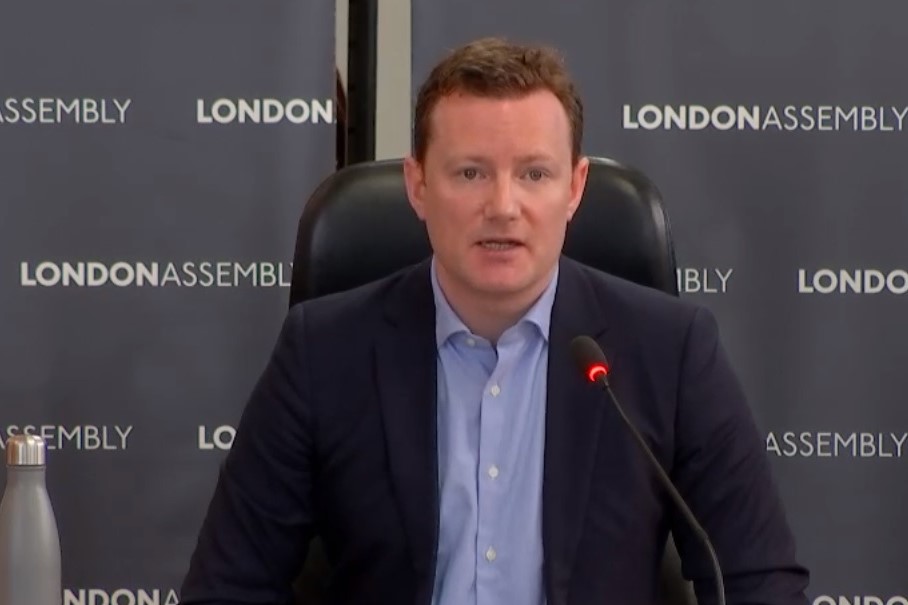
London’s new deputy mayor for transport has outlined his desire to resurrect Crossrail 2 and the Bakerloo Line Extension as he appeared before a London Assembly committee for the first time yesterday.
Seb Dance replaces Heidi Alexander, who stepped down from the role last month, as London mayor Sadiq Khan’s transport chief earlier this month. He told the Confirmation Hearings Committee yesterday that he wanted to see the stalled projects back on the table.
Both schemes – the proposed new link from Hertfordshire to Surrey,and the additional stretch of Tube line from Elephant & Castle to Lewisham – were put on hold earlier in the pandemic as Transport for London (TfL) saw its finances deteriorate.
But Dance said yesterday: “We have to ensure the existing transport system is not only reliable but people also have a sense that we are investing for the future. Projects such as Crossrail 2 and the Bakerloo Line Extension that have had to go back on the shelf because it is impossible to countenance moving forward with them in the current financial situation… if we get long-term funding then those are the kind of ideas I would like to bring back.”
He also backed construction of east London’s controversial Silvertown Tunnel, saying the under-construction 1.4km road crossing of the Thames would allow for 37 extra bus services an hour and play a “huge role” in reducing local congestion.
“Imagine a scenario where public and active transport makes up 80% of journeys in London and all private vehicles are zero emission,” he said. “You still wouldn’t have capacity at Blackwall Tunnel alone to run the cross-transport links [required].”
The former Labour MEP for London said securing long-term funding was his priority as deputy mayor for transport.
“I am not going to pretend it is an easy time [to join], especially having seen the hit to TfL’s finances,” he said. “Funding is the primary challenge; we have a situation where at the peak of the pandemic ridership fell by 95%. There is no longer the £2bn capital funding London used to get to run its transport system; two-thirds of our income is from fare revenue alone, whereas in Paris and New York the majority is from government funding.
“We have had to ask the government for support in the day-to-day management of transport services. We don’t want to have to continue to have to ask government for short-term extensions. It is like pressing the snooze button on the alarm; we all do it sometimes because we can’t face the reality of getting up early but sometimes we have to grasp the nettle. Long-term capital decisions need to be made, we need to give confidence to investors that they can put money into our transport systems and get a return.”
Dance conceded that he had not had a key role to date in running major construction projects.
“In terms of delivery of a major capital project and being directly accountable, no I wouldn’t say there is an obvious example [from my CV] but as with many other briefs I picked up as an MEP, I’m a very fast learner.”
He said that after securing long-term funding, his targets in the role were to reduce carbon emissions, principally by slashing car use and boosting public and active travel, and to ensure TfL’s working relationships were “well managed”.
Dance hinted that more tolls could be introduced on drivers in the capital.
“Going forward, certainly there will be many ideas for road user charging that we will actively consider. There will be a need to look at the long-term application of road user charging. It may well be part of the answer.”
Asked if he would commit to staying in his role to the end of the mayoral term, in 2025, Dance told the committee: “I can give you that commitment 100 per cent. The honour that I feel at being asked to serve the city I was born in and love very deeply is insurmountable – every day I pinch myself that I have this role.”