
• Our new ticketing site is now live! Using either this or the original site (both powered by TrainSplit) helps support the running of the forum with every ticket purchase! Find out more and ask any questions/give us feedback in this thread!

Solving level crossing problems in built up areas through wider urban redevelopment

Status
Not open for further replies.

NotATrainspott

Established Member
Joined
2 Feb 2013
Messages
3,304
The problem: we have towns like Egham:
  • Cut in half by an at-grade railway line, with no easy opportunity to replace the level crossings with bridges or underpasses
  • Level crossings here make a nationally important infrastructure scheme (Southern Rail Access to Heathrow) difficult, as well as general rail service improvements
  • Existing town road and development layout makes a simple bridge or underpass very difficult. Roads and suburban homes are too close to the railway.
  • Located on a major London commuter route, so there is intense demand for housing
  • Little or no land available for more housing. Greenbelt development is very unpopular, and adding more suburban sprawl to outskirts puts too much pressure on small town centre infrastructure (e.g. road widths, parking at train station.
Is there a solution that could cover all of this in one go?

NR or GBR or whatever body could solve a lot of these problems in one fell swoop if they could use compulsory purchase powers to comprehensively redevelop the town centre around the railway station.

I don't just mean buying a few slivers of land near the railway to deliver some incremental improvement. I mean buying up entire streets next to the railway, knocking them down, and building something better to replace them.

In Egham's case, your best bet at bridging over the railway would be to start the road ramp some distance to the north, and reach as far as the roundabout on the southern side. A simple bridge like this would be incompatible with the housing nearby. Even if there were enough width to build the bridge as well as access roads to the existing properties, they'd be blighted by the massive flyover right on their doorstep.

Doing a much more comprehensive development solves this problem. The places where fixing the level crossings will make the most difference will be the places where land values are highest, and so there is the most profit to be made in building large volumes of new housing.

It's easy for new builds to put the main entrance on a different level. The redeveloped land around the station would mean the streets would end up raised by a few metres to gently clear the railway. Once complete, the redevelopment could look entirely natural, as if there were always a hill there. The back gardens of the replacement properties could still be at the original ground level, below the street. There are plenty of examples of very desirable housing (e.g. in the Edinburgh New Town) built on hills where the back gardens are sometimes several storeys beneath the front door.

Parking could be kept on the natural ground level, but completely decked over to provide nice pedestrianised streets.

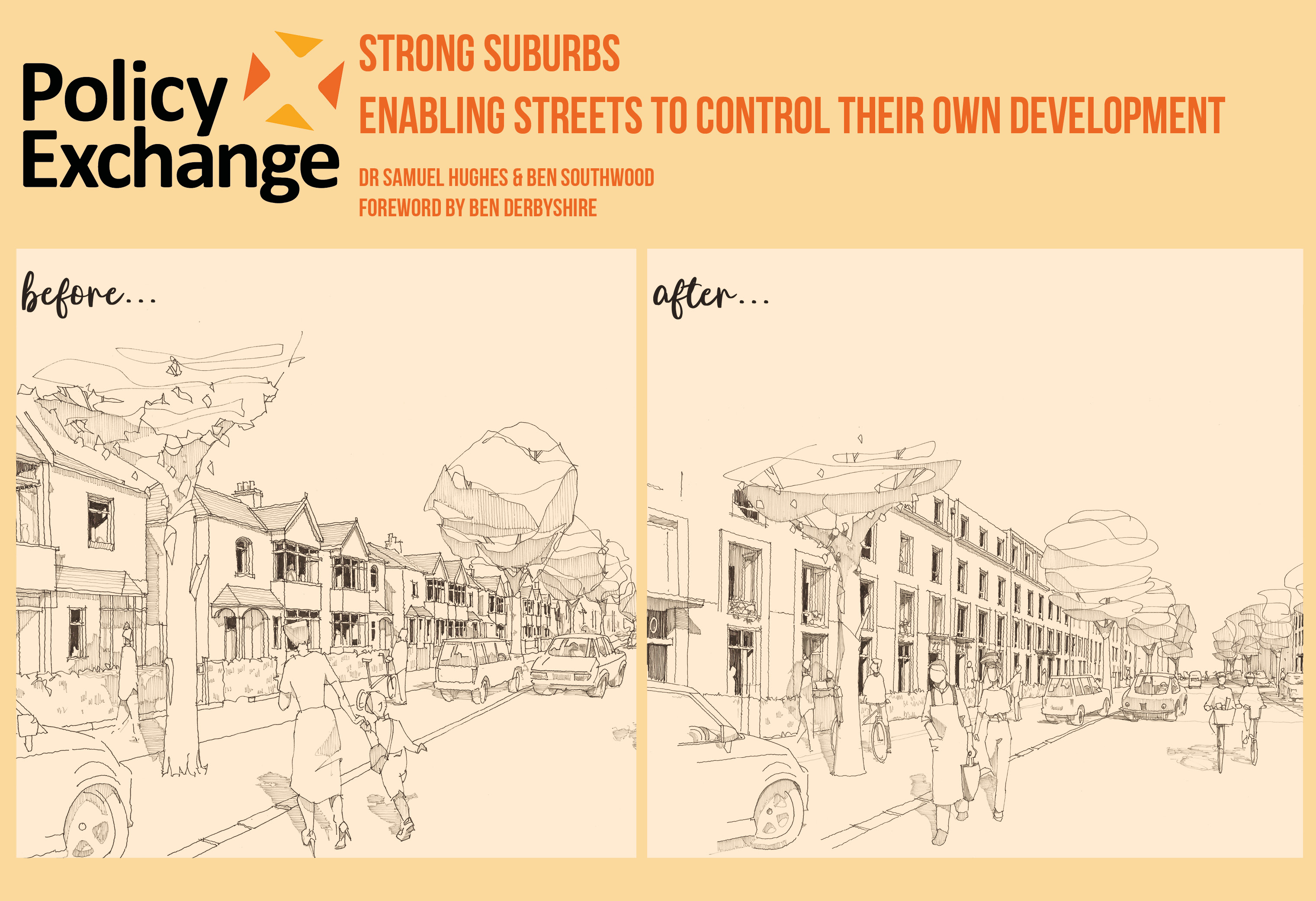
There's no way we can increase the supply of housing without building on the greenbelt unless we start considering schemes like this, to redevelop existing inhabited areas. We're running out of single big brownfield plots. Some think tanks are already starting to propose policies on these lines: Let streets vote to ‘build beautiful’ and create post-Covid housing boom, says Policy Exchange's new report. Having the rail operator kickstart these schemes seems like a very sensible idea, as that's where the most regional and national benefit could be had.
 
Sponsor Post - registered members do not see these adverts; click here to register, or click here to log in
R

RailUK Forums

Bletchleyite

Veteran Member
Joined
20 Oct 2014
Messages
113,391
Location
"Marston Vale mafia"
A quick reply would be "this isn't China" - compulsory purchasing housing to build more housing is just not likely to happen because people will not tolerate it. Even where it's absolutely necessary (e.g. a couple of tower blocks in MK which have structural and fire safety problems) it is not a smooth process.

As to this:

pe.jpg

Comparative picture of 1930s semis and new block of flats from the article linked above

...the first picture is beautiful, the second picture is not.

To be honest I think economic changes are the best solution - the South East is crowded, whereas there are plenty of towns away from there which have near-derelict housing because people don't live there because there isn't enough work.
 

Ken H

Established Member
Joined
11 Nov 2018
Messages
6,718
Location
N Yorks
why not bite on the bullet and build a tunnel to replace the railway. nice linear urban park on the top. cost a few £££ but the benefits would be quite large.
 

75A

Established Member
Joined
31 Mar 2021
Messages
2,043
Location
Ireland (ex Brighton 75A)
A quick reply would be "this isn't China" - compulsory purchasing housing to build more housing is just not likely to happen because people will not tolerate it. Even where it's absolutely necessary (e.g. a couple of tower blocks in MK which have structural and fire safety problems) it is not a smooth process.

As to this:

pe.jpg

Comparative picture of 1930s semis and new block of flats from the article linked above

...the first picture is beautiful, the second picture is not.

To be honest I think economic changes are the best solution - the South East is crowded, whereas there are plenty of towns away from there which have near-derelict housing because people don't live there because there isn't enough work.
Compulsory purchase to build a White Elephant called HS2 is ok though.
As is moving ancient woodlands etc
 

NotATrainspott

Established Member
Joined
2 Feb 2013
Messages
3,304
A quick reply would be "this isn't China" - compulsory purchasing housing to build more housing is just not likely to happen because people will not tolerate it. Even where it's absolutely necessary (e.g. a couple of tower blocks in MK which have structural and fire safety problems) it is not a smooth process.

As to this:

pe.jpg

Comparative picture of 1930s semis and new block of flats from the article linked above

...the first picture is beautiful, the second picture is not.

To be honest I think economic changes are the best solution - the South East is crowded, whereas there are plenty of towns away from there which have near-derelict housing because people don't live there because there isn't enough work.

The 'move people out of the South East' idea doesn't work in reality. There's no fundamental reason why the South East couldn't handle more people. The main problem in many towns is that existing desirable areas are not set up to grow to handle new people. By building new housing only on farmland on the edge of a town, the town ends up being wrongly proportioned. Sustainable urban areas need to get denser in the middle.

Also, the drawing of the nice row of semis is one thing. In reality, most of these suburbs have been mangled over the years with poor architectural decisions. There are lots of 4 bedroom family houses where housing cost pressures mean grown-up children end up needing to stay at home, with their own car. That means the streets are full to the brim with cars and the lovely original front gardens have been paved over to squeeze in a few more parking spaces.

Then, you have the horrors of people over-extending their houses. Plenty of semis have suffered horrible hip-to-gable conversions which mean they're no longer symmetrical. Roofs across the south east of England are groaning under the pressure of permitted development-authorized ungainly dormers and side return extensions.

Add to that the semis which have ended up being illegally subdivided into individual bedsits (sometimes dividing a front room in two at the window!) because of housing pressures, and you can't really claim suburban-style housing is actually working in a lot of areas. Minor modifications are fine, but there comes a point when it's more efficient to tear down the street and replace it with housing types which are actually suited for the market.

When you have a larger area to redevelop, you have a lot more flexibility to do it right without costing the earth. A larger project has better economies of scale, meaning that decorative touches are more economic (e.g. having a factory cranking out nice brick facades with traditional-style lintels).

why not bite on the bullet and build a tunnel to replace the railway. nice linear urban park on the top. cost a few £££ but the benefits would be quite large.

In this case, there's nothing wrong with the railway. Moving the railway to suit the urban area means spending huge amounts of money for little gain. Changing the urban area to better suit the railway could actually be profitable.
 

option

Member
Joined
1 Aug 2017
Messages
639
A quick reply would be "this isn't China" - compulsory purchasing housing to build more housing is just not likely to happen because people will not tolerate it. Even where it's absolutely necessary (e.g. a couple of tower blocks in MK which have structural and fire safety problems) it is not a smooth process.

As to this:

pe.jpg

Comparative picture of 1930s semis and new block of flats from the article linked above

...the first picture is beautiful, the second picture is not.

To be honest I think economic changes are the best solution - the South East is crowded, whereas there are plenty of towns away from there which have near-derelict housing because people don't live there because there isn't enough work.


placemakingeastleigh2resize-20160718040947816.jpg

What's wrong with this?
 

NoRoute

Member
Joined
25 Nov 2020
Messages
504
Location
Midlands
Is there a solution that could cover all of this in one go?

NR or GBR or whatever body could solve a lot of these problems in one fell swoop if they could use compulsory purchase powers to comprehensively redevelop the town centre around the railway station.

Surely a much cheaper solution and one far less disruptive to local communities would be to get Network Rail and the wider rail industry to improve the poor design of level crossings, so that they are safer and less of a problem?

Look at that specific example, there's a pedestrian footbridge, which is good but it uses steps without any ramps so the disabled and those with mobility issues can't easily use it, those on bicycles or parents with push chairs can't easily use it either, yet it looks quite possible to put a ramped footbridge in the space available by extending it at either end. With a wider ramped bridge, it should be quite possible to then direct foot traffic via the bridge rather than the level crossing, closing the foot path over the crossing, reducing risk to pedestrians using the level crossing.

Then the road traffic. With level crossings recognized as one of the biggest safety risks on the railway, you might think Network Rail and DfT would have directed all their engineering ability at minimising the risk, but the designs are awful. Firstly the signage and traffic light designs are bad, the road network uses the standard 3 colour traffic light which every driver encounters every day and understands automatically without thinking, yet level crossings use what is by comparison an unusual light which many drivers struggle to understand - the lack of a green aspect indicating it is safe to cross, the use of flashing red lights when flashing lights on the road network are warnings rather than instructions, and flashing reds not used anywhere else on the road network. A number of studies have flagged up these issues and recommended a change to regular traffic lights, but nothing gets done.

Where is the hashed box on the level crossing? Given the importance of safety, why does no one maintain the road markings to make it clear never to wait on the tracks?

The problem with level crossings sits more with the railways, once they've got their house in order and taken improvements to the limit of what's possible, rather than the bare minimum, maybe then we should start start to consider demolishing parts of the town.
 

Bletchleyite

Veteran Member
Joined
20 Oct 2014
Messages
113,391
Location
"Marston Vale mafia"
View attachment 100377

What's wrong with this?

To be honest I think those are sow-ugly, certainly compared with well-maintained 1930s semis, but obviously beauty is in the eye of the beholder.

More importantly than that is that compulsory purchase to knock down freehold houses to build more houses is not something that is going to be acceptable in the UK. This isn't China.
 

John Webb

Established Member
Joined
5 Jun 2010
Messages
3,768
Location
St Albans
....Then the road traffic. With level crossings recognized as one of the biggest safety risks on the railway, you might think Network Rail and DfT would have directed all their engineering ability at minimising the risk, but the designs are awful. Firstly the signage and traffic light designs are bad, the road network uses the standard 3 colour traffic light which every driver encounters every day and understands automatically without thinking, yet level crossings use what is by comparison an unusual light which many drivers struggle to understand - the lack of a green aspect indicating it is safe to cross, the use of flashing red lights when flashing lights on the road network are warnings rather than instructions, and flashing reds not used anywhere else on the road network. A number of studies have flagged up these issues and recommended a change to regular traffic lights, but nothing gets done.
The 'Wig-wags' are in use in many more places than level crossings - outside many fire, police and ambulance stations for a start. They have been around for decades and any driver who doesn't understand them ought not, in my opinion, to be driving on our roads. They are legally more powerful than ordinary traffic lights in that even emergency vehicles 'blue-lighting' must not pass them, neither can a police constable authorise you to pass one that is working.
Where is the hashed box on the level crossing? Given the importance of safety, why does no one maintain the road markings to make it clear never to wait on the tracks?
I'd agree with you on this point. Are box markings the responsibility of the local highways or of NR?
 

Falcon1200

Established Member
Joined
14 Jun 2021
Messages
6,556
Location
Neilston, East Renfrewshire
Firstly the signage and traffic light designs are bad, the road network uses the standard 3 colour traffic light which every driver encounters every day and understands automatically without thinking

and which motorists ignore day in and day out, and which Emergency Service vehicles pass at red, and which Police Officers are authorised to allow traffic to pass at red, and which (where I live anyway) fail, go blank and do not get repaired for days. That is why LC road traffic signals are different.

The problem with level crossings sits more with the railways, once they've got their house in order and taken improvements to the limit of what's possible, rather than the bare minimum

What improvements to the 'limits of what's possible' do you envisage ? The railway is fully aware of the problems of level crossings, in particular the safety risk due, almost but not totally, to road user misuse, and has been making huge strides forward, eg by replacing LCs with bridges (such as Ufton Nervet) although this is hugely expensive and in many locations such as the one discussed in the OP utterly impractical, upgrading LCs to OD operation, and closing them.
 

zwk500

Veteran Member
Joined
20 Jan 2020
Messages
18,526
Location
Northampton
I know that you'll say it's funded by selling the houses back at the end, but where do you get the money from in the first place? The rail industry is as skint as every other corner of the treasury, and buying up more than 100 houses in Egham is likely to not come very cheap, especially once compulsory purchase gets involved.
 

stuu

Established Member
Joined
2 Sep 2011
Messages
3,766
The Level crossing removal project in Melbourne is enormous, they are spending billions removing 75 crossings. Many are in tight urban situations comparable to Egham or elsewhere. One of the most impressive projects involved digging a trench several kms long and rebuilding 2 stations. They did this in 35 days by throwing resources at it, obviously with a lot of preparation beforehand. Anything is possible with political will and a big pile of money
 

Meerkat

Established Member
Joined
14 Jul 2018
Messages
9,276
Comparative picture of 1930s semis and new block of flats from the article linked above

...the first picture is beautiful, the second picture is not.
Beautiful? What’s wrong with the second one. The plan in that document is a good one - the density of our cities is terrible, miles and miles of thirties semis with big gardens. Much better to increase the density than build on more land, and improves the viability of public transport.
There's no fundamental reason why the South East couldn't handle more people.
Apart from the lack of water, and the creaking roads, power, and sewage infrastructure!
 

zwk500

Veteran Member
Joined
20 Jan 2020
Messages
18,526
Location
Northampton
The Level crossing removal project in Melbourne is enormous, they are spending billions removing 75 crossings. Many are in tight urban situations comparable to Egham or elsewhere. One of the most impressive projects involved digging a trench several kms long and rebuilding 2 stations. They did this in 35 days by throwing resources at it, obviously with a lot of preparation beforehand. Anything is possible with political will and a big pile of money
Being able to dig that trench requires being able to make sure the houses don't backfill it before you've lined the sides. At Egham the buildings are right on the boundary edge, and it's an alluvial floodplain so I'd guess soil stability isn't exactly wonderful. Also you try proposing closing that line for 35 days and watch it go down with local residents like a lead balloon.
 

stuu

Established Member
Joined
2 Sep 2011
Messages
3,766
I was giving an example of what can be done, given enough resources, and I imagine you do the piling before digging out the trench... but I agree going below ground in that area so close to the Thames is a bad idea. So elevate the railway instead. That wouldn't go down well, but it would be possible, with some closures and single line working
 

zwk500

Veteran Member
Joined
20 Jan 2020
Messages
18,526
Location
Northampton
I was giving an example of what can be done, given enough resources, and I imagine you do the piling before digging out the trench... but I agree going below ground in that area so close to the Thames is a bad idea. So elevate the railway instead. That wouldn't go down well, but it would be possible, with some closures and single line working
It would have exactly the same problem - you are putting a lot of weight on unstable soil. You would also need to climb high enough to clear the standard road clearance + margin + Bridge deck width. And keeping one track open while you build a bridge alongside is a technique that belongs in the BFI archives of the '55 plan, and simply isn't acceptable today.

The solutions I can see are to either hope for a large enough developer to come along and buy up enough properties around the station, then twist their arm in the planning process, or to build a new bridge out of town and close the LX to vehicular traffic. Then you might be able to squeeze a footbridge in.
 

NoRoute

Member
Joined
25 Nov 2020
Messages
504
Location
Midlands
The 'Wig-wags' are in use in many more places than level crossings - outside many fire, police and ambulance stations for a start. They have been around for decades and any driver who doesn't understand them ought not, in my opinion, to be driving on our roads. They are legally more powerful than ordinary traffic lights in that even emergency vehicles 'blue-lighting' must not pass them, neither can a police constable authorise you to pass one that is working.

Previous studies into the safety of rail crossings have found that many drivers do not understand them, that's just how it is, they should, but they don't. And that is not really surprising because there is substantially less frequent reinforcement, drivers encounter 3-colour traffic lights every day so everyone knows what the red light means. They don't encounter wig-wags everyday, it might be months or years, there's no reinforcement, which is shown by the fact the authorities require a sign telling drivers to stop if lights show - the authorities know that the driver's response is unlikely to be automatic. We don't have 'Stop at the red light' signs on every road traffic light because it isn't necessary, the response is known and automatic.

Report on level crossing safety and human factors, about 10 years old now but still interesting:

101 A study carried out in 1996 by the Transport Road Research Laboratory on vehicle driver behaviour at level crossings analysed 419 witness statements taken by the BTP from vehicle drivers, most of who had driven past the road traffic light signals when operating. It found that 55% of them passed the lights deliberately because they were unwilling to stop (a violation). When questioned as part of the research, the same study found that only 54 out of 100 vehicle drivers, who had crossed when the lights were flashing, could correctly describe the meaning of the flashing red lights, and only 13 out of 100 vehicle drivers correctly understood what was meant by the amber light.

126 The research published in 1996 (paragraph 101) suggests that some vehicle drivers do not understand the meaning of the indications given by the road traffic light signals. This is more likely to be the case with vehicle drivers who are unfamiliar with level crossings. These drivers may fail to respond to the road traffic light signals correctly. The study identified the following error causing mechanisms relating to this:
the vehicle driver misinterprets the amber light to mean proceed with caution;
the vehicle driver misinterprets the flashing red lights to mean proceed with caution; and
the vehicle driver wrongly believes that the road lights continue to display for a period of time after a train has passed.

127 The DfT reported the emerging findings from the more recent research into the awareness of the meaning of traffic signs (including the flashing lights at level crossings), which was still ongoing at the time of publication (paragraph 88). When the respondents who took part in the study were asked what they thought was meant by the wig-wag signals (figure 2), which had been set up at a tunnel portal, 80% of them knew that they mean stop and 12% of them thought they mean caution. The proportion of respondents correctly understanding the meaning of the flashing red lights rose to 91% when asked whether they could proceed past the flashing lights.

These figures are pretty awful, 91% understanding the signal sounds good but it means 9% don't understand it, which when applied to millions of motorists interacting with level crossings is far too many. I can't believe the figures for regular 3-colour traffic lights could be anywhere near that bad, you'd expect 99.9...% understanding of a steady red light.
 
Last edited:

zwk500

Veteran Member
Joined
20 Jan 2020
Messages
18,526
Location
Northampton
Previous studies into the safety of rail crossings have found that many drivers do not understand them, that's just how it is, they should, but they don't.
This is depressing. You'd have thought flashing red lights would be pretty universal for 'STOP NOW, DO NOT ENTER'. I wonder how many did actually know, but claimed ignorance to the BTP hoping to get a slightly more lenient ticket.
 

NoRoute

Member
Joined
25 Nov 2020
Messages
504
Location
Midlands
This is depressing. You'd have thought flashing red lights would be pretty universal for 'STOP NOW, DO NOT ENTER'. I wonder how many did actually know, but claimed ignorance to the BTP hoping to get a slightly more lenient ticket.
Hang on though, where else on the road network do you encounter flashing red lights?

And when you do encounter flashing lights on the road network what do they mean?
 

zwk500

Veteran Member
Joined
20 Jan 2020
Messages
18,526
Location
Northampton
Hang on though, where else on the road network do you encounter flashing red lights?
Flashing Red lights are present outside Ambulance/Fire Stations and at Swing bridges. There's also a few cases of them around airports, I think (Certainly one in the Scottish Islands where the road crosses the runway itself).
And when you do encounter flashing lights on the road network what do they mean?
A flashing amber is the most common one at pedestrian crossings, which of course means proceed if there isn't a pedestrian still crossing (or about to dash in front of you). The only other flashing lights on the road network I can think of are emergency blues, Police red 'Stopped' warning lights and amber beacons around hazards (slow moving traffic/roadworks).

But importantly, the Level Crossing amber is steady, not flashing. And a steady amber at all traffic lights means 'Stop unless it would be unsafe'.
 

NoRoute

Member
Joined
25 Nov 2020
Messages
504
Location
Midlands
Flashing Red lights are present outside Ambulance/Fire Stations and at Swing bridges. There's also a few cases of them around airports, I think (Certainly one in the Scottish Islands where the road crosses the runway itself).
So only on crossings which can be very rare, so many drivers do not encounter them frequently. Unlike steady red stop lights which they encounter every day.
A flashing red light is rarely encountered, you can go months or years between seeing one.
A flashing amber is the most common one at pedestrian crossings, which of course means proceed if there isn't a pedestrian still crossing (or about to dash in front of you). The only other flashing lights on the road network I can think of are emergency blues, Police red 'Stopped' warning lights and amber beacons around hazards (slow moving traffic/roadworks).

But importantly, the Level Crossing amber is steady, not flashing. And a steady amber at all traffic lights means 'Stop unless it would be unsafe'.
Zebra crossing - proceed with caution if no one crossing or waiting to cross. Pelican crossing - proceed with caution if no one crossing. Obstacles or obstructions - proceed with caution around hazard. Flashing lights = proceed with caution in every other situation.
 

Meerkat

Established Member
Joined
14 Jul 2018
Messages
9,276
I have sat in the long queue for Reigate level crossing a few times and thought someone should really build a bridge under the railway as part a major redevelopment. Property prices round there mean you could probably make it pay, and its not exactly chocolate box village round there!
 

Bald Rick

Veteran Member
Joined
28 Sep 2010
Messages
35,817
NR or GBR or whatever body could solve a lot of these problems in one fell swoop if they could use compulsory purchase powers to comprehensively redevelop the town centre around the railway station.

The railway cannot use compulsory purchase powers to buy property for redevelopment, unless it is directly required for the transport scheme.

They did this in 35 days by throwing resources at it, obviously with a lot of preparation beforehand. Anything is possible with political will and a big pile of money

I know some of the team that managed this work. It took years, not 35 days. The 35 days was when the line was closed - a bit like how Werrington Junction has taken 3 years but the line was shut for 9 days.


Previous studies into the safety of rail crossings have found that many drivers do not understand them, that's just how it is, they should, but they don't

Then the drivers need to read their Highway Code.


Report on level crossing safety and human factors, about 10 years old now but still interesting:
https://assets.publishing.service.g...0241000167/R122011_110728_AOCLs_Class_Inv.pdf

This is about AOCL crossings, the “O” stands for “Open”. Almost all of these have had barriers fitted.

Hang on though, where else on the road network do you encounter flashing red lights?

Every motorway.
 
Last edited:

gingertom

Established Member
Joined
19 Jun 2017
Messages
1,335
Location
Kilsyth
Certainly one in the Scottish Islands where the road crosses the runway itself.
It's at Sumburgh on Shetland. The lights also have CCTV cameras to enforce compliance and woe betide anyone who passes them whilst showing. Similar at Gibraltar, although there the road is gated and manually controlled because of the volume of traffic, both vehicular and foot. The persons controlling the gates give the all clear to the control tower once the runway is clear, only then can an aircraft be instructed to make its move.
 

NotATrainspott

Established Member
Joined
2 Feb 2013
Messages
3,304
The railway cannot use compulsory purchase powers to buy property for redevelopment, unless it is directly required for the transport scheme.

I know, and that's a problem. It may not be the railway operator itself that would manage a big scheme like this, but they'd have a fairly large part to play in it.

Treating CPO as an unachievable last resort option is not going to be sustainable in future. We are going to need to redevelop areas of desirable, owner-occupied housing. We can dress everything up as a matter of local democracy and so on, but when push comes to shove, the legal powers need to exist to force people off their land in return for reasonable compensation. Without that power, the whole idea collapses as it is rational for property owners to hold out for higher and higher offers, as they know the whole scheme depends on their property sale.

In a case like Egham, there can be benefits to a scheme like this that extend beyond the local area and aggregate housing supply. That means larger regional or national bodies can justify getting involved.

This isn't as much a railway problem as a wider society problem, but cases like this seem to bring together a lot of different factors that make it relevant from a railway perspective.

The Melbourne project seems to make more sense when there are so many level crossings. My Egham example really just needs a single area of redevelopment around the station to provide a single bridge. If there are miles and miles of level crossings, then it'll probably be cheaper to rebuild the railway to be grade separated than to redevelop mile upon mile of property alongside it.
 

HSTEd

Veteran Member
Joined
14 Jul 2011
Messages
20,320
So instead of boring a tunnel or digging a trench for a couple of kilometres your solution is to tear down half the town and rebuild it?

An Alameda corridor style trench is surely a better option, let alone going whole hog for a Barcelona style single bore metro line.
In a case like Egham, there can be benefits to a scheme like this that extend beyond the local area and aggregate housing supply. That means larger regional or national bodies can justify getting involved.

There is no need to resort to massive property expropriation to build more housing.

The state just has to loosen the garotte it places on planning permissions to restrict the housing supply.

The answer is not some massive clearance programme - it is a 21st Century Super Milton Keynes
 
Last edited:

Bald Rick

Veteran Member
Joined
28 Sep 2010
Messages
35,817
The Melbourne project seems to make more sense when there are so many level crossings.

They also had a lot of space. When I met the Melbourne guys in London, and showed them how close the railway was to housing, they said things like “Jeez, Bruce*, when they complain back home about being close to the line, we should bring them here!”

*not his real name
 

NoRoute

Member
Joined
25 Nov 2020
Messages
504
Location
Midlands
Then the drivers need to read their Highway Code.
Generally the designer accepts some responsibility for how users interact with their product, if a significant number of users do not understand the meaning of a safety critical sign or signal light, then 'read the Highway Code' isn't an adequate response, blaming the user is less accepted now than 50+ years ago. Theres a duty on the designer to consider the quality of their design, aiming for lights which are unambiguous and universally understood is a better response.
This is about AOCL crossings, the “O” stands for “Open”. Almost all of these have had barriers fitted.
The points made relate to signage and traffic lights which are the same and still apply. The presence or otherwise of barriers doesn't change user understanding of the lights.
Every motorway.
Ahh yes, the red flashing lights for lane closures, which are also not very well adhered to or understood. Though interesting to note that even the motorways don't use just red flashing lights, they use a large red 'X', presumably because the designers thought the red flashing lights alone weren't sufficiently unambiguous.
 
Status
Not open for further replies.

Top