• Our new ticketing site is now live! Using either this or the original site (both powered by TrainSplit) helps support the running of the forum with every ticket purchase! Find out more and ask any questions/give us feedback in this thread!

Vehicle History - The MCW Metrobus

Status
Not open for further replies.

Strathclyder

Established Member
Joined
12 Jun 2013
Messages
3,837
Location
Clydebank
When I relocated to Scotland in 1998, I recall that First Glasgow's Possilpark garage had some Metrobuses, which were mainly dedicated to the Inner Circle 89/90 at the time.

In August 2000 when Possilpark closed, they were transferred to Parkhead, still mainly on the 89/90 alongside with the Volvo Citybuses making an appearance (Possilpark also had Volvo Ailsas that appeared on the 89/90). The Metrobuses seemed to have disappeared in 2002 when Parkhead had a fleet of Optare Solo midibuses (not a minibus and not a single decker, somewhere in between size wise) that became a staple on the 89/90 for a good while.
Apart from late in their lives in the First era (and barring examples transferred to other divisions; a couple G-OGDs ended up in Manchester if I recall correctly), Possil always was the type's main base within GGPTE/Strathclyde/First Glasgow, right up until the depot's closure.

I think most of the PTEs took them, some as experimental (TWPTE) or in greater numbers. Oddly, Strathclyde, Merseyside and West Yorkshire took them, standardised on other models, and then took quite late batches again.
In Greater Glasgow PTE/Strathclyde's case....

The first 5 Metros arrived fairly early on, MB1-5 (GGA 750-754T) appearing in the summer of 1979 as something of a trial period pending more purchases. At this time, the Atlantean was still very much the vehicle of choice for the PTE in terms of new vehicle purchases, which would be the case until the last 'LA' entered service in late 1981. It wouldn't be until early 1982 - Greater Glasgow PTE had given way to Strathclyde PTE by this time - when more Metros arrived, in the shape of MB6-20 (EUS 101-115X). These were unique within Strathclyde as being the only Metros with Alexander R-Type bodywork. Why they were specified as such I don't know; I presume it was to standardize with the large number of 'A-Class' Ailsas that had entered service by this time.

Another year would pass before more were purchased: MB21-35 (KGG 162-171Y - MB21-30 & EUS 309-313Y - MB31-35) arrived in early 1983; 10 more (A730-739 RNS - MB36-45) following in October/November that same year. It would be nearly 6 years before the next & final batch arrived, the aforementioned G-OGDs (G384-408 OGD - MB46-70) around which the warranty/spare parts issues swirled. With their original F-plates being assigned to B10M Citybuses as a result of the order being downsized in light of MCW's uncertain future, they finally entered service in August 1989 on the G-plates.

As far as I can work out, all of Strathclyde's Metros were standard-issue Gardner/Voith affairs; am open to be corrected there if need be.

London had a batch of 22(?) with Cummins engines. Did many others have Cummins engines? The engine became common later in Olympians and Lynx and generally they went like the clappers.
Those 22 (M1084-1105) were new to Brixton in Nov. 1984, but spent the majority of their careers at Croydon, their Cummins L10 powerplants coming in handy for the long, hilly routes out to the south, the 130 and 466 among them. A swathe was cut through them when Tramlink opened, but a handful were retained for the remaining rump of the 130; most finished their London careers as trainers. One of the pair of Mk2 Metros LT bought as part of the Alternative Vehicle Evaluation (AVE) trials - M1442 - also had a Cummins L10 & spent it's entire career working out of Stockwell.

London aside, Northern & Manchester each took a number of Cummins-powered Metros as noted above. Heading overseas, Kowloon Motor Bus (KMB) of Hong Kong had a large number of Cummins-powered examples of both the standard twin-axle and tri-axle Super Metrobus varieties. There may have been others, but not 100% sure.

I believe this was indeed the case. The Metrobus order was reduced by half due to the uncertainty over MCW's future with the balance changed to Citybuses. Ironically some of these Citybuses had G-OGD registrations following on from the final Metrobus, MB70.
Indeed, these were AH24-31 (G409-416 OGD). Goes without saying that Volvo (and Alexander of course) did rather well out of the uncertainty surrounding MCW at that time. Strathclyde wasn't complaining though, given how quickly the AHs endeared themselves to drivers & passengers alike. But that's a thread for another time. ;)
 
Last edited:
Sponsor Post - registered members do not see these adverts; click here to register, or click here to log in
R

RailUK Forums

Strathclyder

Established Member
Joined
12 Jun 2013
Messages
3,837
Location
Clydebank
I seem to recall MB44/45 had Cummins engines.
Interesting; if that were indeed the case, I presume the reason was to compare with the standard Gardner option. Of course - presumably for reasons of standardization - Strathclyde ended up sticking with Gardner for their last Metro order.
 

busesrusuk

Member
Joined
19 May 2020
Messages
418
Location
London
As mentioned above, all PTE's took Metrobuses. Tyne & Wear only bought a small batch of 5 which moved on to LT when they were hoovering up a motley collection of secondhand Metrobuses primarily for Potters Bar Garage to turn that operation into a low cost unit. This one garage ended up with examples from T&W, WYPTE (two Alexander bodied ones) and the majority of the GMPTE 5001-5010 batch ( IIRC I don't think they took all 10).

These buses, as well as the T&W examples, were effectively built to LT mechanical standard (very early production buses) with hydraulic brakes as opposed to air brakes that were fitted to the vast majority of deliveries outside of London. Ironically a number of the SYPTE early dual door examples ended up on LRT tendered services, mainly with Grey Green. This batch of buses were unique as they had the centre exit further forward than all other dual door Metrobuses built. When withdrawn by SYPTE they were spread far and wide with a number ending up in Hong Kong.

Despite their love for the Metropolitan, Leicester only took two, two door examples whilst others who bought one each were Derby and Tayside. Another late convert to the type was Ensignbus who bought (I think) 16 MkII's towards the end of production as well as numerous secondhand examples for LRT work.

Another NBC company to buy new Metrobuses was Yorkshire Traction who took the only low height MCW bodied examples.
 
Joined
25 Jan 2021
Messages
281
Location
Bristol
The examples purchased by Bristol Omnibus (DAE 5xx W registrations?) spent most of their life in Bath, working an early iteration of Park & Ride services to/from Bathampton. AFAIK they were equipped with Rolls-Royce Eagle engines. Never seen any evidence that they found themselves on Bristol city services, but would be very interested to see photographic evidence if it’s out there...

Many years later, one turned up in Lawrence Hill depot, in NBC green with “Bath” NBC-style fleet branding. As I recall, it came from Southampton where it had spent some time as a training bus. From memory, I believe it was headed for preservation, have no info about its current status.
 

Stan Drews

Established Member
Joined
5 Jun 2013
Messages
2,151
Interesting; if that were indeed the case, I presume the reason was to compare with the standard Gardner option. Of course - presumably for reasons of standardization - Strathclyde ended up sticking with Gardner for their last Metro order.
You’ll see from this extract from “bus lists on the web”, that MB44/45 had a different chassis designation (DR132) compared to the other SPTE MB’s. Whilst I’m no expert on the Metrobus chassis codes, it would certainly suggest they were indeed different to all the others - which were DR012.
​
​
​
​
A730RNSMCW DR102/36 MB7345MCWH46/31F
10/1983​
Strathclyde PTE
MB36​
​
A731RNSMCW DR102/36 MB7346MCWH46/31F
10/1983​
Strathclyde PTE
MB37​
​
A732RNSMCW DR102/36 MB7347MCWH46/31F
10/1983​
Strathclyde PTE
MB38​
​
A733RNSMCW DR102/36 MB7348MCWH46/31F
10/1983​
Strathclyde PTE
MB39​
​
A734RNSMCW DR102/36 MB7349MCWH46/31F
10/1983​
Strathclyde PTE
MB40​
​
A735RNSMCW DR102/36 MB7350MCWH46/31F
10/1983​
Strathclyde PTE
MB41​
​
A736RNSMCW DR102/36 MB7351MCWH46/31F
10/1983​
Strathclyde PTE
MB42​
​
A737RNSMCW DR102/36 MB7352MCWH46/31F
10/1983​
Strathclyde PTE
MB43​
​
A738RNSMCW DR132/4 MB7353MCWH46/31F
11/1983​
Strathclyde PTE
MB44​
​
A739RNSMCW DR132/4 MB7354MCWH46/31F
11/1983​
Strathclyde PTE
MB45​
 

37114

Member
Joined
4 Jul 2019
Messages
515
The examples purchased by Bristol Omnibus (DAE 5xx W registrations?) spent most of their life in Bath, working an early iteration of Park & Ride services to/from Bathampton. AFAIK they were equipped with Rolls-Royce Eagle engines. Never seen any evidence that they found themselves on Bristol city services, but would be very interested to see photographic evidence if it’s out there...

Many years later, one turned up in Lawrence Hill depot, in NBC green with “Bath” NBC-style fleet branding. As I recall, it came from Southampton where it had spent some time as a training bus. From memory, I believe it was headed for preservation, have no info about its current status.
Correct, they went to Bath as they were intended for Bristol City services but the Union kicked off as they were single doored so were shipped off to Bath.

DAE510W was the one repainted in green and was preserved but later scrapped due to corrosion.
 

carlberry

Established Member
Joined
19 Dec 2014
Messages
3,169
The examples purchased by Bristol Omnibus (DAE 5xx W registrations?) spent most of their life in Bath, working an early iteration of Park & Ride services to/from Bathampton. AFAIK they were equipped with Rolls-Royce Eagle engines. Never seen any evidence that they found themselves on Bristol city services, but would be very interested to see photographic evidence if it’s out there...
Their early life was on Bath city services 203/213 or the 3/13 to Batheaston being common, later on they often ended up on the Bath-Bristol and Bath-Weston services. They did end up on the Newbridge Park and Ride however I'm not aware of any Park and Ride at Batheaston.
 

Strathclyder

Established Member
Joined
12 Jun 2013
Messages
3,837
Location
Clydebank
You’ll see from this extract from “bus lists on the web”, that MB44/45 had a different chassis designation (DR132) compared to the other SPTE MB’s. Whilst I’m no expert on the Metrobus chassis codes, it would certainly suggest they were indeed different to all the others - which were DR012.
​
​
​
​
A730RNSMCW DR102/36 MB7345MCWH46/31F
10/1983​
Strathclyde PTE
MB36​
​
A731RNSMCW DR102/36 MB7346MCWH46/31F
10/1983​
Strathclyde PTE
MB37​
​
A732RNSMCW DR102/36 MB7347MCWH46/31F
10/1983​
Strathclyde PTE
MB38​
​
A733RNSMCW DR102/36 MB7348MCWH46/31F
10/1983​
Strathclyde PTE
MB39​
​
A734RNSMCW DR102/36 MB7349MCWH46/31F
10/1983​
Strathclyde PTE
MB40​
​
A735RNSMCW DR102/36 MB7350MCWH46/31F
10/1983​
Strathclyde PTE
MB41​
​
A736RNSMCW DR102/36 MB7351MCWH46/31F
10/1983​
Strathclyde PTE
MB42​
​
A737RNSMCW DR102/36 MB7352MCWH46/31F
10/1983​
Strathclyde PTE
MB43​
​
A738RNSMCW DR132/4 MB7353MCWH46/31F
11/1983​
Strathclyde PTE
MB44​
​
A739RNSMCW DR132/4 MB7354MCWH46/31F
11/1983​
Strathclyde PTE
MB45​
The things you overlook lol Makes sense now, given the different chassis codes (would likely also explain why they arrived slightly later than the rest of the batch). Cheers for pointing that one out. :)
 

aswilliamsuk

Member
Joined
10 Jul 2016
Messages
541
The mention of Metrobuses being better performers on hills than Olympians in Durham further up-thread is something I can confirm from Yorkshire Traction territory, too. The low-height Metrobuses there (16 of them, delivered a bit later than intended in 1986, and gaining D-registrations as a result) were well-suited to the rather hilly terrain both sides of Barnsley, and indeed they were regular performers on the various trunk routes out of Huddersfield.

Waterloo depot on the edge of Huddersfield had three of them from new (707-09, 707 was an early recipient of the throwback "County Motors" scheme), and eventually had six or seven, as well as five ex-West Midlands Mk Is that were mainly used on their share of the Leeds services (jointly worked with Yorkshire Woollen for many years) and schools work.

They were regular performers on my route to school (the 235/236 Huddersfield - Barnsley corridor), and romped up the hills that their sister Olympians would often crawl up. That said, the coach-seated examples of both (Metrobuses 701-04 - 705/06 were converted to DP seats - and Olympians 668-73) were notably better performers generally and I suspect had different gear ratios for express work.
 

route101

Veteran Member
Joined
16 May 2010
Messages
12,295
When was the last Metrobus in public service?
 
Last edited by a moderator:

Manclad83

Member
Joined
24 Jan 2021
Messages
33
Location
Manchester
The mention of Metrobuses being better performers on hills than Olympians in Durham further up-thread is something I can confirm from Yorkshire Traction territory, too. The low-height Metrobuses there (16 of them, delivered a bit later than intended in 1986, and gaining D-registrations as a result) were well-suited to the rather hilly terrain both sides of Barnsley, and indeed they were regular performers on the various trunk routes out of Huddersfield.

Waterloo depot on the edge of Huddersfield had three of them from new (707-09, 707 was an early recipient of the throwback "County Motors" scheme), and eventually had six or seven, as well as five ex-West Midlands Mk Is that were mainly used on their share of the Leeds services (jointly worked with Yorkshire Woollen for many years) and schools work.

They were regular performers on my route to school (the 235/236 Huddersfield - Barnsley corridor), and romped up the hills that their sister Olympians would often crawl up. That said, the coach-seated examples of both (Metrobuses 701-04 - 705/06 were converted to DP seats - and Olympians 668-73) were notably better performers generally and I suspect had different gear ratios for express work.
I grew up on the Barnsley end of those routes and they indeed did fly up the stretch between Kexborough and Clayton West.
 

Sprinter107

Member
Joined
26 Mar 2019
Messages
1,098
Loved the Metrobus. I grew up up with them. They were the background soundtrack to Brum in the 1980s and 90s. Thought they were the business. I like the ALX400 Tridents, and the MMCs of todays era, but I think the Metrobus will always be my favourite, especially the mark 1 version. I dont come across them now obviously, usually rallies and open days etc, but they still put a big smile on my face when I do.
 

asw22

Member
Joined
23 May 2018
Messages
131
When was the last Metrobus in public service?

Halifax had quite a few ex London Metrobuses in service in the mid 2000s both with First Halifax (I seem to remember catching one on the 503 from Huddersfield to Halifax in 2005) and Halifax Joint Committee. It looks like C424BUV entered preservation while B162WUL was around until 2014.

​


JonathanH

Veteran Member
Joined
29 May 2011
Messages
23,376
When was the last Metrobus in public service?
I travelled on a Metrobus on rail replacement work in September 2015 but there was an operator in the Doncaster area who ran a Saturday only service from Belton using a Metrobus that stopped running in January 2017. Any advance on that?


Last lap for Isle bus after decades of service

A public bus service that has run between the Isle and Doncaster for decades made its final journey last weekend.

By The Newsroom
Monday, 9th January 2017, 8:54 am
Updated
Wednesday, 11th January 2017, 4:20 am

Barry Dodd has single-handedly run the regular 292 Saturday shopping service from his yard on Westgate Road, Belton, to Doncaster via Epworth and Sandtoft for around 50 years.

Selwyn’s Motors was started up by Mr Dodd’s grandfather, William Jackson, in 1920 and continued by his parents, Eric and Queenie Dodd (nee Jackson), from 1935.

Their service, that ran seven vehicles at its peak, was heavily in demand during wartime, transporting workers to and from Sandtoft airfield as it developed, then RAF personnel who were stationed there.

The long-standing Saturday run would leave Belton at 9.45am to arrive in Doncaster at 10.42am and return in the late afternoon at 4pm.

The decision to end the service that has dwindled in passenger numbers in recent years, was taken by Mr Dodds in light of new bus requirements for disabled and buggy ‘platforms’ that would prove too costly to install.

But he is not retiring from work and will continue to run as a private hire company with his two remaining coaches. The ‘double decker’ is to be sold on.


News
Last lap for Isle bus after decades of service
A public bus service that has run between the Isle and Doncaster for decades made its final journey last weekend.
By The Newsroom
Monday, 9th January 2017, 8:54 am
Updated
Wednesday, 11th January 2017, 4:20 am

It was the final run for the Selwyn Motors Saturday Shopper Service from Belton to Doncaster on Saturday. Pictured is Barry Dood of Selwyn Motors.
Barry Dodd has single-handedly run the regular 292 Saturday shopping service from his yard on Westgate Road, Belton, to Doncaster via Epworth and Sandtoft for around 50 years.

Selwyn’s Motors was started up by Mr Dodd’s grandfather, William Jackson, in 1920 and continued by his parents, Eric and Queenie Dodd (nee Jackson), from 1935.

Their service, that ran seven vehicles at its peak, was heavily in demand during wartime, transporting workers to and from Sandtoft airfield as it developed, then RAF personnel who were stationed there.

Sign up
to our daily newsletter
Enter your email


The long-standing Saturday run would leave Belton at 9.45am to arrive in Doncaster at 10.42am and return in the late afternoon at 4pm.


The decision to end the service that has dwindled in passenger numbers in recent years, was taken by Mr Dodds in light of new bus requirements for disabled and buggy ‘platforms’ that would prove too costly to install.

But he is not retiring from work and will continue to run as a private hire company with his two remaining coaches. The ‘double decker’ is to be sold on.


Both Mr Dodd’s late mother Queenie, and late partner, Barbara, worked as conductresses within the business. He and his mother opted to continue it after tragedy struck with the loss of his father. Eric Dodd died from an injury caused by his falling in to one of the bus inspection pits.

Seventy-eight-years old Mr Dodd still maintains and drives his 49 and 53-seater vehicles himself, with part-time help.

He said: “It’s a sad day. I’m reluctant to end the Saturday service but it’s no longer profitable. School contracts kept me going at one time but license and insurance costs alone top £1500. It’s just not viable.”

He continued: “I’ve plenty to keep me busy with airport runs and such like and the vehicles need work to keep them in condition. I’ve no other hobbies as such.

“I will still be going in to Doncaster on a Saturday to do my shopping and see friends, but I’ll make the trip in my car rather than the bus. It’ll be strange at first.”

Former local users of the ‘hail and ride’ 292 service that had no specific stops, said the run had become something of an institution in the Isle and would be sadly missed.

Apparently there are still some in service.

G.H Watts B840AOP 15/04/2021
A nice surprise during this visit to G.H Watts was to find that 2 Metrobuses were still in use on the afternoon school contracts. Following on from former West Midlands 2636 was 2840. This was new to WMPTE in January 1985 and still looks very smart, considering its spent 37 years on the road.
 
Last edited:

Swanny200

Member
Joined
18 Sep 2010
Messages
680
Only issue I had with the Metrobuses was that I thought certain liveries looked awkward, for instance East Kent had a few and when in old East Kent livery, it looked fine, but as soon as the Stagecoach livery was added especially at the front with the offside radiator grille looked off to me, that might just be my OCD.
 

APT618S

Member
Joined
7 Dec 2018
Messages
510
A few weeks ago NX Wolverhampton were using one as a staff shuttle. Just a pity it was not in public service.
Did not record the ID but presume it was D 957 NDA:

I remember the first batch Northern got (DVK xxx W) and they felt a lot smoother than the normal Atlanteans at the time.
 

Strathclyder

Established Member
Joined
12 Jun 2013
Messages
3,837
Location
Clydebank
I travelled on a Metrobus on rail replacement work in September 2015 but there was an operator in the Doncaster area who ran a Saturday only service from Belton using a Metrobus that stopped running in January 2017. Any advance on that?

That was the last Metrobus in normal service, excluding open-toppers & school/rail replacement/private hire vehicles. The vehicle in question was Cummins-powered F810 YLV (ex-Merseyside 810; new May 1989), which made it 27 years old at the time of the services' cessation (linked video dating from July 2015 from the BgmBuses2020 YT channel).


810 entered preservation later in 2017 and has since been restored to as-new condition (linked image from the Mark Youdan Flickr collection).

 
Last edited:

90sWereBetter

Member
Joined
13 Nov 2012
Messages
1,046
Location
Lost somewhere within Bank-Monument tube station,
In Greater Glasgow PTE/Strathclyde's case....

The first 5 Metros arrived fairly early on, MB1-5 (GGA 750-754T) appearing in the summer of 1979 as something of a trial period pending more purchases. At this time, the Atlantean was still very much the vehicle of choice for the PTE in terms of new vehicle purchases, which would be the case until the last 'LA' entered service in late 1981. It wouldn't be until early 1982 - Greater Glasgow PTE had given way to Strathclyde PTE by this time - when more Metros arrived, in the shape of MB6-20 (EUS 101-115X). These were unique within Strathclyde as being the only Metros with Alexander R-Type bodywork. Why they were specified as such I don't know; I presume it was to standardize with the large number of 'A-Class' Ailsas that had entered service by this time.

Another year would pass before more were purchased: MB21-35 (KGG 162-171Y - MB21-30 & EUS 309-313Y - MB31-35) arrived in early 1983; 10 more (A730-739 RNS - MB36-45) following in October/November that same year. It would be nearly 6 years before the next & final batch arrived, the aforementioned G-OGDs (G384-408 OGD - MB46-70) around which the warranty/spare parts issues swirled. With their original F-plates being assigned to B10M Citybuses as a result of the order being downsized in light of MCW's uncertain future, they finally entered service in August 1989 on the G-plates.

As far as I can work out, all of Strathclyde's Metros were standard-issue Gardner/Voith affairs; am open to be corrected there if need be.


It's interesting that most, if not all of MB6-45 were withdrawn and scrapped around 1997/98, while some of the Ailsas bought at the same time nearly did another 10 years in service. I could imagine the MCW-bodied ones were probably rotten as pears, but the Alexander batch should have been far more robust, pointing towards the various SBG examples that First still had in service across Midland/Lowland until 2005ish. Surprised First didn't transfer MB6-20 over to those operations where they would have been much more standard.

MB1-5 achieved more or less a full service life, but were in horrendous condition by the end, according to this former Strathclyde driver.


DunsBus

Established Member
Joined
12 Jan 2013
Messages
1,814
Location
Duns
It's interesting that most, if not all of MB6-45 were withdrawn and scrapped around 1997/98, while some of the Ailsas bought at the same time nearly did another 10 years in service. I could imagine the MCW-bodied ones were probably rotten as pears, but the Alexander batch should have been far more robust, pointing towards the various SBG examples that First still had in service across Midland/Lowland until 2005ish. Surprised First didn't transfer MB6-20 over to those operations where they would have been much more standard.

MB1-5 achieved more or less a full service life, but were in horrendous condition by the end, according to this former Strathclyde driver.


As I recall, some of MB46-70 were transferred to Manchester around the turn of the noughties, whilst others ended up with Scotland East. Soon after MB63 had been transferred through to the latter in 2005 one of its engine support mountings failed whilst in service, which gives you an idea of just how bad a condition these buses were in by the end. There were calls at at the time of "typical First maintenance" but, if anything, it wasn't Scotland East's fault - they had been landed with an unfamiliar Metrobus variant (integral fullheight, rather than Alexander-bodied lowheight) by the bean-counters at Aberdeen and were expected to make it work with little or no knowledge of its shortcomings.
 

CBlue

Member
Joined
30 Mar 2020
Messages
859
Location
East Angular
East Anglia never really seemed to be a home for the Metrobus for some reason, with the handful of municipal operators preferring either Leyland products (Colchester) or the wacky stuff Dennis was turning out (Ipswich). I think the biggest gathering was when Ensign open top converted a slightly mixed batch for Cambridge sightseeing duties, and their Voith sound effects made an interesting comparison with the Stagecoach ALX300/MANs they operated alongside!

Ensign also operated the somewhat unique ex London M1441 A441UUV on the Cambridge Station - City Centre service 007 they inherited from Guide Friday. I believe it survives to this day with a preservation group?
 

TheGrandWazoo

Veteran Member
Joined
18 Feb 2013
Messages
23,004
Location
Somerset with international travel (e.g. across th
East Anglia never really seemed to be a home for the Metrobus for some reason, with the handful of municipal operators preferring either Leyland products (Colchester) or the wacky stuff Dennis was turning out (Ipswich). I think the biggest gathering was when Ensign open top converted a slightly mixed batch for Cambridge sightseeing duties, and their Voith sound effects made an interesting comparison with the Stagecoach ALX300/MANs they operated alongside!

Ensign also operated the somewhat unique ex London M1441 A441UUV on the Cambridge Station - City Centre service 007 they inherited from Guide Friday. I believe it survives to this day with a preservation group?
Arriva Colchester received a batch of ex London Metrobuses. I can’t quite recall but was it to replace the last Atlanteans?
 

Strathclyder

Established Member
Joined
12 Jun 2013
Messages
3,837
Location
Clydebank
As I recall, some of MB46-70 were transferred to Manchester around the turn of the noughties, whilst others ended up with Scotland East. Soon after MB63 had been transferred through to the latter in 2005 one of its engine support mountings failed whilst in service, which gives you an idea of just how bad a condition these buses were in by the end. There were calls at at the time of "typical First maintenance" but, if anything, it wasn't Scotland East's fault - they had been landed with an unfamiliar Metrobus variant (integral fullheight, rather than Alexander-bodied lowheight) by the bean-counters at Aberdeen and were expected to make it work with little or no knowledge of its shortcomings.
Aye, it's hardly surprising in light of the above that the ex-Alexander (Midland)/Midland Scottish examples outlasted those parachuted in from elsewhere; beileve the last of the former succumbed in late 2006.
 

317 forever

Established Member
Joined
21 Aug 2010
Messages
3,286
Location
North West
Halifax had quite a few ex London Metrobuses in service in the mid 2000s both with First Halifax (I seem to remember catching one on the 503 from Huddersfield to Halifax in 2005) and Halifax Joint Committee. It looks like C424BUV entered preservation while B162WUL was around until 2014.

​

The Halifax ones were withdrawn around October 2010 when Halifax Joint Committee sold out to CentreBus.

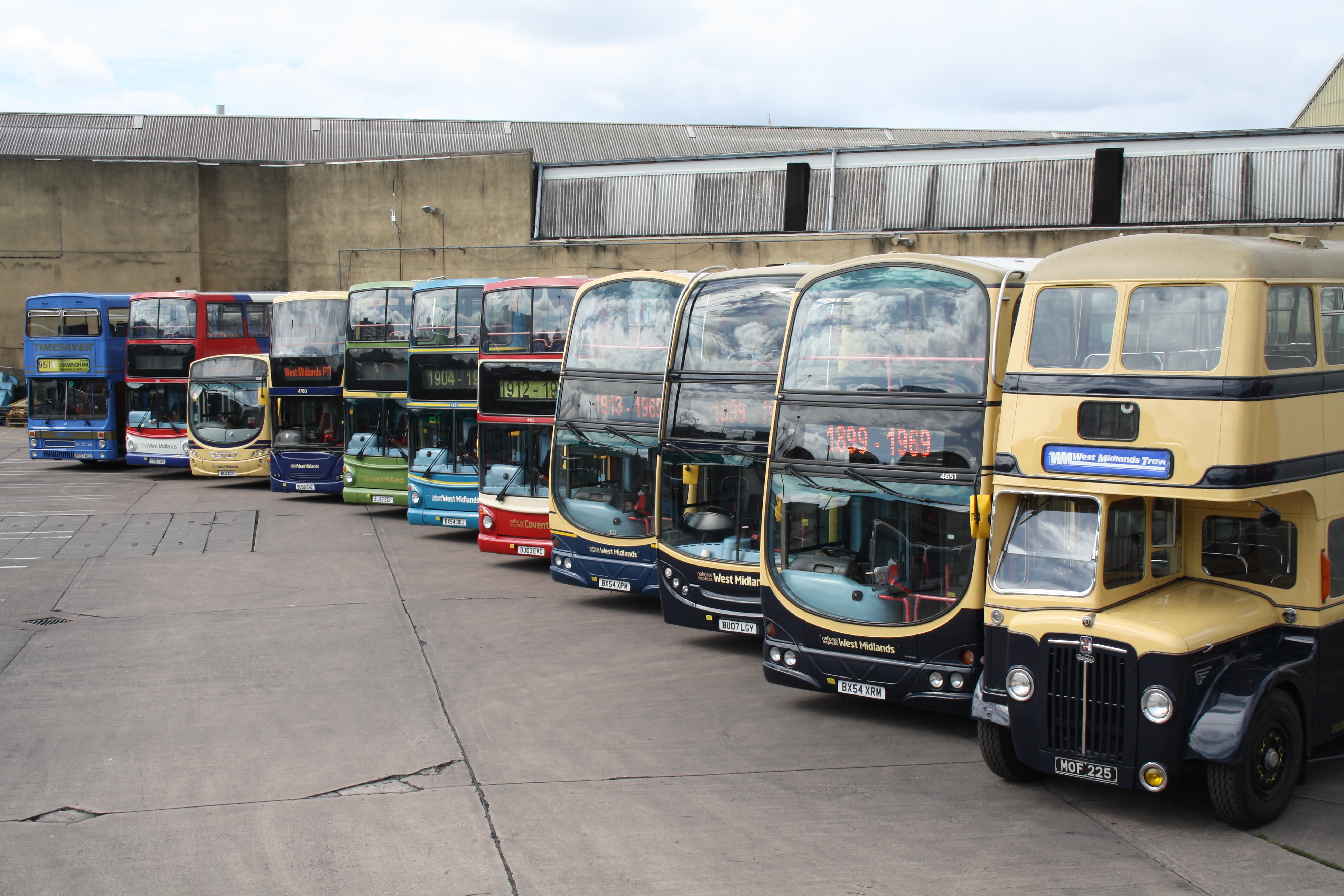
West Midlands ones lasted until July 2010, and may have been the last ones with a major operator as against an independent.
 

Strathclyder

Established Member
Joined
12 Jun 2013
Messages
3,837
Location
Clydebank
West Midlands ones lasted until July 2010, and may have been the last ones with a major operator as against an independent.
Yeah, am struggling to think of any large operator that had Metros in service beyond the summer of 2010; National Express may very well have been the last.
 

bobslack1982

Member
Joined
25 Jul 2008
Messages
98
Yeah, am struggling to think of any large operator that had Metros in service beyond the summer of 2010; National Express may very well have been the last.
I have vague memories of some mark 1s being used by Arriva in the north east post 2010, but that could be my mind playing tricks on me.
 

TheGrandWazoo

Veteran Member
Joined
18 Feb 2013
Messages
23,004
Location
Somerset with international travel (e.g. across th
I have vague memories of some mark 1s being used by Arriva in the north east post 2010, but that could be my mind playing tricks on me.
Not quite though they were certainly very long lived. They lasted until 2008, by which time the oldest were 27 years old. It was a bit of a surprise when they repainted some of them as school buses. One was a W reg which was quite something given they'd withdrawn similar aged VRs about 10 years earlier.
 

Journeyman

Established Member
Joined
16 Apr 2014
Messages
6,295
Not quite though they were certainly very long lived. They lasted until 2008, by which time the oldest were 27 years old. It was a bit of a surprise when they repainted some of them as school buses. One was a W reg which was quite something given they'd withdrawn similar aged VRs about 10 years earlier.
I think that's proof that ultimately they were well-designed and pretty much bulletproof mechanically. They pretty much made it to a quarter century in London's arduous conditions, at a time when maintenance standards were dropping and there was a lot of pressure to cut costs. Not a bad achievement at all.
 
Status
Not open for further replies.

Top