Underpants would do too, which just shows how particularly stupid this law is.
Clean ones, obviously.

Underpants would do too, which just shows how particularly stupid this law is.

Clean ones, obviously.
Underpants would do too, which just shows how particularly stupid this law is.


Or even one of theseDoesn't need to be a mask. Can be a scarf, bandana etc. Baffles me why people are spending a fortune on disposible masks when it is not necessary.


Doesn't need to be a mask. Can be a scarf, bandana etc. Baffles me why people are spending a fortune on disposible masks when it is not necessary.

Just seen Biden on TV doing a speech with a mask round his chin. Someone else posted a while ago that it seems like we might be replacing one idiot with another.
The media for their part should not be promoting mask misuse. The other night on Sky News there was a piece on Corbyn’s suspension where several people were spoken to on the streets of Islington, and every single one was misusing a mask in one way or other.
It would be funny if it wasn’t causing so many problems.
On the street, as in outdoors, where mask wearing isn't required?
You can’t “misuse” a mask outdoors where they are not required to be used.
Yes, though I suspect they were pouncing on people as they had just emerged from shops.
== Doublepost prevention - post automatically merged: ==
Why not? If one is being worn then it should be used properly, whether mandated or not.
Just seen Biden on TV doing a speech with a mask round his chin. Someone else posted a while ago that it seems like we might be replacing one idiot with another.
The media for their part should not be promoting mask misuse. The other night on Sky News there was a piece on Corbyn’s suspension where several people were spoken to on the streets of Islington, and every single one was misusing a mask in one way or other.
It would be funny if it wasn’t causing so many problems.

Just seen Biden on TV doing a speech with a mask round his chin. Someone else posted a while ago that it seems like we might be replacing one idiot with another.
Implement mask mandates nationwide by working with governors and mayors and by asking the American people to do what they do best: step up in a time of crisis.
Experts say that if 95% of Americans wear masks between now and December, we can save almost 70,000 lives.

 joebiden.com

Doesn't need to be a mask. Can be a scarf, bandana etc. Baffles me why people are spending a fortune on disposible masks when it is not necessary.
I don’t understand the American obsession with masks, they are even worse than the most pro-mask people in the UK - I know a few people who live there and they put up pictures of them wearing them walking in the wilderness, hours from any other humans. Just in case though!
Biden is as detached from reality in Trump to be honest. His website says for example:
COVID Timeline - Joe Biden for President: Official Campaign Website
In the midst of a growing public health crisis, the country is looking for leadership, effectiveness, and trusted experience — and that’s Vice President Joe Biden. Joe Biden has been laser-focused on the threat that COVID-19 has posed to our nation and the decisive public health and economic...
I am not greatly bothered either way by masks, but one thing occurred to me while using the tube this morning (and I'm fully prepared to be told I'm misunderstanding the science here!):
Masks are supposedly most effective in face-to-face situations where people are talking. This is because this situation has the most droplets being expelled forwards and masks are supposed to catch those.
It is also known that masks leak aerosols profusely through the unsealed parts - in particular the tops, bottoms and sides. It seems that aerosols are at least one potential transmission factor, and anyone sitting directly to the side of someone wearing a mask would therefore intuitively be getting an increased concentration of 'projected' aerosols.
So how does the risk calculation apply to side-by-side seating situations such as the London Underground? Are we stopping droplets that are minimal anyway (because nobody talks on the tube), with the effect that masks directly project aerosols onto the passenger directly to the side (likely to be the nearest other person)?
I know this may not apply where tubes are so busy that people have to stand, but I can't recall the last one of those I travelled on recently.
I had the same thought on buses by the way, with projection of aerosols onto the passenger immediately behind (since seats are typically shorter than people on buses).
As I say, fully prepared to be pointed to the science that those risks are minimal or misconceived and outweighed by the other benefits.
Even though there’s a wide range of increasing evidence that face coverings are effective in preventing the spread of COVID in close quarters?
- Drop mask rules outside medical settings and leave it up to each individual, but replaced with a renewed focus on physical distancing
Please do share this evidence with us, I've not seen anything convincing thus far.Even though there’s a wide range of increasing evidence that face coverings are effective in preventing the spread of COVID in close quarters?
Only with a great many unrealistic assumptions, including proper medical face coverings, worn properly, stored properly, put on and taken off with clean hands, not touched during use, properly disposed of afterwards, not pulled up or down, etc. etc.Even though there’s a wide range of increasing evidence that face coverings are effective in preventing the spread of COVID in close quarters?
I would like to see the evidence, please. Can guarantee you can't spread COVID-19, you can spread the SARS-CoV-2 virus, thought, that may lead someone to developing COVID-19.Even though there’s a wide range of increasing evidence that face coverings are effective in preventing the spread of COVID in close quarters?
Even though there’s a wide range of increasing evidence that face coverings are effective in preventing the spread of COVID in close quarters?
Even though there’s a wide range of increasing evidence that face coverings are effective in preventing the spread of COVID in close quarters?
Even though there’s a wide range of increasing evidence that face coverings are effective in preventing the spread of COVID in close quarters?
Care to share this with us? The way things are panning out seems to suggest otherwise.

 academic.oup.com
 english.elpais.com

Though based on sound peer-reviewed science, the model itself has limited accuracy because it relies on numbers that are still uncertain: numbers that describe, for example, how many infectious viruses are emitted by an infected person, or just how efficiently homemade cloth masks prevent the virus from spreading from a wearer. On average, that’s probably 50 percent (cloth masks prevent half of all exhaled viruses from entering the air), but some masks fit poorly and others may fit better.
Here's the link to the full paper on the hamster experiment which showed promise talked about in the Nature article:
Surgical Mask Partition Reduces the Risk of Noncontact Transmission in a Golden Syrian Hamster Model for Coronavirus Disease 2019 (COVID-19)
Noncontact transmission of SARS-CoV-2 was demonstrated in a Syrian hamster model. Surgical mask partition significantly reduced the transmission of SARS-Co
It also referred to another experiment a TB ward where it showed that on the days the patients wore a mask it infected fewer guinea pigs than on the days that they didn't:
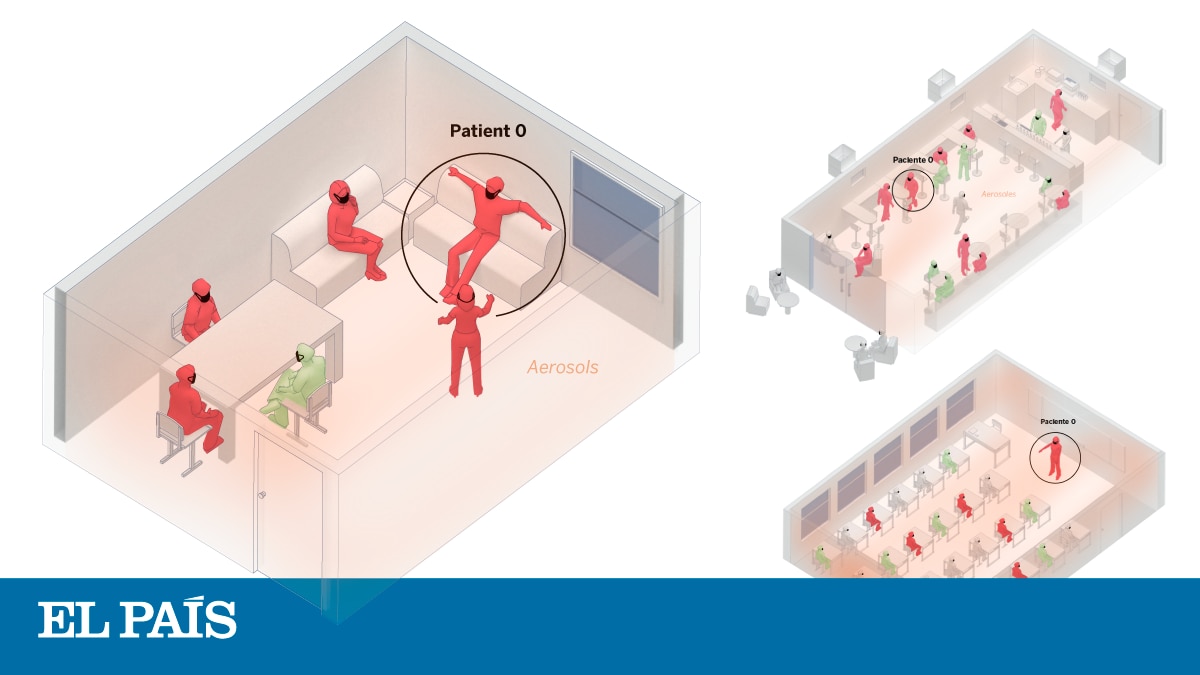
This was in a setting where the concern is about the viral load in the air is of concern rather than direct spray, this article highlights how this can be of concern and how the amount/volume of talking can have an impact on it (even if you disagree with the impact that masks may have on the infection rates cited):
A room, a bar and a classroom: how the coronavirus is spread through the air
The risk of contagion is highest in indoor spaces but can be reduced by applying all available measures to combat infection via aerosols. Here is an overview of the likelihood of infection in three everyday scenarios, based on the safety measures used and the length of exposure
Whilst clearly there's limits on the effectiveness of masks compared to these experiments (which are highlighted in the text), that's a long way away from zero benefits.
In the hamsters experiment even if real world reduced it from 2/3 to 1/2 rather than the 1/4 in the higher level of exposure most would be happier with that lower rate.
There's two things which are of note, whilst the barrier is likely to be better fitted across the air flow than would be the case in the community there was only one layer of mask, whilst for many it would be two layers. The second is that the mask was used for the whole period of the experiment (minimum of 4 days) with air being blown from infected to uninfected all the time for a minimum of 4 days.
Unless at work or on a train most interactions are for periods for significantly less time than this.
What's the evidence that masks have ZERO impact (note that's not reduced impact from what the experiments show, I accept that, but rather actually have no impact what so ever)?

