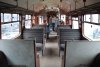
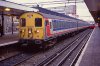
That is one of those things which happens when a fleet is built over a long period. The early CIGs managed close on 40 years and the early VEPs 37 years. While the younger ones only saw just over 30 years service, I think it unlikely that the Phase 2 CIGs would ever have been kept in service for five years after the Phase 1 units had gone.
Clearly that would all have happened well after the NSE livery was applied though!
Yeah, I think there's a few misconceptions around concerning the Southern's fleet longevity. The 40+ years achieved by some units is the exception, not the rule, and most fleets didn't last that long at all.
The original Brighton line express stock of the 1930s managed just over thirty years, and the slightly later semi-fast BILs and HALs managed about 35.
Although some classes like the SUBs, EPBs and HAPs were long-lasting, there were lots of early casualties. In the case of the SUBs, the first all-steel units emerged around 1946, but they were built in small batches, almost all of which had different internal layouts and technical features, so there were lots of non-standard units. Only the later ones built around 1950/51 finalised the design that later got modified into the EPB, and it was only those that lasted right to the end of SUB operation in 1983. Most of the early units only made it to the early-to-mid seventies, so just over 20 years, and the last units in service only just hit 30.
The final BR HAPs and EPBs were built in about 1962, and unfortunately were absolutely riddled with asbestos. Most of these only made it to about 20 - the newest HAPs and EPBs were the first to go. The HAPs were also quick to go once the full VEP fleet was available, as it was a better unit to travel in, and various service cuts left a surplus of HAPs. For their final decade in service, the HAP fleet was tiny. Originally well over a hundred units were built.