• Our new ticketing site is now live! Using either this or the original site (both powered by TrainSplit) helps support the running of the forum with every ticket purchase! Find out more and ask any questions/give us feedback in this thread!

Belgium: train derailed at Leuven

Status
Not open for further replies.

43096

On Moderation
Joined
23 Nov 2015
Messages
18,882
Thank you very interesting.

15 February 2010 – Belgium – Halle train collision - Two passenger trains collide head-on in Buizingen near Brussels. 18 people were killed and 162 were injured.

15 September 2010 – Belgium – Two trains collide at Aarlen, injuring 30–40 people, two seriously.

3 May 2013 – Belgium – A freight train derails in Schellebelle near Ghent. Three wagons carrying acrylonitrile explode and catch fire. One person dies and 33 are injured from toxic fumes in local neighbourhoods.

6 June 2016 – Belgium – Hermalle-sous-Huy train collision: A passenger train runs into the rear of a freight train at Hermalle-sous-Huy. Three people are killed, about 40 are injured, nine seriously.

8 February 2017 – Belgium – 2017 Leuven derailment: A passenger train derails at Leuven. One person is killed and nineteen are injured.

Based on that, for a small country (ridership is 8x lower than in Great Britain), I'm inclined to say that is pretty poor.
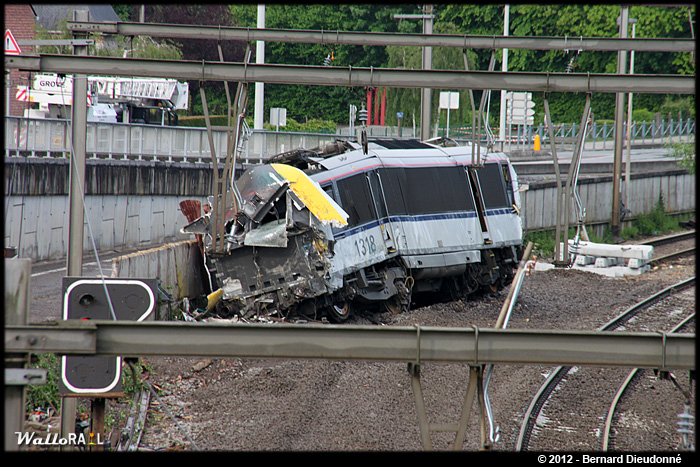
Add to that the Godinne collision in May 2012, which although there were no fatalities, was very destructive in terms of damage to rolling stock.
51b75c8ae4b0de6db97a700a.jpg


13182010.jpg
 
Sponsor Post - registered members do not see these adverts; click here to register, or click here to log in
R

RailUK Forums

MarcVD

Established Member
Joined
23 Aug 2016
Messages
1,246
All those accidents while expensive new signalling systems are deployed proves that security is not just a matter of money. What is missing in Belgium is a real security culture in place of the systematic search of scapegoat that takes place here each time an accident happens.

Envoyé de mon GT-I9505 en utilisant Tapatalk
 

2HAP

Member
Joined
12 Apr 2016
Messages
473
Location
Hadlow
There is also the problem of language. Leuven is Dutch; Ottignies is French language and it went wrong in 2001.

There's no problem. Leuven is in Vlaams-Brabant, Ottignies is in Brabant-Wallon
 
Last edited:

Groningen

Established Member
Joined
14 Jan 2015
Messages
2,866
There's no problem. Leuven is in Vlaams-Brabant, Ottignies is in Brabant-Wallon

So there is a problem. Did you not read the article: The other cause was the language barrier between the station staff at Wavre and Leuven.
 

2HAP

Member
Joined
12 Apr 2016
Messages
473
Location
Hadlow
Ah, yes, so I see. Thought you meant that Dutch and French spellings were being mixed in the article. Dutch spelling for Flanders, French spellings for Wallonia is the norm.
 

Groningen

Established Member
Joined
14 Jan 2015
Messages
2,866
No; Wavre is in the french speaking part of Belgium and Leuven is in the dutch speaking part of Belgium. And that went wrong in 2001.

Belgium-political-map.gif


Wavre and Ottignies are in the orange/brown part of the map; Leuven in the green. And that marks the languagedifference between the 2 parts of Belgium. To the east is a German langauge part behind Eupen.
 

gysev

Member
Joined
23 Dec 2016
Messages
167
Location
Belgium
There is also the problem of language. Leuven is Dutch; Ottignies is French language and it went wrong in 2001.

https://en.wikipedia.org/wiki/Pécrot_rail_crash

What went wrong in 2001 in the first place, is that a driver ignored a red signal and the signaller at Wavre couldn't explain well enough what was happening. After all, "stop" means the same in Dutch and in French.

And don't forget that Wikipedia is not a reliable source. The page you quote says that a driver is "required by operational rules to reduce speed to a low speed and continue cautiously as long as the train is running". That is wrong. They have to make an immediate stop at full braking power when the electricity is cut.
 
Last edited:

gysev

Member
Joined
23 Dec 2016
Messages
167
Location
Belgium
What is missing in Belgium is a real security culture in place of the systematic search of scapegoat that takes place here each time an accident happens.

No, what is missing is a security system that not only reacts when a red signal is passed, but also when a speed reduction is not obeyed. TBL1+ does not do that. As for this accident, most of the Brussels - Leuven line already has ETCS. Most - not the junctions where this accident happened.
 

Quakkerillo

Member
Joined
23 Jan 2015
Messages
553
No, what is missing is a security system that not only reacts when a red signal is passed, but also when a speed reduction is not obeyed. TBL1+ does not do that. As for this accident, most of the Brussels - Leuven line already has ETCS. Most - not the junctions where this accident happened.

This wasn't on the Brussels-Leuven line yet, as you can see in the 11th image here: http://www.demorgen.be/fotografie/dode-en-27-gewonden-na-treinontsporing-leuven-f360152b/

It's just outside the ETCS area, too close to Leuven station itself.
 

gysev

Member
Joined
23 Dec 2016
Messages
167
Location
Belgium
This wasn't on the Brussels-Leuven line yet, as you can see in the 11th image here: http://www.demorgen.be/fotografie/dode-en-27-gewonden-na-treinontsporing-leuven-f360152b/

It's just outside the ETCS area, too close to Leuven station itself.

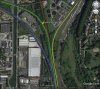
Yes it was, and I really don't understand what that picture has to do with it. It only proves my point: the accident happened outside the ETCS zone. You can see it on the attached image:

green: L36 Brussels - Leuven - Liège
blue: L36N Brussels - Leuven
red: L53 Leuven - Mechelen
yellow: L35 Leuven - Aarschot
 

Attachments

  • FLV.jpg
    FLV.jpg
    205 KB · Views: 33
Last edited:

Quakkerillo

Member
Joined
23 Jan 2015
Messages
553
Yes it was, and I really don't understand what that picture has to do with it. It only proves my point: the accident happened outside the ETCS zone. You can see it on the attached image:

green: L36 Brussels - Leuven - Liège
blue: L36N Brussels - Leuven
red: L53 Leuven - Mechelen
yellow: L35 Leuven - Aarschot

Just confirming what you said, with adding an image that showed it was only just outside the ECTS, as it wasn't even on the Brussels-Leuven line yet, for those that might find the images interesting.
 

MarkyT

Established Member
Joined
20 May 2012
Messages
7,609
Location
Torbay
Are we saying speed through the crossover played a part in the derailment? Otherwise I can only think it was switches moving under the train, and that might have been caused by equipment dragging from the trains and catching on a switch, or some other train failure.
 
Joined
7 Jan 2009
Messages
1,031
So, it looks like the train came from the North side of the ladder across to the tracks on the South. It derailed on a single/double (?) slip in a way in which cars 2 and 3 ran 'wrong line' for a bit. Somehow, though, car 1 was twisted round 180 degrees (look at the deformity in the rail on the wrong line in the pictures!), fell off the track altogether and overturned. The OHLE masts look relatively undamaged, so one suspects that the the coupler must have been sufficiently strong to do the twisting ... but how can this be? Surely the coupler would have been designed to separate the cars above a certain level of force to prevent exactly this sort of derailment? It also appears that the train must have been propelled from the rear (either the forward or rear driving car is powered on a Break) so potentially the motors continued to run even after the derailment occurred. Any other ideas out there?
Infrabel has denied that its infrastructure was the problem, so a train fault may have caused the switch to move but in my experience these kind of incidents are rarely so clear cut as to be solely due to either the train or the track...

 
Last edited:

MarcVD

Established Member
Joined
23 Aug 2016
Messages
1,246
Infrabel will deny any responsibility until proven otherwise. I think you have most of the scénario OK excepted that its only bogie 1 of car 2 which took the wrong track, bogie 2 and whole car 3 being on the right one. Car 1 we don't know which track it took. I think the train was indeed pushed with motor car at the rear. Cause can be faulty switch, faulty train, or over speed.

Envoyé de mon GT-I9505 en utilisant Tapatalk
 
Last edited:

Groningen

Established Member
Joined
14 Jan 2015
Messages
2,866
traincrash.jpg


Location of the crash is where the tracks from Leuven to Brussel and Leuven to Mechelen are still together. So more towards the station of Leuven as posted today at 10.54.
 

Quakkerillo

Member
Joined
23 Jan 2015
Messages
553
Infrabel also claimed the signalling at Buizingen was perfect, yet other train drivers also later saw the signal change from green to left without anything to cause it.
 

MarcVD

Established Member
Joined
23 Aug 2016
Messages
1,246
No, left hand.

Envoyé de mon GT-I9505 en utilisant Tapatalk
 

Peter Mugridge

Veteran Member
Joined
8 Apr 2010
Messages
17,853
Location
Oakham
The question is how that front trainpart could turn 180 degrees.

Easy enough if the front of it catches on something and pivots around that obstacle; that happened to 390 033 at Grayrigg and it's happened in a few other derailments over the years as well.
 

Groningen

Established Member
Joined
14 Jan 2015
Messages
2,866
On one of the pictures i see a sign of a maximum speed of 70 km an hour. Now it is not clear whether it is towards Brussel or Mechelen. I see line 36; so it is Brussel.

Watch the right side of the picture.

3f6343ea-f605-11e6-972b-d6a0496ca28b_web_scale_0.0713703_0.0713703__.jpg
 

2HAP

Member
Joined
12 Apr 2016
Messages
473
Location
Hadlow
Still trying to work this one out in my head. Had the train passed over the crossover at top of picture (facing points), through it (trailing points), or was it approaching the crossover?
 

Quakkerillo

Member
Joined
23 Jan 2015
Messages
553
Still trying to work this one out in my head. Had the train passed over the crossover at top of picture (facing points), through it (trailing points), or was it approaching the crossover?

If you look at the above posted picture from @Groningen from 21:39 on the 20th, the train passed through the cross-over on the top of the picture, coming from the left (Northern) tracks onto the slow tracks towards Brussels (bottom-right of the picture). The train departed from platform 7, thus can not have just passed the set of points without having changed from more Northerly tracks, as that's only possible from platforms 1, A, and B at Leuven station.

Top of the picture is the east, the left side of the picture is the North.
 
Last edited:

2HAP

Member
Joined
12 Apr 2016
Messages
473
Location
Hadlow
Thank you, Quakkerillo. In that case, I'm still trying to understand the "how" part. Sure it will all become clear in the fullness of time.
 

MarcVD

Established Member
Joined
23 Aug 2016
Messages
1,246
Its not that point which could have move but the double slip just before : the train was coming from the diagonal.

Envoyé de mon GT-I9505 en utilisant Tapatalk
 

MarcVD

Established Member
Joined
23 Aug 2016
Messages
1,246
On one of the pictures i see a sign of a maximum speed of 70 km an hour. Now it is not clear whether it is towards Brussel or Mechelen. I see line 36; so it is Brussel.

Watch the right side of the picture.

3f6343ea-f605-11e6-972b-d6a0496ca28b_web_scale_0.0713703_0.0713703__.jpg
The board bears a 9 so it's 90 km/h. Such a sign is used to announce a partial speed increase. In this case it is there to tell the trains that used the diagonal that they can accelerate again but only to 90 because of the sharp curve ahead. Trains that do not use thé diagonal can cross the points zone at 90. And in thé direction Mechelen there is no curve so it is 120.

Envoyé de mon GT-I9505 en utilisant Tapatalk
 
Last edited:

MarkyT

Established Member
Joined
20 May 2012
Messages
7,609
Location
Torbay
Its not that point which could have move but the double slip just before : the train was coming from the diagonal.

Envoyé de mon GT-I9505 en utilisant Tapatalk

I'm not saying the pictured switch was one that could have moved (but didn't according to Infrabel). I included it to show that there must have been some extreme side forces involved on the switch rail while the train passed through, perhaps an indication of excessive speed? The turnout speed limit cannot be very high as it's only 22 metres from switch tip to crossing, measuring on Google Earth. That would probably be a 15 or 20MPH limit in UK. That the switches of the double slips are entirely 'inside' the crossings also indicates a low speed junction.
 

MarcVD

Established Member
Joined
23 Aug 2016
Messages
1,246
Those have a 40 km/h limit on the belgian network. We do not use double slips with external points in Belgium.

Envoyé de mon GT-I9505 en utilisant Tapatalk
 
Last edited:
Status
Not open for further replies.

Top