
-
Our new ticketing site is now live! Using either this or the original site (both powered by TrainSplit) helps support the running of the forum with every ticket purchase! Find out more and ask any questions/give us feedback in this thread!
You are using an out of date browser. It may not display this or other websites correctly.
You should upgrade or use an alternative browser.
You should upgrade or use an alternative browser.
Double heading of Flask trains
- Thread starter paul40122
- Start date
- Status
- Not open for further replies.
Sponsor Post - registered members do not see these adverts; click here to register, or click here to log in
R
RailUK Forums


grumblingalong
Member
- Joined
- 10 Mar 2015
- Messages
- 771
In that situation how would that work? Do you fire up the second loco and drive it from the controls of the first loco? Or does it have to be run round?
Depends if through wired or not. Speaking to one of the DRS guys who do the sizewell flasks the other week it's basically there to be thrashed in any direction should and "undesirables" decide they'd like a ride.

sprinterguy
Veteran Member
As far as I know, both locos provide traction on the nuclear flask trains so it wouldn’t be necessary to fire the second loco up as it would already be running.In that situation how would that work? Do you fire up the second loco and drive it from the controls of the first loco? Or does it have to be run round?
DRS locomotives are fitted with the company’s own multiple working system, except for their class 66s and 68s which are fitted with the AAR system that is standard on these classes, so it should be entirely possible for the second loco to be driven from the first, should the leading loco fail.
Last edited:
Bertie the bus
Established Member
- Joined
- 15 Aug 2014
- Messages
- 3,216
... it's basically there to be thrashed in any direction should and "undesirables" decide they'd like a ride.
I'm not entirely sure what that even means but it certainly isn't true for many reasons.
As far as I know, both locos provide traction on the nuclear flask trains so it wouldnt be necessary to fire the second loco up as it would already be running.
Not always. There can be any combination of locos, some which can't multi.
father_jack
Established Member
- Joined
- 26 Jan 2010
- Messages
- 1,557
Saw a pair with the leader failed at Bristol Temple Meads a while back, both hooked off, ran off via North Somerset junction, the Rhubarb curve and Dr Days junction, back on the move in 10 minutes.I'm not entirely sure what that even means but it certainly isn't true for many reasons.
Not always. There can be any combination of locos, some which can't multi.

156441
Member
Nuke trains always have a second man (Guard) on the rear loco. The rear loco will be left ticking over in the event of them being 'non-compatable' for a quick change over if necessary. (As happened last month at Bristol to bury a fault.)
They are usually diagrammed to be comparable locos though.
--- old post above --- --- new post below ---
Father Jack beating me to it with the Bristol example there!!
They are usually diagrammed to be comparable locos though.
--- old post above --- --- new post below ---
Father Jack beating me to it with the Bristol example there!!
Bertie the bus
Established Member
- Joined
- 15 Aug 2014
- Messages
- 3,216
They're not always left ticking over. In fact there aren't always 2 loco's; normally there are, yes, but not always.

Strathclyder
Established Member
Indeed. A 57/20 combo has appeared on the Hunterston to Sellafield run before.Not always. There can be any combination of locos, some which can't multi.
Can 20/3s and 57/3s work in multiple, though?
Bertie the bus
Established Member
- Joined
- 15 Aug 2014
- Messages
- 3,216
57/20 and 57/37 combinations on the flasks are becoming more common. There are also 66/37 combinations occasionally, though 66s on the flasks are becoming rarer. Although single loco's are rare, they do happen from time to time. I took this photo earlier this year.
Attachments
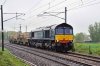

Where they perhaps empty flasks?57/20 and 57/37 combinations on the flasks are becoming more common. There are also 66/37 combinations occasionally, though 66s on the flasks are becoming rarer. Although single loco's are rare, they do happen from time to time. I took this photo earlier this year.
grumblingalong
Member
- Joined
- 10 Mar 2015
- Messages
- 771
I'm not entirely sure what that even means but it certainly isn't true for many reasons
And your basis for that statement is what exactly? I'm talking about anyone who might fancy some nuclear detrious......still not getting it? :roll:
Bertie the bus
Established Member
- Joined
- 15 Aug 2014
- Messages
- 3,216
Where they perhaps empty flasks?
I didn't take a look inside to check but it was the daily Crewe - Sellafield service.
And your basis for that statement is what exactly? I'm talking about anyone who might fancy some nuclear detrious......still not getting it? :roll:
Nope. Still haven't a clue. It's the 'thrashed in any direction' which is baffling. If the DRS driver was suggesting to you that it would be like an episode of a 1970s US cop show with the undesirables clinging on whilst the train goes round corners at unfeasible speeds, don't you think he might have been pulling your leg?

headshot119
Established Member
And your basis for that statement is what exactly? I'm talking about anyone who might fancy some nuclear detrious......still not getting it? :roll:
Because no driver in there right mind is going to throw it into refresh and "thrash it".
What's the basis for your statement, other than platform end wibble :roll:
SpacePhoenix
Established Member
- Joined
- 18 Mar 2014
- Messages
- 5,491
57/20 and 57/37 combinations on the flasks are becoming more common. There are also 66/37 combinations occasionally, though 66s on the flasks are becoming rarer. Although single loco's are rare, they do happen from time to time. I took this photo earlier this year.
Don't all trains with dangerous goods onboard have to have barrier wagons at both ends?
grumblingalong
Member
- Joined
- 10 Mar 2015
- Messages
- 771
I didn't take a look inside to check but it was the daily Crewe - Sellafield service.
Nope. Still haven't a clue. It's the 'thrashed in any direction' which is baffling. If the DRS driver was suggesting to you that it would be like an episode of a 1970s US cop show with the undesirables clinging on whilst the train goes round corners at unfeasible speeds, don't you think he might have been pulling your leg?
"Thrashed in any direction" was (I thought) quite clearly a way of expressing maintaining the ability to get out of situations quickly. Of course limited by signalling and the rule book, but thought that would be evident.....

33056
Established Member
Not any more with flask trains; I don't know the exact date they stopped using barrier wagons but it was a number of years ago now.Don't all trains with dangerous goods onboard have to have barrier wagons at both ends?

RichJF
Established Member
Didn't 31's used to work the flasks on their own with barriers & a guards van back in the day?

221129
Established Member
The Regular flask trains don't run with Barrier vehicles (and the waste they carry isn't particularly dangerous) however the MOD Flasks do.
sprinterguy
Veteran Member
Yes they did, though sometimes in pairs, too. Redundant HEA hoppers were commonly used as barrier vehicles.Didn't 31's used to work the flasks on their own with barriers & a guards van back in the day?

The Regular flask trains don't run with Barrier vehicles (and the waste they carry isn't particularly dangerous) however the MOD Flasks do.
I do wonder why the MOD flasks get barriers and guards and the civil ones don't. They both carry spent fuel so both are equally leathal in the wrong hands so why are civil ones "safer" and don't need a guard?
221129
Established Member
I do wonder why the MOD flasks get barriers and guards and the civil ones don't. They both carry spent fuel so both are equally leathal in the wrong hands so why are civil ones "safer" and don't need a guard?
I believe the MOD ones carry a higher level of material.
Most civilian nuclear waste isn't really that dangerous and would only have local effects if released. US studies into the effects of a dirty bomb using civilian grade fuel indicated that a few city blocks would be affected and that cleanup would take several months to a couple of years.I do wonder why the MOD flasks get barriers and guards and the civil ones don't. They both carry spent fuel so both are equally leathal in the wrong hands so why are civil ones "safer" and don't need a guard?
Military 'research' reactors on the other hand burn much 'hotter' and produce more highly-active and longer-lived products. This is as a result of them being used to breed plutonium, etc. Hence any dirty bomb would be much more destuctive.
Most civilian nuclear waste isn't really that dangerous and would only have local effects if released. US studies into the effects of a dirty bomb using civilian grade fuel indicated that a few city blocks would be affected and that cleanup would take several months to a couple of years.
Military 'research' reactors on the other hand burn much 'hotter' and produce more highly-active and longer-lived products. This is as a result of them being used to breed plutonium, etc. Hence any dirty bomb would be much more destuctive.
Without going too far off topic these are carry the spend fuel from the subs at Devonport and Rosyth. Are they actually used to breed plutonium? Always thought that was for, as you say, "research" reactors like Dounreay.
Civilian reactors use fuel rods that are circa 3-5% U235 when new, submarine reactors use fuel rods that are circa 24% U235 which is much closer to weapons grade and far easier to refine into weapons grade so is potentially a much bigger "target" for those who are so inclined.
- Status
- Not open for further replies.