• Our new ticketing site is now live! Using either this or the original site (both powered by TrainSplit) helps support the running of the forum with every ticket purchase! Find out more and ask any questions/give us feedback in this thread!

Would a Reading Tram system work?

Status
Not open for further replies.

BazingaTribe

Member
Joined
7 Oct 2024
Messages
390
Location
Basingstoke
There's a direct train a few times a day -- it would be simpler to put on a better service like there used to be. (I'm going there for work on Monday -- I had to book via Twyford because the existing direct train is inconvenient for when I need to be at the hospital there.)

There's also a bus; although it used to be through Henley to High Wycombe and the Wycombe route has been discontinued, Reading Buses replaced the Henley leg with one of their own.

Additionally, given you'd be building more infrastructure along what are country roads with affluent residents, it might be really hard to get it past them (same with the village my parents live in to the south of Reading -- they scrutinise any planned development closely in order to prevent themselves being swallowed up by the town itself). Town transport can get uncomfortable in the countryside -- it may be one reason that Reading Buses run single deckers out to villages south of the A4/M4, because they're more comfortable to ride on longer distance journeys and on smaller roads.

There's just simply no need to build anything else. I reiterate what I said above -- I'm not against trams per se. But Reading and the area surrounding it is not lacking in decent public transport already, and what could fill in the gaps could be run on existing roads or railways or timetabled better.
 
Sponsor Post - registered members do not see these adverts; click here to register, or click here to log in
R

RailUK Forums

AlastairFraser

Established Member
Joined
12 Aug 2018
Messages
4,146
I've never been to Reading, but to this layman a quick look at a map seems to show a tram is not remotely viable.

The northern part looks too small, too close, and would require the loss of one of only two river crossings or the building of a third, which is the planning stage where it all quickly seems to look completely unviable given the sheer lack of space or routes. Stick to buses, they're perfect for this kind of scenario.

To the east, even if you could get a tram across the North Downs Line / A3290, Woodley looks to be impenetrable with a tram line without major changes. If it's not already, the London Road/Bath Road to Pound Lane should be full bus priority (lanes, lights and gates) so that every inch of Woodley can be served by fast, frequent buses. Far more benefit for far less disruption to the overall capacity of the local road network.

To the south east, the Wokingham Road/Reading Road corridor to Wokingham would have been perfect for a tram, but of course some fool already put a railway there first. This would mean your most useful (if not your only) tram route competes with the railway and is paralleled by a very fast road. Not great. Surely you would try a mix of express buses using the A3290/A329M and a bus rapid transit system down the Wokingham/Reading Road, both terminating in Bracknell, before considering a tram? If it is wildly successful, then get to work. If not, you haven't bankrupted the town.

To the west, even if you ignored the impact on their usefulness as regional roads, the Oxford Road and Bath Road, the most logical paths for a tram line, have very small catchment areas. And as the lines diverge, the vast area between the two, Tilehurst et al, looks similar to Woodley. Surely a guided bus or bus rapid transit route that connects these two roads with a run along Park Lane / School Road in a triangle, would be a cheaper and far more useful alternative? If it doesn't work, then at least you know and can easily revert back to conventional buses.

To the south, it's painful to see how impenetrable a huge catchment area like Lower Earley is to a tram, given the possibility of getting there with a line down the A327. The whole place ways seems to have been designed with the car and bus in mind, by the looks of it.

This would seem to only leave the straight run south through Whitley to Whitley Wood as prime tram territory. Multiple potential routes, a wide variety of potential custom, residential and employment, limited impact on both the local and regional road network. It might even be possible to add a western spur to Reading Green Park. Do that, with the northern end running all the way to the main railway station, and you're looking at a very healthy business case. But will the town put up with all that disruption, for a single tram line? Probably not when people realise you could just make the main section an urban guided busway, and have its fast frequent buses not only serving Whitley and Whitley Wood almost as good as a tram would, but also speeding up bus journeys to Green Park and the villages south of the M4.
The Oxford Road to TVP corridor has gone beyond the capacity limits that buses can reasonably offer. London Road/Kings Road on the east side of the centre, and Oxford Rd on the west are absolutely saturated with traffic, and this slows down traffic to an extent that buses are also too slow to attract enough passengers on these stretches.

The only other alternative to a tram/light rail/VLR system in the long term would be a congestion charge covering everywhere from the bottom of the A329(M)/Whitley St roundabout on the east/south to Norcot Jcn/the top of Castle Hill, on the west side. That has been proposed several times and is incredibly unpopular (plus the combination of that and the expensive parking would finally kill off central Reading shopping - everyone would just go to Bracknell or Basingstoke instead, or a retail park/shopping centre like Savacentre in Calcot and Woodley Town Centre).

It's something you'd really need to at least visit to understand.

== Doublepost prevention - post automatically merged: ==

There's a direct train a few times a day -- it would be simpler to put on a better service like there used to be. (I'm going there for work on Monday -- I had to book via Twyford because the existing direct train is inconvenient for when I need to be at the hospital there.)

There's also a bus; although it used to be through Henley to High Wycombe and the Wycombe route has been discontinued, Reading Buses replaced the Henley leg with one of their own.

Additionally, given you'd be building more infrastructure along what are country roads with affluent residents, it might be really hard to get it past them (same with the village my parents live in to the south of Reading -- they scrutinise any planned development closely in order to prevent themselves being swallowed up by the town itself). Town transport can get uncomfortable in the countryside -- it may be one reason that Reading Buses run single deckers out to villages south of the A4/M4, because they're more comfortable to ride on longer distance journeys and on smaller roads.

There's just simply no need to build anything else. I reiterate what I said above -- I'm not against trams per se. But Reading and the area surrounding it is not lacking in decent public transport already, and what could fill in the gaps could be run on existing roads or railways or timetabled better.
Yep, not to mention the flooding risk east of the A4155 if you were considering a tram-train up the western bank of the Thames. South Oxon DC wouldn't even accept a 3rd Thames Bridge, no chance with this.
 

Non Multi

Member
Joined
11 Dec 2017
Messages
1,190
There's also a bus; although it used to be through Henley to High Wycombe and the Wycombe route has been discontinued, Reading Buses replaced the Henley leg with one of their own.
There's still a through bus service from Henley to Marlow and High Wycombe, Carousel 850 which runs via the A4 and Twyford.

What happened was when Arriva withdrew from High Wycombe last spring they operated the 800 & 850 to Reading. The 800 ran via Caversham, the 850 via Twyford.

Both Carousel and Reading Buses had their own separate plans for the 800/850 corridor once Arriva withdrew, Carousel would run a like for like replacement of the 800/850 routes, Reading Buses would launch the 28 which only runs Reading - Henley on the Caversham route. After the first month Carousel withdrew their 800 service, but increased the frequency of the 850.
 

AlastairFraser

Established Member
Joined
12 Aug 2018
Messages
4,146
Would there be enough demand for a tram-train between Reading and Henley? I think there's five buses per hour, and, outside Greater London, it's the third* most popular flow with no direct connection. I can't imagine that it would be cheap to build, or if there's another solution. With a new curve at Twyford, is there enough capacity on existing lines for an hourly or better direct service? Given that there's a 'via Reading' Henley to Paddington fare, presumably missing out Twyford wouldn't be a massive issue.

* Glasgow Central – Stirling and Falkirk High are probably data errors with Glasgow Central; Liverpool Lime Street – Edinburgh and Bognor Regis – Chichester are the two most common.
There is an idea that does have some merit with the Henley line - it's slightly off-topic, I admit, but conversion of the Henley line itself into a tram-train shuttle with reinstatement of double track (to heavy rail standards to allow through services from elsewhere during Regatta) and a few new stops wouldn't be unpopular. Your new stops would likely be on Bath Road on the edge of Twyford (to serve the northern estates of Twyford and the large Piggott secondary school that accepts students from a wide area of Wokingham district), plus on Mill Lane in Henley (very useful if you signed a scheme with the adjacent Tesco superstore to use parts of their underused car park as a Park and Ride, with an option to take more during Regatta).


A tram shuttle would likely be cheaper to operate too, meaning you could increase frequency that way (and there's already plenty of services Twyford to Reading to connect into, the usual issue extending journey times right now is the fact that the half hourly Twyford-Henley train is designed to connect into London-bound services, not Reading-bound). With a 4tph or greater frequency, it would alleviate this issue significantly.
 

BazingaTribe

Member
Joined
7 Oct 2024
Messages
390
Location
Basingstoke
There's still a through bus service from Henley to Marlow and High Wycombe, Carousel 850 which runs via the A4 and Twyford.

What happened was when Arriva withdrew from High Wycombe last spring they operated the 800 & 850 to Reading. The 800 ran via Caversham, the 850 via Twyford.

Both Carousel and Reading Buses had their own separate plans for the 800/850 corridor once Arriva withdrew, Carousel would run a like for like replacement of the 800/850 routes, Reading Buses would launch the 28 which only runs Reading - Henley on the Caversham route. After the first month Carousel withdrew their 800 service, but increased the frequency of the 850.
Thanks. I used to use the route quite a bit but that was a long time ago (such that children born that year are now adults :-0!) but haven't been there in a while.

I honestly think utilising what we have already have better than just trying to build more. While there are some blind spots and gaps in the network, I don't think costly new building would be beneficial, either financially or environmentally. (I'm not sold on the utility of Crossrail either to be frank, and it's uncomfortable to ride from Reading to Slough because the seats are more suitable for inner London journeys. However, it may be more useful for those who need to go out to the east of London; if I'm going in that direction anyway I use the direct line from Basingstoke to Waterloo anyway.)

I wouldn't be on the front line protesting anything but I wouldn't be advocating for much other than improved bus or train service. Everything suggested could be improved by adding to existing services -- and the post I'm quoting just solidifies the work being done to tighten up potentially loose links in the system. Reading Green Park opening a couple of years ago also suggests the official way forward lies with current infrastructure rather than new. It proves a need for additional services, but it shows where there is capacity to add them without turning the whole town into a building site for years to come.

(And maybe I'm a bit jealous that they built the LUAS in Dublin after I left my job there, but Dublin is a capital city with plausible routes for trams to take and space to provide the service. Reading is...not.)
 

Mgameing123

Member
Joined
29 Apr 2023
Messages
1,031
Location
Denmark
Thanks. I used to use the route quite a bit but that was a long time ago (such that children born that year are now adults :-0!) but haven't been there in a while.

I honestly think utilising what we have already have better than just trying to build more. While there are some blind spots and gaps in the network, I don't think costly new building would be beneficial, either financially or environmentally. (I'm not sold on the utility of Crossrail either to be frank, and it's uncomfortable to ride from Reading to Slough because the seats are more suitable for inner London journeys. However, it may be more useful for those who need to go out to the east of London; if I'm going in that direction anyway I use the direct line from Basingstoke to Waterloo anyway.)

I wouldn't be on the front line protesting anything but I wouldn't be advocating for much other than improved bus or train service. Everything suggested could be improved by adding to existing services -- and the post I'm quoting just solidifies the work being done to tighten up potentially loose links in the system. Reading Green Park opening a couple of years ago also suggests the official way forward lies with current infrastructure rather than new. It proves a need for additional services, but it shows where there is capacity to add them without turning the whole town into a building site for years to come.

(And maybe I'm a bit jealous that they built the LUAS in Dublin after I left my job there, but Dublin is a capital city with plausible routes for trams to take and space to provide the service. Reading is...not.)
Reading is the same size as Aarhus in Denmark (300k residents). I'm very sure Reading has enough demand for a tram network on key routes.

== Doublepost prevention - post automatically merged: ==

It used to have one!

The frequency of buses is really at the limit of what's possible without some major infrastructure improvements, I think.

Buses down the Oxford Road get delayed by vehicles performing all sorts of manoeuvres, including at the very end across the IDR and up to Broad Street Mall - there's ~10 routes through that narrow choke point, plus everything turning onto Friar Street!

As previously discussed, my view is that the Brunel demolition should result in an integrated transport hub at the station which would help with the congestion along Friar Street.

In general, Reading has a solid bus network with good frequencies and even into the night. But you can't cram any more buses into the town centre and they're pretty busy services. There's lots hub-and-spoke but no radial services and what bus lanes exist are fairly piecemeal.

So what's the solution? Unfortunately we're too wedded to our cars in the UK, I think, to find the kind of radical public transport priority that exists on the Continent palatable.

The low density of the urban sprall further out (which as discussed further up, isn't actually in the purview of RBC) doesn't help either if you're trying to run a frequent metro-style service.

Maybe this should diverge into Speculative Discussion...
Reading's low density and in general in the UK is actually quite high density. Also isn't it possible to run perhaps bendy buses in Reading? I don't know too many tight corners.

Anyways I think what should be the main priority for the Reading Trams is to connect Reading Station with the uni. It's a corridor which would have a high passenger flow.
 
Last edited:

AlastairFraser

Established Member
Joined
12 Aug 2018
Messages
4,146
Also isn't it possible to run perhaps bendy buses in Reading?
Parked cars and narrow streets in the centre would make life hell.
Anyways I think what should be the main priority for the Reading Trams is to connect Reading Station with the uni. It's a corridor which would have a high passenger flow.
It's a reasonable idea, I have it down as on my route 3. It's not as busy as the 17 though (which should be the first route that gets partially replaced or significantly supplemented).
 

JonathanH

Veteran Member
Joined
29 May 2011
Messages
23,264
Reading Station with the uni. It's a corridor which would have a high passenger flow.
The pattern of bus routes in Reading actually suggests that the passenger flow to and from the University is not among the larger ones.
 

WAO

Established Member
Joined
10 Mar 2019
Messages
1,216
The University now has a dedicated non-stop service from the town centre to Christchurch Green (No 20) replacing the 21a, so there must be some custom.

WAO
 

AlastairFraser

Established Member
Joined
12 Aug 2018
Messages
4,146
The University now has a dedicated non-stop service from the town centre to Christchurch Green (No 20) replacing the 21a, so there must be some custom.

WAO
There is some custom, but not enough to fill a tram line pre-2040 (and you have to remember that a lot of university buildings on the main Whiteknights campus are closer to the Earley Gate and therefore the 17/19 services (plus the London Road campus, which is on the 21 only). The west-east corridor is the first priority due to the traffic volumes, and then Emmer Green - Caversham - central Reading - Whitley - Green Park + Mad Stad/Mereoak is probably the next priority.
 

BazingaTribe

Member
Joined
7 Oct 2024
Messages
390
Location
Basingstoke
Reading is the same size as Aarhus in Denmark (300k residents). I'm very sure Reading has enough demand for a tram network on key routes.
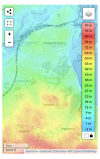
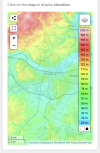
It's kinda saturated at this point in terms of actual transport options. The routes it needs most, to the outlying villages, would be the hardest to get planning permission for from the surrounding borough/district councils. I'm not just talking about NIMBYism -- the pressure on Swallowfield, Arborfield, and more isolated communities like Beech Hill and Grazeley is to preserve their character and stop them getting swallowed up by the metro area. To say nothing of the hills that have already been cited as posing an issue for trams -- Denmark is pretty flat, but while we might drive over it and not notice the incline, when you do it on a bike or walking or whatever you feel it. Some of the smaller roads between the Oxford and Tilehurst road arteries are almost straight up, while subtler topography coming down off the ridges of the North and South Downs in one direction and the Chilterns in the other is still hilly and at higher elevation than Aarhus. With Beech Hill the clue is in the name. I'm a minute or two from home, but once I get there I will show you a topographical comparison.

(Beware tangling with the daughter of a civil engineer and a geography teacher.)

It may be the same size as Aarhus, but it's got a very different landscape and geographical factors, and chewing up yet more countryside isn't high on the agenda of the satellite towns that might be integrated into the tram network.

ETA -- pictures. The maps show relative elevation (blue lowest, green middle, yellow higher) in a particular area. Aarhus is a bit hilly, but Reading has large areas of yellow where the ground goes up and down quite steeply. Caversham Heights is an area with potential market, but as the name suggests, it's actually on a hillside. So basically different terrain presents more of an obstacle.

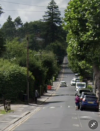
When I get off work I'll post a picture of the hill I used to walk up every day if you're still not convinced. (ETA -- Third picture. You need a funicular to get up there, not a tram.)
 

Attachments

  • Screenshot_20241115-163211.png
    Screenshot_20241115-163211.png
    852.9 KB · Views: 21
  • Screenshot_20241115-162714.png
    Screenshot_20241115-162714.png
    910.5 KB · Views: 21
  • Screenshot_20241115-165348.png
    Screenshot_20241115-165348.png
    959 KB · Views: 20
Last edited:

Ghostbus

On Moderation
Joined
17 Sep 2024
Messages
331
Location
England
I love how the A327 follows a ridgeline.

Hopefully my guided bus corridor along Park Lane/School Road in Tilehurst passes muster. I guess since they almost always follow old railway alignments, I'm not aware of any that tackle decent gradients.
 

AlastairFraser

Established Member
Joined
12 Aug 2018
Messages
4,146
It's kinda saturated at this point in terms of actual transport options. The routes it needs most, to the outlying villages, would be the hardest to get planning permission for from the surrounding borough/district councils. I'm not just talking about NIMBYism -- the pressure on Swallowfield, Arborfield, and more isolated communities like Beech Hill and Grazeley is to preserve their character and stop them getting swallowed up by the metro area. To say nothing of the hills that have already been cited as posing an issue for trams -- Denmark is pretty flat, but while we might drive over it and not notice the incline, when you do it on a bike or walking or whatever you feel it. Some of the smaller roads between the Oxford and Tilehurst road arteries are almost straight up, while subtler topography coming down off the ridges of the North and South Downs in one direction and the Chilterns in the other is still hilly and at higher elevation than Aarhus. With Beech Hill the clue is in the name. I'm a minute or two from home, but once I get there I will show you a topographical comparison.

(Beware tangling with the daughter of a civil engineer and a geography teacher.)

It may be the same size as Aarhus, but it's got a very different landscape and geographical factors, and chewing up yet more countryside isn't high on the agenda of the satellite towns that might be integrated into the tram network.

ETA -- pictures. The maps show relative elevation (blue lowest, green middle, yellow higher) in a particular area. Aarhus is a bit hilly, but Reading has large areas of yellow where the ground goes up and down quite steeply. Caversham Heights is an area with potential market, but as the name suggests, it's actually on a hillside. So basically different terrain presents more of an obstacle.

When I get off work I'll post a picture of the hill I used to walk up every day if you're still not convinced. (ETA -- Third picture. You need a funicular to get up there, not a tram.)
I'm not convinced that you'd need to extend a tram out as far as TMC/Burghfield/Spencers Wood/Shinny if you provided a decent connection off shuttle buses at Mereoak P and R. This model works particularly well in Sheffield with the Supertram feeder buses they've had there, and Mereoak is a lot closer to the town centre than e.g. Halfway is.
 

crablab

Established Member
Joined
8 Feb 2020
Messages
1,288
Location
UK
When I get off work I'll post a picture of the hill I used to walk up every day if you're still not convinced
I think you're overcooking this. No one is proposing running a tram up Western Elms Avenue (which incidentally I cycle up). There's a reason the long-lost tram ran at right angles, along the Oxford Road.

Historically trams made it up Castle Hill (which isn't all that steep) and I think Sheffield has a few too... Not to mention Switzerland!
It's kinda saturated at this point in terms of actual transport options.
It's saturated in terms of demand, yes. Hence the suggestion around adding capacity to satisfy demand and grow ridership.
The routes it needs most, to the outlying villages
Not to put too finer point on it, but is this because you live out there? :) I think you may have mentioned Bramley in another thread?
I'm not sold on the utility of Crossrail either to be frank
This is an...interesting point of view.

A selective quote from our erstwhile representative:
Matt Rodda reminded members that the Elizabeth line cost £19 billion to build, but it has already generated £42 billion of economic benefits in just two years.

Everything suggested could be improved by adding to existing services
Spoiler: it can't. There's a practical limit to what can go down Oxford Road/Kings Road, as has been explained several times already.
If you want to propose more buses then associated infrastructure changes will be required too.

I honestly think utilising what we have already have better than just trying to build more.
I don't understand the British obsession with mediocrity. Why can't we aspire for more?
If society actually wants to achieve modal shift and change the way we travel (which it is generally acknowledged we must, for various reasons) then you have to build things.
Why is everyone so afraid of different ideas and change?

I'm not wedded to the idea of a tram, but I find long paragraphs of text that seem to conclude in "NIMBY" rather frustrating.

Sure, you don't like the idea of a tram. So what exactly would you propose as an alternative that could deliver the same level of capacity? Or should everyone keep driving everywhere?
 

Ghostbus

On Moderation
Joined
17 Sep 2024
Messages
331
Location
England
If you're taking a strategic view, then it's surely cheaper in the long run to try and reduce the population of places like Reading (while maximising the efficiency of the mode that most suits it) by building new towns in the South East that are designed with active travel and well connected high capacity public transport in mind from the outset. It can take ten years from the first outline ideas to actually open a single tram line in this country, and that's not solely because we aren't China, it's also precisely because we are Britain.
 

crablab

Established Member
Joined
8 Feb 2020
Messages
1,288
Location
UK
If you're taking a strategic view, then it's surely cheaper in the long run to try and reduce the population of places like Reading (while maximising the efficiency of the mode that most suits it) by building new towns in the South East that are designed with active travel and well connected high capacity public transport in mind from the outset.
I don't necessarily disagree. Unfortunately this kind of strategic planning has been absent of new build, which seem to lack any interest in building liveable, connected homes: https://www.theguardian.com/politic...nk-new-homes-to-public-transport-report-finds

A decade of planning rules designed to create housing connected to public transport routes has achieved nothing, a report has found, with millions of people in new homes still dependent on cars to get to local amenities.
So whilst I agree with the principle, in practice it isn't happening. And when you add to that the difficulties in establishing new towns (as serveral of the last ones experienced), the lead time in getting it off the ground and the perennial issues with planning permission...
 

Mgameing123

Member
Joined
29 Apr 2023
Messages
1,031
Location
Denmark
I think you're overcooking this. No one is proposing running a tram up Western Elms Avenue (which incidentally I cycle up). There's a reason the long-lost tram ran at right angles, along the Oxford Road.

Historically trams made it up Castle Hill (which isn't all that steep) and I think Sheffield has a few too... Not to mention Switzerland!

It's saturated in terms of demand, yes. Hence the suggestion around adding capacity to satisfy demand and grow ridership.

Not to put too finer point on it, but is this because you live out there? :) I think you may have mentioned Bramley in another thread?

This is an...interesting point of view.

A selective quote from our erstwhile representative:


Spoiler: it can't. There's a practical limit to what can go down Oxford Road/Kings Road, as has been explained several times already.
If you want to propose more buses then associated infrastructure changes will be required too.


I don't understand the British obsession with mediocrity. Why can't we aspire for more?
If society actually wants to achieve modal shift and change the way we travel (which it is generally acknowledged we must, for various reasons) then you have to build things.
Why is everyone so afraid of different ideas and change?

I'm not wedded to the idea of a tram, but I find long paragraphs of text that seem to conclude in "NIMBY" rather frustrating.

Sure, you don't like the idea of a tram. So what exactly would you propose as an alternative that could deliver the same level of capacity? Or should everyone keep driving everywhere?
I agree so what do we do to get these trams into Reading. Unlike Aarhus who had very wide main roads. Reading doesn't have that so the tram system has to share its path with other vehicles. What do we do? I suggest looking into the busiest corridors we have like the Lion 4/X4 and replace them with tramlines.
 

crablab

Established Member
Joined
8 Feb 2020
Messages
1,288
Location
UK
I agree so what do we do to get these trams into Reading
Pass. My approach is to write to representatives about these things.

(I don't seriously think there will be a tram in Reading any time soon; Leeds and Bristol would be the obvious choices first! That doesn't prevent me advocating for it, however)

What do we do? I suggest looking into the busiest corridors we have like the Lion 4/X4 and replace them with tramlines.
I think, as @AlastairFraser pointed out to me, laying trams along the existing bus routes may be problematic for various reasons.
I don't think running the tram parallel to the railway all the way to Wokingham is useful, for example.

Going out to the University, down to Earley and then Shinfield might be more useful. Or Woodley across into Green Park.

And as before, the something along the Oxford Road/Kings Road alignment to TVP.

Ultimately someone needs to sit down and do some feasibility analysis to work out where the demand is and what infrastructure could be built to support that.

One could start by FOIng Reading Buses (who I believe may fall in scope, being wholly owned by the Council?) for their passenger data and seeing what the popular flows are.
 
Last edited:

CW2

Established Member
Joined
7 May 2020
Messages
2,220
Location
Crewe
Whilst tram systems are in vogue, why are they preferred to trolley buses, or busways? In the case of Reading, rubber tyres vehicles are much more suited to climbing the hills around the town.
 

AlastairFraser

Established Member
Joined
12 Aug 2018
Messages
4,146
Whilst tram systems are in vogue, why are they preferred to trolley buses, or busways? In the case of Reading, rubber tyres vehicles are much more suited to climbing the hills around the town.
Reading had trolleys and has unguided busways (well, segregated bus lanes). It hasn't worked in both cases, because the roads are simply too congested, and there is no room for more bus priority measures without removing more roadside parking or more road space (both of which would be really unpopular).
Where as a tram can make more use of space that is currently grass verges and still retain the aesthetic benefits, plus the benefit of the tram running technically off road as much as possible to reduce traffic obstructions (and parked vehicles blocking the road).
 

Dr Day

Member
Joined
16 Oct 2018
Messages
755
Location
Bristol
Reading had trolleys and has unguided busways (well, segregated bus lanes). It hasn't worked in both cases, because the roads are simply too congested, and there is no room for more bus priority measures without removing more roadside parking or more road space (both of which would be really unpopular).
Where as a tram can make more use of space that is currently grass verges and still retain the aesthetic benefits, plus the benefit of the tram running technically off road as much as possible to reduce traffic obstructions (and parked vehicles blocking the road).
Are trams really that much skinnier than buses? It would be helpful to show a cross section of the road indicating why trams can be fitted in without affecting parking and traffic but buses can’t.
 

BazingaTribe

Member
Joined
7 Oct 2024
Messages
390
Location
Basingstoke
I'm not convinced that you'd need to extend a tram out as far as TMC/Burghfield/Spencers Wood/Shinny if you provided a decent connection off shuttle buses at Mereoak P and R. This model works particularly well in Sheffield with the Supertram feeder buses they've had there, and Mereoak is a lot closer to the town centre than e.g. Halfway is.

The 600 acts that way at the moment. It goes out to various villages on several of its services every hour. I'd rather have the 7 return which went through Whitley and past amenities like Aldi and Morrisons and then out directly to Riseley, but we have a decent compromise so far as bus connections go. We don't need any more transport out to Mereoak, which is served every 15 minutes regardless of where outbound buses go after that -- we need routes beyond it. Which aren't going to be trams for many reasons.

I get that you're a tram fan and so am I, but it does seem a tad superfluous when there are a lot of improvements that could be made to existing services first before tearing up the streets yet again. (And that we're getting very passionate about something that is speculation at best.)
 
Last edited by a moderator:

Mgameing123

Member
Joined
29 Apr 2023
Messages
1,031
Location
Denmark
The 600 acts that way at the moment. It goes out to various villages on several of its services every hour. I'd rather have the 7 return which went through Whitley and past amenities like Aldi and Morrisons and then out directly to Riseley, but we have a decent compromise so far as bus connections go. We don't need any more transport out to Mereoak, which is served every 15 minutes regardless of where outbound buses go after that -- we need routes beyond it. Which aren't going to be trams for many reasons.

I get that you're a tram fan and so am I, but it does seem a tad superfluous when there are a lot of improvements that could be made to existing services first before tearing up the streets yet again. (And that we're getting very passionate about something that is speculation at best.)
Trams should seriously be considered though. Its proven they are more attractive to drivers than buses are so there is less cars on the road and trams attract growth around the route in a way buses cannot provide.
 

CW2

Established Member
Joined
7 May 2020
Messages
2,220
Location
Crewe
Reading had trolleys and has unguided busways (well, segregated bus lanes). It hasn't worked in both cases, because the roads are simply too congested, and there is no room for more bus priority measures without removing more roadside parking or more road space (both of which would be really unpopular).
Where as a tram can make more use of space that is currently grass verges and still retain the aesthetic benefits, plus the benefit of the tram running technically off road as much as possible to reduce traffic obstructions (and parked vehicles blocking the road).
I do (just) remember the Reading trolley buses, having used the 18 route from Armour Hill to Reading as a young boy. I don't understand how a tram route is supposed to be less intrusive / require less space than a trolleybus route. Either way, you are going to be taking up space for a transport system that isn't currently there, but the trolleybus might interface more easily with the existing road infrastructure once you are clear of the congested town centre, enabling greater network coverage, whereas a tram route would be more costly and disruptive to build.
 

AlastairFraser

Established Member
Joined
12 Aug 2018
Messages
4,146
Are trams really that much skinnier than buses? It would be helpful to show a cross section of the road indicating why trams can be fitted in without affecting parking and traffic but buses can’t.
Yes, and that's the reason why guided busways were created - to enable buses to act like trams, taking up less space (but with the significant cost of building a concrete guideway and a concrete barrier that would likely be needed to segregate from roads since the accident in Cambridge happened).
Link here:Kerb-guided busways

== Doublepost prevention - post automatically merged: ==

The 600 acts that way at the moment. It goes out to various villages on several of its services every hour. I'd rather have the 7 return which went through Whitley and past amenities like Aldi and Morrisons and then out directly to Riseley, but we have a decent compromise so far as bus connections go. We don't need any more transport out to Mereoak, which is served every 15 minutes regardless of where outbound buses go after that -- we need routes beyond it. Which aren't going to be trams for many reasons.

I get that you're a tram fan and so am I, but it does seem a tad superfluous when there are a lot of improvements that could be made to existing services first before tearing up the streets yet again. (And that we're getting very passionate about something that is speculation at best.)
I do agree that better buses to the villages are needed, but the socioeconomic profile just isn't right to serve them with more routes or a higher frequency right now sadly. They cut the 7 because not enough people used it, and any subsidy cash from private developments is not going to last long enough to build patronage.

The point with a tram line to Mereoak is that people living south of Reading who won't take a bus (less likely in TMC/Spencers Wood, but they aren't popular in Riseley/Swallowfield and further out) will be able to drive to Mereoak and park there for a tram to remove journeys up the A33 into central Reading or for those working in Green Park, while you'll probably get decent patronage for a circular feeder bus Mereoak - TMC - Spencers Wood - Shinfield - short link to Oakbank (what was Ryeish Green school) - TMC - Mereoak.
I do (just) remember the Reading trolley buses, having used the 18 route from Armour Hill to Reading as a young boy. I don't understand how a tram route is supposed to be less intrusive / require less space than a trolleybus route. Either way, you are going to be taking up space for a transport system that isn't currently there, but the trolleybus might interface more easily with the existing road infrastructure once you are clear of the congested town centre, enabling greater network coverage, whereas a tram route would be more costly and disruptive to build.
I don't know how recently you've visited the Ding, but sadly peak hours and sometimes even off-peak congestion can be seriously obstructive as far as Thames Valley Park on the east, and Norcot Junction on the west (plus the IDR from the A33 direction is also a mess, but any north-south second tram line or whatever else you choose will need a lot of tunnelling, so unrealistic for now). So it's not just the town centre that is an issue!

The population is approaching 300,000 inclusive of all the suburbs as far as Calcot/Purley out west + the Loddon Valley out east (currently around 270,000 I believe).

The congestion is only going to get worse with the addition of more massive car-dependent suburbs at Three Mile Cross/Spencers Wood/the southern end of Winnersh, and the satellite town of Arborfield Green (on the site of Arborfield Garrison, which moved to Wilts about 15 years ago now I think) will have about 10,000 people when completed, so something radical has to be done.
 
Last edited:

daodao

Established Member
Joined
6 Feb 2016
Messages
3,601
Location
Dunham/Bowdon
Unlike Aarhus who had very wide main roads.
I thought that the Arhus tram system closed in 1971 - I remember seeing the ancient small 4-wheel cars running on 2 routes past the central station when visiting the city as a child in 1966. On topic - I lived in Reading for 6 months in 1980 and recall that it had an excellent municipal bus service, which I understand is still extant. In my opinion, the town is too small and the roads too narrow for a tram system - the previous network closed before WW2 and I don't think it had any reserved track.
 

AlastairFraser

Established Member
Joined
12 Aug 2018
Messages
4,146
I thought that the Arhus tram system closed in 1971 - I remember seeing the ancient small 4-wheel cars running on 2 routes past the central station when visiting the city as a child in 1966. On topic - I lived in Reading for 6 months in 1980 and recall that it had an excellent municipal bus service, which I understand is still extant. In my opinion, the town is too small and the roads too narrow for a tram system - the previous network closed before WW2 and I don't think it had any reserved track.
The town's population has probably doubled or near tripled since you've last been. The buses are good, but not good enough that a decent majority will take them!
 

daodao

Established Member
Joined
6 Feb 2016
Messages
3,601
Location
Dunham/Bowdon
The town's population has probably doubled or near tripled since you've last been. The buses are good, but not good enough that a decent majority will take them!
The population of Reading/Wokingham was about 210k in 1974 and is about 350k now (2024), i.e. a 67% increase (not even 2-fold); it was actually lower (200k) in 1980. New tram networks are really not realistic in the UK as they are too expensive and the country cannot afford to build them; at most, some limited extensions to existing networks might be possible. The former chancellor of the exchequer (the late Alistair Darling) made clear the Labour party view on trams in 2005 and no new schemes have been opened since then apart from that in Edinburgh, which was already at the planning stage and was almost cancelled completely in about 2010 because of the massive cost over-run.
 

JonathanH

Veteran Member
Joined
29 May 2011
Messages
23,264
New tram networks are really not realistic in the UK as they are too expensive and the country cannot afford to build them; at most, some limited extensions to existing networks might be possible.
True. The biggest challenge in Reading is that there are no segregated routes on which to build a tram system and there would be massive disruption whilst they are being built if existing roads were used. While some slightly less busy corridors have been suggested, it isn't really obvious that they would work.
 

AlastairFraser

Established Member
Joined
12 Aug 2018
Messages
4,146
The population of Reading/Wokingham was about 210k in 1974 and is about 350k now (2024), i.e. a 67% increase (not even 2-fold); it was actually lower (200k) in 1980. New tram networks are really not realistic in the UK as they are too expensive and the country cannot afford to build them; at most, some limited extensions to existing networks might be possible. The former chancellor of the exchequer (the late Alistair Darling) made clear the Labour party view on trams in 2005 and no new schemes have been opened since then apart from that in Edinburgh, which was already at the planning stage and was almost cancelled completely in about 2010 because of the massive cost over-run.
If the country cannot afford to build them, than we should cancel the remainder of HS2 and borrow to spend on local transport systems that will replace a lot of local journeys (the car journeys that are often most damaging for the environment, because they are frequent and short).
Thankfully, I believe that, in a decade, we will be in a suitable economic position to invest in both.
 
Status
Not open for further replies.

Top