
• Our new ticketing site is now live! Using either this or the original site (both powered by TrainSplit) helps support the running of the forum with every ticket purchase! Find out more and ask any questions/give us feedback in this thread!

Wind Power and UK Energy Use

Class 317

Member
Joined
7 Jul 2020
Messages
570
Location
Cotswolds
Globally it looks like renewable installations mainly solar have exceeded demand increases for the first time.

Quote below from Guardian website. Sorry it won't let me quote in the normal way for some reason
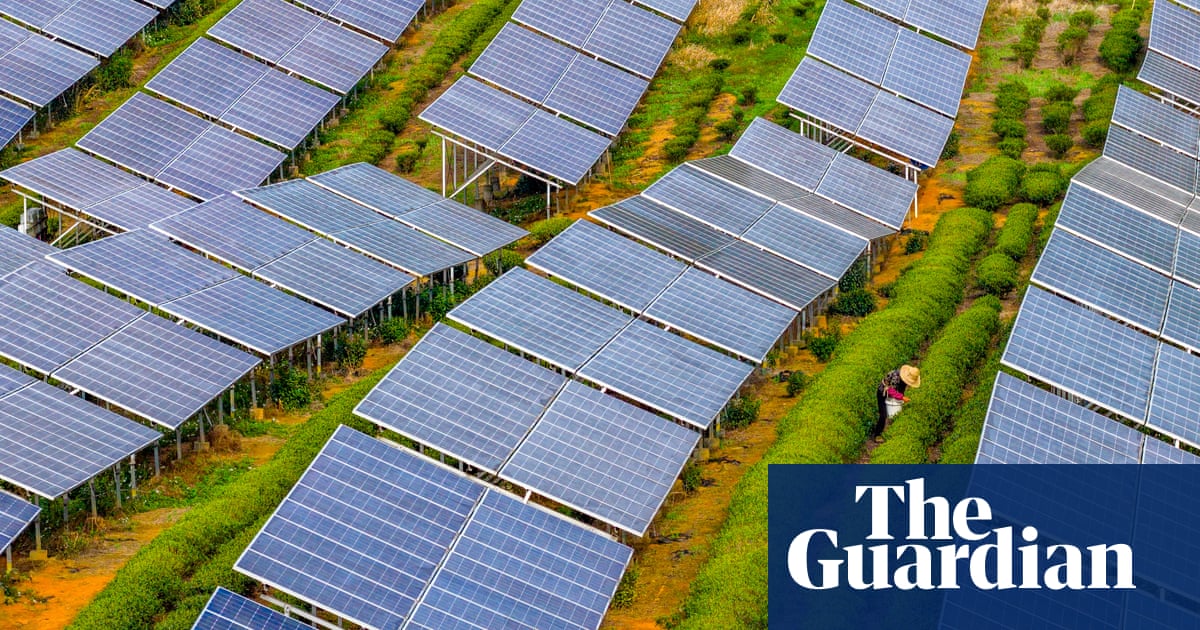

All of last year’s growth in global electricity demand was met from renewable sources, while fossil fuel power generation remained flat, research has found, marking what many hope could become a turning point in the drive to phase out planet-heating fossil fuels.

Solar power generation rose by nearly a third in 2025, marking a new record and faster growth. In the decade from 2015, solar output grew tenfold, roughly doubling every three years, according to the thinktank Ember.

More than half of the increase came from China, which has surged ahead in renewable energy and is also the world’s biggest exporter of clean energy components.

Solar power met three-quarters of the increase in electricity demand in 2025, with the remainder mostly met by wind power. Electricity generation from fossil fuels fell by 0.2%.

End of quote.

If this trend continues then worldwide electricity generation emissions will steadily fall year on year. Given the growth rate of solar and batteries in particular the rate of reduction should increase year on year.
 
Sponsor Post - registered members do not see these adverts; click here to register, or click here to log in
R

RailUK Forums

edwin_m

Veteran Member
Joined
21 Apr 2013
Messages
28,706
Location
Nottingham
...but probably not now in Network Rail ownership (if they ever were). Who Owns England got the entire NR priory portfolio in GIS format about 10y so and it doesn't look like they own a lot that isn't the operational railway.
Railtrack only inherited property that was in railway use, and even some freight yards that were owned by British Rail went to EWS (predecessor of DB). So they don't have surplus land, and their property activities are mainly to do with viaduct arches and similar which aren't much use for solar.
You put the wire through the fence, eg with an interface cabinet in the fence line for circuit breakers. The issues are not likely boring practical things like vandalism, vegetation growth and so on which kill of sites that are small and/or remote

Which leads to the question, could NR create a solar fence which could be maintained from either side (potentially very useful for sites where there's a road along the boundary).
Either of these would need people to go trackside for part of the construction and maintenance activities.
You could even create a design where they sit on the south side (in a cutting) where the lower 600mm is used to create a flat area for access with the planes acting as a second fence line to limit trespass. This would also reduce the risk of landslide and being a standard design could be fairly cheap to implement (standard gravel boards are used by many house builders to create s step between properties of 600mm).

The complex element would be designing a 1.8m long mounting unit to hold the 1.7m long solar panels in a way which means that they can easily be skid into the fence parts but with a way to secure them to stop them being the next target for theft.
Possibly it could be some sort of module incorporating a cable tray too, although the panel would then have to be removeable so it could be replaced without moving the module and affecting the cables.
 

quantinghome

Established Member
Joined
1 Jun 2013
Messages
2,903
Electricity generation mix right now.
https://grid.iamkate.com/

Yellow = solar
Green = wind
Light blue = hydro
Mid-blue = nuclear
Dark blue = biomass
Orange = gas

We could be on for a record low in gas-powered generation today.

1776851324550.png

-------------------------

3pm update:

1776866937245.png
 
Last edited:

Class 317

Member
Joined
7 Jul 2020
Messages
570
Location
Cotswolds
The first step, moving Drax from baseload to peaker plant from next year, has already been agreed by the government.
That's a good start as Drax is essentially getting unfair subsidies adding to energy bills.
The quicker we can move away from burning biofuels the better.

I'm not against Biofuels for everything but believe in appropriate ones like biomethane made from human, animal and food wastes. I've recently become aware that the potential to meet a significant part of our gas needs whilst also reducing methane emissions from the wastes exists. Given Methane is a much worse greenhouse gas, the return on investments to reduce it whilst boosting UK energy security must be much higher than chasing an earlier net zero.
 

The Ham

Veteran Member
Joined
6 Jul 2012
Messages
12,036
That's a good start as Drax is essentially getting unfair subsidies adding to energy bills.
The quicker we can move away from burning biofuels the better.

I'm not against Biofuels for everything but believe in appropriate ones like biomethane made from human, animal and food wastes. I've recently become aware that the potential to meet a significant part of our gas needs whilst also reducing methane emissions from the wastes exists. Given Methane is a much worse greenhouse gas, the return on investments to reduce it whilst boosting UK energy security must be much higher than chasing an earlier net zero.

Methane also breaks down much faster in the atmosphere and so can help turn around atmosphere values much faster than CO2 (obviously, we need to do both, however where there's capacity to deal with Methane, then it's worth doing.)
 

Bald Rick

Veteran Member
Joined
28 Sep 2010
Messages
35,906
In other news, the Dept for Energy Security & Net Zero and Ofgem have co-written an open letter to industry aboutcon ections reform. This includes a part regarding the forecast oversupply of battery storage systems in the market from 2030, and considerably more than required by 2035. Note this is measured by power, not energy stored.


It’s quite a techy letter and a lot to quote, so just I’ll add just this part:

We remain committed, as set out in the 2025 Clean Flexibility Roadmap, to maintaining a market environment that supports the deployment of 23-27 GW of grid-scale batteries by 2030, and welcome the sector’s work to bring forward so many mature projects. Although the reform process removed many non‑viable battery projects and significantly reduced the queue, there is still 14.8 GW above the top of the Action Plan battery capacity range for 2030 and 61.7 GW above the projected battery system need in 2035.
 

edwin_m

Veteran Member
Joined
21 Apr 2013
Messages
28,706
Location
Nottingham
Surely energy storage is just as an important criterion as power?
Hmm, yes, not sure if the letter makes sense assuming it is as quoted. If there is more power than needed then all the storage won't be discharging at the same time, but for a longer period of insufficient renewable energy some of them could be held in reserve and start discharging after others were depleted.
 

quantinghome

Established Member
Joined
1 Jun 2013
Messages
2,903
Hmm, yes, not sure if the letter makes sense assuming it is as quoted. If there is more power than needed then all the storage won't be discharging at the same time, but for a longer period of insufficient renewable energy some of them could be held in reserve and start discharging after others were depleted.
Yes - grid-scale battery storage can completely discharge in 1-2 hours. However, discharge may be needed for 12 hours or even up to 24 hours. So energy storage is inevitably the more critical factor.
 

hwl

Established Member
Joined
5 Feb 2012
Messages
8,266
Look like a new CCGT low of 0.353GW at 1400 GMT / 1500 BST on Wednesday 22nd.
And a preliminary estimate of 14.447GW* for solar at 1230, >4.4 between 1200-1250 GMT /1300-1350 BST. Looks like a new record at this stage.
*which may well turn out higher when the better post analysis of solar comes out (has gone up by up to ~0.3 previously).

== Doublepost prevention - post automatically merged: ==

Unsurprisingly given the weather another new solar record of 15.12GW at 1230 GMT (Thursday 23rd)
 
Last edited:

HSTEd

Veteran Member
Joined
14 Jul 2011
Messages
20,348
Trying to choke off battery storage plant growth in the short term to free connection capacity for renewables and data centres could easily backfire later. Especially on the basis of a measure for energy storage in terms of power rather than energy

Given that the CEGB and regional boards delivered infrastructure for sustained ten percent year on year growth in electricity use in the 1960s, I don't think the number of connection requests is really the issue.

The industry has simply atrophied it's capabilities during the long stagnation of the 1990s and 2000s and hasnt (yet) recovered.
 

Class 317

Member
Joined
7 Jul 2020
Messages
570
Location
Cotswolds
Trying to choke off battery storage plant growth in the short term to free connection capacity for renewables and data centres could easily backfire later. Especially on the basis of a measure for energy storage in terms of power rather than energy

Given that the CEGB and regional boards delivered infrastructure for sustained ten percent year on year growth in electricity use in the 1960s, I don't think the number of connection requests is really the issue.

The industry has simply atrophied it's capabilities during the long stagnation of the 1990s and 2000s and hasnt (yet) recovered.
The key to this is capacity to install new connections. On balance they have decided they have to many BESS connection in the queue currently. Rebalancing to more renewable and other industrial connections in the short term should lower emissions and lower costs.
 

InTheEastMids

Established Member
Joined
31 Jan 2016
Messages
1,401
The key to this is capacity to install new connections. On balance they have decided they have to many BESS connection in the queue currently. Rebalancing to more renewable and other industrial connections in the short term should lower emissions and lower costs.
Ed Milliband has been something of an interventionist ever since he was first SofS at DECC back in 2008(?). I think his first big decision was killing off the proposed Kingsnorth 5&6 coal plans in 2008*. And that sort-of marks the moment when we began to step away from the 1998 market. The CfD system that the Coalition came up with does give the state a very significant lever on how much low carbon generation gets built.

Given Labour have said that decarbonisation and electrification is a national priority from both a carbon and energy security perspective, and electricity network capacity is a critical blocker, it is not surprising that we are seeing more and more intervention to direct electricity transmission and distribution. The amount that gets built has always been heavily regulated by Ofgem, although for most of the time Ofgem have worked to restrict what got built.

*As an aside, the insanity that Kingsnorth nearly got the go-ahead, but presumably would've closed after perhaps ~10y of operation!
Let alone the idea of new build coal coming online between 2012-2014 seems completely alien now
 

HSTEd

Veteran Member
Joined
14 Jul 2011
Messages
20,348
*As an aside, the insanity that Kingsnorth nearly got the go-ahead, but presumably would've closed after perhaps ~10y of operation!
Let alone the idea of new build coal coming online between 2012-2014 seems completely alien now
A pair of modern coal units in 2014 would probably just have resulted in the legacy 1960s "Hinton Heavies" and the 660MW units going out of service earlier.

Depending on how you measure the life cycle emissions of LNG, fueling supercritical units in Kingsnorth from an open cast coal mine in Wales probably wouldn't have been much worse than the status quo of first gen CCGTs running on imported LNG. They'd almost certainly end up better than running Drax per unit, given the problematic biomass supply and the ongoing scandal about it

== Doublepost prevention - post automatically merged: ==

The key to this is capacity to install new connections. On balance they have decided they have to many BESS connection in the queue currently. Rebalancing to more renewable and other industrial connections in the short term should lower emissions and lower costs.
I'm not sure, given we are already suffering crippling grid constraint costs, that diverting our limited available capacity to more renewables is really going to lower costs. If we are not going to radically expand north south transmission capacity, then the best thing we can do in this situation is add as much BESS as possible. That would allow us to run the existing transmission at as close to 100% as possible.

All adding more renewables will do is pile in more constraint costs.

On a more general note, if the ESI cannot learn to deliver connections in much greater numbers than it can today, we are going to have serious problems with decarbonisation, however we spend our connection capacity.
 
Last edited:

quantinghome

Established Member
Joined
1 Jun 2013
Messages
2,903
I'm not sure, given we are already suffering crippling grid constraint costs, that diverting our limited available capacity to more renewables is really going to lower costs. If we are not going to radically expand north south transmission capacity, then the best thing we can do in this situation is add as much BESS as possible. That would allow us to run the existing transmission at as close to 100% as possible.

All adding more renewables will do is pile in more constraint costs.

On a more general note, if the ESI cannot learn to deliver connections in much greater numbers than it can today, we are going to have serious problems with decarbonisation, however we spend our connection capacity.
4GW north-south capacity is under construction with another 6GW planned. And besides, the vast majority of grid-scale renewables currently under construction or pre-construction are the 'right' side of the north-south transmission bottleneck.
 

HSTEd

Veteran Member
Joined
14 Jul 2011
Messages
20,348
4GW north-south capacity is under construction with another 6GW planned.
When I did an energy system model as part of my PhD a few years ago it suggested a north south connection capacity of more like 30GW was going to be necessary, and it could easily be double that depending on how relative development of renewables goes. 10GW of additional capacity to be delivered by the mid 2030s is a downpayment at best - assuming it can all be delivered on time.

Decarbonising the UK energy system, at least if you give up the illusion of hydrogen heating (which is rapidly losing the little traction it had) will require electricity use that we can scarcely fathom today.

EDIT: By 2035 we are looking at another 8-10GW of installed capacity in Scotland over today. Not counting domestic solar PV, which is probably going to go up quite a bit with the availability of plug in systems.

And besides, the vast majority of grid-scale renewables currently under construction or pre-construction are the 'right' side of the north-south transmission bottleneck.
Which won't really radically reduce system costs, because billions a year of constraint payments will still be a serious issue. We are also starting to get to the point where constraint payments will be initiated due to net demand falling to near zero as well as transmission system limits.

BESS systems deployed on either side of the bottleneck can allow us to move more power through the system bottleneck, both by allowing more aggressive use of the existing connections or by storing power north of the block to allow the capacity factor of the connections to go up.

EDIT:

But beyond arguments about the actual capacity required, tampering with programmes that are progressing (like BESS projets) is a dangerous way to break those, without necessarily helping accelerate other projects (like renewable generators and new industrial connections).
 
Last edited:

SynthD

Established Member
Joined
4 Apr 2020
Messages
2,049
Location
UK
It sounds like directly connecting Scotland to mainland Europe could pay off. The current northern-most link is at Cambois, near Morpeth.
 

JamesT

Established Member
Joined
25 Feb 2015
Messages
4,901
It sounds like directly connecting Scotland to mainland Europe could pay off. The current northern-most link is at Cambois, near Morpeth.
Is the North Sea conducive to that? Looking at some tomography maps it seems to get considerably deeper when you go North of there, which presumably makes running an interconnector from Scotland much more expensive.
 

quantinghome

Established Member
Joined
1 Jun 2013
Messages
2,903
When I did an energy system model as part of my PhD a few years ago it suggested a north south connection capacity of more like 30GW was going to be necessary, and it could easily be double that depending on how relative development of renewables goes. 10GW of additional capacity to be delivered by the mid 2030s is a downpayment at best - assuming it can all be delivered on time.
That very much depends on floating wind coming through. There is limited shallow seabed off Scotland for fixed turbines. Only 3GW of additional offshore wind power in Scotland has the go-ahead at present (up to and including AR7), and the largest (Berwick Bank) will have a connector to Blyth avoiding the bottleneck.

Decarbonising the UK energy system, at least if you give up the illusion of hydrogen heating (which is rapidly losing the little traction it had) will require electricity use that we can scarcely fathom today.
It will require 2-3x times the current level of electricity generation. That's not unfathomable. It's basically on the same scale as what we did in the 50s to the 70s.

EDIT: By 2035 we are looking at another 8-10GW of installed capacity in Scotland over today. Not counting domestic solar PV, which is probably going to go up quite a bit with the availability of plug in systems.

Which won't really radically reduce system costs, because billions a year of constraint payments will still be a serious issue. We are also starting to get to the point where constraint payments will be initiated due to net demand falling to near zero as well as transmission system limits.
Given constraint payments are now a widely understood problem, it's unlikely that large quantities of additional renewables will get through future auction rounds without transmission capacity being part of the deal.
 

edwin_m

Veteran Member
Joined
21 Apr 2013
Messages
28,706
Location
Nottingham
It sounds like directly connecting Scotland to mainland Europe could pay off. The current northern-most link is at Cambois, near Morpeth.

Is the North Sea conducive to that? Looking at some tomography maps it seems to get considerably deeper when you go North of there, which presumably makes running an interconnector from Scotland much more expensive.
The North Sea probably is quite conductive to current, but I'd like to think the cable is well insulated...

I'm also hoping that the Navy really has got its act together monitoring and preparing countermeasures against the Russians, seeing how our domestic grid as well as international connectors are relying more and more on undersea assets.
 

The Ham

Veteran Member
Joined
6 Jul 2012
Messages
12,036
It will require 2-3x times the current level of electricity generation. That's not unfathomable. It's basically on the same scale as what we did in the 50s to the 70s.

I looked at could we see a 9 fold increase in renewables (again following that increase in renewables in the last 15 years) over the next 15 years; TL;DR - maybe but we'd have to see a big shift from all sectors (which to be honest is likely to involve creating green hydrogen and exporting of power):

Yet another story about capacity being added:

UK’s largest power-generating solar farm approved amid energy crisis | The Independent https://share.google/s9q5uVodjxeRnawzm


The thing I noticed about those numbers about growth in renewables, between 2024 to 2025 the increase was nearly 41% of the total capacity in 2010.

If anyone had predicted that level of growth in a single year for 15 years time a lot of people wouldn't have believed them, especially not if it was also said that royal capacity would be around 9 times the total.

Given the shift to EV's and heat pumps and generally the electrification of our energy, it's not impossible that I've the next 15 years we could see that repeat again, so total renewals being 9 times higher 0.55TW and an increase of 25GW.

To put that into perseverance here's what Google AI suggests is the total amount of energy used:

UK Total Energy Demand by Fuel Type (2024/2025 Estimates)
The final energy consumption by fuel type, based on 2024 data (published in 2025), is broken down as follows:

Oil (Petrol & Diesel): ~58.2 mtoe (~677 TWh with cars and vans accounting for around 400 TWh of this)— ~45.4%
Natural Gas: ~37.1 mtoe (~431 TWh) — ~29.0%
Electricity: ~23.4 mtoe (~272 TWh) — ~18.3%
Bioenergy, Heat, and Waste: ~8.5 mtoe (~99 TWh) — ~6.6%
Coal & Others: ~0.8 mtoe (~9 TWh) — ~0.6%

It also suggests that 43% of the above energy is imported.

That means that the total is 1,500 TWh, given renewables (excluding wood burning) was 103 TWh last year, a 9 fold increase to 2004 would be 927 TWh (61.8% of current energy use) it's would at first glance apear possible (although would require a lot of policy carrot and sick)

However, switching to EV's (possibly 95 of all cars) and ASHP (in the numbers required to hit that target) could actually reduce overall energy demand by 33% (including reduced refinery need and energy to transport oil and it's products).

As such 927 TWh out of a total of 1,000 TWh would almost certainly be impossible with current demand. Especially given aviation and marine fuel is likely to be hard to impact within that timeline.

There are a few things which could increase the total energy need

For example, potential at the lower end of total impact, we are likely to see population growth and demographic changes:
- a lower total number of children, as it's been reported that we've already passed peak primary school aged population, with secondary schools likely to see this hit them in the next few years
- quite significant increase in older people (total number and percentage of population), whilst they may not commute to work and typically do less driving some of them can have quite high energy use in the form of aviation travel, having large homes with a limited number of people in them and requiring the room temperature to be warmer (or if they are a widow or widower being able to set the room temperature higher than their other half would set it to) - as I've said not all, so there's could be some who's lifestyles mean that they reduce energy needs as they retire.

One which could potentially have a big impact on total energy use (especially if there's reliable times of negative energy costs) is green hydrogen production

Another factor which could see higher energy need is exporting energy to other countries if they shift to electrification of their energy use (industrial, EV's & ASHP) but don't manage to install as much green energy as fast.
 

Class 317

Member
Joined
7 Jul 2020
Messages
570
Location
Cotswolds
Look like a new CCGT low of 0.353GW at 1400 GMT / 1500 BST on Wednesday 22nd.
And a preliminary estimate of 14.447GW* for solar at 1230, >4.4 between 1200-1250 GMT /1300-1350 BST. Looks like a new record at this stage.
*which may well turn out higher when the better post analysis of solar comes out (has gone up by up to ~0.3 previously).

== Doublepost prevention - post automatically merged: ==

Unsurprisingly given the weather another new solar record of 15.12GW at 1230 GMT (Thursday 23rd)
And also I believe a record 98.5% of electricity from.non carbon sources around 4pm on Wednesday. I haven't seen any figures in press reports yet but circulating internally.
 

Stephen42

Member
Joined
6 Aug 2020
Messages
808
Location
London
And also I believe a record 98.5% of electricity from.non carbon sources around 4pm on Wednesday. I haven't seen any figures in press reports yet but circulating internally.
NESO put out a release on Friday with a slightly higher number:
NESO ran the transmission network with a record high of 98.8% zero carbon sources between 15:30 and 16:00 on 22 April - surpassing the previous zero-carbon record of 97.7%, set on 1 April 2025.

On the same day gas reached an historic low of 1.2% of the energy mix at both the transmission and distribution levels. It means zero-carbon energy sources were producing enough electricity on the transmission network to power nearly all 28 million homes and 5 million businesses across the country.
It's pretty well hidden on the site. It also implies that the record will be beaten soon so can imagine that's also a factor in outlets not rushing to cover it.
 

jon0844

Veteran Member
Joined
1 Feb 2009
Messages
30,937
Location
UK
When I did an energy system model as part of my PhD a few years ago it suggested a north south connection capacity of more like 30GW was going to be necessary, and it could easily be double that depending on how relative development of renewables goes. 10GW of additional capacity to be delivered by the mid 2030s is a downpayment at best - assuming it can all be delivered on time.

Decarbonising the UK energy system, at least if you give up the illusion of hydrogen heating (which is rapidly losing the little traction it had) will require electricity use that we can scarcely fathom today.

EDIT: By 2035 we are looking at another 8-10GW of installed capacity in Scotland over today. Not counting domestic solar PV, which is probably going to go up quite a bit with the availability of plug in systems.


Which won't really radically reduce system costs, because billions a year of constraint payments will still be a serious issue. We are also starting to get to the point where constraint payments will be initiated due to net demand falling to near zero as well as transmission system limits.

BESS systems deployed on either side of the bottleneck can allow us to move more power through the system bottleneck, both by allowing more aggressive use of the existing connections or by storing power north of the block to allow the capacity factor of the connections to go up.

EDIT:

But beyond arguments about the actual capacity required, tampering with programmes that are progressing (like BESS projets) is a dangerous way to break those, without necessarily helping accelerate other projects (like renewable generators and new industrial connections).

While I think we need to upgrade the grid, it would certainly make sense to pursue things like local/virtual power plants in the areas that need the most power (including allowing people like me to export a small amount of energy when required in return for an uplifted payment - like Axle Energy that gives me £1 per kWh (on top of Octopus paying me 12p). I believe Axle may receive £3 so if competition comes, we might even see that £1 go up.

And, assuming the AI bubble doesn't burst or Governments clamp down on AI replacing jobs, put data centres in locations that negate the need to move large amounts of energy around the country. They do need to be staffed but not to a massive degree, so they can be in more remote locations surely?

Meanwhile EVs can be charged smartly, with power adjusting to meet local demand. As long as your car is charged to the level you want by the time you set, all is good. But if you have Vehicle to Grid then perhaps you will allow up to nn% of your battery to be exported, or for charging to stop at a slightly lower level in return for a payment. If you know you need your car with 100% by tomorrow morning, opt out in the app and you're all good - someone else can sacrifice some power instead.

Finally, more solar (and batteries) on new homes and existing homes also helps reduce the peak demand between 1600-1900, although sadly new homes will only get the solar.. but that will still help a lot in the summer when panels will still be generating at that time.

== Doublepost prevention - post automatically merged: ==

NESO put out a release on Friday with a slightly higher number:

It's pretty well hidden on the site. It also implies that the record will be beaten soon so can imagine that's also a factor in outlets not rushing to cover it.

And yet on X, Facebook and Threads it's still full of 'drill, baby, drill' propaganda.
 

HSTEd

Veteran Member
Joined
14 Jul 2011
Messages
20,348
While I think we need to upgrade the grid, it would certainly make sense to pursue things like local/virtual power plants in the areas that need the most power (including allowing people like me to export a small amount of energy when required in return for an uplifted payment - like Axle Energy that gives me £1 per kWh (on top of Octopus paying me 12p). I believe Axle may receive £3 so if competition comes, we might even see that £1 go up.
Paying £3/kWh for local electricity is in many ways a great indictment of how dysfunctional the industry is.
You could buy an awful lot of transmission infrastructure before the marginal cost of moving electricity round even breaks £1/kWh!

Sometimes I feel that people have developed very low bars for what an acceptable cost of electricity is, but perhaps that is just me!

Electricity is going to have to get down to the price of gas if we are truly to have an electric society.

And, assuming the AI bubble doesn't burst or Governments clamp down on AI replacing jobs, put data centres in locations that negate the need to move large amounts of energy around the country. They do need to be staffed but not to a massive degree, so they can be in more remote locations surely?
Even if the bubble somehow does not burst, data centres still require a great many staff, and putting them in remote locations runs into all the problems of building anything in remote locations (the same problem as all those industrial units etc people want to build, people don't want them around in their bucolic pseudo wilderness).
Also data centres are pretty much absolute baseloads, so they have to be supplied at all times, regardless of the national situation. You still need a big grid system to support them because localised storage is never going to be affordable compared to an actual transmission system.

The actual costs for moving power the entire length of Great Britain on a properly designed transmission system are very small.
Indeed, even today the bulk of transmission and distribution costs are incurred at the very low end of the system.

In extremis, the 800kV-class systems seen in places like South Korea, Quebec and India could move power from Dounreay to Brighton and lose only 5% of it.
Britain may as well be a single point in terms of the electricity transmission infrastructure seen elsewhere.

Interestingly in Korea they built their 800kV pylons unusually tall so they don't have to clear the forest underneath them, which I don't think anyone else does.

Finally, more solar (and batteries) on new homes and existing homes also helps reduce the peak demand between 1600-1900, although sadly new homes will only get the solar.. but that will still help a lot in the summer when panels will still be generating at that time.
They can reduce the peak, but even the baseload is going to be enormous once decarbonisation of heating, cars and such kicks in, plus industry.
Especially as the peak will be heavily biased towards the winter when rooftop solar will produce not much at all.
 

The Ham

Veteran Member
Joined
6 Jul 2012
Messages
12,036
They can reduce the peak, but even the baseload is going to be enormous once decarbonisation of heating, cars and such kicks in, plus industry.
Especially as the peak will be heavily biased towards the winter when rooftop solar will produce not much at all.

Indeed, as I noticed when trying to understand if it were possible to see another 9 fold increase in renewables over the next 15 years (as we've seen in the past 15 years).
 

Top
