• Our new ticketing site is now live! Using either this or the original site (both powered by TrainSplit) helps support the running of the forum with every ticket purchase! Find out more and ask any questions/give us feedback in this thread!

Why is the Elizabeth line not "Overground"

Status
Not open for further replies.

andy33gmail

Member
Joined
23 Mar 2025
Messages
302
Location
cambridgeshire
So I appreciate on the face of it, the answer is "because it's underground"

But ... less than half the underground is actually below ground

The Elizabeth line is a TFL run service on a NR line. Using "normal trains", with "normal" 25KV power. which broadly speaking puts it in the same class as Overground

So, why is it categorised in the underground line?
 
Sponsor Post - registered members do not see these adverts; click here to register, or click here to log in
R

RailUK Forums

Crithylum

Member
Joined
21 May 2024
Messages
350
Location
London Borough of Ealing
So, why is it categorised in the underground line?
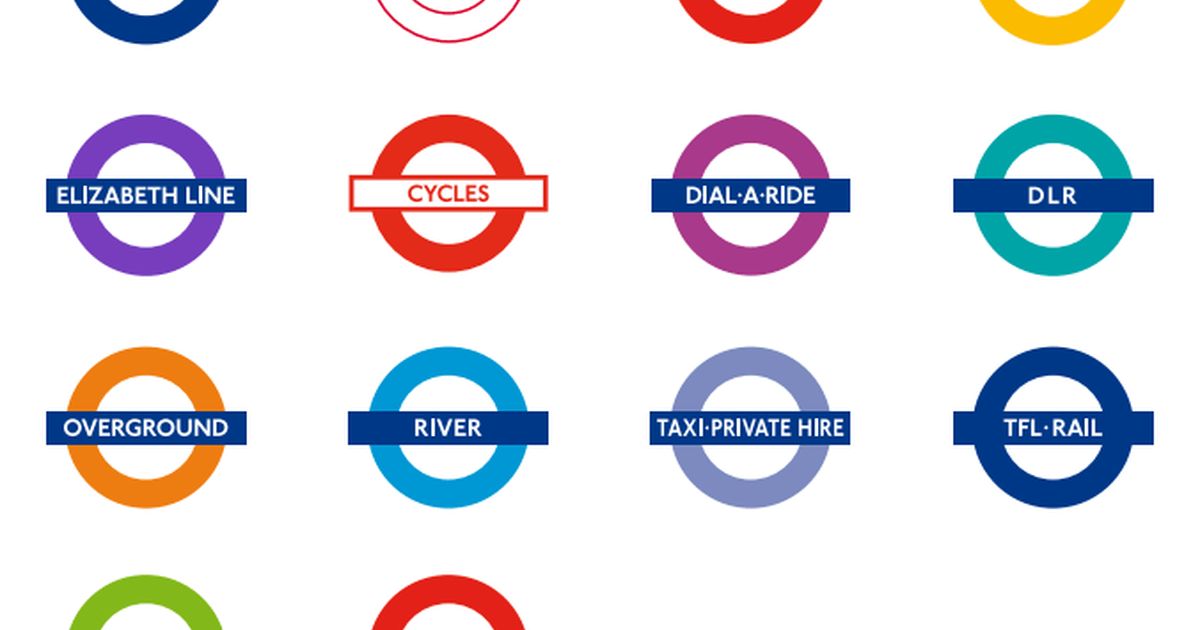
It isn't. It is a separate category to Overground and Underground. Overground was TFL taking over poorly served (often orbital) routes outside central London, and making them into a useable service (possibly except Weaver line). Elizabeth line was a brand new railway straight through the centre of London.
 

announcements

Member
Joined
31 Mar 2011
Messages
717
Different operators/contracts. I suppose they could have been amalgamated into one, but they chose not to go down that route - no pun intended.

Actually, I have always wondered for simplicity if the Liberty Line could have been franchised as a standalone branch of the Elizabeth line. Yes, another bit of clutter for the EL diagram, however less clutter and rogueness for the LO network map, and one less colour to have given away. On the other end, they could make the Greenford branch a standalone branch of the EL while they're at it!
 

Ken H

Established Member
Joined
11 Nov 2018
Messages
6,718
Location
N Yorks
UndergrounD is a brand coined by the the company who owned the Yerkes tubes & the district railway + the independant Metropolitan Railway. The capital D at the end was part of the marque
Can't remember when the Central line starting using the marque but I think 1920's
 

PeterC

Established Member
Joined
29 Sep 2014
Messages
4,785
Different operators/contracts. I suppose they could have been amalgamated into one, but they chose not to go down that route - no pun intended.

Actually, I have always wondered for simplicity if the Liberty Line could have been franchised as a standalone branch of the Elizabeth line. Yes, another bit of clutter for the EL diagram, however less clutter and rogueness for the LO network map, and one less colour to have given away. On the other end, they could make the Greenford branch a standalone branch of the EL while they're at it!
I agree about the Liberty. There is no reason why line marketing has to be aligned with operational contracts.

The tube map has a long history of showing branches without a through service
 
Last edited:

JonathanH

Veteran Member
Joined
29 May 2011
Messages
23,388
I agree about the Liberty. There is no reason why line marketing has to be aligned with operational contracts.
The fact that it uses class 710 units otherwise used elsewhere on the Overground makes it tidier to run as an Overground service from both a marketing and operational sense.
 

stadler

Established Member
Joined
5 Jun 2023
Messages
3,304
Location
Horsley
Romford to Upminster has always seemed rather odd as an isolated London Overground branch. It is a shame that the fast and slow lines of the GEML are the other way round as otherwise you could probably just make the Romford to Upminster branch in to a branch of the Elizabeth Line service. Just send two of the Shenfield trains each hour to Upminster instead. The trains get quieter after Romford so diverting two per hour to Upminster would work fine. But the current track layout means they would have to cross over the fast lines so it would never work.
 

317 forever

Established Member
Joined
21 Aug 2010
Messages
3,289
Location
North West
Romford to Upminster has always seemed rather odd as an isolated London Overground branch. It is a shame that the fast and slow lines of the GEML are the other way round as otherwise you could probably just make the Romford to Upminster branch in to a branch of the Elizabeth Line service. Just send two of the Shenfield trains each hour to Upminster instead. The trains get quieter after Romford so diverting two per hour to Upminster would work fine. But the current track layout means they would have to cross over the fast lines so it would never work.
The other option might be to combine it with c2c, which of course is the TOC serving Upminster.
 

generalnerd

Member
Joined
20 Jan 2025
Messages
455
Location
Hull
The main part people use is underground, plenty of users would probably not ever take it above ground and it would be weird to call it ‘overground’ whilst the main bit is deep
 

Mojo

Forum Staff
Staff Member
Administrator
Joined
7 Aug 2005
Messages
21,191
Location
0035
The other option might be to combine it with c2c, which of course is the TOC serving Upminster.
Which would of course make no sense whatsoever given the unit for it is based out of Ilford depot (which is a depot used by LO “Weaver” line trains which also operate the branch) and there is no physical connection to the c2c route at Upminster, even though it was originally a branch of the LT&S.

The branch being part of LO is probably the most sensible Toc to put it with despite the fact it is geographically separated from the rest of said Toc’s services.
 

yorkie

Forum Staff
Staff Member
Administrator
Joined
6 Jun 2005
Messages
78,463
Location
Yorkshire
UndergrounD is a brand coined by the the company who owned the Yerkes tubes & the district railway + the independant Metropolitan Railway. The capital D at the end was part of the marque
Do you have a source for this claim? From what I've seen, it was all caps, but the first and last characters were simply larger.

I see no evidence that only the U and D were capitals; the middle characters were never in lower case in any source I've ever seen.

There is some history here:
In 1908, the various separate underground railway companies agreed to use the term ‘Underground’ for all their joint promotion of services.

A distinctive logotype (also known as a word mark), designed with a large initial U and final D, began to appear outside stations and on advertising material.
 

AM9

Veteran Member
Joined
13 May 2014
Messages
16,061
Location
St Albans
Which would of course make no sense whatsoever given the unit for it is based out of Ilford depot (which is a depot used by LO “Weaver” line trains which also operate the branch) and there is no physical connection to the c2c route at Upminster, ...
especially as it is the wrong side of the line to access the C2C track, indeed, even worse that the Romford situation because it would involve dual electrification (ac OLE and DC 4th rail) of the District line.
 

pdeaves

Established Member
Joined
14 Sep 2014
Messages
5,932
Location
Gateway to the South West
I see no evidence that only the U and D were capitals; the middle characters were never in lower case in any source I've ever seen.
You're reading too much into Ken H's statement. I think he was simply trying to use plain text to indicate larger end letters (as you described).
 

Transilien

Member
Joined
10 Mar 2024
Messages
756
Location
Ayrshire
It’s similar to the RER/transilien situation in Île de France where the RER runs across the city while transilien terminates at city termini (I.e. Paris St Lazare or Paris Nord).
 
Last edited:

Mgameing123

Member
Joined
29 Apr 2023
Messages
1,060
Location
Denmark
It’s not really anything comparable to the Underground or Overground.

The only other system that works the same way as the Elizabeth Line is Thameslink.
 

Ken H

Established Member
Joined
11 Nov 2018
Messages
6,718
Location
N Yorks
I think you are right @yorkie. UNDERGROUND all in caps but larger initial and last letters

Your evolution of the roundel link is a good source.
 

61653 HTAFC

Veteran Member
Joined
18 Dec 2012
Messages
19,366
Location
Yorkshire
So I appreciate on the face of it, the answer is "because it's underground"

But ... less than half the underground is actually below ground

The Elizabeth line is a TFL run service on a NR line. Using "normal trains", with "normal" 25KV power. which broadly speaking puts it in the same class as Overground

So, why is it categorised in the underground line?
More than half of the Underground is also above ground, to be fair. At Whitechapel there's the amusing quirk of the Underground lines passing over the top of the Overground lines.
They're essentially just different brands, and sometimes applied for (small "p") political reasons as much as practical ones. Crossrail was rebranded as the Elizabeth line for political PR reasons by the Johnson administration, not because it made any logical sense. In practical terms it is essentially an Overground line in all but name. Or perhaps a sideways version of Thameslink.

If it was up to me I'd have saved the Elizabeth Line name for a rebranding of the Jubilee Line in honour of the late Queen Elizabeth II. It was already named in her honour after all, but it's a bit daft that there's a line marking her silver jubilee when she went on to celebrate her golden and diamond ones!
 

JJKiller

Member
Joined
23 Nov 2018
Messages
9
That’s because it’s a Crossrail. But we’re not allowed to call it that anymore. Stupid decision to get rid of the mode name..
Agreed. And with Crossrail 2 on the cards (at the time) it could have been the beginning of a network. Throw in a re-branded Thameslink as Crossrail 3 and we’re looking more like the RER in Paris, German S-Bahn or Spanish Cercanías networks.
 

A60stock

Member
Joined
26 Aug 2019
Messages
245
Location
London
I have a feeling that when/if Crossrail 2 opens, a decision will likely be taken to go back to using the mode name of "Crossrail" for what are currently the purple "Elizabeth line" roundels, with the Elizabeth line name becoming the name of the specific line, by which time, it would be fine to update certain signage elements. It is only really the Roundels which would need to be changed. Station line maps would retain the Elizabeth Line name, as well as any signposting for the line specifically.

I think the signage being marked as Elizabeth Line makes sense EXCEPT for using it on the Roundel. I guess until you have more than one "Crossrail line", it's not going to really cause too many issues.
 
Last edited:

Tetchytyke

Veteran Member
Joined
12 Sep 2013
Messages
17,628
Location
Isle of Man
I suspect that the route being New and Shiny and Exciting was enough to give it a separate branding/name to keep it distinct.
Romford to Upminster has always seemed rather odd as an isolated London Overground branch.

The branch was always operationally included with the other inner-suburban services out of Liverpool Street, even before electrification, so when they moved to Overground it made sense for that line to move to Overground too. It could have gone to either TfL Rail (which took over the Shenfield service in preparation for Crossrail) or Overground. But I think Overground probably made more sense with a shared pool of trains and drivers.

The branding is separate because the line itself is separate from the other Overground lines out of Liverpool Street.

There are a few of the inner-suburban services on the GEML which don't neatly fit into one box. The Stratford-Meridian Water service is one that feels like it should be with Overground but isn't, and that's probably because of the level of interworking with the Stratford-Bishops Stortford service.
 

greatkingrat

Established Member
Joined
20 Jan 2011
Messages
3,312
When the Liberty line originally transferred to London Overground, it was driven by TfL Rail drivers who had transferred from Greater Anglia. It was only when the Class 710 trains were introduced that LO drivers were used.
 

Ken H

Established Member
Joined
11 Nov 2018
Messages
6,718
Location
N Yorks
The branch was always operationally included with the other inner-suburban services out of Liverpool Street, even before electrification, so when they moved to Overground it made sense for that line to move to Overground too. It could have gone to either TfL Rail (which took over the Shenfield service in preparation for Crossrail) or Overground. But I think Overground probably made more sense with a shared pool of trains and drivers.

The branding is separate because the line itself is separate from the other Overground lines out of Liverpool Street.

There are a few of the inner-suburban services on the GEML which don't neatly fit into one box. The Stratford-Meridian Water service is one that feels like it should be with Overground but isn't, and that's probably because of the level of interworking with the Stratford-Bishops Stortford service.
There was a diesel worked upminster grays service. I think it was amalgamated into a TOC somehow.
 

Tetchytyke

Veteran Member
Joined
12 Sep 2013
Messages
17,628
Location
Isle of Man
There was a diesel worked upminster grays service. I think it was amalgamated into a TOC somehow.
Yeah, it was cut back to Upminster at some point and now IIRC you can’t access the C2C lines from the Romford direction. Wikipedia says it was diesel operated until NSE in 1986 when the Romford-Upminster branch was electrified.

When the Liberty line originally transferred to London Overground, it was driven by TfL Rail drivers who had transferred from Greater Anglia. It was only when the Class 710 trains were introduced that LO drivers were used.
Makes sense, especially with the TfL Rail drivers driving the 315s.
 

Magdalia

Established Member
Joined
1 Jan 2022
Messages
7,412
Location
The Fens
The branch was always operationally included with the other inner-suburban services out of Liverpool Street
Not always. Romford-Upminster was London Tilbury and Southend Railway (LTS). In steam days there was a Romford-Upminster-Grays-Tilbury service.

These were some of the first services to go over to DMUs, in 1956, with the DMUs based at Stratford. That's when Romford-Upminster first became a standalone service operated from the Romford end.

There was a diesel worked upminster grays service.

DMUs based at Tilbury also operated Upminster-Grays-Tilbury, with cyclic working to get DMUs from/to Stratford for maintenance. The service had to be spilt at Upminster because of track changes associated with LTS electrification and the new Upminster LT Depot.

Romford-Upminster-Grays-Tilbury continued to be presented in the same table in the Eastern Region public timetable until summer 1962 when the (almost) full LTS electric timetable was introduced.


Wikipedia says it was diesel operated until NSE in 1986 when the Romford-Upminster branch was electrified.
The electric service on Romford-Upminster started in May 1986, about a month before Network SouthEast was launched.
 

Instinct04

On Moderation
Joined
1 Jun 2023
Messages
211
Location
London
Romford to Upminster has always seemed rather odd as an isolated London Overground branch. It is a shame that the fast and slow lines of the GEML are the other way round as otherwise you could probably just make the Romford to Upminster branch in to a branch of the Elizabeth Line service. Just send two of the Shenfield trains each hour to Upminster instead. The trains get quieter after Romford so diverting two per hour to Upminster would work fine. But the current track layout means they would have to cross over the fast lines so it would never work.
If the Slow/Fast Lines at Romford were inverted, then it could work. Only other issue would be the platform lengths at both Emerson Park and Upminster...
 

Magdalia

Established Member
Joined
1 Jan 2022
Messages
7,412
Location
The Fens
If the Slow/Fast Lines at Romford were inverted, then it could work. Only other issue would be the platform lengths at both Emerson Park and Upminster...
That isn't going to happen, because of the location of the Elizabeth Line carriage sidings at Gidea Park and Shenfield.
 
Status
Not open for further replies.

Top