• Our new ticketing site is now live! Using either this or the original site (both powered by TrainSplit) helps support the running of the forum with every ticket purchase! Find out more and ask any questions/give us feedback in this thread!

Why Is New Overhead Electrification So Ugly?

Status
Not open for further replies.

Envoy

Established Member
Joined
29 Aug 2014
Messages
3,127
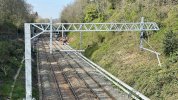
Many comments were made about how ugly (& costly) the overhead electrification was when the GWR was wired. I now see that similar looking masts have been placed on the south Wales valleys (metro) electrification. Was this a ‘job lot’ left over from the GWR scheme? Why is foreign electrification with higher speeds and usually a more severe climate so less obtrusive? What are they using for the Trans-Pennine Electrification?

Photo below shows the City Line in Cardiff.
 

Attachments

  • OLE ON CARDIFF CITY LINE.jpg
    OLE ON CARDIFF CITY LINE.jpg
    4.8 MB · Views: 494
Sponsor Post - registered members do not see these adverts; click here to register, or click here to log in
R

RailUK Forums

zwk500

Veteran Member
Joined
20 Jan 2020
Messages
18,491
Location
Northampton
Many comments were made about how ugly (& costly) the overhead electrification was when the GWR was wired. I now see that similar looking masts have been placed on the south Wales valleys (metro) electrification. Was this a ‘job lot’ left over from the GWR scheme?
There are a number of OLE designs used in the UK of varying 'chunkiness'. Somebody on either the TRU or MML thread posted a comparison. @Elecman or @59CosG95 are you able to explain the differences? It needs to be stiff enough to span the tracks, holding the tension and stand up to the expected ground and wind conditions. The use of Twin-Track Cantilevers as you've pictured is preferred because it means only 1 pile rather than 2, speeding up delivery and making less noise for neighbours.
In other areas Portal gantries are used, or single track masts where the support structures can't be co-located or it's better to avoid the cantilever span. Portals are also used where Headspan wires might have been once because of problems with the threadbare 80's installations taking out everything at once.
Why is foreign electrification with higher speeds and usually a more severe climate so less obtrusive? What are they using for the Trans-Pennine Electrification?
Much foreign electrification was installed earlier (certainly in western Europe) and compares pretty similarly to UK kit of similar vintage. In addition, many European railways use 1.5 or 3KV DC which has different tension and insulation requirements and can have much lighter looking equipment. The Germans have long had a preference for lattice masts and structures, which also helps them look lighter. European conventional railways are also in general slower than the UK. There's also the issue of building while maintaining a running railway in between shifts - if you compare lines built with electrification from new (HS1) they have largely the same kit as comparable European routes.

 

LNW-GW Joint

Veteran Member
Joined
22 Feb 2011
Messages
21,904
Location
Mold, Clwyd
Brand new (as yet unused) 25kV high speed lines in Spain designed for 320km/h (200mph) use much lighter electrification structures than NR's recent 140mph GW wiring.
They are also painted green to blend into the landscape, and have old-hat pulleys and weights for tensioning.
New/upgraded 230km/h lines in Austria (15kV) similarly.
HS1 electrification is less intrusive than the GW design.

NR adopted an improved design over the GW setup (MS1) for MML and also seemingly TRU, but it still looks too heavy to me.
There's still nothing to beat the lattice portal structures of the original 1960s WCML wiring for 4-track routes.
 

zwk500

Veteran Member
Joined
20 Jan 2020
Messages
18,491
Location
Northampton
Brand new (as yet unused) 25kV high speed lines in Spain designed for 320km/h (200mph) use much lighter electrification structures than NR's recent 140mph GW wiring.
They are also painted green to blend into the landscape, and have old-hat pulleys and wheels for tensioning.
New/upgraded 230km/h lines in Austria (15kV) similarly.
HS1 electrification is less intrusive than the GW design.
Brand new routes are not a fair comparison though because you don't have to install the masts in between trains needing to run! A major reason why TTCs are liked is that you only need 1 pile not 2, which makes it much quicker to install but then requires the structure itself to be much stronger to take the torsion forces at the end of the arm.
 

Mag_seven

Forum Staff
Staff Member
Global Moderator
Joined
1 Sep 2014
Messages
11,957
Location
here to eternity
If you put up obtrusive robust structures you are accused of gold plating and over engineering.
If you put up unobtrusive less robust structures you are accused of electrifying on the cheap.
 

GRALISTAIR

Established Member
Joined
11 Apr 2012
Messages
10,488
Location
Preston Lancs
If you put up obtrusive robust structures you are accused of gold plating and over engineering.
If you put up unobtrusive less robust structures you are accused of electrifying on the cheap.
I am glad you said it. No win situation for us Brits that like to moan and groan.
 

oglord

Member
Joined
13 Oct 2010
Messages
377
Location
Newport, Monmouthshire
Many comments were made about how ugly (& costly) the overhead electrification was when the GWR was wired. I now see that similar looking masts have been placed on the south Wales valleys (metro) electrification. Was this a ‘job lot’ left over from the GWR scheme? Why is foreign electrification with higher speeds and usually a more severe climate so less obtrusive? What are they using for the Trans-Pennine Electrification?
These are MML-like not GWML-like.
 

nlogax

Established Member
Joined
29 May 2011
Messages
6,012
Location
Mostly Glasgow-ish. Mostly.
I now see that similar looking masts have been placed on the south Wales valleys (metro) electrification.
It's Bonomi (or similar) kit, part of the Network Rail UK Master Series catalogue of electrification components, and attached to a tradition UK twin track cantilever. See also EGIP, MML, Barrhead/East Kilbride etc. Personally I think it looks pretty elegant.

No Bonomi stuff on the GW project that I can recall. That was Furrer+Frey, some of their components also live on via UKMS.
 

Revaulx

Member
Joined
17 Sep 2019
Messages
526
Location
Saddleworth
If you put up obtrusive robust structures you are accused of gold plating and over engineering.
If you put up unobtrusive less robust structures you are accused of electrifying on the cheap.

I am glad you said it. No win situation for us Brits that like to moan and groan.

That’s not really true is it?

Gold plating would consist of putting up proper gantries, which would be both more robust and less obtrusive than the ugly but cheaper to build Twin Track Cantilevers.
 

Trainbike46

Established Member
Joined
18 Sep 2021
Messages
4,371
Location
belfast
Putting in structures that are strong, and resistant to damage is a good thing in my view. Save on maintenance and reduce delays due to OHLE failures.

Designing it so that less piling is needed is desirable on an active railway, so I don't see the issue here?
 

HSTEd

Veteran Member
Joined
14 Jul 2011
Messages
20,287
If you put up obtrusive robust structures you are accused of gold plating and over engineering.
If you put up unobtrusive less robust structures you are accused of electrifying on the cheap.

"electrifying on the cheap" has never managed to destroy the national electrification programme.
"gold plating and over engineering" most certainly has.
 

59CosG95

Established Member
Joined
18 Aug 2013
Messages
6,855
Location
Beeston (Notts)
Brand new routes are not a fair comparison though because you don't have to install the masts in between trains needing to run! A major reason why TTCs are liked is that you only need 1 pile not 2, which makes it much quicker to install but then requires the structure itself to be much stronger to take the torsion forces at the end of the arm.
They're also favoured on 4-track open route areas as one pair of lines can be kept open while the other pair is closed for works (though this rarely happens in daylight hours).
It's Bonomi (or similar) kit, part of the Network Rail UK Master Series catalogue of electrification components, and attached to a tradition UK twin track cantilever. See also EGIP, MML, Barrhead/East Kilbride etc. Personally I think it looks pretty elegant.

No Bonomi stuff on the GW project that I can recall. That was Furrer+Frey, some of their components also live on via UKMS.
Minor pedantry point: the Metro here is using Alstom 'cLever' kit, which is admittedly very similar to the Bonomi kit.
And I remember seeing at least 1 Bonomi cantilever in the Newport area, as the radial load was too high for a F+F cantilever.
 

leytongabriel

Member
Joined
27 Jan 2013
Messages
639
'If you put up obtrusive robust structures you are accused of gold plating and over engineering.
If you put up unobtrusive less robust structures you are accused of electrifying on the cheap'.

More like engineers who are the 'experts' don't like being questioned. There needs to be input from people with other values too.
Don't aestethic considerations need to be incoporated earlier in the design stage?
There shouldn't be this no-win choice between robust and ugly and lighter but less obtrusive.
I was waiting at Bristol Parkway the other day and was also struck how unbelievably ugly the cantenary is.
Easy to laugh at the good burghers of Bath not wanting it over the viaduct in their cherished city but you can see why.
 

AM9

Veteran Member
Joined
13 May 2014
Messages
16,027
Location
St Albans
Brand new (as yet unused) 25kV high speed lines in Spain designed for 320km/h (200mph) use much lighter electrification structures than NR's recent 140mph GW wiring.
They are also painted green to blend into the landscape, and have old-hat pulleys and weights for tensioning.
New/upgraded 230km/h lines in Austria (15kV) similarly.
HS1 electrification is less intrusive than the GW design.
In general, lines in Spain have far lighter use*, and less rain and ice to endure. Which not only menas less wear and tear, but also less opportunity for rectification of faults.

*even off-peak, the GWML main tracks get 7-8 trains each way per hour.
 

zwk500

Veteran Member
Joined
20 Jan 2020
Messages
18,491
Location
Northampton
'If you put up obtrusive robust structures you are accused of gold plating and over engineering.
If you put up unobtrusive less robust structures you are accused of electrifying on the cheap'.

More like engineers who are the 'experts' don't like being questioned. There needs to be input from people with other values too.
Don't aestethic considerations need to be incoporated earlier in the design stage?
There shouldn't be this no-win choice between robust and ugly and lighter but less obtrusive.
I was waiting at Bristol Parkway the other day and was also struck how unbelievably ugly the cantenary is.
Easy to laugh at the good burghers of Bath not wanting it over the viaduct in their cherished city but you can see why.
Budget, Looks, Quality. Pick Any 2. The Treasury usually get to go first and they always seem to pick 'Budget' for some reason.
 

Dougal2345

Member
Joined
29 Oct 2009
Messages
633
In general, lines in Spain have far lighter use*, and less rain and ice to endure. Which not only menas less wear and tear, but also less opportunity for rectification of faults.

*even off-peak, the GWML main tracks get 7-8 trains each way per hour.
Does each passing train cause the lattice structure to flex appreciably then? I would have thought (as a layman) that there would be little vibration transferred from the pantograph to the main structure, and that, say, flexing in the wind would be a much bigger factor?
 

stuu

Established Member
Joined
2 Sep 2011
Messages
3,764
I was waiting at Bristol Parkway the other day and was also struck how unbelievably ugly the cantenary is.
Easy to laugh at the good burghers of Bath not wanting it over the viaduct in their cherished city but you can see why.
It was never going to be used through Bath, there was a bespoke design selected for it. As NR knew full well how ugly their kit was. It's not the robustness that bothers me about the GW electrification, it's the sheer inelegance of the industrial design and the wasteful use of materials. The lattice structure in the OP is miles better than anything on the GWML
 

AM9

Veteran Member
Joined
13 May 2014
Messages
16,027
Location
St Albans
Does each passing train cause the lattice structure to flex appreciably then? I would have thought (as a layman) that there would be little vibration transferred from the pantograph to the main structure, and that, say, flexing in the wind would be a much bigger factor?
Lattice structure has more joints, and more places where corrosion can take place. It is also probably more expensive than the one piece gantry to manufacture despite using more material. The design of the catenary and conductor wires support components that the more substantial gantries give the smallest live component envelope improving the survivability of foreign body damage, and reducing the HV hazards.
It was never going to be used through Bath, there was a bespoke design selected for it. As NR knew full well how ugly their kit was. It's not the robustness that bothers me about the GW electrification, it's the sheer inelegance of the industrial design and the wasteful use of materials. The lattice structure in the OP is miles better than anything on the GWML
The OLE through the cutting by Sydney Gardens was (or will) be to a design that used wall brackets fixed to the stone retianing walls. The materials will be there for over 100 years* so the use of more than some other designs is insignificant compared with the overall cost of the OLE.
* The original LNER OLE support structures used on the GEML and Piccadilly to Glossop lines are already about 75 years old and still doing their job perfectly well.
 

snowball

Established Member
Joined
4 Mar 2013
Messages
8,144
Location
Leeds
The OLE through the cutting by Sydney Gardens was (or will) be to a design that used wall brackets fixed to the stone retianing walls. The materials will be there for over 100 years* so the use of more than some other designs is insignificant compared with the overall cost of the OLE.
An image of the proposed OLE at Sydney Gardens (dating from when the GW electrification there was still an active proposal) was posted in another thread within the last six months or so, but I can't find it right now. If I remember correctly a curved steel beam would start out running up the retaining wall and then curve overhead.
 

zwk500

Veteran Member
Joined
20 Jan 2020
Messages
18,491
Location
Northampton
An image of the proposed OLE at Sydney Gardens (dating from when the GW electrification there was still an active proposal) was posted in another thread within the last six months or so, but I can't find it right now. If I remember correctly a curved steel beam would start out running up the retaining wall and then curve overhead.
Here's the blog https://bathnewseum.com/2016/04/26/is-this-the-sydney-gardens-rig-for-electrification/

I've no idea if this was the only proposal, nor if there would be a different proposal if it was done today.
 

59CosG95

Established Member
Joined
18 Aug 2013
Messages
6,855
Location
Beeston (Notts)
Lattice structure has more joints, and more places where corrosion can take place. It is also probably more expensive than the one piece gantry to manufacture despite using more material. The design of the catenary and conductor wires support components that the more substantial gantries give the smallest live component envelope improving the survivability of foreign body damage, and reducing the HV hazards.
And another thing - while there are 4 angle portals in the modern design ranges (in fact they've been there since Mk3), they have a much smaller design tolerance as the base of the masts have no slotted holes.
 

Envoy

Established Member
Joined
29 Aug 2014
Messages
3,127
Many thanks everybody for your responses.
 

GRALISTAIR

Established Member
Joined
11 Apr 2012
Messages
10,488
Location
Preston Lancs
Lattice structure has more joints, and more places where corrosion can take place.
This is absolutely key. Remember, all chemical reactions take place on surfaces. (Nuclear reactions take place in the nucleus). So corrosion takes place on surfaces. A lattice structure has a much higher surface area/volume ratio.

1) Lowest corrosion (if any) - in the body of the material
2) Next lowest corrosion - on the surface of a material
3) Very high corrosion on edges (two surfaces come together)
4) Extremely high corrosion on corners (three surfaces come together)

Joints not good at all for corrosion.
 
Status
Not open for further replies.

Top