• Our new ticketing site is now live! Using either this or the original site (both powered by TrainSplit) helps support the running of the forum with every ticket purchase! Find out more and ask any questions/give us feedback in this thread!

Why did the Class 769 Flex fail?

Status
Not open for further replies.

Archie810

Member
Joined
25 Jan 2023
Messages
48
Location
Derbyshire
Since GWR are no longer going to operate newly refurbished class 769s, that got me wondering how and why did the 769 flex project fail? This isn't a train i know too much about but i do know that they were pretty unreliable, but lots of trains can be unreliable. so what was it that fundamentally killed this project off?
 
Sponsor Post - registered members do not see these adverts; click here to register, or click here to log in
R

RailUK Forums

Joined
1 Feb 2018
Messages
132
I think you highlighted the exact problem, it was pretty unreliable, and that makes it a pretty bad train. However, other big factors were reduced level of demand for travel than when they were ordered, and probably the slightly higher running costs than expected made an easy solution to bin them off.
 

JonathanH

Veteran Member
Joined
29 May 2011
Messages
23,307
There were three things discussed on this forum
a) unreliability - they never managed to get past a point where they had reliable units, with multiple failures during the testing phase
b) industrial relations - they were deemed unsatisfactory workplaces by traincrew, and not accepted by the union
c) the training requirement - a substantial training programme would have had to be put in place to get the drivers trained which would have taken time and money.

Ultimately, it appears to have been an easy decision to send the units off lease unused as a way of saving costs.

With the Northern and TfW units, there was a difficult introductory phase. One of the substantial issues appears to have been adequately cooling the generator units. This is because they were effectively 'always on' as generators for electric power, in contrast to the way a diesel mechanical or diesel hydraulic set up works.

Ultimately, Porterbrook struggled to provide what it promised, and TfW are discarding their units at the first opportunity.
 

LOL The Irony

Established Member
Joined
29 Jul 2017
Messages
5,335
Location
Chinatown, New York
Since GWR are no longer going to operate newly refurbished class 769s, that got me wondering how and why did the 769 flex project fail? This isn't a train i know too much about but i do know that they were pretty unreliable, but lots of trains can be unreliable. so what was it that fundamentally killed this project off?
The first failure was the fact they were advertised as being quicker to acquire than new trains. Northern found this wasn't the case the hard way, when after everything was said and done, it would've been quicker and easier to just order 8 additional 195/1s. The situation at Northern was so bad, that they, as the launch customer, actually introduced their units after TfW, who only ordered them as a stop gap until their Stadler units entered service.

Of course, if only there were people who knew that slinging diesel engines under 30+ year old trains that spent most of those 30 years being hammered on a mainline, was a bad idea, then Porterbrook might not have made such a silly mistake. (I will say that it was partly driven by the mantra of the time of Northern's stupid idea to replace 323s with 319s. They did make a bit more sense at one time, but now they don't really.)
 

Dan G

Member
Joined
12 May 2021
Messages
610
Location
Exeter
AIUI the new power raft and power/control cabinet are fine, after some typical "teething" trouble with the latter. The problem seems to be mainly around the downstream power system and the traction motors, which apparently were not overhauled – a big mistake.
 

Bertie the bus

Established Member
Joined
15 Aug 2014
Messages
3,216
I think the main problem was it was a good idea woefully executed. The units were years late and don't work very well. Other trains might be unreliable but there is a big difference between a new train with a 30 or 40 year life expectancy that is initially unreliable and a 30 - 40 year old train that is unreliable. It is almost certainly worth putting the time and money into sorting out the problems with the former, but not the latter.
 

AMD

Member
Joined
6 Dec 2017
Messages
772
Also politics.
Porterbrook offered up a theoretical bimode solution at the time the government were trying to downsize some electrification and ended up under pressure to deliver what became a more challenging proposition than they initially thought. I've also been told about how much Porterbrook have lost on this project trying to make it work and it's a very big number.
 

Iskra

Established Member
Joined
11 Jun 2014
Messages
10,686
Location
West Riding
I actually quite like the Northern units. Their bi-mode capability and 4 carriage formation is very useful on a number of routes, plus they’ve released DMU’s and are better for the environment. That said, I’ve not had to rely on them to get to work on a daily basis or maintain them :D
 

fgwrich

Established Member
Joined
15 Apr 2009
Messages
10,632
Location
Hampshire
The first failure was the fact they were advertised as being quicker to acquire than new trains. Northern found this wasn't the case the hard way, when after everything was said and done, it would've been quicker and easier to just order 8 additional 195/1s. The situation at Northern was so bad, that they, as the launch customer, actually introduced their units after TfW, who only ordered them as a stop gap until their Stadler units entered service.

Of course, if only there were people who knew that slinging diesel engines under 30+ year old trains that spent most of those 30 years being hammered on a mainline, was a bad idea, then Porterbrook might not have made such a silly mistake. (I will say that it was partly driven by the mantra of the time of Northern's stupid idea to replace 323s with 319s. They did make a bit more sense at one time, but now they don't really.)
Their first and biggest failure was offering the concept for sale without producing a prototype unit first. Like any good manufacturer or engineer knows, you don't sell the concept before you've produced a product to available to test first. And then, by promising it as something that will be quicker to acquire than a new train and sucking in the orders, well, you reap what you sow! And unsurprisingly, it's coming back to bite them hard.

To summarise, good concept, poor execution, no prototype and rubbish reliability.
 
Last edited:

Invincible

Member
Joined
23 Apr 2022
Messages
853
Location
Surrey
Eversholt have 2 projects
The first to refurbish (ex Thameslink?) 321s (which already have had extensive refurbishment) with battery technology from Vivarail (now GWR) and Kiepe Electric. They dont seem to have any TOC signed up, but presumably were working on a prototype to test alongside GWRs 230 trail?. Doubt if this will progress?
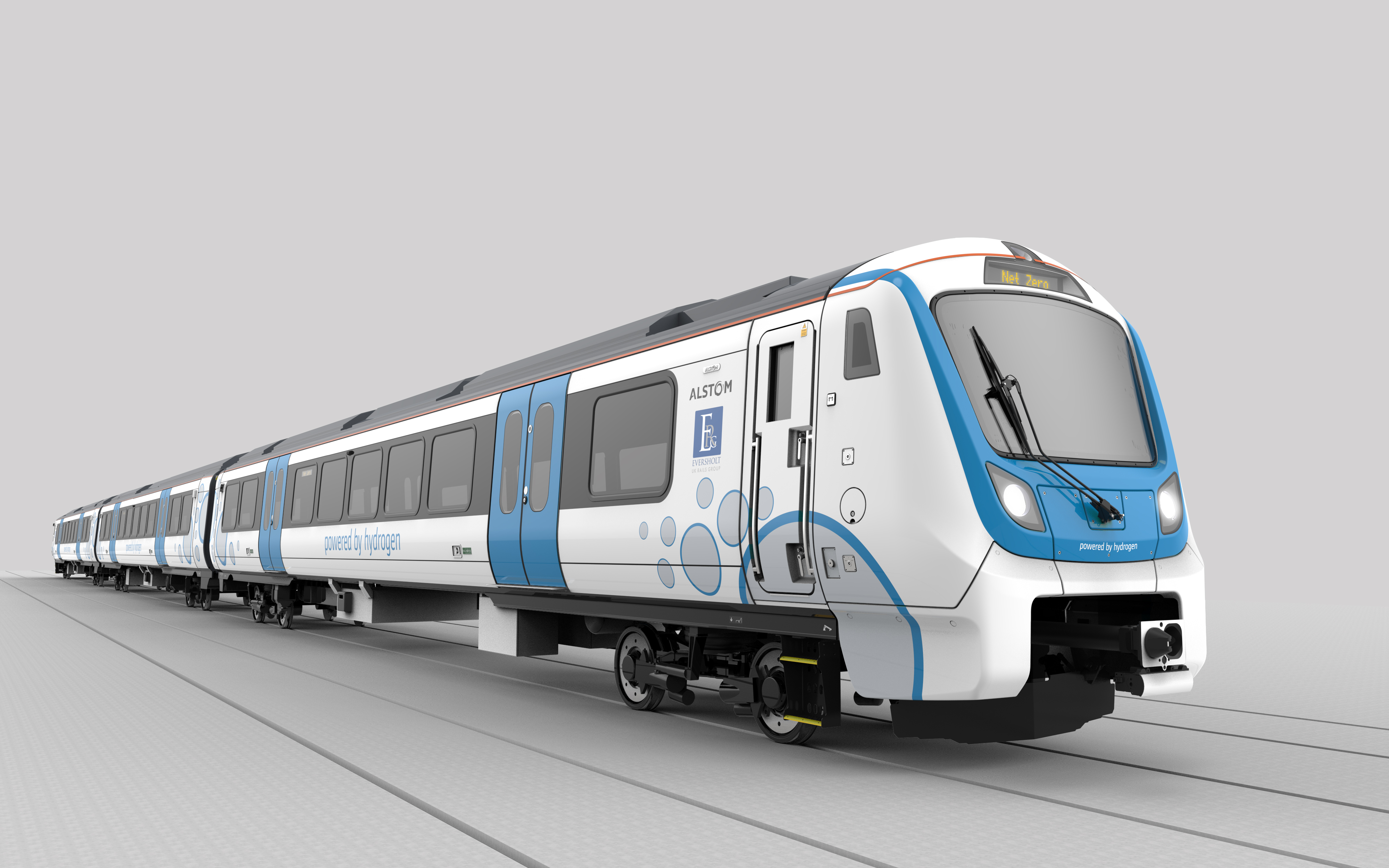
The second is adding Hydrogen to future new build Alstom Aventras, they have a hydrogen 321 prototype and Lint operational trains in Germany, but no confirmed TOC signed up. Some Lint operators in Germany now prefer battery technology to hydrogen, so again doubt if this will progress?

Porterbrook have a project to convert 350s to battery
Providing they test a prototype in conjunction with a TOC before progressing with getting orders, the 350 is a more modern train than the 769, and they learn lessons from the 769 project, it might work?

 
Last edited:

fgwrich

Established Member
Joined
15 Apr 2009
Messages
10,632
Location
Hampshire
Eversholt have 2 projects
The first to refurbish ex Thameslink 321s (which already have had extensive refurbishment) with battery technology from Vivarail (now GWR) and Kiepe Electric. They dont seem to have any TOC signed up, but presumably were working on a prototype to test alongside GWRs 230 trail?. Doubt if this will progress?
The second is adding Hydrogen to future new build Alstom Aventras, they have a hydrogen 321 prototype and Lint operational trains in Germany, but no confirmed TOC signed up. Some Lint operators in Germany now prefer battery technology to hydrogen, so again doubt if this will progress?

Porterbrook have a project to convert 350s to battery
Providing they test a prototype in conjunction with a TOC before progressing with getting orders, the 350 is a more modern train than the 769, and they learn lessons from the 769 project, it might work?
Small point of note, the 321s are the Ex Greater Anglia ‘Renatus’ units.
 

Invincible

Member
Joined
23 Apr 2022
Messages
853
Location
Surrey
Small point of note, the 321s are the Ex Greater Anglia ‘Renatus’ units.
Thanks
So what condition are they in? Is it worth adding new untested battery technology as a prototype to further what Vivarail where hoping to do?
 

D365

Veteran Member
Joined
29 Jun 2012
Messages
13,174
The 319s were pretty knackered after Thameslink. Must have contributed to at least some of the delays.
 

DanNCL

Established Member
Joined
17 Jul 2017
Messages
5,123
Location
County Durham
Eversholt have 2 projects
The first to refurbish (ex Thameslink?) 321s (which already have had extensive refurbishment) with battery technology from Vivarail (now GWR) and Kiepe Electric. They dont seem to have any TOC signed up, but presumably were working on a prototype to test alongside GWRs 230 trail?. Doubt if this will progress?
The second is adding Hydrogen to future new build Alstom Aventras, they have a hydrogen 321 prototype and Lint operational trains in Germany, but no confirmed TOC signed up. Some Lint operators in Germany now prefer battery technology to hydrogen, so again doubt if this will progress?

Porterbrook have a project to convert 350s to battery
Providing they test a prototype in conjunction with a TOC before progressing with getting orders, the 350 is a more modern train than the 769, and they learn lessons from the 769 project, it might work?
Aren’t the hydrogen Aventras supposed to be instead of the 321 conversions?
 

Greybeard33

Established Member
Joined
18 Feb 2012
Messages
4,335
Location
Greater Manchester
Small point of note, the 321s are the Ex Greater Anglia ‘Renatus’ units.
A year or two before the 769 project was conceived, Porterbrook was touting a Renatus-like refurbishment for the 319 fleet, including a new traction package with AC motors, in the hope of extending their life. However, there were no takers.

IMO it was penny wise, pound foolish not to include such an upgrade in the 769 conversion. An AC traction package would have been more reliable and could have been properly integrated with the diesel generator control, giving better performance and efficiency. Northern had already been experiencing reliability issues with its 319 fleet, including failures of the old traction motors, before the 769 conversion.

There were also some major slip-ups in the engineering design of the diesel generator system, which caused several years delay in entry into service. With the two DC generators operating in parallel, the engineers failed to foresee the need for a load balancing system to ensure that the electrical load was shared evenly between them. And then it was discovered, after initial deliveries to Northern, that the bulky catalytic converters of the original exhaust system fouled the adjacent carriage on tight curves. This caused months of delay waiting for a test house slot to repeat the emissions testing with the redesigned exhaust.
 

JonathanH

Veteran Member
Joined
29 May 2011
Messages
23,307
IMO it was penny wise, pound foolish not to include such an upgrade in the 769 conversion. An AC traction package would have been more reliable and could have been properly integrated with the diesel generator control, giving better performance and efficiency. Northern had already been experiencing reliability issues with its 319 fleet, including failures of the old traction motors, before the 769 conversion.
It could have been even more money down the drain without a working prototype. It wouldn't necessarily have avoided the industrial relations issues about the cabs.
 

Invincible

Member
Joined
23 Apr 2022
Messages
853
Location
Surrey
Aren’t the hydrogen Aventras supposed to be instead of the 321 conversions?
Yes, Eversholt gave up on 321 Hydrogen conversations in preference to the Hydrogen powered Aventras (although they have yet to test an Aventra Hydrogen unit). Which is why it's interesting Porterbrook were proposing to continue converting their old 321s to battery power.
 

43096

On Moderation
Joined
23 Nov 2015
Messages
18,782
Yes, Eversholt gave up on 321 Hydrogen conversations in preference to the Hydrogen powered Aventras (although they have yet to test an Aventra Hydrogen unit). Which is why it's interesting Porterbrook were proposing to continue converting their old 321s to battery power.
Porterbrook don't have any 321s. :s
 

Invincible

Member
Joined
23 Apr 2022
Messages
853
Location
Surrey
Porterbrook don't have any 321s. :s
Thanks, correction it is Eversholt who are proposing to convert Renatus 321s to battery,
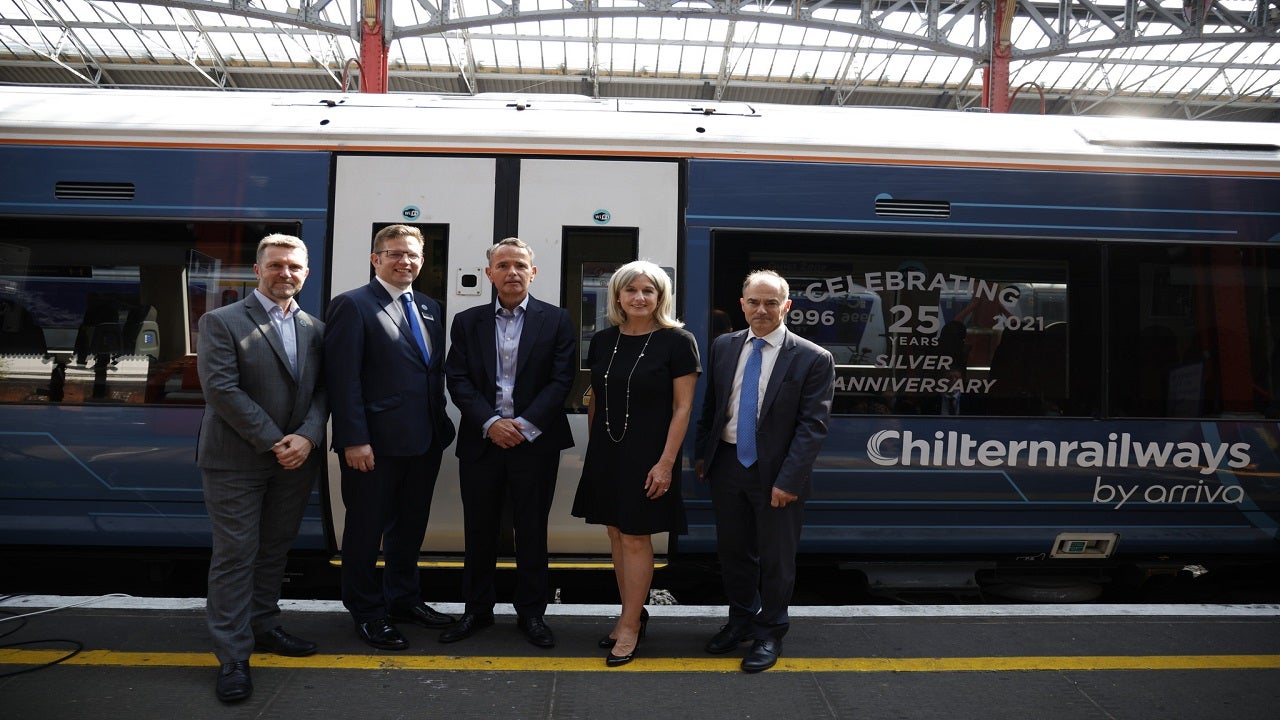
Porterbrook (after the 769s) now have the Turbostar battery diesel "hybidflex" working for Chiltern Railways, no takers for the proposed 350 battery conversion
 

Dan G

Member
Joined
12 May 2021
Messages
610
Location
Exeter
Their first and biggest failure was offering the concept for sale without producing a prototype unit first. Like any good manufacturer or engineer knows, you don't sell the concept before you've produced a product to available to test first. And then, by promising it as something that will be quicker to acquire than a new train and sucking in the orders, well, you reap what you sow! And unsurprisingly, it's coming back to bite them hard.

To summarise, good concept, poor execution, no prototype and rubbish reliability.

No-one builds "prototypes" of anything without at least an EMD contract. Haven't done for 50+ years.
 
Last edited:
Status
Not open for further replies.

Top