• Our new ticketing site is now live! Using either this or the original site (both powered by TrainSplit) helps support the running of the forum with every ticket purchase! Find out more and ask any questions/give us feedback in this thread!

Why Class 37s?

Status
Not open for further replies.

D365

Veteran Member
Joined
29 Jun 2012
Messages
13,176
I'm basing a lot of this on the assumption that a 37 with a 60s power plant is a gas guzzler compared to modern alternatives (eg: a 68) - is this a fair assumption?
You wouldn’t think so if you saw the number of 37s left idling at RTC most days..!
If so, would anyone in the know be able to advise on the true cost analysis of replacement? For example, at what point would it be more efficient to commision a whole new build super-light loco? (I'm coining the term seeing as 68s are "UK light" but still a hefty RA8) I presume the 37s can't go on forever, so there's gotta be a point where the financial scales tip away from them? (Even better if anyone could support an answer with figures)
I’d be impressed if somebody had done the maths and be in a position to share. But I can certainly assume a new build loco would cost upwards of £4m/unit.
 
Sponsor Post - registered members do not see these adverts; click here to register, or click here to log in
R

RailUK Forums

DelW

Established Member
Joined
15 Jan 2015
Messages
5,978
I'm basing a lot of this on the assumption that a 37 with a 60s power plant is a gas guzzler compared to modern alternatives (eg: a 68) - is this a fair assumption?
I suspect possibly not. Some years ago I did some work on diesel engines in a different field (construction plant), correlating fuel consumption against a variety of factors. My conclusion was that the only factor that was really relevant was average power output across the duty cycle, and the graph between that and rate of fuel consumption was almost exactly linear. Other factors including size of engine, age of engine, and type of work, either had no effect or no clear correlation.

I think that much of the development work on diesels has been to improve their performance in terms of emissions, noise, reliability, specific power output (i.e. output per given size of engine), etc. While all these have been achieved, I suspect that energy output (i.e. power x time) per litre of fuel used hasn't actually changed all that much*. If any one with expert knowledge of modern diesel engines can confirm or refute that, I'd be interested to know.

(*off-topic but related - ignore these adverts for "miracle heater warms a room in seconds and costs almost nothing to run". They're snake oil - heat output is directly related to electricity input, and no amount of supposed "ceramic elements" and the like can change that law of physics)
 

coppercapped

Established Member
Joined
13 Sep 2015
Messages
3,328
Location
Reading
I suspect possibly not. Some years ago I did some work on diesel engines in a different field (construction plant), correlating fuel consumption against a variety of factors. My conclusion was that the only factor that was really relevant was average power output across the duty cycle, and the graph between that and rate of fuel consumption was almost exactly linear. Other factors including size of engine, age of engine, and type of work, either had no effect or no clear correlation.

I think that much of the development work on diesels has been to improve their performance in terms of emissions, noise, reliability, specific power output (i.e. output per given size of engine), etc. While all these have been achieved, I suspect that energy output (i.e. power x time) per litre of fuel used hasn't actually changed all that much*. If any one with expert knowledge of modern diesel engines can confirm or refute that, I'd be interested to know.

(*off-topic but related - ignore these adverts for "miracle heater warms a room in seconds and costs almost nothing to run". They're snake oil - heat output is directly related to electricity input, and no amount of supposed "ceramic elements" and the like can change that law of physics)
I agree with you, but with one minor caveat. Recently I read somewhere (I made no note of the reference, doh!) that the use of common rail, high pressure injection systems with more modern types of injector have significantly reduced (FSVO of 'significantly'!) fuel consumption at idle.

But, basically, for the same compression ratios and operating temperatures power output is proportional to the rate of fuel burn.
 

Domh245

Established Member
Joined
6 Apr 2013
Messages
8,426
Location
nowhere
I think that much of the development work on diesels has been to improve their performance in terms of emissions, noise, reliability, specific power output (i.e. output per given size of engine), etc. While all these have been achieved, I suspect that energy output (i.e. power x time) per litre of fuel used hasn't actually changed all that much*. If any one with expert knowledge of modern diesel engines can confirm or refute that, I'd be interested to know.

I recall reading somewhere, though this may be something of a myth, that the various exhaust treatment systems were net-negative in terms of fuel consumtion - perhaps not directly impacting the engine itself but definitely in terms of additional mass to be propelled.

A quick bit of searching has turned up this graph from this paper:

3-s2.0-B9780857095220500091-f09-10-9780857095220.gif


Which shows that (at least in terms of on-road diesel engines) there was a distinct uptick in thermal efficiency from the 1960s to early 2000s, which has since been ticking up again. The same paper refers to a target 55% thermal efficiency and mentions increasing cylinder pressures and adjusting/optimising the injection timing (earlier) as some of the technologies to achieve this
 

Ken H

Established Member
Joined
11 Nov 2018
Messages
6,718
Location
N Yorks
I recall reading somewhere, though this may be something of a myth, that the various exhaust treatment systems were net-negative in terms of fuel consumtion - perhaps not directly impacting the engine itself but definitely in terms of additional mass to be propelled.

A quick bit of searching has turned up this graph from this paper:

3-s2.0-B9780857095220500091-f09-10-9780857095220.gif


Which shows that (at least in terms of on-road diesel engines) there was a distinct uptick in thermal efficiency from the 1960s to early 2000s, which has since been ticking up again. The same paper refers to a target 55% thermal efficiency and mentions increasing cylinder pressures and adjusting/optimising the injection timing (earlier) as some of the technologies to achieve this
Does 'net negative' mean that fitting a silencer increased fuel consumption. Cl 37 are certainly loud (part of their attraction for many!).
I am sure the weight of the silencer didnt help either.
you dont get owt fer nowt!
 

gingertom

Established Member
Joined
19 Jun 2017
Messages
1,335
Location
Kilsyth
I'd be surprised if an MTU R4000 V12 (out of the HST) wouldn't fit. A few more horses, meets modern emission regulations, improved fuel consumption, same weight (give or take). That it hasn't been done suggests the cost of such an engine swap isn't worthwhile.
 

DelW

Established Member
Joined
15 Jan 2015
Messages
5,978
I recall reading somewhere, though this may be something of a myth, that the various exhaust treatment systems were net-negative in terms of fuel consumtion - perhaps not directly impacting the engine itself but definitely in terms of additional mass to be propelled.

A quick bit of searching has turned up this graph from this paper:

3-s2.0-B9780857095220500091-f09-10-9780857095220.gif


Which shows that (at least in terms of on-road diesel engines) there was a distinct uptick in thermal efficiency from the 1960s to early 2000s, which has since been ticking up again. The same paper refers to a target 55% thermal efficiency and mentions increasing cylinder pressures and adjusting/optimising the injection timing (earlier) as some of the technologies to achieve this
Thanks for that, it's an interesting graph. It shows an improvement in efficiency of around 25% between 1960 and 2010, albeit with a hiccup around 2000 due to emission reduction measures. That's actually more than I'd expected, though the work I did in the early 2000s only covered engines up to about 20ish years old, so the improvements would have been less evident (I can't remember if or when extra emissions limits were applied to them). The lines at the bottom do confirm that emissions have been reduced by a much greater factor.
 

MattRat

On Moderation
Joined
26 May 2021
Messages
2,128
Location
Liverpool
I'd actually say the biggest thing of why they are still here is 'cost', by which I mean any change from the status quo costs money, and the Government hates spending money on anything that doesn't benefit them or their mates.

Until we get a new government that will actually invest in the country, the 37s will likely stay until they fall apart.
 

43096

On Moderation
Joined
23 Nov 2015
Messages
18,802
I'd be surprised if an MTU R4000 V12 (out of the HST) wouldn't fit. A few more horses, meets modern emission regulations, improved fuel consumption, same weight (give or take). That it hasn't been done suggests the cost of such an engine swap isn't worthwhile.
The HST engine is a V16 (16V4000 R41).
 

Domh245

Established Member
Joined
6 Apr 2013
Messages
8,426
Location
nowhere
Does 'net negative' mean that fitting a silencer increased fuel consumption. Cl 37 are certainly loud (part of their attraction for many!).
I am sure the weight of the silencer didnt help either.
you dont get owt fer nowt!

Apologies, just realised the clunkiness of the wording! But in effect, the fitment of exhaust treatment (/scrubbing) reduced the fuel efficiency of the engines - which is what the drop off ~2000 in the graph represents. Fitting a silencer shouldn't really have an impact beyond a small amount of backpressure on the exhaust, which shouldn't have been too big an impact, it's not really treament as such, just a bunch of baffles in the exhaust system. The weight would probably be the bigger impact I'd have thought
 

Speed43125

Member
Joined
20 Jul 2019
Messages
1,172
Location
Dunblane
Apologies, just realised the clunkiness of the wording! But in effect, the fitment of exhaust treatment (/scrubbing) reduced the fuel efficiency of the engines - which is what the drop off ~2000 in the graph represents. Fitting a silencer shouldn't really have an impact beyond a small amount of backpressure on the exhaust, which shouldn't have been too big an impact, it's not really treament as such, just a bunch of baffles in the exhaust system. The weight would probably be the bigger impact I'd have thought
Class 68s have certainly shown that finding space for such silencers can actually be the limiting factor!
 

jfollows

Established Member
Joined
26 Feb 2011
Messages
10,105
Location
Wilmslow
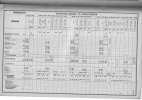
I find it interesting given their ubiquity and longevity that it was extremely unusual to see a class 37 anywhere near Manchester when I was growing up (1970s); there was one conspicuous exception which was the last years of the Harwich Boat Train over Woodhead which - I believe - used a Stratford 37 - but when I was around a few years later this train was always a "Peak" of some sort (and went via the Hope Valley line).
Extract from 6/3/67 to 5/5/68 working timetable.
 

Attachments

  • 1M72.jpeg
    1M72.jpeg
    1.2 MB · Views: 43

D365

Veteran Member
Joined
29 Jun 2012
Messages
13,176
I'd be surprised if an MTU R4000 V12 (out of the HST) wouldn't fit. A few more horses, meets modern emission regulations, improved fuel consumption, same weight (give or take). That it hasn't been done suggests the cost of such an engine swap isn't worthwhile.
Thoroughly in the speculative territory, but a hybrid powerplant would make far more sense in this age.
I'd actually say the biggest thing of why they are still here is 'cost', by which I mean any change from the status quo costs money, and the Government hates spending money on anything that doesn't benefit them or their mates.

Until we get a new government that will actually invest in the country, the 37s will likely stay until they fall apart.
Aside from DRS, which is public owned and has invested in the Class 68/88 locomotives, why should the taxpayer be responsible for bankrolling the renewal of private assets?

I say that, but East Coast ETCS means that a lot of privately-owned locos are effectively getting a 'free' upgrade to their safety systems...
 

12LDA28C

Established Member
Joined
14 Oct 2022
Messages
5,058
I'd actually say the biggest thing of why they are still here is 'cost', by which I mean any change from the status quo costs money, and the Government hates spending money on anything that doesn't benefit them or their mates.

Until we get a new government that will actually invest in the country, the 37s will likely stay until they fall apart.

What does the Government have to do with anything? The 37s are owned/operated by private freight companies (or private owners in some cases) so any cost of replacement would be down to them. Although it's ironic that DRS who were (are) effectively Government funded spent millions on resurrecting demic 37s a few years ago, only to put them up for sale last year.
 
Last edited:
Joined
3 Mar 2020
Messages
672
Location
Furness
I hope the Prince of Wales was open....sadly it isn't any more. :(
Off thread sorry, but there is some talk about the pub being for sale again. Don't know all the ins & outs. Needs a lot of money spending on it if the community has any hope of getting a pub back.
 

_toommm_

Established Member
Joined
8 Jul 2017
Messages
6,296
Location
South West London
I hope the Prince of Wales was open....sadly it isn't any more. :(

It was luckily. I felt more sorry for the crew who had to wait with the train until all of us had our replacement transport arrive, and probably wait with the train until another loco turned up.
 

Jamesrob637

Established Member
Joined
12 Aug 2016
Messages
6,067
Simple

Why not Class 37s?!

Awesome sound, awesome acceleration for old beasts and utterly reliable.
 

driverd

Member
Joined
29 Mar 2021
Messages
909
Location
UK
Thanks again everyone for the replies! Just to pick up on a handful of things:

As for the test train, it is its go pretty much anywhere RA5 without restriction that makes them more suitable. No use having a test train that has to significantly reduce its speed all the time.

Absolutely get the go anywhere bit, but given the UTU train has to go at 30 max, I can see why a 15 mph reduction for a bridge or two would be an issue. I take the west Highland line as an example. There's about 3 or 4 bridges between Fort William and Mallaig where various types of loco have to slow right down. It's hardly a bustling mainline route, so my thinking was essentially if exceptions can be made for heavy locos to go here, why is it seen as such a big deal elsewhere? (Intended as a relatively Rhetorical question as this has been covered pretty conclusively but feel free to go there if you have more to add!)

They are serviceable, available, evidently affordable and fit for these niche purposes: 66s are slow and largely in use, 60s are limited to 60 whilst 67s have a very unappealing axle load.

I'm guessing the general gist is the cost of purchasing and operating a 37, combine with the niches it satisfys, makes it broadly more viable than an order for a new fleet.

Just out of interest, does anyone know what DB utilised on test trains prior to the contract swapping to Colas?

I recall reading somewhere, though this may be something of a myth, that the various exhaust treatment systems were net-negative in terms of fuel consumtion - perhaps not directly impacting the engine itself but definitely in terms of additional mass to be propelled.

A quick bit of searching has turned up this graph from this paper:

3-s2.0-B9780857095220500091-f09-10-9780857095220.gif


Which shows that (at least in terms of on-road diesel engines) there was a distinct uptick in thermal efficiency from the 1960s to early 2000s, which has since been ticking up again. The same paper refers to a target 55% thermal efficiency and mentions increasing cylinder pressures and adjusting/optimising the injection timing (earlier) as some of the technologies to achieve this

A LOT of that went over my head, although the general gist I got (I think). Thank you to yourself and other posters who gave such thoughtful replies and went into so much detail around the fuel economy etc! Really interesting to read.

Is the short, sweet summary that a 37 likely has similar fuel burn to a contrmporary of similar power output, just with a lot more dirties (particulates etc)?

Simple

Why not Class 37s?!

Awesome sound, awesome acceleration for old beasts and utterly reliable.

Without labouring this too much, because they're employed by businesses who make money and don't care for the enthusiast value or sound. Why have the 37s survived where 20s/31s/33s/47s etc etc have not (Rhetorical question)?
 

tomuk

Established Member
Joined
15 May 2010
Messages
2,009
Is the short, sweet summary that a 37 likely has similar fuel burn to a contrmporary of similar power output, just with a lot more dirties (particulates etc)?
Actually a 37 is probably quite benign compared to modern engines. It has both quite a low compression ratio and injector pressure meaning the combustion is cooler and not complete producing lots of visible 'clag' but a lot less NOX and small particulates which are the real nasties without any after treatment.
 

12LDA28C

Established Member
Joined
14 Oct 2022
Messages
5,058
Without labouring this too much, because they're employed by businesses who make money and don't care for the enthusiast value or sound. Why have the 37s survived where 20s/31s/33s/47s etc etc have not (Rhetorical question)?

Again, 47s certainly have survived, and indeed a small fleet was used by Colas until they were sold to GBRf a few years ago as Colas wanted to do away with the micro-fleet of 47s.

Freightliner still operate a 47 which is regularly used for route learning duties and DRS only got rid of their 47s relatively recently and many of those still survive at LSL based at Crewe.

As regards emissions, it will be interesting to see how 37207 performs, if and when it emerges from Wolverton as a hybrid loco.
 

Magdalia

Established Member
Joined
1 Jan 2022
Messages
7,387
Location
The Fens
Why have the 37s survived where 20s/31s/33s/47s etc etc have not (Rhetorical question)?
Class 47s RA6 or RA7.
Class 33s RA6.
Class 31s most late survivors were class 31/4 which were RA6.
Class 20s RA5 but less powerful than class 37s.
 

driverd

Member
Joined
29 Mar 2021
Messages
909
Location
UK
Aware this is often a theme, but I'm trying to avoid repetition of whats already been said in the thread. Both my quoted messages made clear they were rhetorical as there seems little point covering things already mentioned in the thread but, here goes.

Again, 47s certainly have survived, and indeed a small fleet was used by Colas until they were sold to GBRf a few years ago as Colas wanted to do away with the micro-fleet of 47s.

But as already mentioned, 47s never survived having their own niche or guaranteed work every year. RHTT is and has long been the sole reserve of 37s for instance. 47 were always a gap filler and have been out of all commercial service in any serious numbers for over a decade. 37s have not.

Freightliner still operate a 47 which is regularly used for route learning duties and DRS only got rid of their 47s relatively recently and many of those still survive at LSL based at Crewe.

LSL is not in the same market as DRS or Colas so its a totally separate consideration - heritage loco for heritage appeal is very different to tendering for competitive contract work.

As regards the FL 47 - I was unaware of this - where is this based? I can understand it though - I suppose being a 47 stops control steal the road learning train for a failed 66.

Class 47s RA6 or RA7.
Class 33s RA6.
Class 31s most late survivors were class 31/4 which were RA6.
Class 20s RA5 but less powerful than class 37s.

But as covered up thread, there are plenty of circumstances where RA can be mitigated, often with a restricted speed. In addition, RA6 was good enough for the 31s that operated the test trains for years.

Again, this wasn't really intended as a heritage loco comparison, just more a question of why 37s have persevered where other locos, in almost every other regard, have lost their work to more modern machines. Its an interesting railway niche - that the likes of 15-20 year old class 60s were all but dumped (admittedly making a limited come back) in favour of then new 66s, whilst then 45+ year old 37s soldier on. The same could be said for almost all the BR fleets, except 37s.

 
Last edited:

12LDA28C

Established Member
Joined
14 Oct 2022
Messages
5,058
But as already mentioned, 47s never survived having their own niche or guaranteed work every year. RHTT is and has long been the sole reserve of 37s for instance. 47 were always a gap filler and have been out of all commercial service in any serious numbers for over a decade. 37s have not.

Apart from the very many routes that use 66s or MPVs on RHTT work of course. It depends entirely on who bids for and wins the contract, whether that be Freightliner, DB or Colas.
 

driverd

Member
Joined
29 Mar 2021
Messages
909
Location
UK
Apart from the very many routes that use 66s or MPVs on RHTT work of course. It depends entirely on who bids for and wins the contract, whether that be Freightliner, DB or Colas.

Right! And exactly my point in creating this topic - whats the competitive advantage of a 37, as opposed to replacing them with an MPV etc. Where's the cost:benefit ratio and at what point would the scales tip toward favouring something new build.
 

12LDA28C

Established Member
Joined
14 Oct 2022
Messages
5,058
Right! And exactly my point in creating this topic - whats the competitive advantage of a 37, as opposed to replacing them with an MPV etc. Where's the cost:benefit ratio and at what point would the scales tip toward favouring something new build.

I'm not sure exactly what you're asking here. It's not about 37s having a 'competitive advantage'.

Colas have a fleet of 37s, as do DRS (who I believe sold some locos off and leased them back). So if Colas and/or DRS bid for RHTT work and lost out because Freightliner or DB bid cheaper, and a loco's RA was not a concern then you would not see 37s on RHTT work any more.

If 37s are part of your fleet, why would you spend a lot of money replacing them with new locos (at more than a million pounds per loco, plus the associated cost of training drivers and maintenance staff on the new fleet)? How would that make commercial sense?
 

MattRat

On Moderation
Joined
26 May 2021
Messages
2,128
Location
Liverpool
If 37s are part of your fleet, why would you spend a lot of money replacing them with new locos (at more than a million pounds per loco, plus the associated cost of training drivers and maintenance staff on the new fleet)? How would that make commercial sense?
Commercial sense? No. Climate sense? Yes. It's weird how we are constantly told about climate change and what we joe public should be doing to help, but companies are allowed to continue being massive polluters and nothing seems to be said to them. Rules for thee and not for me it seems.
 

Magdalia

Established Member
Joined
1 Jan 2022
Messages
7,387
Location
The Fens
Right! And exactly my point in creating this topic - whats the competitive advantage of a 37, as opposed to replacing them with an MPV etc. Where's the cost:benefit ratio and at what point would the scales tip toward favouring something new build.

I'm not sure exactly what you're asking here. It's not about 37s having a 'competitive advantage'.

Colas have a fleet of 37s, as do DRS (who I believe sold some locos off and leased them back). So if Colas and/or DRS bid for RHTT work and lost out because Freightliner or DB bid cheaper, and a loco's RA was not a concern then you would not see 37s on RHTT work any more.

If 37s are part of your fleet, why would you spend a lot of money replacing them with new locos (at more than a million pounds per loco, plus the associated cost of training drivers and maintenance staff on the new fleet)? How would that make commercial sense?
I think that is is a legitimate question. To take COLAS as an example, they had new class 66s and class 70s, yet also acquired class 37s out of preservation.
 

Spartacus

Established Member
Joined
25 Aug 2009
Messages
3,823
I think that is is a legitimate question. To take COLAS as an example, they had new class 66s and class 70s, yet also acquired class 37s out of preservation.

MPVs can only do 75mph, while 37s can do up to 90mph, while MPVs have more limited haulage capacity. You can't use MPVs on NR's test trains, where the extra speed a 37 offers over 66s and 70s is often vital, it's the same reason COLAS acquired 67s, while their better route availability offers greater flexibility. Barring a new build to replace the very much worn out 31s, nothing else would do the job the 37s can do as comprehensively as a 37.
 
Status
Not open for further replies.

Top