• Our new ticketing site is now live! Using either this or the original site (both powered by TrainSplit) helps support the running of the forum with every ticket purchase! Find out more and ask any questions/give us feedback in this thread!

Why 'bonneted diesels', and why the end of them?

Status
Not open for further replies.

Richard Scott

Established Member
Associate Staff
International Transport
Railtours & Preservation
Joined
13 Dec 2018
Messages
4,587
Nah. 37s weren’t permanently de-rated like the 47s. The 47s were effectively tolerated by BR, largely because there were so many/too many of them and they couldn’t afford replacement.
The 47's need for derating was why BR ordered the 50s. However too much interference by BR in design stages led to inbuilt reliability issues. Believe EE also wanted to fit alternators as knew the generator was really overstressed hence the issues that dogged the 50s in this area? BR didn't want this to their ultimate cost. Think a 50 with an alternator would have been a superb machine.
 
Sponsor Post - registered members do not see these adverts; click here to register, or click here to log in
R

RailUK Forums

Cowley

Forum Staff
Staff Member
Global Moderator
Joined
15 Apr 2016
Messages
18,966
Location
Devon
The 47's need for derating was why BR ordered the 50s. However too much interference by BR in design stages led to inbuilt reliability issues. Believe EE also wanted to fit alternators as knew the generator was really overstressed hence the issues that dogged the 50s in this area? BR didn't want this to their ultimate cost. Think a 50 with an alternator would have been a superb machine.
They could have also gone the extra mile and fitted them with alternators when they refurbished them in the early 80s but didn’t, yet they did fit them to the 37s when they were refurbished a few years later. Always seemed an odd choice to me that one?
 

43096

On Moderation
Joined
23 Nov 2015
Messages
18,895
They could have also gone the extra mile and fitted them with alternators when they refurbished them in the early 80s but didn’t, yet they did fit them to the 37s when they were refurbished a few years later. Always seemed an odd choice to me that one?
The engineers wanted alternators on refurb, but cost cutting saw it removed from the plan. Had they been fitted, I think the 50s would have ended up on XC in place of Duffs.
 

Peter Sarf

Established Member
Joined
12 Oct 2010
Messages
9,842
Location
Croydon
The engine in the 37 was derated from 2000hp, allegedly for reliability. Not sure if it wasn't so wouldn't embarrass the 40s! To be honest can't believe they didn't change the order to more 37s and cancel remaining 40s once 37 was on the scene?
I believe the 2,000hp engine of the class 40 was the 16 cylinder version. With advances of technology (pressure charging - supercharging iirc ?) EE could get 1,750hp out of the 12 cylinder equivalent engine block. So by saving 25% of the engine weight they only lost 12.5% of the power. The saving in weight allowed for a less cumbersome loco with a better route availability. So we went from a 1Co-Co1 wheel arrangement to a Co-Co wheel arrangement.
They did, 37s built from 1960 onwards and 40s until 1962. I know that was the reason for so many 40s but diesel technology was moving on quickly then hence I don't understand why some uprated 37s weren't ordered instead of 40s, which could have been cancelled. Manufacturer wasn't losing out as the same one. BR could have had a loco some 30tons lighter without the cumbersome 1Co-Co1 bogies.
I suspect that the orders were already placed for the 40s. And, like the Brush/Sulzer 44s, 45s & 46s BR were stuck with them. The 37s were only type 3 so not meant for express passenger work.

Brush went on to improve on things in the shape of the class 47. EE got left out having instead filled the (lucrative ?) type 3 slot. The class 50 was EEs late answer to the type 4 requirement but by then not many were required and BR had so over-specified the requirement that the 50 was full of unreliable features.
 

Cowley

Forum Staff
Staff Member
Global Moderator
Joined
15 Apr 2016
Messages
18,966
Location
Devon
The engineers wanted alternators on refurb, but cost cutting saw it removed from the plan. Had they been fitted, I think the 50s would have ended up on XC in place of Duffs.
That’s an interesting alternative history to imagine.
 

edwin_m

Veteran Member
Joined
21 Apr 2013
Messages
28,770
Location
Nottingham
I believe the 2,000hp engine of the class 40 was the 16 cylinder version. With advances of technology (pressure charging - supercharging iirc ?) EE could get 1,750hp out of the 12 cylinder equivalent engine block. So by saving 25% of the engine weight they only lost 12.5% of the power. The saving in weight allowed for a less cumbersome loco with a better route availability. So we went from a 1Co-Co1 wheel arrangement to a Co-Co wheel arrangement.

The 16 cylinder version went through several upratings, first appearing in 1947 in the LMS twins (1,600 hp) and the Southern railway's trio (1700-2000hp), then in Class 40 (2000hp), Class 50 (2700hp) and finally, in the late 1970s, class 56 (3250hp)
Of the above all were Co-Co except the Southern ones and the Class 40, demonstrating that the same basic engine could be fitted into a Co-Co without any problem. The reason to adopt 1Co-Co1 couldn't have been reducing axle load, as the extra length needed for the longer bogies would have increased it about as much as the extra wheels (smaller therefore probably carrying less load than the others) reduced it.

I can only assume the pony wheels were considered necessary to provide some sort of steering of the bogie, like the leading wheels on all steam locomotive designs intended for similar maximum speeds. Did the Co-Co "twins" cause problems with track damage, or another case (like the sleeper flicker issue) of one bit of BR not listening to experience from another bit?
 

delt1c

Established Member
Joined
4 Apr 2008
Messages
2,182
Whatever the flaws of the 37, it has to be said that it hit a sweet spot of performance, reliability, flexibility and weight. It may look a little ungainly and be bit of a mashup of other parts, but I challenge anyone to find a more successful British diesel.
Class 20, from the same stable, simple rugged and have paid for themselves many times over
 

edwin_m

Veteran Member
Joined
21 Apr 2013
Messages
28,770
Location
Nottingham
Class 20, from the same stable, simple rugged and have paid for themselves many times over
The 20 was certainly simple, rugged and reliable. But concern about sighting when running bonnet-first soon resulted in them spending almost all their time running in pairs. Except for some unfitted freights where brake force might have been a concern, with hindsight it would have been better to stop ordering 20s and replace the unordered fleet with an order for half as many extra 37s.
 

Irascible

Established Member
Joined
21 Apr 2020
Messages
2,233
Location
Dyfneint
Of the above all were Co-Co except the Southern ones and the Class 40, demonstrating that the same basic engine could be fitted into a Co-Co without any problem. The reason to adopt 1Co-Co1 couldn't have been reducing axle load, as the extra length needed for the longer bogies would have increased it about as much as the extra wheels (smaller therefore probably carrying less load than the others) reduced it.

I can only assume the pony wheels were considered necessary to provide some sort of steering of the bogie, like the leading wheels on all steam locomotive designs intended for similar maximum speeds. Did the Co-Co "twins" cause problems with track damage, or another case (like the sleeper flicker issue) of one bit of BR not listening to experience from another bit?

I think it was a) brake force, and b) the 40s ( and the SR units ) were built so heavy. One reason the WR went for hydraulics, because they wanted lighter weight & the d-e builders weren't offering - there's not really any good reason you couldn't build lighter D-E,; the 21s were 6t or so heavier than 22s

One thing about flat front builds is that the equipment space isn't split - not sure that *really* makes that mudh difference but it's useful when it's all in one big cavern ( just for cooling, if nothing else ).
 

delt1c

Established Member
Joined
4 Apr 2008
Messages
2,182
The 20 was certainly simple, rugged and reliable. But concern about sighting when running bonnet-first soon resulted in them spending almost all their time running in pairs. Except for some unfitted freights where brake force might have been a concern, with hindsight it would have been better to stop ordering 20s and replace the unordered fleet with an order for half as many extra 37s.
The extra 20's were ordered as replacement for the unsucsesful 17's, so a 37 would have been overpowered for services operated by a single 20, also the 20 were go anywhere machines with a Bo Bo wheel arangment and low gearing
 

randyrippley

Established Member
Joined
21 Feb 2016
Messages
5,382
Major problems with crankcase and crankshaft failures
Almost every engine had to be remanufactured

== Doublepost prevention - post automatically merged: ==

Nah. 37s weren’t permanently de-rated like the 47s. The 47s were effectively tolerated by BR, largely because there were so many/too many of them and they couldn’t afford replacement.

BR chose to de-rate the class 37 engines from new, simply so they qualified as type 3, which is what the government authority for spending was for.
In East African service EE successfully ran the same engine at 2000hp - hotter, higher, with open-air servicing
 
Last edited:

Inversnecky

Member
Joined
1 Jan 2021
Messages
581
Location
Scotland
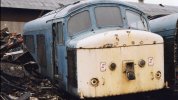
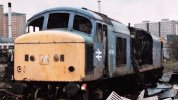
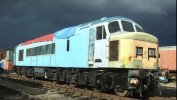
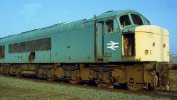
Sad to see the end of these stalwarts of the 1970s...
 

Attachments

  • F0DFFB6E-E57E-4DED-B319-5B1202338961.jpeg
    F0DFFB6E-E57E-4DED-B319-5B1202338961.jpeg
    484.7 KB · Views: 24
  • 67E44A93-E1A7-4800-8842-104E31B3C440.jpeg
    67E44A93-E1A7-4800-8842-104E31B3C440.jpeg
    456.6 KB · Views: 21
  • 26970855-DE53-4CC7-A6AF-90C76A30070F.jpeg
    26970855-DE53-4CC7-A6AF-90C76A30070F.jpeg
    459.5 KB · Views: 21
  • 06A4F508-18A8-4E63-AD61-AF0B9625BE04.jpeg
    06A4F508-18A8-4E63-AD61-AF0B9625BE04.jpeg
    545.2 KB · Views: 20
  • FBD19058-F14D-47C4-BAA6-30E751D58BA1.jpeg
    FBD19058-F14D-47C4-BAA6-30E751D58BA1.jpeg
    601 KB · Views: 24
  • E1E5E2CD-858A-4640-AE7D-DB59EEA2E746.jpeg
    E1E5E2CD-858A-4640-AE7D-DB59EEA2E746.jpeg
    476.1 KB · Views: 23

Richard Scott

Established Member
Associate Staff
International Transport
Railtours & Preservation
Joined
13 Dec 2018
Messages
4,587
Sad to see the end of these stalwarts of the 1970s...
At least one is still around as one of the photos is of 45149 there, believe it's rostered out in May if you fancy rekindling old memories?
 

MrEd

Member
Joined
13 Jan 2019
Messages
599
The class 40 was an original type 4 design (2000hp) whereas the class 37 was a type 3 (1750hp).
The class 37s were a newer design but also designed for lighter work. I don’t think there was much in it as far as pulling a train was concerned although due to its weight a class 40 had more brake force which meant they were quite useful on unfitted freight work in the 1960s/70s.
Actually, I don’t think a 40 has any more brake force than a 37, despite being nearly 30 tons heavier. If I’ve read the data panels correctly, the brake force of a 37 is 50 tons, while that of a 40 is 51 tons. Hardly anything in it, it seems (similarly the brake force of a Deltic is 51 tons, and a class 31 49 tons. A Western probably also has 50 tons). 31s and Westerns weigh the same, a 37 is a couple of tons lighter, and a Deltic a couple of tons lighter still.

The classes with the highest brake force are the Peaks (44/45/46, all 63 tons), followed by 47s at 60 tons and 50s at 59 tons.

Can anyone who knows more about physics than I do explain why a Class 44 has a brake force of 63 tons, yet a Class 40 of exactly the same weight only 51 tons?
 

DustyBin

Established Member
Joined
20 Sep 2020
Messages
3,927
Location
First Class
Actually, I don’t think a 40 has any more brake force than a 37, despite being nearly 30 tons heavier. If I’ve read the data panels correctly, the brake force of a 37 is 50 tons, while that of a 40 is 51 tons. Hardly anything in it, it seems (similarly the brake force of a Deltic is 51 tons, and a class 31 49 tons. A Western probably also has 50 tons). 31s and Westerns weigh the same, a 37 is a couple of tons lighter, and a Deltic a couple of tons lighter still.

The classes with the highest brake force are the Peaks (44/45/46, all 63 tons), followed by 47s at 60 tons and 50s at 59 tons.

Can anyone who knows more about physics than I do explain why a Class 44 has a brake force of 63 tons, yet a Class 40 of exactly the same weight only 51 tons?

I can’t answer definitively but my guess is that there are other variables in play. For example, a difference in total friction surface area would affect the ability to disipate heat and therefore overall braking efficiency.

I’d be interested to know the answer myself!
 

Richard Scott

Established Member
Associate Staff
International Transport
Railtours & Preservation
Joined
13 Dec 2018
Messages
4,587
Actually, I don’t think a 40 has any more brake force than a 37, despite being nearly 30 tons heavier. If I’ve read the data panels correctly, the brake force of a 37 is 50 tons, while that of a 40 is 51 tons. Hardly anything in it, it seems (similarly the brake force of a Deltic is 51 tons, and a class 31 49 tons. A Western probably also has 50 tons). 31s and Westerns weigh the same, a 37 is a couple of tons lighter, and a Deltic a couple of tons lighter still.

The classes with the highest brake force are the Peaks (44/45/46, all 63 tons), followed by 47s at 60 tons and 50s at 59 tons.

Can anyone who knows more about physics than I do explain why a Class 44 has a brake force of 63 tons, yet a Class 40 of exactly the same weight only 51 tons?

Actually, I don’t think a 40 has any more brake force than a 37, despite being nearly 30 tons heavier. If I’ve read the data panels correctly, the brake force of a 37 is 50 tons, while that of a 40 is 51 tons. Hardly anything in it, it seems (similarly the brake force of a Deltic is 51 tons, and a class 31 49 tons. A Western probably also has 50 tons). 31s and Westerns weigh the same, a 37 is a couple of tons lighter, and a Deltic a couple of tons lighter still.

The classes with the highest brake force are the Peaks (44/45/46, all 63 tons), followed by 47s at 60 tons and 50s at 59 tons.

Can anyone who knows more about physics than I do explain why a Class 44 has a brake force of 63 tons, yet a Class 40 of exactly the same weight only 51 tons?
I don't know about brake set up on a 40 but 44/45/46 have 24 individual brake cylinders, two per wheel on a powered axle so that may have something to do with it?
 

Snow1964

Established Member
Joined
7 Oct 2019
Messages
11,293
Location
West Wiltshire
I believe the 2,000hp engine of the class 40 was the 16 cylinder version. With advances of technology (pressure charging - supercharging iirc ?) EE could get 1,750hp out of the 12 cylinder equivalent engine block. So by saving 25% of the engine weight they only lost 12.5% of the power. The saving in weight allowed for a less cumbersome loco with a better route availability. So we went from a 1Co-Co1 wheel arrangement to a Co-Co wheel arrangement.

I suspect that the orders were already placed for the 40s. And, like the Brush/Sulzer 44s, 45s & 46s BR were stuck with them. The 37s were only type 3 so not meant for express passenger work.

Brush went on to improve on things in the shape of the class 47. EE got left out having instead filled the (lucrative ?) type 3 slot. The class 50 was EEs late answer to the type 4 requirement but by then not many were required and BR had so over-specified the requirement that the 50 was full of unreliable features.

Unfortunately I gave away a number of books before moving house so can’t check, but I used to have a book on Brush diesels until 1978 and I am sure it said something like last 20 class 46 were cancelled and replaced by 47s. And some early 47s got some of the equipment ordered for the cancelled 46s
 

Richard Scott

Established Member
Associate Staff
International Transport
Railtours & Preservation
Joined
13 Dec 2018
Messages
4,587
Unfortunately I gave away a number of books before moving house so can’t check, but I used to have a book on Brush diesels until 1978 and I am sure it said something like last 20 class 46 were cancelled and replaced by 47s. And some early 47s got some of the equipment ordered for the cancelled 46s
That is correct, the electrical equipment intended for last 20 46s was instead used for first 20 47s.
 

randyrippley

Established Member
Joined
21 Feb 2016
Messages
5,382
Brush went on to improve on things in the shape of the class 47. EE got left out having instead filled the (lucrative ?) type 3 slot. The class 50 was EEs late answer to the type 4 requirement but by then not many were required and BR had so over-specified the requirement that the 50 was full of unreliable features.
Not really true.......Falcon, Lion and DP2 were all built at around the same time as technology demonstrators for the volume build of type 4s. BRCW then lost interest in loco building, so orphaning Lion, with AEI struggling alone to keep it running.
In the meantime even with two production lines open, delivery of Peaks was behind schedule so Brush were contracted to open a third production line with an initial 20 locos. Then someone had a brainwave and said hang on...........why not use the already ordered parts in a redesigned Falcon body, and the rest his history. You have to also consider that BR wanted the volume production to be built at BR workshops, and EE would never agree to that as it had four loco assembly sheds to fill: Vulcan, Stephensons, Hawthorne-Leslie and (arguably) Preston. Whether the push to change the design of the 20 came from Brush or BR is unclear, though I've read several times that there is more BR input in the design than Brush.
As for the class 50s........internet rumour has it that BR wanted a batch of class 48 derivatives with an improved version of the French v-Sulzer designs, but the stupidities experienced in maintaining that engine blocked it. Also the government blocked the capital purchase of any new locos. EE needed to fill their workshops, so created a leasing company and offered a power-for-hire deal based on DP2. BR said yes, signed the order, and then allowed different design and engineering teams to get involved, competing for who should have more influence. Resulting in a lot of bad engineering decisions.
 

Taunton

Veteran Member
Joined
1 Aug 2013
Messages
12,347
There have been various criticisms levelled at (principally) English Electric for designing locos with forward bonnets, but none at General Motors, Alco, etc, for building pretty much all (continuing to today) diesel locos in the USA with one. The classic streamliner design is well known, but the ubiquitous road switcher also had the cab at the quarter point of the body. By the 1960s they started to have the short hood reduced for improved visibility (it doesn't give as much improvement as you might think), but some refused this, and the major Norfolk & Western, until quite recent times, had all their main diesels configured the other way round, to run "long hood forward", with the crew three-quarters of the way back.

The whole point is crew protection in the event of a collision.

 

Harvester

Established Member
Joined
9 Nov 2020
Messages
1,798
Location
Notts
Unfortunately I gave away a number of books before moving house so can’t check, but I used to have a book on Brush diesels until 1978 and I am sure it said something like last 20 class 46 were cancelled and replaced by 47s. And some early 47s got some of the equipment ordered for the cancelled 46s

It would be interesting to know the intended numbering of the last 14 of the cancelled batch. The sixth delivery would have reached D199, but the D200-D399 slot was allocated for the English Electric type 4s.
 

Richard Scott

Established Member
Associate Staff
International Transport
Railtours & Preservation
Joined
13 Dec 2018
Messages
4,587
It would be interesting to know the intended numbering of the last 14 of the cancelled batch. The sixth delivery would have reached D199, but the D200-D399 slot was allocated for the English Electric type 4s.
Think it was supposed to be D1100 onwards, which was subsequently used for some 47s.
 

Taunton

Veteran Member
Joined
1 Aug 2013
Messages
12,347
Think it was supposed to be D1100 onwards, which was subsequently used for some 47s.
They were numbered in the relevant Ian Allan loco book (1962?) as D194-199 and D1500-D1513. IA always took their info from official BR records.
 

Richard Scott

Established Member
Associate Staff
International Transport
Railtours & Preservation
Joined
13 Dec 2018
Messages
4,587
They were numbered in the relevant Ian Allan loco book (1962?) as D194-199 and D1500-D1513. IA always took their info from official BR records.
Interesting so they were going to use the numbers the 47s subsequently used. Thanks for info.
 

Inversnecky

Member
Joined
1 Jan 2021
Messages
581
Location
Scotland
I posted elsewhere about cab visibility issues (thinking especially of the likes of the Class 20) - was this an issue with "bonneted diesels" and why this type of design came to an end?
 

randyrippley

Established Member
Joined
21 Feb 2016
Messages
5,382
BR got bonneted diesels because quite simply that's what EE offered
Take a look at this Wiki page listing EE models
https://en.wikipedia.org/wiki/Category:English_Electric_locomotives

You'll find that post-war most EE designs were either bonneted, or class 20 clones.
Some key designs are these from the early 1950s

Indian WCM-1
https://en.wikipedia.org/wiki/Indian_locomotive_class_WCM-1

Victorian Railways L class
https://en.wikipedia.org/wiki/Victorian_Railways_L_class
both of which show the USA styling EE were copying - but also where the Deltic look came from.

Also the Queensland 1200 class, which is more or less a class 20 body with a cab thats starting to look like a 40.


Its the way EE did things, no-one else did - except for BR wanting the Peaks and D600 to look similar.

Then the design panel came along, decided bonnets were bad from a styling point of view and we got the 35,47 and 52
 
Last edited:

Irascible

Established Member
Joined
21 Apr 2020
Messages
2,233
Location
Dyfneint
There are a few more things than just styling - all your machinery can be in one space, the cabs are a little further from the noise, and then there's the view as well. There might also be some benefits if you're using stressed body parts rather than doing it all in the chassis, but without scribbling some numbers I really don't know.
 
Status
Not open for further replies.

Top