• Our new ticketing site is now live! Using either this or the original site (both powered by TrainSplit) helps support the running of the forum with every ticket purchase! Find out more and ask any questions/give us feedback in this thread!

Whitland level crossing crash

Status
Not open for further replies.

moggie

Member
Joined
2 Jan 2010
Messages
426
Location
West Midlands
Sure most, if not all, AHB crossings say that those in charge of a slow moving or abnormally-loaded wagon/trailer have to phone the signaller before using the crossing?

Yes, and its a mandatory requirement.

This is going to be the key question of the investigation imo. The requirement stems from the Hixon disaster back in 1968 and is intended to ensure a train is not on the approach to an AHBC before a potentially slow moving road vehicle attempts to cross on the crossing. The requirement placed on the road vehicle driver is not optional.

In so far as the signalling is concerned, the crossing is designed to function independently. There is normally no direct proving of the AHB in 'protecting signals', which may be located some distance away from the crossing. Hence the need for the driver of the road vehicle to contact the signaller if there is a possibility they may not clear the crossing in the time from crossing initiation by a train to the commencement of barrier lowering, normally satisfied by the amber / red wig-wag traffic light sequence.

If, as in this case a signal is located within the normal strike in for the crossing for other signalling reasons, the rail signal clearance may be automatically delayed for a period until the crossing has reached a point in the standard crossing sequence thereby ensuring a train does not arrive over the crossing before sufficient warning time / barrier lowering has been given.

A bad day for all concerned, thankfully not far worse.
 
Sponsor Post - registered members do not see these adverts; click here to register, or click here to log in
R

RailUK Forums

Peter Mugridge

Veteran Member
Joined
8 Apr 2010
Messages
17,831
Location
Epsom
Curiously, it appears as if the primary impact was at cab roof level, which is rather odd for a collision with a road vehicle, and this seems to have forced the whole structure downwards making the damage appear to be more serious than usual in these cases.

I think that's just down to the hay bales falling onto it; these bales are extremely heavy and one landing at the front top would transmit quite a downwards force on the cab.

Hay bales are often stacked very high on those lorries - certainly higher than the top of the train.
 

anthony263

Established Member
Joined
19 Aug 2008
Messages
6,892
Location
South Wales
I think that's just down to the hay bales falling onto it; these bales are extremely heavy and one landing at the front top would transmit quite a downwards force on the cab.

Hay bales are often stacked very high on those lorries - certainly higher than the top of the train.

Certainly looks that way.

Hopefully Alstom will be able to repair 175002 quickly however it looks like ATW will have to stretch the 175 fleet to provide cover as well as putting class 150's on the Cardiff - Holyhead services.

I am glad to hear that there has not been to many injuries to passengers and I wish the driver etc a swift recovery.

Although the damage to 175002 looks bad it could have been a lot worse just goes to show how well built the 175's are.

Just seen a photo on this article:

http://www.bbc.co.uk/news/uk-wales-16248179

some of the damage to the roof of 175002 could possibly have been done by the metal that it around the cab of the lorrys tractor unit.
 
Last edited:

Oswyntail

Established Member
Joined
23 May 2009
Messages
4,183
Location
Yorkshire
Sure most, if not all, AHB crossings say that those in charge of a slow moving or abnormally-loaded wagon/trailer have to phone the signaller before using the crossing?
Yes, a critical point. But define "abnormal". The hay lorries that pass through Ilkley are loaded way higher than most lorries, and have bits sticking off the side way "out of gauge". But, as the drivers do many loads like that each week, would they think of them as "abnormal"? And would they know the dimensions accurately?
 

andypops

Member
Joined
31 Mar 2011
Messages
169
Yes, a critical point. But define "abnormal". The hay lorries that pass through Ilkley are loaded way higher than most lorries, and have bits sticking off the side way "out of gauge". But, as the drivers do many loads like that each week, would they think of them as "abnormal"? And would they know the dimensions accurately?

Quite frankly, as a road user they should know. It would not be too difficult to have a crude / primitive loading guage on the farm - yes, I have seen it done (painted onto the side of a shed - simple but effective).

If it was abnormal according to these requirements, then it would be quite cut-and-dried (I'm not saying that this is the case, of course). Any LGV user should be able to give their vehicle's dimensions and weight; isn't a condition of their license to be fully aware of the vehicle's size / shape? As we often see when double-decker drivers decide to test the durability of low bridges.


BestWestern

Established Member
Joined
6 Feb 2011
Messages
6,736
I think that's just down to the hay bales falling onto it; these bales are extremely heavy and one landing at the front top would transmit quite a downwards force on the cab.

Hay bales are often stacked very high on those lorries - certainly higher than the top of the train.

That's a very good point, I hadn't thought of that! I suppose it's surprising how heavy a hay bale can be, certainly a lot heavier than I would have imagined if they've done that much damage. From the various different views it certainly appears that the main body structure is fine, just the shattered cab. I dread to think what the farmer's insurance bill will be this time, the last one who damaged a 175 wasn't happy and that was nothing compared to this! :|
--- old post above --- --- new post below ---
Yes, a critical point. But define "abnormal". The hay lorries that pass through Ilkley are loaded way higher than most lorries, and have bits sticking off the side way "out of gauge". But, as the drivers do many loads like that each week, would they think of them as "abnormal"? And would they know the dimensions accurately?

The sign may read "large or slow vehicles" in which case there is little dispute over the driver's liability to make the call.
 
Last edited:

GB

Established Member
Joined
16 Nov 2008
Messages
6,557
Location
Somewhere
Certainly looks that way.

Hopefully Alstom will be able to repair 175002 quickly however it looks like ATW will have to stretch the 175 fleet to provide cover as well as putting class 150's on the Cardiff - Holyhead services.

I am glad to hear that there has not been to many injuries to passengers and I wish the driver etc a swift recovery.

Although the damage to 175002 looks bad it could have been a lot worse just goes to show how well built the 175's are.

Just seen a photo on this article:

http://www.bbc.co.uk/news/uk-wales-16248179

some of the damage to the roof of 175002 could possibly have been done by the metal that it around the cab of the lorrys tractor unit.

Good job there wasn't a small fire to set that lot off!
 

tirphil

Member
Joined
27 Jan 2011
Messages
275
Location
Wales
Just seen the photo's and just a few points to bear in mind.

1) The road vehicle involved was not an agricultural vehicle but an LGV drawbar. They are limited to 61' 6" in total and so would not be considered large in the Highway code. It would have to be over 61' 6"!

2) Most LGV's are no more than 8' 6" wide and many are only 8' 2" wide.

3) The driver of the road vehicle would not consider it slow as vehicles such as these are capable of 60mph.

BBC Wales Today has reported that the lorry driver has been released on bail pending further enquiries.
 
Joined
6 Sep 2011
Messages
989
Location
Blackpool south Shore
To what I can see in the pictures, the lorry's trailer is left stuck under the barrier.
These hay lorries are not normally slow, but with its high loading it would have been prudent to slow right down for the crossing, as often the road surface is uneven due to marrying up to the rails.( Danger of the vehicle/ trailer to lurching violently, and a possibility of upsetting the load. I am not even going to think of guessing the actual cause of the accident) This also increases the chance of stalling or even wheel slip pulling away with a heavy trailer and a slope.
I would guess that at this time of the year the lorry would be delivering to a farm.
I remember years ago travelling through Cornwall, I could see, about a mile before on the down line, the barriers lowering at Gwinear Road level crossing. That's about minute before crossing the road. In later years I think they increased the timings.

The road/ crossing appears quite narrow, another reason for slowing down.
 
Last edited:

tsr

Established Member
Joined
15 Nov 2011
Messages
7,400
Location
Between the parallel lines
I believe BTP would merely interview under caution if all they wanted was a legally-binding statement from the driver. You don't need to arrest someone to do this, if I remember correctly. Forgive me if I'm wrong on this.

Each hay bale will typically weigh between a quarter of a ton and a ton - easily enough to cause damage to anything made of fibreglass that it is dropped onto.

I am very surprised at the lack of a complete evacuation immediately after the accident (as far as I can see from the video at http://www.bbc.co.uk/news/uk-wales-16256901). My transport safety training and basic common sense tells me that any amount of fuel combined with hay would constitute a serious fire hazard.
 

142094

Established Member
Joined
7 Nov 2009
Messages
8,789
Location
Newcastle
Yes, a critical point. But define "abnormal". The hay lorries that pass through Ilkley are loaded way higher than most lorries, and have bits sticking off the side way "out of gauge". But, as the drivers do many loads like that each week, would they think of them as "abnormal"? And would they know the dimensions accurately?

I'd expect any person driving a lorry to know the dimensions and weight of the load. I've seen some of these flat wagons with the hay bales on before and they look quite precariously loaded. Even so, I'm sure most bales come out in standard sizes (think I've only seen about three different types of bale, the large round one and two different sized cuboid ones), so they should have a good estimate of how high and heavy the load is.

Still, this is getting too technical - either there was a fault with the lorry which caused it to become stranded on the crossing, or the driver didn't check with the signaller to see if he had enough time to cross. Thankfully no one has been fatally injured, which is the main thing.
--- old post above --- --- new post below ---
I am very surprised at the lack of a complete evacuation immediately after the accident (as far as I can see from the video at http://www.bbc.co.uk/news/uk-wales-16256901). My transport safety training and basic common sense tells me that any amount of fuel combined with hay would constitute a serious fire hazard.

In most cases it is better to remain on the train, unless there is an immediate danger (such as a fire that has started). Driver or conductor would not have known if a train was coming the opposite way, and you don't want to detrain people who are likely to start wandering around on the track.
 

Michael.Y

Established Member
Joined
14 Oct 2011
Messages
1,437
In most cases it is better to remain on the train, unless there is an immediate danger (such as a fire that has started). Driver or conductor would not have known if a train was coming the opposite way, and you don't want to detrain people who are likely to start wandering around on the track.

ATW's safety posters (and our training!) say "1 Stay on the train. If 1 is not possible, move to another coach if necessary. Only if 1 is not possible (fire, danger etc) do you detrain.

I was told today that one of the Carmarthen ASC stewards was also involved, she was in the vestibule immediately behind the drivers cab - she was one of the ones hospitalised due to shock. The conductor on my train today (1W84) was called in on his "spare" day to cover the injured conductor from the crash; and as a result of the steward being injured, I'm covering her run to Salop on Xmas Eve.
 

Flamingo

Established Member
Joined
26 Apr 2010
Messages
6,806
I am very surprised at the lack of a complete evacuation immediately after the accident (as far as I can see from the video at http://www.bbc.co.uk/news/uk-wales-16256901). My transport safety training and basic common sense tells me that any amount of fuel combined with hay would constitute a serious fire hazard.

The emphasis on dealing with rail emergencies is to keep passengers on-board if at all possible. As said, you don't want passengers wandering around on the railway track if another train is coming, or somebody in shock wandering off into the middle of nowhere.

See the report on Grayrigg http://www.raib.gov.uk/cms_resources.cfm?file=/081023_R202008_Grayrigg_v5.pdf, it goes into it in some detail.
 

TDK

Established Member
Joined
19 Apr 2008
Messages
4,164
Location
Crewe
Firstly can I wish a speedy recovery to the train manager and the four passengers who are now in hospital.

Secondly I can't help wondering why AHBs don't have a safeguard by which unless the barriers are completely closed at both ends the signal doesn't turn green for the train? Presumably the crossing might now be converted from AHB into MCB + CCTV controlled from Whitland, about 1 mile east, but in the meantime this sort of thing only makes the idiocies of not having gate boxes a lot clearer.

Dave

There is a safeguard - it's flashing red lights and a loud claxon
--- old post above --- --- new post below ---
Thought it was. Although with the sewage tanker was hit by the 156 at Sudbury, we all know that even if it is mandatory, it still doesn't mean people will do so.

No evidence to prove the driver did not use the phone
--- old post above --- --- new post below ---
It was doing 50mph before the emergency brakes were applied. The collision speed would have been slower.

No evidence released yet of the trains speed
 

daikilo

Established Member
Joined
2 Feb 2010
Messages
1,623

tsr

Established Member
Joined
15 Nov 2011
Messages
7,400
Location
Between the parallel lines
My workplace hazard training was extremely comprehensive and covered road and rail accidents. The most important rule was emphasised as follows: "In the event of fire or smoke, or any reasonable suspicion of fire or smoke, immediately leave the vehicle by the safest available exit" or something very similar.

I fail to see how several tanks of diesel, a lorry load of hay and a lot of trailer and battery cables would not equate to a reasonable suspicion of fire after a train crash has happened. It must be possible to evacuate a train onto the verge, rather than the adjacent track. In addition, as far as I know, the train driver would make the signallers aware of the incident as soon as possible, and they could issue an emergency brake request to trains that were dangerously close to an accident site. Once again, forgive me if I'm wrong.
 

ukrob

Established Member
Joined
15 Jan 2009
Messages
1,810
No evidence released yet of the trains speed

The train was already braking for Whitland. The crossing is 1019 meters before the station. It is safe to say the train was not doing 100mph.

Various media sources have stated 'around 50mph'. An emergency brake application would reduce the speed further. That is a fact.

That is what I have to backup me saying '50mph' when talking about the speed.

My workplace hazard training was extremely comprehensive and covered road and rail accidents.

Forgive me if you have already mentioned, but what workplace is this? It is NOT what is instructed to rail passengers (or staff) - to evacuate.
 

Pacerpilot

Member
Joined
7 Jun 2010
Messages
347
I'd have been closer to 70 but I cant speak for the Driver's exact driving style.
Im still coasting at 65-70 and start braking beyond Llanboidy Crossing under normal circumstances.
 

tsr

Established Member
Joined
15 Nov 2011
Messages
7,400
Location
Between the parallel lines
The train was already braking for Whitland. The crossing is 1019 meters before the station. It is safe to say the train was not doing 100mph.

Various media sources have stated 'around 50mph'. An emergency brake application would reduce the speed further. That is a fact.

That is what I have to backup me saying '50mph' when talking about the speed.


Forgive me if you have already mentioned, but what workplace is this? It is NOT what is instructed to rail passengers (or staff) - to evacuate.

Vocational training in chemical hazards, heavy and workshop machine safety and fire safety, as well as PPE and first aid. This, plus safety around freight vehicles such as trucks, forklifts and trains, has also been covered in a lengthy health and safety course I completed a while ago, which I now principally use as a qualification for traffic management at complex events, but can also use for risk assessment in the event of most transport-related incidents. It was a 24-week part-time course if I remember correctly. The precise name of it escapes me.

You asked ;)
 

142094

Established Member
Joined
7 Nov 2009
Messages
8,789
Location
Newcastle
No evidence to prove the driver did not use the phone

I thought this was in the RAIB report, unless I'm confusing it with some other incident.

Anyway the point still stands (and I know for a fact that an accident involving a train on the Tyne Valley line was caused by a delivery driver not using the phone when he should have.
 

fgwrich

Established Member
Joined
15 Apr 2009
Messages
10,632
Location
Hampshire
Certainly looks that way.

Hopefully Alstom will be able to repair 175002 quickly however it looks like ATW will have to stretch the 175 fleet to provide cover as well as putting class 150's on the Cardiff - Holyhead services.

I am glad to hear that there has not been to many injuries to passengers and I wish the driver etc a swift recovery.

Although the damage to 175002 looks bad it could have been a lot worse just goes to show how well built the 175's are.

Just seen a photo on this article:

http://www.bbc.co.uk/news/uk-wales-16248179

some of the damage to the roof of 175002 could possibly have been done by the metal that it around the cab of the lorrys tractor unit.

By the looks of the pictures it should be a fairly easy front end collision damage rebuild job, though obviously it'll be requiring a structural survey - But, as already said, it appears that the crumple zone has done its job with the fibreglass front taking the majority of the impact and shearing off just at the joint that runs down between the driver door and passenger door (Probably would have been worse if it was a 170...If even a bird can crack the entire front end moulding!)

Given that these trains are 10 years old, how easy would it be to source (say for example) a replacement front nose? Do the fibreglass mouldings still exist at Washwood Heath?

Yes and no...Yes the cab mouldings do still exist...But they (along with a 180 mould), for many years now, have been lingering down the back of Eastleigh Works...
 
Last edited:

Tomnick

Established Member
Joined
10 Jun 2005
Messages
5,933
Attempting to get traffic stopped on the other line in an emergency is one thing (and not as quick or easy as it sounds) - getting confirmation that everything's at a stand is quite another. Even with the possibility of fire, I'm sure moving along the train would, in the short term at least, usually be a much better option than evacuating a trainload of shocked and confused passengers into the cess and expecting them to calmly remain there and not wander into the path of something on the other road!
 

TDK

Established Member
Joined
19 Apr 2008
Messages
4,164
Location
Crewe
I thought this was in the RAIB report, unless I'm confusing it with some other incident.

Anyway the point still stands (and I know for a fact that an accident involving a train on the Tyne Valley line was caused by a delivery driver not using the phone when he should have.

That was another incident as the RAIB investigation is only just beginning on this incident
--- old post above --- --- new post below ---
My workplace hazard training was extremely comprehensive and covered road and rail accidents. The most important rule was emphasised as follows: "In the event of fire or smoke, or any reasonable suspicion of fire or smoke, immediately leave the vehicle by the safest available exit" or something very similar.

Sorry Pal but this is not the done thing and in retrospect the decision to not carry out an emergency evacuation in this case was the correct one - it's easy talking about it in a classroom but in reality it is the persons in charge who makes the descision and this will be the driver and guard.

As for a safe exit, there isn't one from a train unless a controlled evacuation is carried out. So, I smell smoke on a train, I have done many times when loco's are braking speed in the wet - this is a suspicion - how ever not a fire and not a dangerous situation. There are too many people who think they know the best methods and in fact could really make things a lot worse - so tell me - if you was on that train would you have advised the passengers to evacuate as you have the knowledge from a non railway course?
 

GB

Established Member
Joined
16 Nov 2008
Messages
6,557
Location
Somewhere
. The most important rule was emphasised as follows: "In the event of fire or smoke, or any reasonable suspicion of fire or smoke, immediately leave the vehicle by the safest available exit" or something very similar.

That doesn't necessarily equate to detraining a train load of passengers into a potentially live railway environment.
 
Joined
6 Sep 2011
Messages
989
Location
Blackpool south Shore
The track is a pretty hostile environment for the passengers. Steeply sloping large sharp ballast, outside of which there is often mud & long grass. Don't think many passengers would have suitable footwear. It is tempting to walk sleeper to sleeper in the centre of the track. The level crossing will normally have a cattle grid to cross too. If another train approached, which would have arrived before all the passengers had time to detrain, they would stand more chance seated inside the vehicle.
Unless there is smoke or fire I would much rather wait comfort and in the dry on the train until the emergency services are ready to evacuate, or on an order from the train crew/ official.
 

trainspotter

Member
Joined
11 Jan 2011
Messages
397
Location
Oldbury, West Mids
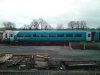
Here a few photos from the head on collision on the unmaned level crossing just outside Whitland crossing!

175 002 was split and ready to be loaded on to two Alleys trucks parked up by the sidings at the station!

Passing the crash scene by road on Tuesday morning 002 was still tangled to the hay trailer and waiting to be moved to Whitland station!

Sorry about the poor quality of the photos as they where take with my phone!
 

Attachments

  • DSC01723.jpg
    DSC01723.jpg
    116.2 KB · Views: 147
  • DSC01729.JPG
    DSC01729.JPG
    310.1 KB · Views: 141
  • DSC01724.JPG
    DSC01724.JPG
    320.1 KB · Views: 148
  • DSC01725.JPG
    DSC01725.JPG
    325.9 KB · Views: 133
  • DSC01726.JPG
    DSC01726.JPG
    281.5 KB · Views: 127
Status
Not open for further replies.

Top