• Our new ticketing site is now live! Using either this or the original site (both powered by TrainSplit) helps support the running of the forum with every ticket purchase! Find out more and ask any questions/give us feedback in this thread!

When did lineside fencing become common on the railway and why?

Status
Not open for further replies.

sad1e

Member
Joined
26 Aug 2024
Messages
1,050
Location
London
When did lineside fencing become common on the railways , because looking back at older railway photos (mid 1930s) the presence of lineside fencing or any kind of trespass prevention other than the odd sign seems almost nonexistent.

However nowadays every railway line seems to have a massive barbed wire fence along it. When did this become commonplace and was there a particular law that introduced it or is it just the general trend towards making things safer in this country?
 
Sponsor Post - registered members do not see these adverts; click here to register, or click here to log in
R

RailUK Forums

The exile

Established Member
Joined
31 Mar 2010
Messages
9,481
Location
Somerset
When did lineside fencing become common on the railways , because looking back at older railway photos (mid 1930s) the presence of lineside fencing or any kind of trespass prevention other than the odd sign seems almost nonexistent.

However nowadays every railway line seems to have a massive barbed wire fence along it. When did this become commonplace and was there a particular law that introduced it or is it just the general trend towards making things safer in this country?
Was under the impression it had been a requirement in the UK since the dawn of time (except possibly for Light Railways). What was / is deemed adequate has changed for the worse!
 

sad1e

Member
Joined
26 Aug 2024
Messages
1,050
Location
London
Was under the impression it had been a requirement in the UK since the dawn of time (except possibly for Light Railways). What was / is deemed adequate has changed for the worse!
1755182889134.jpeg
Looking at photos like this of the Metropolitan Railway Brill branch I fail to see any lineside fencing, they must have been very minimal with lineside protections back then (Photo was taken in 1933 at it's latest as the brill branch was shut in 1933)
 

Trainman40083

Established Member
Joined
29 Jan 2024
Messages
4,728
Location
Derby
I guess the change happened when people started getting killed or injured on the railway, because they were somewhere they shouldn't have been. Then when we see damages claims of serious money, it is cheaper to fence off the railway. Strange though, motorways aren't fenced off..
 

The exile

Established Member
Joined
31 Mar 2010
Messages
9,481
Location
Somerset
View attachment 186317
Looking at photos like this of the Metropolitan Railway Brill branch I fail to see any lineside fencing, they must have been very minimal with lineside protections back then (Photo was taken in 1933 at it's latest as the brill branch was shut in 1933)
This side is a yard - so no fencing. I see a very thick hedge on the far side which may well have been deemed adequate (tbh it’s probably better than a fence) or may have a fence concealed within it. Alternatively we can’t actually see the railway boundary - which is where the fence would be. AFAIK the requirement was to prevent livestock straying onto the line.
 

GRALISTAIR

Established Member
Joined
11 Apr 2012
Messages
10,571
Location
Preston Lancs
OK anecdotal but yet personal observation here. I lived with my parents in a house backing onto the WCML about 4 miles north of Preston 1966-1975 (and it was electrified in that time!!!) and I will try and find photos when I am next back in the UK. Some wooden posts and 4 strands of wire about 1 foot apart- ZERO barbed wire. I moved into a very similar location in 1990 and still have a house there. 1990 to after 2000 there was flimsy to non-existent - wooden posts and 4 strands of wire about 1 foot apart- posts about 1.5m apart. Then I think it was after 2005 very sturdy green painted trellis like galv or steel fencing spiked on the top was installed. I will likewise try and locate a photo.

I always assumed it coincided with Network Rail (it was not Railtrack iirc) getting fined for the young boy getting electrocuted at Allerton depot after getting through a hole in the fence - hence sturdier and maintained fencing.
 

DarloRich

Veteran Member
Joined
12 Oct 2010
Messages
32,950
Location
Fenny Stratford
When did lineside fencing become common on the railways , because looking back at older railway photos (mid 1930s) the presence of lineside fencing or any kind of trespass prevention other than the odd sign seems almost nonexistent.
the fence was always there. Most often it was a post and rail or post and wire fence
However nowadays every railway line seems to have a massive barbed wire fence along it.
It isn't barbed wire. it is palisade fencing.
 

ac6000cw

Established Member
Joined
10 May 2014
Messages
3,918
Location
Cambridge, UK
When did lineside fencing become common on the railways , because looking back at older railway photos (mid 1930s) the presence of lineside fencing or any kind of trespass prevention other than the odd sign seems almost nonexistent.

However nowadays every railway line seems to have a massive barbed wire fence along it. When did this become commonplace and was there a particular law that introduced it or is it just the general trend towards making things safer in this country?

It was at least 180 years ago...

A quote from the 'Railways Clauses Consolidation Act 1845' (the 'Company' is the railway company). I assume that act was a consolidation of requirements previously inserted into each Act of Parliament needed to construct each individual railway line:

Company to separate the Lands before using them.​

Before the Company shall use any such Lands for any of the purposes aforesaid they shall, if required so to do by the Owner or Occupier thereof, separate the same by a sufficient Fence from the Lands adjoining thereto, with such Gates as may be required by the said Owner or Occupier for the convenient Occupation of such Lands, and shall also, to all private Roads used by them as aforesaid, put up Fences and Gates in like Manner, in all Cases where the same may be necessary to prevent the straying of Cattle from or upon the Lands traversed by such Roads, and in case of any Difference between the Owners or Occupiers of such Roads and Lands and the Company as to the Necessity for such Fences and Gates, such Fences and Gates as any Two Magistrates shall seem necessary for the Purposes aforesaid, on Application being made to them in like Manner as herein-before is provided in respect to the Use of such Roads.

Re. the present day situation re. fencing and railway boundaries from Network Rail (my bolding):

We use fences to mark the boundary of our land. They also serve as a deterrent to prevent trespass and vandalism. Part of a structure, buildings – and occasionally natural screens of thorny shrubs – can also act as railway boundaries.
We’re responsible for the fencing that forms the boundary to the railway. If there’s a problem with our fencing we will either fix the fence or replace it. This doesn’t apply to other fences that may be parallel to our boundary measure.
If our fencing is showing signs of age and fatigue, let us know and we’ll investigate and assess it. If there’s a gap and we can’t immediately carry out a permanent repair, then we’ll do a temporary repair first of all.

If we can’t repair the fence to a safe standard, and a fence is needed to keep the railway safe, we’ll replace it with a new one of a similar size and type. Occasionally we’ll replace it with a higher specification, particularly if trespassing, vandalism or fly-tipping are common in the area. Similarly, we may replace it with a lower specification if it’s safe to do so.

So basically the railway fence serves the same purpose as one round your house - it marks out the property boundary and deters people and animals from entering it.
 
Last edited:

j37401

Member
Joined
16 Feb 2017
Messages
105
There are still sections of busy mainline that have the wooden / concrete posts and wire arrangement. Albeit they are slowly disappearing. At Old Alder Lane just south of Winwick junction on the WCML, the north side of the bridge still has the very basic fence as described above whereas south of the bridge it has the high palisade fencing. My understanding was the NR install the newer fencing when there has been issues with trespass or cattle getting onto the line. If there is no issue then leave it as it is IMO as the palisade fences, whether galvanised or painted green are rather unsightly and unnecessary in many places.
 

HSTEd

Veteran Member
Joined
14 Jul 2011
Messages
20,383
It's worth noting that the Brill Branch was otherwise known as the Brill Tramway.

It does appear it was operated under authority meant for a tramway rather than as a full blown railway.
 

DelW

Established Member
Joined
15 Jan 2015
Messages
6,047
Strange though, motorways aren't fenced off..
They very much are fenced off, right from initial construction. There might be occasions when fencing has been broken or overgrown, but they should always be fenced.

View attachment 186317
Looking at photos like this of the Metropolitan Railway Brill branch I fail to see any lineside fencing, they must have been very minimal with lineside protections back then (Photo was taken in 1933 at it's latest as the brill branch was shut in 1933)
Brill was built as a tramway, and I think continued to operate under tramway rules and legislation until closure. Tramways (obviously) couldn't be fenced.

(Edit: pipped at the post!)
 

sad1e

Member
Joined
26 Aug 2024
Messages
1,050
Location
London
Brill was built as a tramway, and I think continued to operate under tramway rules and legislation until closure. Tramways (obviously) couldn't be fenced.

(Edit: pipped at the post!)
Thanks for the clarification, i assumed it stopped operating as a Tramway and started operating like a mainline when the Metropolitan Railway took it over.

Weren't there plans to upgrade the Brill branch to mainline standards at one point, I must have got confused with those.
 

ac6000cw

Established Member
Joined
10 May 2014
Messages
3,918
Location
Cambridge, UK
Brill was built as a tramway, and I think continued to operate under tramway rules and legislation until closure. Tramways (obviously) couldn't be fenced
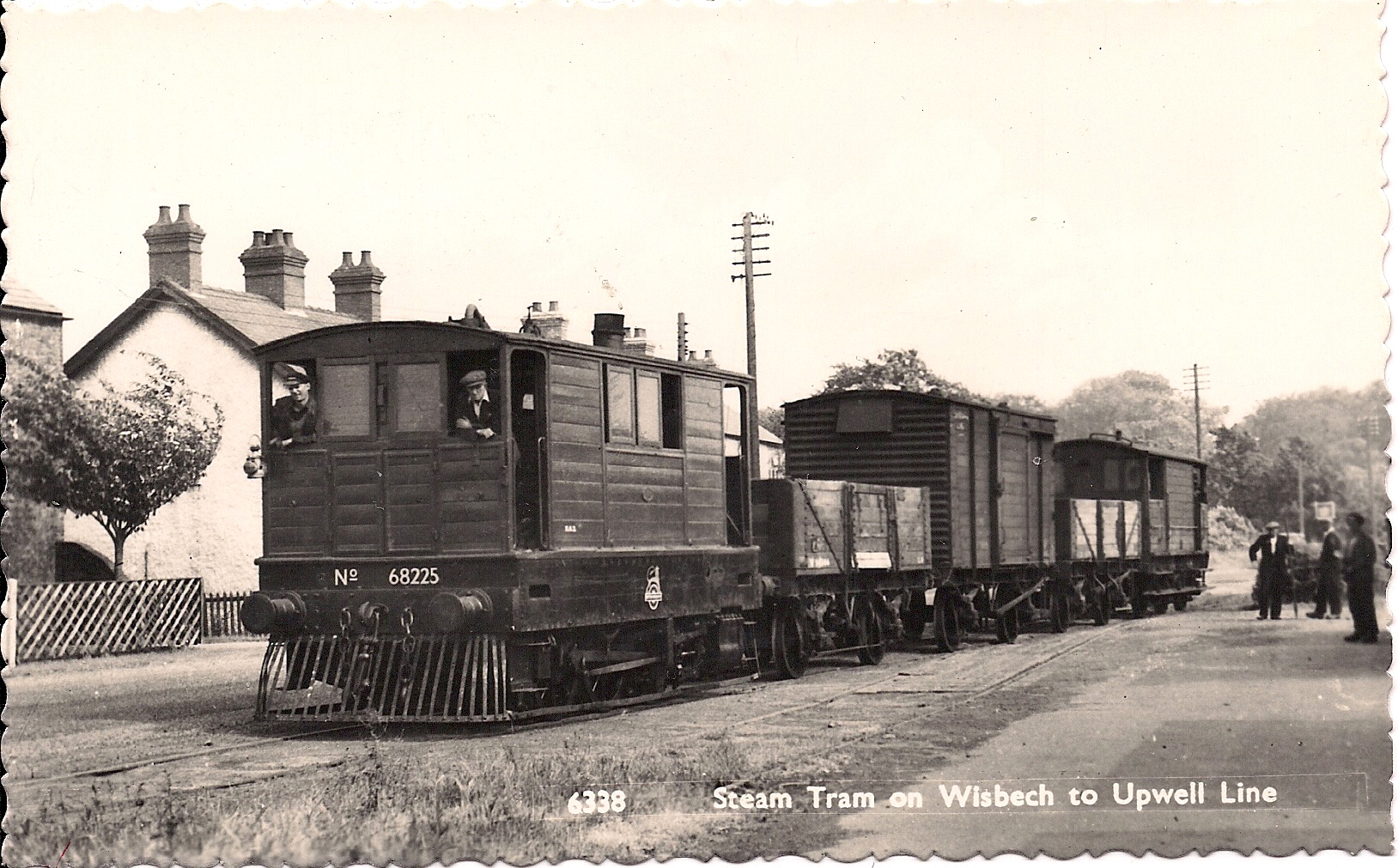
The Wisbech and Upwell Tramway in East Anglia was another well-known example of a 'railway style' standard-gauge rural tramway. It eventually became part of BR and survived (for freight) into the mid-1960s.

(Image from Wikipedia - H. Coates & Sons, Wisbech, Public domain, via Wikimedia Commons, dated 1952 - note the BR lion-on-wheel emblem on the loco):

Wisbech_and_Upwell_Tramway_%28postcard%29.jpg
 
Last edited:

GRALISTAIR

Established Member
Joined
11 Apr 2012
Messages
10,571
Location
Preston Lancs
Here are some fence photos outside my UK home on the WCML. As you can see the fence is quite sturdy. I think it looks much better than the wooden posts and flimsy wire that was there before.
 

Attachments

  • IMG_0909.JPG
    IMG_0909.JPG
    2.1 MB · Views: 102
  • IMG_0910.JPG
    IMG_0910.JPG
    1.6 MB · Views: 107
  • IMG_0911.JPG
    IMG_0911.JPG
    1.5 MB · Views: 103
  • IMG_0912.JPG
    IMG_0912.JPG
    1.6 MB · Views: 95
  • IMG_0913.JPG
    IMG_0913.JPG
    2 MB · Views: 105

DelW

Established Member
Joined
15 Jan 2015
Messages
6,047
Thanks for the clarification, i assumed it stopped operating as a Tramway and started operating like a mainline when the Metropolitan Railway took it over.

Weren't there plans to upgrade the Brill branch to mainline standards at one point, I must have got confused with those.
The extensive Wikipedia article refers to a proposed but unbuilt extension, and to the line being upgraded in 1894, but (as far as I've seen) doesn't mention changes to its legal status (subject to correction if I've missed it).
 

Dr Hoo

Established Member
Joined
10 Nov 2015
Messages
5,721
Location
Hope Valley
Even the old waggonways often used to have ‘fencing’ or other form of enclosure. The Peak Forest Tramway, built in the late 18th Century had dry stone walls. George Stephenson’s first ‘employment ‘ as a lad was earning a few pennies as a ‘level crossing’ gatekeeper at Wylam.
 

sad1e

Member
Joined
26 Aug 2024
Messages
1,050
Location
London
The Wisbech and Upwell Tramway in East Anglia was another well-known example of a 'railway style' standard-gauge rural tramway. It eventually became part of BR and survived (for freight) into the mid-1960s.

(Image from Wikipedia - H. Coates & Sons, Wisbech, Public domain, via Wikimedia Commons, dated 1952 - note the BR lion-on-wheel emblem on the loco):

Wisbech_and_Upwell_Tramway_%28postcard%29.jpg
Are there any tramways like this still left in the UK , I would expect not but you never know.
 

themiller

Established Member
Joined
4 Dec 2011
Messages
1,383
Location
Cumbria, UK
This side is a yard - so no fencing. I see a very thick hedge on the far side which may well have been deemed adequate (tbh it’s probably better than a fence) or may have a fence concealed within it. Alternatively we can’t actually see the railway boundary - which is where the fence would be. AFAIK the requirement was to prevent livestock straying onto the line.
I can see a section of fencing beside the hedge just past the far wagon and a gate in the distance past the platform.
 

Dunfanaghy Rd

Member
Joined
16 Sep 2019
Messages
466
Location
Alton, Hants
I always assumed it coincided with Network Rail (it was not Railtrack iirc) getting fined for the young boy getting electrocuted at Allerton depot after getting through a hole in the fence - hence sturdier and maintained fencing.
I thought it was EWS that was fined. The Depot Manager from Allerton was wished on us at Eastleigh until the court case (to keep him inside the tent, &c.) and was handed his cards on the way out of the courtroom.
Pat
PS Sorry for being OT. Pat
 

SargeNpton

Established Member
Joined
19 Nov 2018
Messages
1,754
One thing that prompted the spread of palisade fencing was cable theft.
 

DelW

Established Member
Joined
15 Jan 2015
Messages
6,047
Are there any tramways like this still left in the UK , I would expect not but you never know.
I think Weymouth Quay was probably the last tramway-style operation (ignoring things like heavily-skewed level crossings and temporary emergency arrangements).
 

themiller

Established Member
Joined
4 Dec 2011
Messages
1,383
Location
Cumbria, UK
Thanks for that. I wondered because it’s remote and runs across a bog so a fence may have been considered unnecessary and too hard to install.
 

Harpo

Established Member
Joined
21 Aug 2024
Messages
3,976
Location
Newport
a persistent and long term trend of increasing levels of trespass is the main reason.
Yes. And even in rural locations, bits of palisade get removed to reinstate fishermens’ short cuts etc.. Hopefully the bolted stuff isn’t used anywhere these days.
 

PeterC

Established Member
Joined
29 Sep 2014
Messages
4,786
As a teenager in the 60s I recall the alignment of the Corris Railway being fenced with pieces of slate wired together in the same manner as Chestnut paling.

In South Wales on the other hand I remember unfenced standard gauge. Presumably NCB rather than BR.
 
Status
Not open for further replies.

Top