• Our new ticketing site is now live! Using either this or the original site (both powered by TrainSplit) helps support the running of the forum with every ticket purchase! Find out more and ask any questions/give us feedback in this thread!

What counts as a mainline?

Status
Not open for further replies.

Senex

Established Member
Joined
1 Apr 2014
Messages
2,956
Location
York
Which it was – the South Western Mainline diverged from the London to Exeter/Plymouth 'West of England Mainline'. Which is puzzling because the LSWR was originally the London & Southampton Railway.

I agree with other posters that there isn't a set definition, and it has changed through time.
There are quite a number of examples of where the status of lines has changed over time. Worting is an interesting one, where the London & Southampton was first there and originally the more important, but then the West of England line came to be seen as the principal route (probably principally for its Plymouth traffic), only for the Southampton line to become once again the more important in modern times (and the more important by a very long way!).

As to the general question that started this, I can't offer any sort of real resolution either. I think "main line" has just too many possible usages. And even the sort of proper-name usages are not clear. Is the "East Coast Main Line" just London-Edinburgh, or does it go on to Glasgow/Aberdeen? And dies the ECML include the Leeds branch. As others have asked, just what does the West Coast Main Line" include"? Under "Midland Main Line" do we think just of London-Leicester-Derby-Sheffield, or do we think of the historic Midland Railway main line from London to Carlisle? And so on. And is "main line" the same thing as "principal route"?
 
Sponsor Post - registered members do not see these adverts; click here to register, or click here to log in
R

RailUK Forums

Sunset route

Established Member
Joined
27 Oct 2015
Messages
1,223
So the Brighton main line starting from London Victoria is listed on signalling diagrams as
the Down & Up Brighton Fast and Slow lines,
the Down & Up Victoria Fast and Slow lines,
the Down & Up Fast and Slow lines,
the Down and Up Quarry lines,
the Down & Up Redhill lines,
the Down & Up Fast and Slow lines
and finally from Balcombe Tunnel Junction to Montpelier Junction as the Down and up Main lines.

Also the track engines (pway etc etc) use the reference code VTB (Victoria to Brighton) but collectively we all call this route the “Brighton Main Line”.

So a main line can be used to give a section of track a name or it can be also a term applied as a marketing tool for a line of route between two or more places and I’ve also never come across any hard rules for a true definition.
 

zwk500

Veteran Member
Joined
20 Jan 2020
Messages
18,474
Location
Northampton
So a main line can be used to give a section of track a name or it can be also a term applied as a marketing tool for a line of route between two or more places and I’ve also never come across any hard rules for a true definition.
Indeed - especially in GWR land where the track pairs are often 'Main' and 'Relief' rather than 'Fast' and 'Slow'.
 

Sunset route

Established Member
Joined
27 Oct 2015
Messages
1,223
:lol:Indeed - especially in GWR land where the track pairs are often 'Main' and 'Relief' rather than 'Fast' and 'Slow'.

Always in GWR land ;)
Why admit that you have "slow" lines :)

In our part of the old SR land we used to have Through and Local in multiple track areas until the BML resignalling of the early 80s came along. :lol:
 
Last edited:

dch82

Member
Joined
3 Apr 2025
Messages
18
Location
Carshalton on Hill
Is it by capacity, by distance or by number of tracks?

== Doublepost prevention - post automatically merged: ==

If by capacity then the Thameslink core is a mainline
 
Last edited:

30907

Veteran Member
Joined
30 Sep 2012
Messages
21,939
Location
Airedale
That’s possibly puzzling because over 100 years ago, when the line through Basingstoke was yet to be quadrupled, and Battledown flyover had not yet been built, the 2 track flat junction layout did have the Southampton route straight ahead (just as it is now in terms of its general alignment), with the line to Andover being the divergence.

The way the S&C is laid out now, the inner fast line pair connects to both routes, with the Southampton route still being the higher speed. The way it’s usually shown on straight line track diagrams or online maps doesn't reflect the physical layout. It’s the Andover route that has the flashing yellow aspects.
Nevertheless from the opening of the flyover until the modern realignment of the junction the Southampton route was the speed restricted one: either 60 at Worting or stay on the Local lines.
The design of the flyover may have been decided by minimum land-take as much as anything - I don't have relevant sources - but I am sure (from timetables) actual traffic was heavier to Southampton even then, even if the WoE had prestige/competition.
 

Boilinthebag

Member
Joined
12 Jul 2022
Messages
49
Location
GWR
It's probably not in the spirit of these conversations but there is a very black and white answer from the perspective of the ORR, in the Railways and Other Guided Transport Systems (Safety) Regulations 2006 (ROGS). Screenshot from the guide attached.
 

Attachments

  • Screenshot_2025-12-14-11-11-02-08_40deb401b9ffe8e1df2f1cc5ba480b12.jpg
    Screenshot_2025-12-14-11-11-02-08_40deb401b9ffe8e1df2f1cc5ba480b12.jpg
    382.6 KB · Views: 72
Last edited:

Horizon22

Established Member
Associate Staff
Jobs & Careers
Joined
8 Sep 2019
Messages
10,964
Location
London
It's probably not in the spirit of these conversations but there is a very black and white answer from the perspective of the ORR, in the Railways and Other Guided Transport Systems (Safety) Regulations 2006 (ROGS). Screenshot from the guide attached.

To be fair it is exactly the theme of the conversation in my opinion. Close the thread haha!
 

Warrior2852

Member
Joined
27 Oct 2018
Messages
316
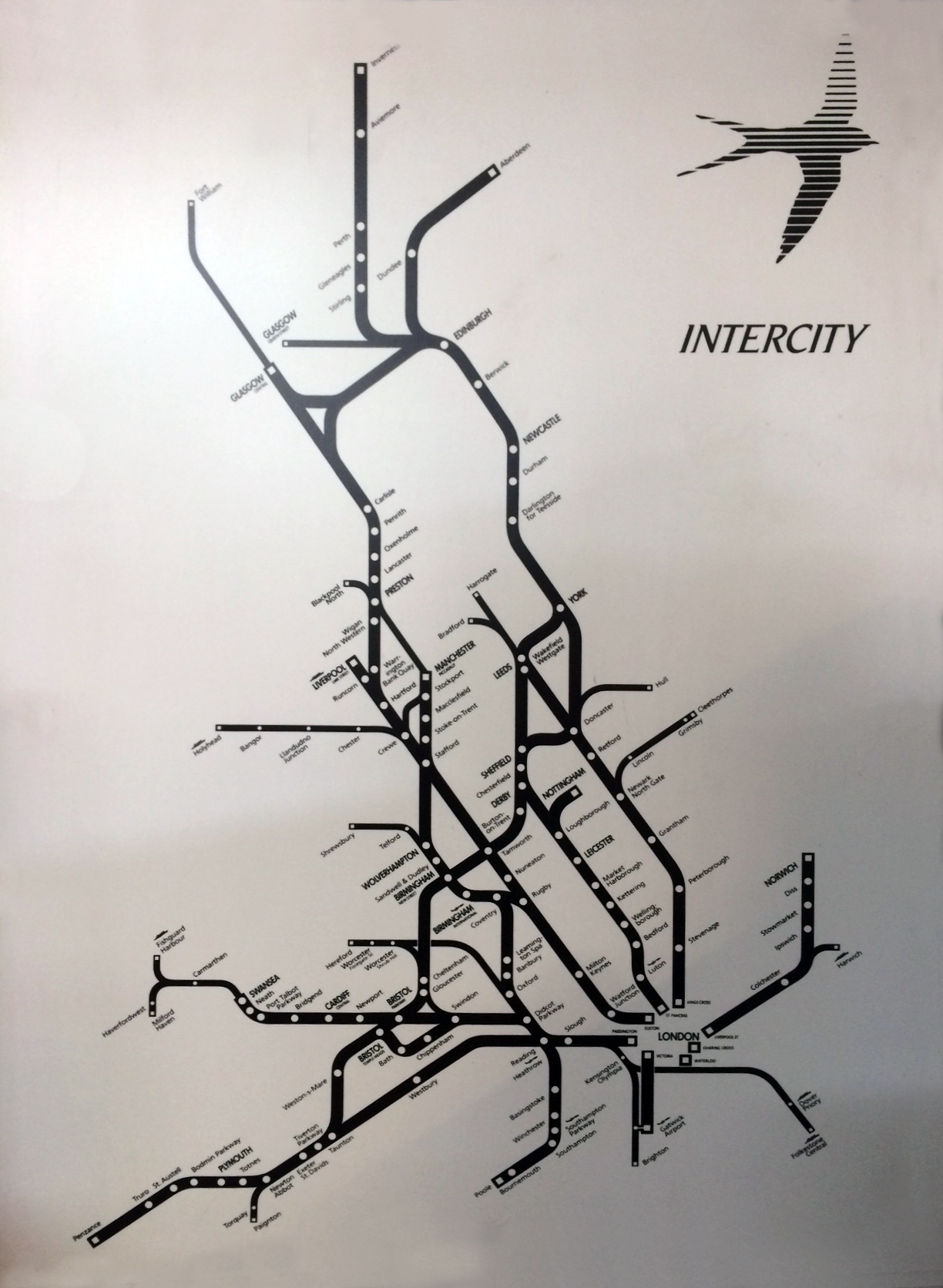
InterCity%20map%201989a.jpg


This image from Project Mapping via the link: https://projectmapping.co.uk/Reviews/britishrailbriti.html
It's odd that this map has the spur to Fort William coming off Glasgow Central... The West Highland Line trains go from Queen Street!
 

A S Leib

Established Member
Joined
9 Sep 2018
Messages
3,279
It's odd that this map has the spur to Fort William coming off Glasgow Central... The West Highland Line trains go from Queen Street!
Did Fort William sleepers go via Central low level before Airdrie–Bathgate opened?
 

AndrewE

Established Member
Joined
9 Nov 2015
Messages
7,322
To be fair it is exactly the theme of the conversation in my opinion. Close the thread haha!
Don't forget that "the law is a ass!"

I'm with whoever said "don't overthink it!" For me a "main line" implies unobstructed fast running, so ideally no single track sections (Sorry, Cornwall) and on the side, access to some branch lines or even alternative slower routes.

"Mainline" annoys me... I think the rot set in with so-called "Mainline Freight" but most uses nowadays mean Main Line as opposed to Branch line. The film Trainspotting might have brought "mainlining" into public use (Injecting drugs into a vein?) but to me it is an adjective and a noun. So West Coast or East Coast Main Line, or "I took a main-line train rather than the stopper"
 

Spandau

Member
Joined
15 Aug 2012
Messages
100
Surely it’s all relative. The Cumbrian Coast line most certainly is not an inter-city artery. But if you alight from La’al ratty at Ravenglass to travel onwards, you are unquestionably joining ‘the main line’.
 

PLY2AYS

Member
Joined
26 Mar 2024
Messages
518
Location
Montserrat
For me a "main line" implies unobstructed fast running, so ideally no single track sections (Sorry, Cornwall) and on the side, access to some branch lines or even alternative slower routes.
By definition then Largin wouldn’t be mainline?
 

norbitonflyer

Established Member
Joined
24 Mar 2020
Messages
5,681
Location
SW London
Everthing's relative. I have heard "main line" used as a synonym for any National Rail line - as opposed to eg the Tyneside Metro or the London Underground. So for example the Chingford line at Walthamstow Central
 

Steve Harris

Member
Joined
11 Dec 2016
Messages
1,193
Location
ECML
I believe they did reversals at Queen Street High Level, certainly at some point?
Yes they did. I can remember waking up on said service and seeing what 37 had hauled us from ???* And seeing what was on the other end to take us to Fort Bill before retiring back to my birth.
I can't remember the exact year but it would of been 1987 or 1988.

*I was asleep when/wherever the change from electric to diesel loco happened.

Getting back on topic.... what about length of train defining a Mainline?
Afterall, you don't see many 2 car sprinters on a Mainline compared to an 8 coach HST/hauled stock. Likewise you don't see many 8 coach trains on a branch line (unless it's a railtour/special).
 

Warrior2852

Member
Joined
27 Oct 2018
Messages
316
Getting back on topic.... what about length of train defining a Mainline?
Afterall, you don't see many 2 car sprinters on a Mainline compared to an 8 coach HST/hauled stock. Likewise you don't see many 8 coach trains on a branch line (unless it's a railtour/special).
The Midland Main Line used to have a lot of 170s operating the Intercity services to Nottingham and Sheffield before the 222s came in.
 

Steve Harris

Member
Joined
11 Dec 2016
Messages
1,193
Location
ECML
The Midland Main Line used to have a lot of 170s operating the Intercity services to Nottingham and Sheffield before the 222s came in.
Hmmm.... Yes there were 170 services on the MML (heck I even travelled on one) but the HST's were still used on the majority of services. (Plus before that you had Peak hauled 8 (+ more) coach trains and more latterly 10 coach meridians)

As I tried pointing out in my earlier post there will always be exceptions to the rule ie an 11 coach rail tour down a branch line. Or even a Class 158 on the ECML between Grantham and Peterborough. But put into context they are in the minority, when the majority of services on branch lines tend to be 2 or 3 coaches long and Mainline services tend to be 8* coaches or more.

*Yes LNER have slightly kiboshed my theory by reducing 225 sets from 9 to 7 coaches long. But you get the gist.
 

AndrewE

Established Member
Joined
9 Nov 2015
Messages
7,322
By definition then Largin wouldn’t be mainline?
Maybe not. Clearly it is on a trunk route, and part of me says that all of the line to Penzance ought to be part of the main line, but on my simple rule of thumb maybe quite a few of the UK's more remote trunk routes don't quite come up to the measure of a main line.

Maybe if we added in a relatively high linespeed (>70mph?) some of these might qualify?
 

etr221

Established Member
Joined
10 Mar 2018
Messages
1,581
Everthing's relative. I have heard "main line" used as a synonym for any National Rail line - as opposed to eg the Tyneside Metro or the London Underground. So for example the Chingford line at Walthamstow Central
That is essentially the ORR definition, mentioned above.

Which perhaps perhaps groups a whole load of lines that more formalised countries might have rigourously divided between 'main' and 'local'/'secondary', but which we never bothered to distinguish in any formal sense.

If pushed, my qualification for a main line might be one that (in the traditional, pre Beeching era) had class 'A' (express passenger, became class '1') services running over it, on a regular basis.

I believe they did reversals at Queen Street High Level, certainly at some point?
The West Highland line was North British Railway, later LNER, so traditionally its service was from Kings Cross via Edinburgh and Glasgow Queen Street - or possibly the through coaches were worked around some of the NBR north Glasgow lines, detached and attached as appropriate, without being worked down into Queen Street.
 

yorksrob

Veteran Member
Joined
6 Aug 2009
Messages
44,312
Location
Yorks
It definitely depends on context.

For example Southeastern would say that have a Southeastern "Mainline" (essentially Charing Cross to Dover Priory via Tonbridge and Ashford International) and a Chatham "Mainline" (essentially Victoria to Ramsgate via Chatham). This is in opposition to their metro routes (e.g. via Dartford or to Sevenoaks) or more rural routes. But I doubt many on these forums would call it a "main line". Perhaps better stated as a "regional main line".

These are indeed the South Eastern and Chatham main lines.

I wouldn't refer to them as anything else
 

Mattplans

Member
Joined
27 Sep 2024
Messages
699
Location
London, UK
Surely it is in the context of the discussion? When discussing the London Underground, "Mainline" can pretty much be used to refer to any line on the national network just to distinguish it from Lu/dlr.
 

The exile

Established Member
Joined
31 Mar 2010
Messages
9,343
Location
Somerset
Surely it is in the context of the discussion? When discussing the London Underground, "Mainline" can pretty much be used to refer to any line on the national network just to distinguish it from Lu/dlr.
About the only places where the Underground interfaces directly with branch lines are Barking and Upminster, I should say -though whether the Gospel Oak line could really be called a “branch line” is in itself arguable. On the more general point, I would suggest that any line that has MU differential speed restrictions for significant stretches (ie not TSRs or applicable to specific structures) should have its “main line” status questioned - though in this days of ubiquitous units possibly less so than in the past.
 
Status
Not open for further replies.

Top