• Our new ticketing site is now live! Using either this or the original site (both powered by TrainSplit) helps support the running of the forum with every ticket purchase! Find out more and ask any questions/give us feedback in this thread!

Vivarail to develop battery 321

Status
Not open for further replies.

Class360/1

Member
Joined
10 Feb 2021
Messages
652
Location
Essex
This is the future of rail travel in Britain then is it? Strap something to a 30 or 40 year old unit and boast about how the rail industry is saving the planet.

If there is such an eager market why has there been no progress since they stuck a battery on a Class 379 8 years ago?
The battery was simply an experiment for further development; they weren’t very advanced back in 2015, but now in 2022 they are much better, to the point it is highly feasible for revenue earning service. There are also plenty of sections of OHLE (especially in Scotland, where the RosCo says there is a market for them).
 
Sponsor Post - registered members do not see these adverts; click here to register, or click here to log in
R

RailUK Forums

CDM

Member
Joined
18 Apr 2012
Messages
72
How does a 321 charge its existing batteries currently? Does it have a motor alternator or a statcon or inverter?

Apologies but I'm no expert on those units, they use a funny coat hanger thing to get their power.
It's just a straight forward battery charger, picking up the current that's been stepped-down in voltage by the main transformer and then rectified to DC.

The existing batteries don't feed much though - they are simply there for auxiliary supplies; The 110v train wires (control circuits), auxiliary compressor (which just supplies the pantograph so you can get it up) and emergency lighting (plus emergency ventilation on the Renatus units).
No capacity to do anything more.
Traction batteries would have to be entirely separate.

The concept of powering modern EMU AC traction packs has already been successfully proven on GA - with a Class 379, 7 years ago. Different Traction package (Bombardier versus Vossloh-Kieppe on Renatus) but entirely feasible.
 

philthetube

Established Member
Joined
5 Jan 2016
Messages
4,176
This is the future of rail travel in Britain then is it? Strap something to a 30 or 40 year old unit and boast about how the rail industry is saving the planet.

If there is such an eager market why has there been no progress since they stuck a battery on a Class 379 8 years ago?
No one is going to build a brand new unit using experimental tech, once something is running well and tech developement slows then it will happen if it works.
 

sannox

Member
Joined
1 Mar 2016
Messages
649
There is going to be no market for a unit with a range of 20 - 30 miles. It will get as much use as that parcel conversion unit dumped at Doncaster RMT.
There's been noises about East Kilbride electrification being downgraded, so no wires from Busby Junction to East Kilbride. The use of a 321 to battery charging on the wires into Glasgow is possible and given Scotrail have existing 320s, not impossible to see a market.
 

Class360/1

Member
Joined
10 Feb 2021
Messages
652
Location
Essex
There's been noises about East Kilbride electrification being downgraded, so no wires from Busby Junction to East Kilbride. The use of a 321 to battery charging on the wires into Glasgow is possible and given Scotrail have existing 320s, not impossible to see a market.
Although the 320’s are going to be replaced in a few years time
 

Wyrleybart

Established Member
Joined
29 Mar 2020
Messages
2,606
Location
South Staffordshire
If there is such an eager market why has there been no progress since they stuck a battery on a Class 379 8 years ago?
Because the unique UK privatised railway system relies on long term partnerships. Unfortunately we are stuck with the five year political model rather than the 21 year Chiltern franchise which delivered Evergreen 1, II and III very successfully. Electric trains need OLE and Network Rail will not commit to anything other than piecemeal or "nearly" schemes.
 

Invincible

Member
Joined
23 Apr 2022
Messages
852
Location
Surrey
That doesn't matter. The proposal is only to make something of the 30 321s that were given the new traction package and internal refurbishment.

(There are separately some 321/4s stored that were intended for hydrogen class 600 conversions.)
From Railadvent
"Both Vivarail and Eversholt Rail has discussed the options with various operators and the Department for Transport. The case development will continue in 2022 and further investment in the fleet will be confirmed in due course."
Which could suggest a small number of the Renatus 321s will first have the added batteries and control circuits, then if successful the whole 30 will be done for use in rural areas, Vivarail at some point said they could charge the 231 batteries in 10 minutes, so could be done when at at a terminal station, the 321 with aircon may take longer with more batteries.

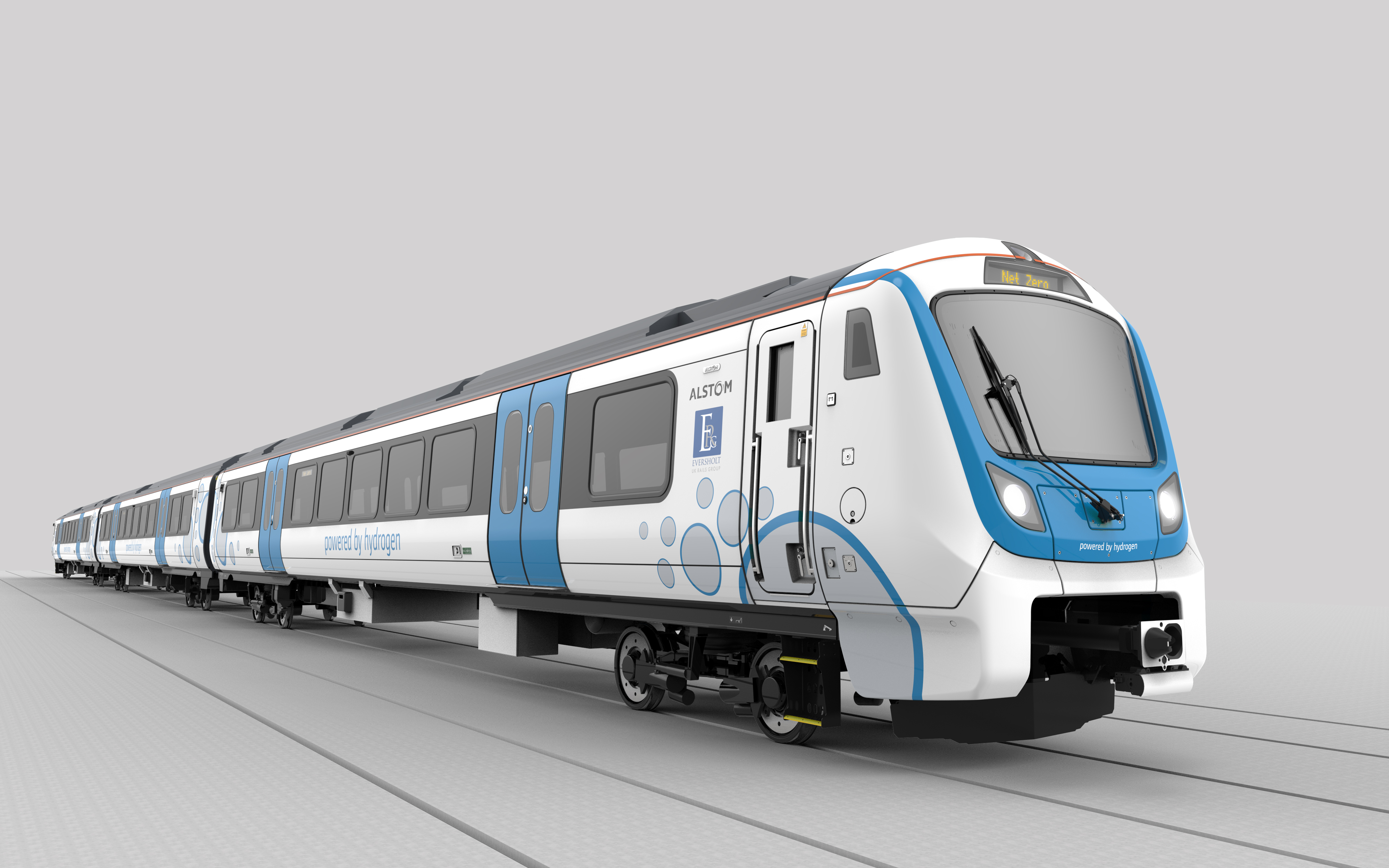
Not sure if the class 600 "Breeze" conversions will continue as Alstom and Evershot have decided to make new Hydrogen (with some batteries?) Aventra trains
"Alstom and Eversholt Rail have previously worked together on a hydrogen rolling stock solution for the UK rail sector, through the proposed conversion of an existing Electric Multiple Unit to hydrogen power – the ‘Breeze’ project. Both companies now believe that there is a market for a fleet of new trains for use by train operators across Britain. The breadth, depth of knowledge and experience gained from the Breeze project, together with stakeholder feedback on future fleet strategies, has been invaluable in shaping the product planning."
 
Last edited:

Wyrleybart

Established Member
Joined
29 Mar 2020
Messages
2,606
Location
South Staffordshire
From Railadvent

"Alstom and Eversholt Rail have previously worked together on a hydrogen rolling stock solution for the UK rail sector, through the proposed conversion of an existing Electric Multiple Unit to hydrogen power – the ‘Breeze’ project. Both companies now believe that there is a market for a fleet of new trains for use by train operators across Britain. The breadth, depth of knowledge and experience gained from the Breeze project, together with stakeholder feedback on future fleet strategies, has been invaluable in shaping the product planning."

That suggests to me that the class 321 trial conversion project is dead in the water. One of the two units hs already gone to the scrapyard anyway I believe. I think it is a mistake because the Breeze project would have acted as a pathfinder and highlighted any modifications necessary. But there you go.
 

superkev

Established Member
Joined
1 Mar 2015
Messages
2,856
Location
west yorkshire
I always thought the lightweight aluminium PEP stock Class 313, 315 etc would have been a better choice for the various flavours of Dmu, bmu etc created from ex LU stock, 319 or now 321s.
K
 

D365

Veteran Member
Joined
29 Jun 2012
Messages
13,164
I always thought the lightweight aluminium PEP stock Class 313, 315 etc would have been a better choice for the various flavours of Dmu, bmu etc created from ex LU stock, 319 or now 321s.
The PEP derivatives are ~10 years older than the 319s and were not available in 2015. It's also telling that, instead of cascaded 315s, Wales opted for new build Stadler units for the Valleys electrification.

Eversholt has put some amount of money into the Renatus 321s; if the market is there, it makes sense to team up with Vivarail.
 

Nottingham59

Established Member
Joined
10 Dec 2019
Messages
3,330
Location
Nottingham
There is going to be no market for a unit with a range of 20 - 30 miles. It will get as much use as that parcel conversion unit dumped at Doncaster RMT.
I think there could well be a market. Even that short range is enough to cover many of the gaps between the main electrified lines, especially when the MML and Leeds-York are done

And it means they could electrify the MML faster and cheaper without having to wire problematic places like Leicester and Nottingham stations, with their bimode services to London.

For example, the following gaps are 20 miles or less: Bletchley-Beford; Oxford-Didcot rtn; Oxenholme-Windermere Rtn; Sheffield-Doncaster; Sheffield Moorthorpe.
30 miles or so: Hunt's Cross to Deansgate, Hazel Grove to Dore, Nottingham to Grantham. Peterborough-Ely

And if a gap is a bit too long, then you can shorten it by extending the OHLE from either end, depending on which is cheaper.
 

Wolfie

Established Member
Joined
17 Aug 2010
Messages
7,397
Also it's changing from overhead to batteries. The issue with the 769's seems to be the diesel elements, especially on TfW lines where they struggle on the hills up the valleys. This may actually work and be useful
When you say changing from overhead to battery do you mean switching between modes (which the original post implied) or a complete switch? The latter would seem unwise. Surely both overhead and battery would be better?
 

Peter0124

Established Member
Joined
20 Nov 2016
Messages
2,745
Location
Glasgow
Does anyone think the Maryhill line being only 5 and a half miles long could use a battery powered unit? (or we just electrify the line completely).
 

Nottingham59

Established Member
Joined
10 Dec 2019
Messages
3,330
Location
Nottingham
Does anyone think the Maryhill line being only 5 and a half miles long could use a battery powered unit? (or we just electrify the line completely).
Sure, especially as there is a reasonable length under the wires after Ashfield to Queen St to recharge, and OHLE already at Anniesland too, though not to all platforms. It all depends on the capacity of the current electricity supply, of course.

And then when the Maryhill line is electrified, cascade the battery unit to somewhere else.
 

Wtloild

Member
Joined
8 Aug 2018
Messages
193
Oh there is!
Given any journey beyond the end of the wires would need to be a return journey back to the wires, surely 20-30 mile range isn't going to be sufficient?
Local to me, I could see 50-60 mile range being useful.
 

Bob Price

Established Member
Joined
8 Aug 2019
Messages
1,243
With a fast charger at the destination to top up the batteries for the return journey then a 30 mile off wires could be achievable. It's up to Vivarail and Eversholt to demo it.
 

Nottingham59

Established Member
Joined
10 Dec 2019
Messages
3,330
Location
Nottingham
Local to me, I could see 50-60 mile range being useful.
I agree. Battery EMUs in Europe like the Stadtler Flirt AKKU seem to be standardising for guaranteed range around the 80km/50mile mark,

See: https://www.railtech.com/rolling-st...ld-record-for-battery-only-range/?gdpr=accept
Stadler was able to confirm the long-held belief that the FLIRT Akku would be able go farther on a single charge than the 80 kilometres guaranteed by the company.

“We designed and calculated the vehicle for an operational range of 80 kilometres, depending on the route requirements of the respective network. But on various journeys testing the technology, we were able to realise significantly greater ranges, so that we even dared to attempt the world record at wintry temperatures”, said technical project leader Evelyn Thiel.
 

Clansman

Established Member
Joined
4 Jan 2016
Messages
2,649
Location
Scotland and Hong Kong
Does anyone think the Maryhill line being only 5 and a half miles long could use a battery powered unit? (or we just electrify the line completely).

Sure, especially as there is a reasonable length under the wires after Ashfield to Queen St to recharge, and OHLE already at Anniesland too, though not to all platforms. It all depends on the capacity of the current electricity supply, of course.

And then when the Maryhill line is electrified, cascade the battery unit to somewhere else.
The Maryhill line absorbs its DMUs from WHL and Perth/Dundee/Aberdeen turns.

If you have dedicated stock for Maryhill in isolation then you'll have one or two DMUs sitting around doing nothing taking up platform, depot, and pathing space - making it a non starter.
 

Invincible

Member
Joined
23 Apr 2022
Messages
852
Location
Surrey
With a fast charger at the destination to top up the batteries for the return journey then a 30 mile off wires could be achievable. It's up to Vivarail and Eversholt to demo it.
Looks like Vivarail and GWR will test West Ealing to Greenford (8km return) first with 231s, agreed in Feb but no confirmed date for the first test.
Great Western Railway has signed a deal with manufacturer Vivarail to trial new battery-charging technology on its network, paving the way for battery-only trains to run in regular passenger service in the future.

The trial, supported by Network Rail, will take place on the Greenford branch line later this year and test Vivarail’s trackside fast-charging equipment in an operational setting for the first time.
It is hoped that the project will demonstrate that the equipment works safely and reliably in a ‘real-world’ environment.
That suggests to me that the class 321 trial conversion project is dead in the water. One of the two units hs already gone to the scrapyard anyway I believe. I think it is a mistake because the Breeze project would have acted as a pathfinder and highlighted any modifications necessary. But there you go.
Alstom proved hydrogen with the Coradia I Lint in Germany, but the tanks in the roof were too high for UK, The 321/600 Breeze project proved hydrogen trains did not have to be so high and run in the UK, but Alstom and Eversholt have decided it is better to build new hydrogen powered trains based on the Aventa rather than any more conversions.
 
Last edited:

JonathanH

Veteran Member
Joined
29 May 2011
Messages
23,287
Looks like Vivarail and GWR will test West Ealing to Greenford (8km return) first with 231s, agreed in Feb but no confirmed date for the first test.
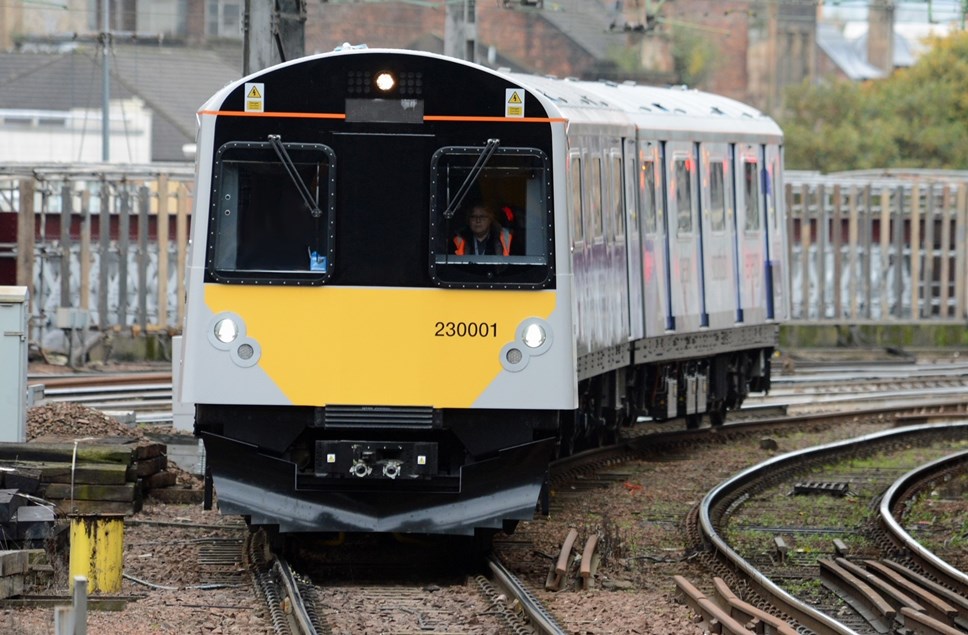
230001 will be used. It was meant to be September but was last suggested to be December.
 

amazon1675

Member
Joined
23 Oct 2016
Messages
78
Vivarail seem to produce a variety of less than reliable conversions.Then again,re-engineering seems a tad unsuccessful in general such as the 769 saga is proving. It seems the 484s on the IOW are reasonable,but basically they are a simple third rail unit.I am not an industry insider,and no expert,but the units remain rather ugly and are mostly unreliable. What do other think?
 

swt_passenger

Veteran Member
Joined
7 Apr 2010
Messages
34,252
When you say changing from overhead to battery do you mean switching between modes (which the original post implied) or a complete switch? The latter would seem unwise. Surely both overhead and battery would be better?
I thought it was more likely a typo for “charging”...
 

D365

Veteran Member
Joined
29 Jun 2012
Messages
13,164
Vivarail seem to produce a variety of less than reliable conversions.Then again,re-engineering seems a tad unsuccessful in general such as the 769 saga is proving. It seems the 484s on the IOW are reasonable,but basically they are a simple third rail unit.I am not an industry insider,and no expert,but the units remain rather ugly and are mostly unreliable. What do other think?
Worth pointing out that, other than the two units now in America, Vivarail hasn't yet put any battery 230s into passenger service. The common denominator of the WMT and TfW 230s is diesel engines.
 

Invincible

Member
Joined
23 Apr 2022
Messages
852
Location
Surrey
I wonder if it will be painted into GWR livery prior to this?

FC4_x8NXIAoKDf9

From Glasgow COP where the train ran under battery (303032 twitter) there seems to be a lot of unpainted aluminium, so only the blue bits need repainting in green if the GWR test goes ahead in December, (but from Wikipedia looks like it still has a diesel engine just in case)
 
Last edited:

D365

Veteran Member
Joined
29 Jun 2012
Messages
13,164
FC4_x8NXIAoKDf9

From Glasgow COP where the train ran under battery (303032 twitter) there seems to be a lot of unpainted aluminium, so only the blue bits need repainting in green if the GWR test goes ahead in December, (but from Wikipedia looks like it still has a diesel engine just in case)
The silver colour is definitely not bare aluminium - and the diesel rafts have been fully removed from 230001.
 

CDM

Member
Joined
18 Apr 2012
Messages
72
I always thought the lightweight aluminium PEP stock Class 313, 315 etc would have been a better choice for the various flavours of Dmu, bmu etc created from ex LU stock, 319 or now 321s.
K
Whole host of reasons why not to.
PEP stock is a more complex construction/less easy to modify and repair (aluminium skin over steel frame) is much less strong and is significantly older. The body would require significant work. They're also not route proved as widely as the mk3 coach design that the 319/321's are and are much slower (75mph versus 100mph).

The idea of these freight services is they can run at higher speed to reduce time and open up more paths, so you need the 100mph top speed.
 

Woods

Member
Joined
3 Sep 2021
Messages
187
Location
Guildford
Vivarail seem to produce a variety of less than reliable conversions.Then again,re-engineering seems a tad unsuccessful in general such as the 769 saga is proving. It seems the 484s on the IOW are reasonable,but basically they are a simple third rail unit.I am not an industry insider,and no expert,but the units remain rather ugly and are mostly unreliable. What do other think?
Just to debunk this a little bit....

The West Midlands Class 230s were initially very unreliable but seem to be doing much better now (I don't have the MTIN figures).

The 484s on the Island Line appeared pretty high up in the Modern Railways 'New EMU' reliability table several months ago but again I don't have the MTIN figures to hand.

The TfW Class 230s haven't been proven in service yet and the reasons for this are many and varied, some Vivarail's fault but equally as much a problem of TfW's creation. So it's a bit unfair to pan them just yet.

230001 the battery train did 2 weeks' service at COP26 in November 2021, two round trips a day to Barrhead and back from Glasgow, didn't fail once, but that isn't much service experience to base any conclusions upon. The proof will be in the pudding when it starts operating a 6 day a week service on the Greenford branch later this year (the branch doesn't operate a Sunday service).

In theory the 'all electric' variants of the 'D-Train' project (230001 and 484s) should be more reliable on account of fewer moving parts than their diesel (West Mids) and diesel-battery hybrid (TfW) counterparts but the TfW fleets needs to be given chance to prove itself. I know that many people have condemned the TfW fleet already, there is a whole other thread about that....

And of course, whether you think they are 'ugly' or not, is purely a matter of opinion.

 
Status
Not open for further replies.

Top