Our new ticketing site is now live! Using either this or the original site (both powered by TrainSplit) helps support the running of the forum with every ticket purchase! Find out more and ask any questions/give us feedback in this thread!
Some of my earliest railway memories are of being taken trainspotting at Lichfield Trent Valley and Stafford by grandparents in the late 90s, and watching the procession of loco hauled expresses storm through.
A few questions in the period:
- My vague memory of the time is that 86s and mk2s were more or less entirely confined to Cross Country workings, but I think that's wrong: does anybody know "how" wrong I am?
- As a child spotter, it seemed that it was almost random as to whether expresses were allocated class 87 or 90. Did the locos tend to stay assigned to given routes, or was it a true common pool?
- What would HST workings at the time have looked like?
- And finally: I have a perception that coaching stock rakes would be a complete hodgepodge of Intercity and Virgin liveried mk3s, but Flickr photos seem to suggest that, at least for mk3s, whole rakes would be formed up in a single livery (not the case for mk2s). Does anybody have any reminisces of this?
Some of my earliest railway memories are of being taken trainspotting at Lichfield Trent Valley and Stafford by grandparents in the late 90s, and watching the procession of loco hauled expresses storm through.
A few questions in the period:
- My vague memory of the time is that 86s and mk2s were more or less entirely confined to Cross Country workings, but I think that's wrong: does anybody know "how" wrong I am?
It was generally 86+Mk2 on XC and 87 or 90+Mk3 on West Coast. However there were a few dedicated West Coast Mk2 sets with Mk3 DVTs which were longer and had a different interior more like the Mk3s in colour scheme, i.e. the blue/light green seating rather than XC's dark green. The WC sets also had a couple of emergency opening windows per coach for the inevitable aircon failures.
- And finally: I have a perception that coaching stock rakes would be a complete hodgepodge of Intercity and Virgin liveried mk3s, but Flickr photos seem to suggest that, at least for mk3s, whole rakes would be formed up in a single livery (not the case for mk2s). Does anybody have any reminisces of this?
They mostly refurbished a set at a time, yes, and so mostly things were consistent other than when a drop-in replacement was necessary on rare occasions.
Not sure if this is answering your question but they were mostly on Cross-Country routes, working just over half the services on the Bournemouth route for example (typically services turning around at Bournemouth during daytime). The SW route (Bristol, Exeter, etc) was largely HSTs but a few Mk-II workings (hauled by 47 to Birmingham, 86 onwards) on routes such as Bristol-Manchester, IIRC.
HSTs were (certainly latterly) fully painted in Virgin red livery.
I think HSTs did the Holyhead services too, but my memory's a bit vague there.
Thank you! Yes- I was asking mostly about WCML HST workings. I know they ran to Holyhead, but I have a distinct memory of an HST at Preston too: I think this would be sometime around 96-98. A Blackpool working?
Thank you! Yes- I was asking mostly about WCML HST workings. I know they ran to Holyhead, but I have a distinct memory of an HST at Preston too: I think this would be sometime around 96-98. A Blackpool working?
Can't remember whether there was a similar service from Euston.
There was also of course the "Wessex Scot" from Bournemouth to Glasgow, routed up the WCML through Preston. This ran for many years as an HST, from about 1992 IIRC.
My memories of using VT services in the late 1990s were mainly travelling from Euston to Birmingham or Wolverhampton to connect with a CT service to the Cambrian Coast. Seemed most of the time the “EBWs” as they were known were formed of 86s and 100mph mk2s, but very occasionally we’d get mk3s, and especially towards the end of the Push Pull Operation, more mk3 sets started to be seen!
On a couple of occasions we were diverted via Nuneaton due to engineering works, and of all the EWS/RES Class 47/7s involved, the two that normally hauled the Royal Train (798 and 799) were used on the drags!!
1A07 05:20 Piccadilly-Euston was HST, I remember (I used it once to get to the Fox & Anchor in Smithfield for a liquid breakfast with friends), and confirmed by the CE working timetable from 1999. 1H14 19:00 Euston-Piccadilly likewise.
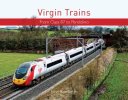
Does anyone with a copy of John Balmforth's 2012 book "Virgin Trains: From HST to Pendolino" reckon that it might shed any light on the question(s) posed by the OP?
1A07 05:20 Piccadilly-Euston was HST, I remember (I used it once to get to the Fox & Anchor in Smithfield for a liquid breakfast with friends), and confirmed by the CE working timetable from 1999. 1H14 19:00 Euston-Piccadilly likewise.
Were the 90's originally defined as an cl 87 sub class? 87/2 I think. I think west coast regarded them as interchangeable. But the insides were very different, as 87 had tap changers, 90 was thyristor phase angle. I think the bogies and traction motors were the same, or very similar.
Anyone remember the Pretendolino, a retained Cl87/Mk3 set that stood in for non available Pendolinos. I think it actually had a few peak hour workings - maybe on Fridays.
I think it may not have been all the sets, possibly only even one, and was quite late on. It was all coaches in the set(s) that had it. It was only WC set(s), not XC.
Anyone remember the Pretendolino, a retained Cl87/Mk3 set that stood in for non available Pendolinos. I think it actually had a few peak hour workings - maybe on Fridays.
I travelled on the Pretendolino once or twice in about 2011 to return from Uni- I think it ran something like 19.46 off Euston on a Friday night? The power was a Freightliner 90, not an 87.
I think some 87s came back briefly on Birmingham fill in turns in about 2006? This was before the full Pretendolino set was painted up though.
It also for a while did a MKC-Euston (originating from Rugby I think) at around 0700 (I think it was the 0657). Always lost 2 minutes as it was a Pendolino diagram.
1A07 05:20 Piccadilly-Euston was HST, I remember (I used it once to get to the Fox & Anchor in Smithfield for a liquid breakfast with friends), and confirmed by the CE working timetable from 1999. 1H14 19:00 Euston-Piccadilly likewise.
I used to travel on the 19:00.
Also been on additionals from Euston that went like the clappers!
VT HST's used to crop up on Sundays quite a bit, even though there was nothing wrong with the AC.
It was generally 86+Mk2 on XC and 87 or 90+Mk3 on West Coast. However there were a few dedicated West Coast Mk2 sets with Mk3 DVTs which were longer and had a different interior more like the Mk3s in colour scheme, i.e. the blue/light green seating rather than XC's dark green.
There was an odd-ball consist on the WCML for a while of MK3 coaches with a MK2f(? I think) coach sandwiched in.
You only sat in there once because of the ride quality!
Thank you! Yes- I was asking mostly about WCML HST workings. I know they ran to Holyhead, but I have a distinct memory of an HST at Preston too: I think this would be sometime around 96-98. A Blackpool working?
As an example of West Coast HST workings, in 2000/1 the weekday diagrams were:
XC091: 1A07 0520 Manchester-Euston, 1D87 0838 Euston-Holyhead, 1A70 1343 Holyhead-Euston, 1D89 1908 Euston-Holyhead
XC092: 1A23 0546 Holyhead-Euston, 1P03 1038 Euston-Blackpool, 1A72 1444 Blackpool-Euston, 1H21 1858 Euston-Manchester
XC093: MO 5V97 0300 Longsight-Laira ECS, TWO @ LA, ThO 5M97 1657 Laira-Longsight ECS, FO 1A83 1659 Manchester-Euston, FO 1D90 2123 Euston-Holyhead
The workings did swap around a bit over the years: I think there was a Lancaster rather than Blackpool at one stage and there was a daytime Euston-Manchester and return towards the end.
Anyone remember the Pretendolino, a retained Cl87/Mk3 set that stood in for non available Pendolinos. I think it actually had a few peak hour workings - maybe on Fridays.
Also in the early days of Virgin Trains West Coast standard class passengers were still allowed to dine in the restaurant car. Then Virgin hyked up first class ticket prices and introduced their 'complimentary at seat service' - any standard class passenger wishing to dine were now restricted to the buffet only. By restricting the dining car to first class it was seen and marketed as one of the benefits of travelling first class.
Virgin Trains also dropped the "named trains" identities such as The Manchester Pullman, Royal Scot and Irish Mail as they did not fit into their brand image.
My vague memory of the time is that 86s and mk2s were more or less entirely confined to Cross Country workings, but I think that's wrong: does anybody know "how" wrong I am?
86s and Mk2E/F XC sets did Glasgow/Edinburgh-Birmingham/Manchester
(There was also the use of 2E/F sets on XC workings, hauled by 86/2s on the WCML, 47/8s (nominally) elsewhere.)
86s and 2F push-pull sets did the Euston-Birmingham/Wolverhampton (EBW), but did appear off link at times (even to Glasgow).
90s supplemented the 86s on EBW workings primarily (that was what BR ordered them for, to replace the 81/85s essentially), but their 5,000hp and 110mph rating meant they went anywhere.
The 110mph rated all Mk3 sets were used on Euston-Manchester/Liverpool/Glasgow, as those routes were all timed for 110mph running from 1989/90. These were originally booked 87s.
As a child spotter, it seemed that it was almost random as to whether expresses were allocated class 87 or 90. Did the locos tend to stay assigned to given routes, or was it a true common pool?
Theoretically, yes. Certainly BR intended that, in practice by Virgin days, no. Except that 87s, 90s or one of the 110mph 86s (Class 87 prototypes) were obviously preferred for the 110mph diagrams.
And finally: I have a perception that coaching stock rakes would be a complete hodgepodge of Intercity and Virgin liveried mk3s, but Flickr photos seem to suggest that, at least for mk3s, whole rakes would be formed up in a single livery (not the case for mk2s). Does anybody have any reminisces of this?
Virgin got the WCML sets done pretty sharpish, plus the XC HSTs. The XC Mk2E/F sets remained mixed until the end, though the number of IC vehicles was ever fewer by the last years, but as late as 2000, over half were still IC livery.
Were the 90's originally defined as an cl 87 sub class? 87/2 I think. I think west coast regarded them as interchangeable. But the insides were very different, as 87 had tap changers, 90 was thyristor phase angle. I think the bogies and traction motors were the same, or very similar.
Originally classified 87/2, but it was later decided to give them their own class due to the different control system.
Pretty much same bogie/motor designs, ditto the 86/1s. There are a few subtle differences I seem to recall reading about in the Railway Magazine, an issue from about 1988 when the 90s were being tested.
Also in the early days of Virgin Trains West Coast standard class passengers were still allowed to dine in the restaurant car. Then Virgin hyked up first class ticket prices and introduced their 'complimentary at seat service' - any standard class passenger wishing to dine were now restricted to the buffet only. By restricting the dining car to first class it was seen and marketed as one of the benefits of travelling first class.
Virgin Trains also dropped the "named trains" identities such as The Manchester Pullman, Royal Scot and Irish Mail as they did not fit into their brand image.
The Royal Scot and Caledonian lasted until the 2005 timetable, actually both becoming limited stop Pendolino services. The switch to a fully regular stopping pattern for all services (ie, no additional limited stop services over thr normal pattern) led to their withdrawal. The Manchester Pullman went in 1999, not sure about the Irish Mail, but I have a feeling it lasted until HSTs were usurped on Holyheads, but possibly no longer shown in the timetables.
The Royal Scot and Caledonian lasted until the 2005 timetable, actually both becoming limited stop Pendolino services. The switch to a fully regular stopping pattern for all services (ie, no additional limited stop services over thr normal pattern) led to their withdrawal. The Manchester Pullman went in 1999, not sure about the Irish Mail, but I have a feeling it lasted until HSTs were usurped on Holyheads, but possibly no longer shown in the timetables.
It is a shame they didn't keep the names. European railways continued to have named trains even in a regular interval timetable, it is just a nice touch.
As for early VT, another thing to credit it with is the Advance Single (then called the Virgin Value Single). And the introduction of discounted First Class, which up to that point was full whack or nowt.
Does anyone with a copy of John Balmforth's 2012 book "Virgin Trains: From HST to Pendolino" reckon that it might shed any light on the question(s) posed by the OP?
It is a shame they didn't keep the names. European railways continued to have named trains even in a regular interval timetable, it is just a nice touch.
My memories of using VT services in the late 1990s were mainly travelling from Euston to Birmingham or Wolverhampton to connect with a CT service to the Cambrian Coast. Seemed most of the time the “EBWs” as they were known were formed of 86s and 100mph mk2s, but very occasionally we’d get mk3s, and especially towards the end of the Push Pull Operation, more mk3 sets started to be seen!
On a couple of occasions we were diverted via Nuneaton due to engineering works, and of all the EWS/RES Class 47/7s involved, the two that normally hauled the Royal Train (798 and 799) were used on the drags!!
Yes, sounds correct, but time flies and might be getting date wrong now, but I am sure many Euston-West Midlands formations were still mk2f in early 1997.
The Driving Van trailers were only about 8 years old as the same rakes had operated with mk1 BGs until end of 1980s. Some of which had been upgraded to 110mph.
I think some Virgin Cross Country rakes were formed of mk2 d-f with mk1 BGs and a brake second at other end, when Virgin started in 1997. But not 100% sure now as mk1s might have been few years earlier
The Driving Van trailers were only about 8 years old as the same rakes had operated with mk1 BGs until end of 1980s. Some of which had been upgraded to 110mph.
I think some Virgin Cross Country rakes were formed of mk2 d-f with mk1 BGs and a brake second at other end, when Virgin started in 1997. But not 100% sure now as mk1s might have been few years earlier
I travelled on the Pretendolino once or twice in about 2011 to return from Uni- I think it ran something like 19.46 off Euston on a Friday night? The power was a Freightliner 90, not an 87.
I think some 87s came back briefly on Birmingham fill in turns in about 2006? This was before the full Pretendolino set was painted up though.
Also regarding the Pretendolino, but the final, 90-hauled version:
Wasn't there one variant of the post-Princess Virgin timetable that saw one of the four trains between Birmingham and Manchester in each 2 hour period operate as a Birmingham-Manchester shuttle? So a shuttle would work every 2 hours.
There were 2 shuttle diagrams I think (as a round trip with turnaround allowance would take about 4 hours), and one year I saw the Pretendolino on one of them. I have a feeling it was actually booked for it, too.
They did 110mph working before the DVT's. The BGs were modified for that. I assume commonwealth bogies. Never undrstood why a mk1 BG could be made to run at 110 but Mk could not.
They did 110mph working before the DVT's. The BGs were modified for that. I assume commonwealth bogies. Never undrstood why a mk1 BG could be made to run at 110 but Mk could not.
Yes, that what I was saying. The modified BGs ran on B4s. They were given special maintenance.
Assuming you mean "never understood why a Mk1 BG could be passed for 110 but a Mk2 could not", the sets could only comfortably make the braking distances from 110mph with one tread braked coach, allowing for poor adhesion and driver reaction. The Mk3s had their distributor braking rate pushed back to 9%g for 110mph use having been reduced to 6%g soon after introduction to reduce brake pad wear as it was found that the Mk3s ended up doing most of the braking in mixed sets.
Yes, that what I was saying. The modified BGs ran on B4s. They were given special maintenance.
Assuming you mean "never understood why a Mk1 BG could be passed for 110 but a Mk2 could not", the sets could only comfortably make the braking distances from 110mph with one tread braked coach, allowing for poor adhesion and driver reaction. The Mk3s had their distributor braking rate pushed back to 9%g for 110mph use having been reduced to 6%g soon after introduction to reduce brake pad wear as it was found that the Mk3s ended up doing most of the braking in mixed sets.
We are aware of an issue with emails from the Forum to Microsoft-based email accounts (hotmail/outlook/live.com email addresses). This is being looked into currently, thanks for your patience meanwhile.