Agreed it shouldn't be unless it has 484K and other mutations as the people of Manaus and surrounding areas have found.A peak in September won't be an issue, as we'll have have vaccinated everyone by then.

-
Our new ticketing site is now live! Using either this or the original site (both powered by TrainSplit) helps support the running of the forum with every ticket purchase! Find out more and ask any questions/give us feedback in this thread!
You are using an out of date browser. It may not display this or other websites correctly.
You should upgrade or use an alternative browser.
You should upgrade or use an alternative browser.
Vaccine Progress, Approval, and Deployment
- Thread starter Yew
- Start date
- Status
- Not open for further replies.
Sponsor Post - registered members do not see these adverts; click here to register, or click here to log in
R
RailUK Forums

Either provide conclusive peer reviewed evidence that there is an impact on hospitalisation rates amongst the vaccinated, or cease this baseless fear mongering.Agreed it shouldn't be unless it has 484K and other mutations as the people of Manaus and surrounding areas have found.
Except, this is assuming everyone who wants to be has been vaccinated - there will always be a percentage who refuse the vaccine, and there is also the fact that the vaccines aren't 100% effective, it's more likely around 93%, as seen in Israel. Even after a 93% reduction, the much higher number of cases means the number of serious cases will still be substantial.A peak in September won't be an issue, as we'll have have vaccinated everyone by then.
It does seem like most unlocking plans produce a very similar result; the best course seems to roughly be Tier 3 in March, Tier 2 in April, Tier 1 in May, and then very limited restrictions until July or August, but there's not a great deal in it.
Here is the analysis (and I've included the core of the summary below): I don't know that I endorse it 100%, but the main message seems sound, and the methodology seems reasonable enough. It seems that other than indefinite suppression (which the author rules out due to lack of exit strategy), any plan will lead to a fourth wave, but one which will probably be manageable.
Since the question of how far, and how fast, we can relax our current lockdown restrictions is very much current, I have updated my “vax & release” model with the latest data. And it’s mostly good news: we should be able to unlock faster than I previously thought, returning to near-normality in June, without causing the many tensor hundreds of thousands of further deaths that were predicted by the Warwick and Imperial models. (please note I’m not criticising their modelling which I’m sure is much better than mine–I just think their input assumptions are out-of-date).
However, there is a sting in the tail :there is still a strong risk of a further (fourth) wave in the summer or autumn, with maybe another ~20-30k deaths. To avoid that wave causing a peak of hospitalisations that would overwhelm the NHS, it may be necessary to continue with ‘light’ social-distancing requirements(e.g. masks in crowded places, work from home if you can, etc) small number of months after we unlock. Seasonal factors and/or voluntary behavioural responses might avoid the need for this – but it could be dangerous to rely on these.
While naturally acquired and vaccinated immunity are different of people in Manaus have had both old (estimated at 76% of the population at the start of October, i.e. before the new strain) and new strain with very high levels of hospitalisation to the extent that hospital were and are overwhelmed with patients being placed on oxygen treatment at home in the care of their families.Either provide conclusive peer reviewed evidence that there is an impact on hospitalisation rates amongst the vaccinated, or cease this baseless fear mongering.
Why do you thin all the leading covid vaccine suppliers are talking about modifying the vaccines to be modelled on newer strains?
How about providing peer reviewed proof it isn't?
You always demand peer reviewed proof when someone says something you don't like but not for stuff you agree with.
As a hint don't try looking in the Lancet as you'll find few a few recent articles with data on Manaus that you would classify as "fearmongering".
Yes, and last time I checked, we weren't on some sort of child-like quest to stop all deaths.Except, this is assuming everyone who wants to be has been vaccinated - there will always be a percentage who refuse the vaccine, and there is also the fact that the vaccines aren't 100% effective, it's more likely around 93%, as seen in Israel. Even after a 93% reduction, the much higher number of cases means the number of serious cases will still be substantial.
== Doublepost prevention - post automatically merged: ==
Because that's not how science works, you can't prove negatives.How about providing peer reviewed proof it isn't?
I agree, but if the health service were to be overwhelmed, that will cause massive harms. Particularly considering the massive backlog of health issues caused by lockdown, which we need to start clearing in the coming months. Personally, I think if someone's an anti-vaxxer then you're taking your chances with the virus, and so I don't think we should impose restrictions to keep them safe, but if the health service collapses then it won't just be them who gets hurt.Yes, and last time I checked, we weren't on some sort of child-like quest to stop all deaths.
That's a very big if, can you prove that it will happen?I agree, but if the health service were to be overwhelmed, that will cause massive harms. Particularly considering the massive backlog of health issues caused by lockdown, which we need to start clearing in the coming months. Personally, I think if someone's an anti-vaxxer then you're taking your chances with the virus, and so I don't think we should impose restrictions to keep them safe, but if the health service collapses then it won't just be them who gets hurt.
I agree, but if the health service were to be overwhelmed, that will cause massive harms. Particularly considering the massive backlog of health issues caused by lockdown, which we need to start clearing in the coming months. Personally, I think if someone's an anti-vaxxer then you're taking your chances with the virus, and so I don't think we should impose restrictions to keep them safe, but if the health service collapses then it won't just be them who gets hurt.
The chance of the NHS being overwhelmed after everyone who wants it has been vaccinated is miniscule - and if this supposed risk exists, it will exist every winter so are you suggesting a whole-winter lockdown, every winter, to "protect the NHS"?
And someone refusing a vaccine is not necessarily an 'anti-vaxxer' (i.e. against all vaccines) - some will be of course, but some won't want to have this particular vaccine for whatever reason.
You can't prove that it will happen, but it's a very plausible risk. We should prepare for it as a possibility, and try to minimise the risk through our exit strategy. We can't stick our heads in the sand - the only way to avoid a fourth wave is to have restrictions forever, and that's obviously not viable.That's a very big if, can you prove that it will happen?
Absolutely not, I'm merely saying that we need to be careful with how we unlock. Harsh lockdowns tend to delay the inevitable, but just removing all restrictions at once could make the fourth wave bigger than it needs to be. The vaccine is fantastic but it's not infallible.The chance of the NHS being overwhelmed after everyone who wants it has been vaccinated is miniscule - and if this supposed risk exists, it will exist every winter so are you suggesting a whole-winter lockdown, every winter?
Absolutely not, I'm merely saying that we need to be careful with how we unlock. Harsh lockdowns tend to delay the inevitable, but just removing all restrictions at once could make the fourth wave bigger than it needs to be. The vaccine is fantastic but it's not infallible.
That's unlikely given that we will be heading into summer anyway, and even without anyone vaccinated cases plummeted last summer. By the time we reach autumn all the vaccinations should be done.
We'll see, but I'm reluctant to make any comparisons with last summer. The first half was still in lockdown, so it's not surprising cases fell, while the second half saw cases reasonably flat - but was still hardly normal. This summer is likely to be much more normal than that, so you'd expect considerably more cases, even with the vaccine.That's unlikely given that we will be heading into summer anyway, and even without anyone vaccinated cases plummeted last summer. By the time we reach autumn all the vaccinations should be done.
As it happens, my gut feeling is that most models are underestimating the vaccine's impact on transmission. I pointed out initially that these models are very sensitive to that variable, and if they're even 70% effective at blocking transmission, the chances of a fourth wave basically diminish to nothing (even with complete unlocking in May/June).
The first part of the latest batch Of Oxford/AZ study work as just been peer reviewed and published yesterday as @Bald Rick noted yesterday so probably time for quick catch up on the data on this vaccine.

Note the current UK vaccination strategy highlighted in red that also happens to be the best overall.
Exploratory analyses by prime-boost interval
Primary symptomatic COVID-19 cases more than 14 days after second dose
Asymptomatic COVID-19 cases more than 14 days after second dose (COV002 only)
Any NAAT-positive COVID-19 cases more than 14 days after second dose
Single-dose administration and the influence of the timing of the booster dose on immunogenicity and efficacy of ChAdOx1 nCoV-19 (AZD1222) vaccine: a pooled analysis of four randomised trials
The results of this primary analysis of two doses of ChAdOx1 nCoV-19 were consistent with those seen in the interim analysis of the trials and confirm that the vaccine is efficacious, with results varying by dose interval in exploratory analyses. A 3-month dose interval might have advantages...
www.thelancet.com
Note the current UK vaccination strategy highlighted in red that also happens to be the best overall.
| Cases more than 14 days after second dose | Total cases | ChAdOx1 nCoV-19 | Control | Vaccine efficacy (95% CI)* |
| Primary symptomatic COVID-19 | 332 | 84/8597 (1·0%) | 248/8581 (2·9%) | 66·7% (57·4 to 74·0) |
| Two standard doses | 271 | 74/7201 (1·0%) | 197/7179 (2·7%) | 63·1% (51·8 to 71·7) † |
| Low dose plus standard dose | 61 | 10/1396 (0·7%) | 51/1402 (3·6%) | 80·7% (62·1 to 90·2) |
| Asymptomatic or unknown infection (COV002 UK only) | 130 | 57/4071 (1·4%) | 73/4136 (1·8%) | 22·2% (−9·9 to 45·0) |
| Two standard doses | 83 | 41/2692 (1·5%) | 42/2751 (1·5%) | 2·0% (−50·7 to 36·2) |
| Low dose plus standard dose | 47 | 16/1379 (1·2%) | 31/1385 (2·2%) | 49·3% (7·4 to 72·2) |
| Any NAAT positive | 507 | 161/8597 (1·9%) | 346/8581 (4·0%) | 54·1% (44·7 to 61·9) |
| Two standard doses | 390 | 132/7201 (1·8%) | 258/7179 (3·6%) | 49·5% (37·7 to 59·0) |
| Low dose plus standard dose | 117 | 29/1396 (2·1%) | 88/1402 (6·3%) | 67·6% (50·8 to 78·7) |
Exploratory analyses by prime-boost interval
Primary symptomatic COVID-19 cases more than 14 days after second dose
| Prime-boost interval (two standard doses) | Total cases | ChAdOx1 nCoV-19 | Control | Vaccine efficacy (95% CI)* |
| <6 weeks | 111 | 35/3890 (0·9%) | 76/3856 (2·0%) | 55·1% (33·0 to 69·9) |
| 6–8 weeks | 64 | 20/1112 (1·8%) | 44/1009 (4·4%) | 59·9% (32·0 to 76·4) |
| 9–11 weeks | 43 | 11/906 (1·2%) | 32/958 (3·3%) | 63·7% (28·0 to 81·7) |
| ≥12 weeks | 53 | 8/1293 (0·6%) | 45/1356 (3·3%) | 81·3% (60·3 to 91·2) |
| Prime-boost interval (two standard doses or low dose plus standard dose) | Total cases | ChAdOx1 nCoV-19 | Control | Vaccine efficacy (95% CI)* |
| <6 weeks | 111 | 35/3905 (0·9%) | 76/3871 (2·0%) | 55·1% (33·0 to 69·9) |
| 6–8 weeks | 64 | 20/1124 (1·8%) | 44/1023 (4·3%) | 59·7% (31·7 to 76·3) |
| 9–11 weeks | 66 | 14/1530 (0·9%) | 52/1594 (3·3%) | 72·2% (50·0 to 84·6) |
| ≥12 weeks | 91 | 15/2038 (0·7%) | 76/2093 (3·6%) | 80·0% (65·2 to 88·5) |
Asymptomatic COVID-19 cases more than 14 days after second dose (COV002 only)
| Prime-boost interval (two standard doses) | Total cases | ChAdOx1 nCoV-19 | Control | Vaccine efficacy (95% CI)* |
| <6 weeks | 17 | 9/728 (1·2%) | 8/733 (1·1%) | −11·8% (−189·5 to 56·8) |
| 6–8 weeks | 21 | 14/528 (2·7%) | 7/476 (1·5%) | −74·2% (−330·3 to 29·5) |
| 9–11 weeks | 17 | 6/599 (1·0%) | 11/666 (1·7%) | 39·9% (−62·3 to 77·8) |
| ≥12 weeks | 28 | 12/837 (1·4%) | 16/876 (1·8%) | 22·8% (−63·3 to 63·5) |
| Prime-boost interval (two standard doses or low dose plus standard dose) | Total cases | ChAdOx1 nCoV-19 | Control | Vaccine efficacy (95% CI)* |
| <6 weeks | 17 | 9/728 (1·2%) | 8/733 (1·1%) | −11·8% (−189·5 to 56·8) |
| 6–8 weeks | 21 | 14/538 (2·6%) | 7/488 (1·4%) | −75·7% (−334·2 to 28·9) |
| 9–11 weeks | 43 | 17/1223 (1·4%) | 26/1302 (2·0%) | 31·6% (−26·0 to 62·8) |
| ≥12 weeks | 49 | 17/1582 (1·1%) | 32/1613 (2·0%) | 47·2% (5·0 to 70·7) |
Any NAAT-positive COVID-19 cases more than 14 days after second dose
| Prime-boost interval (two standard doses) | Total cases | ChAdOx1 nCoV-19 | Control | Vaccine efficacy (95% CI)* |
| <6 weeks | 145 | 51/3890 (1·3%) | 94/3856 (2·4%) | 47·1% (25·6 to 62·4) |
| 6–8 weeks | 90 | 39/1112 (3·5%) | 51/1009 (5·1%) | 32·6% (−2·2 to 55·5) |
| 9–11 weeks | 68 | 18/906 (2·0%) | 50/958 (5·2%) | 61·9% (34·8 to 77·8) |
| ≥12 weeks | 87 | 24/1293 (1·9%) | 63/1356 (4·6%) | 59·9% (35·8 to 75·0) |
| Prime-boost interval (two standard doses or low dose plus standard dose) | Total cases | ChAdOx1 nCoV-19 | Control | Vaccine efficacy (95% CI)* |
| <6 weeks | 145 | 51/3905 (1·3%) | 94/3871 (2·4%) | 47·1% (25·6 to 62·4) |
| 6–8 weeks | 90 | 39/1124 (3·5%) | 51/1023 (5·0%) | 32·2% (−2·7 to 55·3) |
| 9–11 weeks | 122 | 33/1530 (2·2%) | 89/1594 (5·6%) | 61·8% (43·1 to 74·3) |
| ≥12 weeks | 150 | 38/2038 (1·9%) | 112/2093 (5·4%) | 65·6% (50·3 to 76·2) |

Except, this is assuming everyone who wants to be has been vaccinated - there will always be a percentage who refuse the vaccine, and there is also the fact that the vaccines aren't 100% effective, it's more likely around 93%, as seen in Israel. Even after a 93% reduction, the much higher number of cases means the number of serious cases will still be substantial.
It does seem like most unlocking plans produce a very similar result; the best course seems to roughly be Tier 3 in March, Tier 2 in April, Tier 1 in May, and then very limited restrictions until July or August, but there's not a great deal in it.
Here is the analysis (and I've included the core of the summary below): I don't know that I endorse it 100%, but the main message seems sound, and the methodology seems reasonable enough. It seems that other than indefinite suppression (which the author rules out due to lack of exit strategy), any plan will lead to a fourth wave, but one which will probably be manageable.
Is that the original tier 3, or the later"lockdown in all but name" tier 3 ?
I don't know - I think it assumes that schools would be fully open, as would shops, but hospitality would still be shut (or heavily restricted). Not sure about gyms.Is that the original tier 3, or the later"lockdown in all but name" tier 3 ?
I don't know - I think it assumes that schools would be fully open, as would shops, but hospitality would still be shut (or heavily restricted). Not sure about gyms.
Oh yes, I forgot. Old tier three allowed one household to use hospitality with a meal.
The problem with modelling is that it's incredibly sensitive to the assumptions you make.
I was reading an analysis which an independent statistician had done - he had replicated their model but then tweaked some of the assumptions, and that had huge impacts on the results. For example, he initially assumed that the vaccine blocks 50% of transmission after one dose, and 65% after two. Under that, we'd see a fairly large (but manageable) peak in August, about half the size of the current one. But if you change those figures to 40% and 55%, you see a much larger peak than the current one in July instead. If those figures were actually 60% and 75%, we might barely see another peak at all, and it would be pushed all the way to the winter. We still don't exactly know what the true levels of protection are, yet even tiny differences in this would have massive future ramifications.
That’s as per the modelling I saw from a few weeks ago. At 60% efficacy there was still a high 4th wave in late autumn, at 80% there wasn’t.
Other variables also have a big effect - including delaying the lockdown easing from February to March as we have done. A 4 week delay buys us a lot of extra freedom in lste Spring and Summer, as those extra 10 million people vaccinated takes a big chunk of risk out.
If that model is predicting large peaks in July or August, it's clearly not taking seasonality into account - we know from last year that this has a significant impact.
I’m not sure about that. Don’t forget we were in lockdown until May, and most activities weren’t back to normal until July, and some weren’t at all. It’s no surprise that infection rates in the late summer were low - we’d been locked up for most of the previous 4 months. The same will be true this time, except that we have the vaccine now to provide the cavalry.
A peak in September won't be an issue, as we'll have have vaccinated everyone by then.
Sigh. There will still be those that haven’t been vaccinated, for medical, moral or stupidity reasons, and of course the vaccine won’t work for everyone. There could still be c20-30% of the population unprotected. Whilst this is no different to many other diseases, the consequences of this disease are much worse than for most other infections. The peak could still be an issue; it depends on what the PM announces
I remember reading a piece by “M.D.” in Private Eye early in the pandemic. He explained in his usual brilliantly simple style how this disease with an unconstrianed “R” of about 3, and a death rate of about 1-2% of infections compared to others. Measles has an “R” of around 15, with a death rate of 0.2%; Ebola has an “R” of about 1.5 through bodily fluids only (not aerosols) but a death rate of c50%. Epidemiologists are most concerned about a theoretical “Ebeasles” with a high R and high death rate; in a way we have been lucky that COVID is ‘only’ moderate in both cases.
We can't keep having restrictions hanging over us like a sword of Damocles for such a small number of people. It's time to set an expiry date on any form of compulsory non-pharmaceutical interventions and consign them to the dustbin of history.Sigh. There will still be those that haven’t been vaccinated, for medical, moral or stupidity reasons, and of course the vaccine won’t work for everyone. There could still be c20-30% of the population unprotected.
That is untrue.Whilst this is no different to many other diseases, the consequences of this disease are much worse than for most other infections. The peak could still be an issue; it depends on what the PM announcesin the Sunday Telegraph tomorrowon Monday.
Plenty of real world effectiveness good news from Israel on the Pfizer Jab:
2Weeks post 2nd jab:
Effectiveness measures:
95.8% at preventing SARS-CoV-2 infection
98.0% at preventing disease with fever or respiratory symptoms
98.9% at preventing COVID-19 hospitalizations
99.2% at preventing severe disease
98.9% at preventing death from COVID-19
Not quite sure how the 4th point works as I'd include death in the severe disease category!
2Weeks post 2nd jab:
Effectiveness measures:
95.8% at preventing SARS-CoV-2 infection
98.0% at preventing disease with fever or respiratory symptoms
98.9% at preventing COVID-19 hospitalizations
99.2% at preventing severe disease
98.9% at preventing death from COVID-19
Not quite sure how the 4th point works as I'd include death in the severe disease category!
Indeed, you would imagine it to be a subset of the former.Plenty of real world effectiveness good news from Israel on the Pfizer Jab:
2Weeks post 2nd jab:
Effectiveness measures:
95.8% at preventing SARS-CoV-2 infection
98.0% at preventing disease with fever or respiratory symptoms
98.9% at preventing COVID-19 hospitalizations
99.2% at preventing severe disease
98.9% at preventing death from COVID-19
Not quite sure how the 4th point works as I'd include death in the severe disease category!
it appears to be the same as the hospitalisations number, so perhaps it's a typographical error?

HSTEd
Veteran Member
- Joined
- 14 Jul 2011
- Messages
- 20,292
I think it means more of the severe disease cases went on to lead to death than in the placebo group.Indeed, you would imagine it to be a subset of the former.
it appears to be the same as the hospitalisations number, so perhaps it's a typographical error?
It’s amazing how disagreeing with the proposition that they must end ASAP means I want them extended; anyone would think my posts are being read through a filter.So it's fine to rely on models from someone who has demonstrably over-estimated by huge amounts, but not to rely on models which are realistic based on current understanding?
Why don't you just come out and say that you think lockdowns should continue indefinitely, and that you couldn't care less about the impact this has on some sectors of society? Because that is clearly the standpoint you are taking on this!
So, for clarity, I want them over, and once and for all. I believe that the right way to achieve that is with caution, and not to set policy assuming the best case is true. I then challenge the use of predictions for the future path of the pandemic based on those best case assumptions by people arguing the utter error of the Imperial modelling not because I agree with it, but because refusing to accept modelling can be justified has to work for all models, not just unpalatable ones.
RomeoCharlie71
Established Member
The Prime Minister has announced that the vaccine targets have been brought forward - JCVI groups 1-9 by April 15th, and the rest of the UK adult population by the end of July.
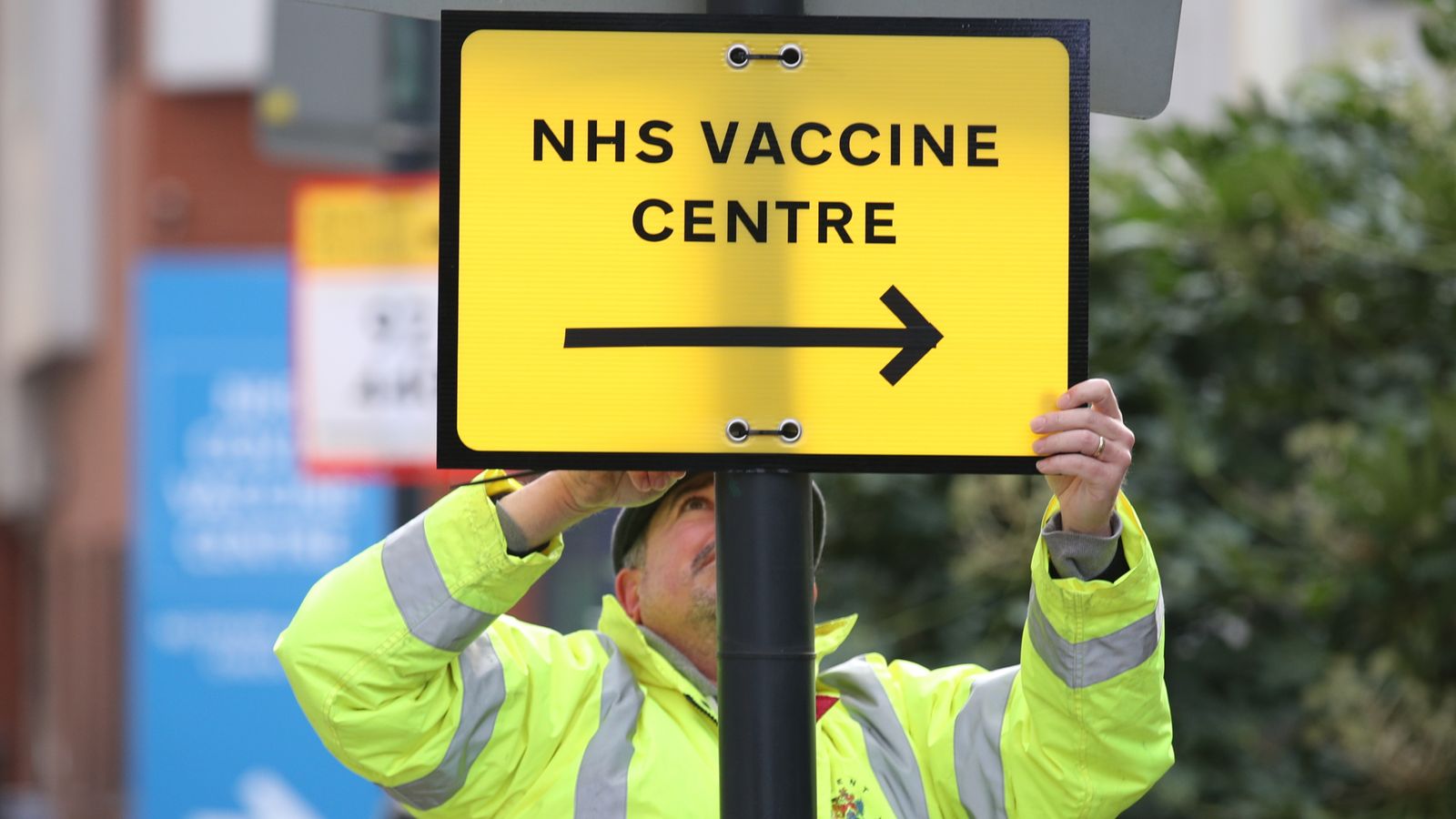
 news.sky.com
COVID-19: All adults to be offered vaccine by 31 July under PM's accelerated plan, as ministers meet to finalise roadmap out of lockdown
The accelerated vaccine rollout will help protect the most vulnerable sooner and enable the easing of restrictions, the PM says.
COVID-19: All adults to be offered vaccine by end of July under PM's accelerated plan
The accelerated vaccine rollout will help protect the most vulnerable sooner and enable the easing of restrictions, the PM says.
Boris Johnson has pledged that every adult in the UK should be offered a COVID-19 vaccine by the end of July.
The accelerated vaccine rollout would help protect the most vulnerable sooner and also enable the easing of some lockdown restrictions, the prime minister said.
People aged 50 and over and those with underlying health conditions will be offered a jab by 15 April.
And by 31 July, all adults should have been offered a COVID-19 vaccine, though the order of priority for those aged under 50 has yet to be outlined by the Joint Committee on Vaccination and Immunisation (JCVI).
Government ministers had set a target to offer vaccines to all adults by September, with an aim to reach all those aged 50 and over in the first nine JCVI priority groups by May.
The new target has been set before Mr Johnson unveils his road map out of lockdown to MPs on Monday, as he spends the weekend finalising his plan for relaxing the stringent measures.
The accelerated vaccine rollout will fuel calls for restrictions to be eased sooner, but Mr Johnson insisted the route out of lockdown would be "cautious and phased".
He said: "Hitting 15 million vaccinations was a significant milestone - but there will be no let up, and I want to see the rollout go further and faster in the coming weeks.
"We will now aim to offer a jab to every adult by the end of July, helping us protect the most vulnerable sooner, and take further steps to ease some of the restrictions in place.
"But there should be no doubt - the route out of lockdown will be cautious and phased, as we all continue to protect ourselves and those around us."
The prime minister is still aiming to reopen all schools in England next month - on 8 March - despite concerns from teachers and scientists.
Outdoor mixing is also likely to be one of the first areas where rules will be relaxed.
Earlier this month, the government met its ambition to offer jabs to all those in the top four priority groups - adults aged 70 and over, frontline health and social care workers and the most clinically vulnerable - by 15 February.
As of Saturday, more than 17.2 million people across the UK had received their first dose of a COVID-19 vaccine at one of the 1,500 vaccination sites across the country - while 600,000 have received their second.
Downing Street said the JCVI would publish its priority list for the second phase of the vaccine programme in due course as people are calling for teachers and other frontline workers to be prioritised.
Labour's shadow health secretary Jonathan Ashworth said the vaccine rollout's success shows "the true value of our incredible health service" as he thanked NHS staff.
"Ensuring people are vaccinated as quickly as possible is the right thing to do. All adults getting a first dose by July is welcome, though if supplies increase this could be achieved earlier," he said.
He added: "We now urgently need government to set out how they will prioritise those outside of the first nine groups - it's perfectly reasonable for teachers, police officers and other key workers who haven't been able to stay at home in the lockdown to ask when their turn will be.
"If government aren't going to prioritise by occupation in the next phase they need to set out why."
The Prime Minister has announced that the vaccine targets have been brought forward - JCVI groups 1-9 by April 15th, and the rest of the UK adult population by the end of July.
COVID-19: All adults to be offered vaccine by 31 July under PM's accelerated plan, as ministers meet to finalise roadmap out of lockdown
The accelerated vaccine rollout will help protect the most vulnerable sooner and enable the easing of restrictions, the PM says.
Excellent news.
Nicholas Lewis
Established Member
This weeks dynamic co-cin report (data date 11 Feb) shows how the average days in hospital are dropping quickly now compared to a few months ago. Over the last 14 days worth of data 1 in 4 people were hospitalised for 24-48hrs which is down from 5-6 days. Sadly the mortality rate hasn't improved that much as a percentage of those hospitalised but is resulting in reduced absolute number with falling cases.The chance of the NHS being overwhelmed after everyone who wants it has been vaccinated is miniscule - and if this supposed risk exists, it will exist every winter so are you suggesting a whole-winter lockdown, every winter, to "protect the NHS"?
And someone refusing a vaccine is not necessarily an 'anti-vaxxer' (i.e. against all vaccines) - some will be of course, but some won't want to have this particular vaccine for whatever reason.
Bertie the bus
Established Member
- Joined
- 15 Aug 2014
- Messages
- 3,216
Not excellent news at all. When groups 5 - 9 are described as the most vulnerable, which they are certainly not, it is obviously a precursor to an announcement that very few restrictions will be lifted before mid-April. It is the opposite of excellent news.Excellent news.
Not excellent news at all. When groups 5 - 9 are described as the most vulnerable, which they are certainly not, it is obviously a precursor to an announcement that very few restrictions will be lifted before mid-April. It is the opposite of excellent news.
As far as I'm concerned, the quicker the vaccination rollout happens, the better.
I completely see your worry, but I've come to the conclusion that SAGE, the Government and other lockdown protagonists are going to push for continual lockdown regardless, so anything such as a quicker vaccine rollout that could undermine that, is good in my book.
Bertie the bus
Established Member
- Joined
- 15 Aug 2014
- Messages
- 3,216
Manaus has a large population of native Amazonians. Everything known to man kills native Amazonians. No parallels can be drawn between Manaus and here.While naturally acquired and vaccinated immunity are different of people in Manaus have had both old (estimated at 76% of the population at the start of October, i.e. before the new strain) and new strain with very high levels of hospitalisation to the extent that hospital were and are overwhelmed with patients being placed on oxygen treatment at home in the care of their families.
Why do you thin all the leading covid vaccine suppliers are talking about modifying the vaccines to be modelled on newer strains?
How about providing peer reviewed proof it isn't?
You always demand peer reviewed proof when someone says something you don't like but not for stuff you agree with.
As a hint don't try looking in the Lancet as you'll find few a few recent articles with data on Manaus that you would classify as "fearmongering".
Is this the new drugs, or the effect of vaccinations?This weeks dynamic co-cin report (data date 11 Feb) shows how the average days in hospital are dropping quickly now compared to a few months ago. Over the last 14 days worth of data 1 in 4 people were hospitalised for 24-48hrs which is down from 5-6 days. Sadly the mortality rate hasn't improved that much as a percentage of those hospitalised but is resulting in reduced absolute number with falling cases.

Put it this way, if we carry on with an average of 400,000 jabs per day (just under 3 million per week), then it’s highly likely that we will have inoculated the entire adult population with their first dose by the middle of June. Hopefully when the time comes for adults to have their second dose, there is more vaccine supply available so this can be done 4 weeks rather than 12 after the first dose.Excellent news.
Put it this way, if we carry on with an average of 400,000 jabs per day (just under 3 million per week), then it’s highly likely that we will have inoculated the entire adult population with their first dose by the middle of June. Hopefully when the time comes for adults to have their second dose, there is more vaccine supply available so this can be done 4 weeks rather than 12 after the first dose.
Sounds good to me. If we need a booster, we'll have a head start for it.
- Status
- Not open for further replies.