• Our new ticketing site is now live! Using either this or the original site (both powered by TrainSplit) helps support the running of the forum with every ticket purchase! Find out more and ask any questions/give us feedback in this thread!

Using an SPT for emergencies

Status
Not open for further replies.

alxndr

Established Member
Joined
3 Apr 2015
Messages
1,679
I’ve pondered what I’d do as off duty staff sometimes and I think my tactic would be, in order of preference:
  1. If on my patch, call the signaller from my mobile direct. I’ll know where I am, which signal box/electrical control room, and all the numbers are on my personal phone as a backup anyway.
  2. If there is an unlocked SPT in sight, very nearby, and can be accessed safely then head for that, but be ready to phone 999 if it doesn’t work as they’re not the most reliable things.
  3. If no SPT immediately available then phone 999 and consider aiming for an SPT or performing what protection of the line I can without equipment if the situation warrants it.
Phoning 999 should be sufficient, but direct contact with a signaller is faster.

The report from a bridge strike near Hungerford in 2015 where contacting 999 wasn’t fast enough may be of interest to this thread.

At around 17:31 hrs on 22 February 2015, a high speed passenger train (HST), the 16:34 hrs First Great Western service from London Paddington to Penzance, struck and ran over part of the fallen masonry parapet of an overline bridge at Froxfield, Wiltshire.

The train was fully loaded with around 750 passengers and was travelling at a speed of 86 mph (138 km/h) when the driver saw the obstruction. He applied the emergency brake but there was insufficient distance to reduce the speed significantly before the train struck the parapet. The train did not derail and came to a stop around 720 metres beyond the bridge. There were no injuries. The leading power car sustained damage to its leading bogie, braking system, running gear and underframe equipment.

The immediate cause of the collision was that the eastern parapet of Oak Hill Road overline bridge had been pushed off and onto the tracks, by a heavy goods vehicle which had reversed into it. The train had not been stopped before it collided with the debris because of delays in informing the railway about the obstruction on the tracks.

* Locked ones do exist but they’re rare in most cases and if I’m off duty I’m unlikely to have a key on me.
 
Sponsor Post - registered members do not see these adverts; click here to register, or click here to log in
R

RailUK Forums

Joined
15 Apr 2020
Messages
402
Location
Wakefield
It’s surprisingly common to receive calls from well meaning members of the public, station staff or off duty rail staff from SPTs on platforms, or crossing phones etc. They are also occasionally used by abusive or confused members of the public but it’s rare from my experience.

SPTs, points zone phones and level crossing phones (with the exception of some gate boxes) ring directly to the controlling signaller and each have individually identified direct lines so we know exactly which phone is calling, and to help us prioritise which call to answer as signallers get a lot of phone calls!
 
Joined
1 Feb 2018
Messages
132
I think - maybe someone with more knowledge can comment - that mobiles are set to recognise the various emergency numbers (999, 911, 112, probably others) if dialled, and make an emergency call, rather than a 'conventional' dialled one, straight to the emergency control: which is why at times your mobile will say 'emergency calls only' - it doesn't worry about whether you (it) are on the correct network or have any credit...
Hello, Radio Frequency Complaince Engineer here! I can actually provide you with a bit of detail, i will bullet point it to ensure i dont go off on a waffle.

- Most networks and sim cards have pre programmed emergency numbers.
- networks and sims can be programmed with additional emergency numbers e.g 000, 118, other local emergency numbers
- when making an emergency call, the number is not actually even transmitted to the network.
- most countries will allow mobile emergency calls without a sim card
- dialling an recognised emergency number will force the phone to transmit the call through any network, so if you dont have signal with your provider, it will try all other available networks
-GSM phones can often have their location triangulated and number traced, even if the block caller ID.
- once an emergency call is placed, emergency services can often hold a line open until they decide the emergency is over. This doesnt mean the caller cant hang up, just means ems can use same line to call back.
 

ian_99

Member
Joined
2 Jan 2024
Messages
19
Location
Belgium
911 will be rerouted to 999 on mobiles in the UK and has been for many years. I’m not sure about landlines or other types.
I think it's been like that for a long while indeed, I never tried it myself but I'm sure I heard/read about it a long time ago.

== Doublepost prevention - post automatically merged: ==

I’ve pondered what I’d do as off duty staff sometimes and I think my tactic would be, in order of preference:
  1. If on my patch, call the signaller from my mobile direct. I’ll know where I am, which signal box/electrical control room, and all the numbers are on my personal phone as a backup anyway.
  2. If there is an unlocked SPT in sight, very nearby, and can be accessed safely then head for that, but be ready to phone 999 if it doesn’t work as they’re not the most reliable things.
  3. If no SPT immediately available then phone 999 and consider aiming for an SPT or performing what protection of the line I can without equipment if the situation warrants it.
Phoning 999 should be sufficient, but direct contact with a signaller is faster.

The report from a bridge strike near Hungerford in 2015 where contacting 999 wasn’t fast enough may be of interest to this thread.
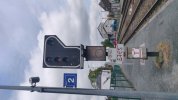
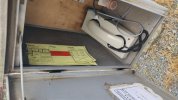
That is indeed what I have been wondering myself, and I'd come to the conclusion that this is also the most logical order of things. For us it is very easy to access a SPT, as they are always supposed to be in working condition. In theory they are checked a few times a year (they are still a vital part of fulfilling a "pass at danger" procedure). I attached some pictures of an SPT from around here, and what's inside them. A lot more complex than the UK I bet.
 

Attachments

  • 2024-04-26-11-47-29-056.jpg
    2024-04-26-11-47-29-056.jpg
    3.6 MB · Views: 58
  • 2024-04-26-11-47-36-487.jpg
    2024-04-26-11-47-36-487.jpg
    4.5 MB · Views: 58
Last edited:

ian_99

Member
Joined
2 Jan 2024
Messages
19
Location
Belgium
Hello, Radio Frequency Complaince Engineer here! I can actually provide you with a bit of detail, i will bullet point it to ensure i dont go off on a waffle.

- Most networks and sim cards have pre programmed emergency numbers.
- networks and sims can be programmed with additional emergency numbers e.g 000, 118, other local emergency numbers
- when making an emergency call, the number is not actually even transmitted to the network.
- most countries will allow mobile emergency calls without a sim card
- dialling an recognised emergency number will force the phone to transmit the call through any network, so if you dont have signal with your provider, it will try all other available networks
-GSM phones can often have their location triangulated and number traced, even if the block caller ID.
- once an emergency call is placed, emergency services can often hold a line open until they decide the emergency is over. This doesnt mean the caller cant hang up, just means ems can use same line to call back.
Thanks for this! That is very interesting!! I knew you could dial an emergency number without a sim, but not that the emergency numbers are saved on the sim.
 

king_walnut

On Moderation
Joined
16 Oct 2013
Messages
292
In the UK the GSM-R (in-cab) radio system will connnect you just as quickly to the signaller, plus there aren't that many SPT's.

A guy visiting the UK who sees an emergency on a railway line won't have a GSM-R radio in his pocket will he?

As for there not being that many SPTs .. they're found on or near just about all signal posts that aren't distant signals.

To answer your question OP, yes if the nearest phone is an SPT then absolutely use that. Level crossings will have a level crossing telephone (in a yellow case) that do the same job. If no phones are available then it's 999 and you can signal a train to stop by raising both hands in the air or waving your phone light vigorously.
 

stuving

Member
Joined
26 Jan 2017
Messages
722
Thanks for this! That is very interesting!! I knew you could dial an emergency number without a sim, but not that the emergency numbers are saved on the sim.
It is - of course - a bit more complicated!

Some numbers are defined in the phone - the current list appears to be 112, 911, 000, 08, 110, 999, 118, and 119. These will work if entered even with no SIM present.

The SIM is set up by the network operator to suit the country (or countries) where your contract works on their network. This adds any local emergency numbers needed there to the phone's internal definitions.

When you roam to a new country, the local network will supply any new numbers needed locally - basically the ones they put on their own SIMs.

So if you dial any of those numbers, the phone will detect it and send a special "emergency call" message. This does not have a number, but can include a code for the type of emergency call if that's been defined with the number (e.g. police, coastguard, etc.). Some countries may have a separate call centre (PSAP) for some services.

Your phone probably offers a way of making emergency calls, as an alternative to dialling a number - a button on the lock screen, or pressing the power button five times, or a menu item, etc. This has obvious advantages when you are abroad and don't know the local numbers.

Finally, if you dial a number (short code in this case) that isn't defined as above, it gets sent into the network as a call, and it can be recognised as an emergency call number there.
 

greatkingrat

Established Member
Joined
20 Jan 2011
Messages
3,290
911 will be rerouted to 999 on mobiles in the UK and has been for many years. I’m not sure about landlines or other types.
911 can't work on landlines, because some people will have local numbers 911xxx.
 

LAX54

Established Member
Joined
15 Jan 2008
Messages
3,906
Thanks for this! That is very interesting!! I knew you could dial an emergency number without a sim, but not that the emergency numbers are saved on the sim.
My phone has a specific SOS button on the screen, so I am guessing pressing that dials the number for that country.
 

alxndr

Established Member
Joined
3 Apr 2015
Messages
1,679
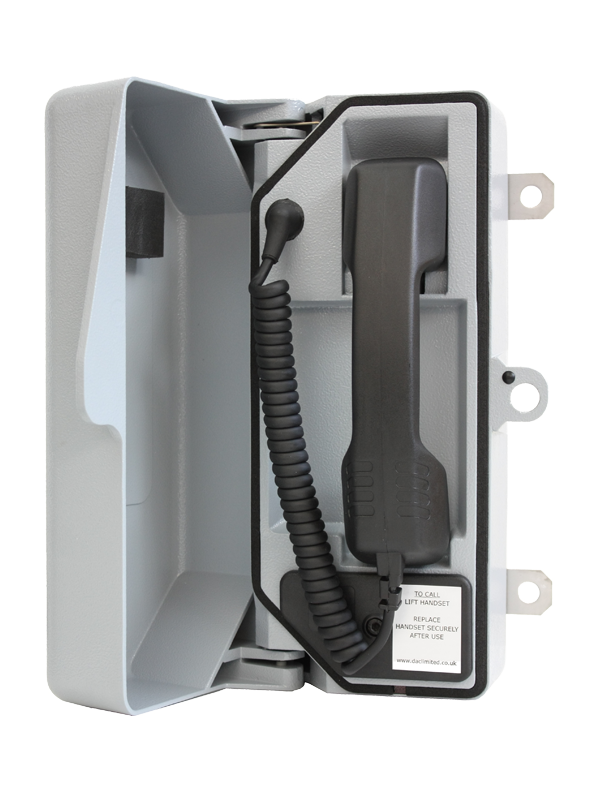
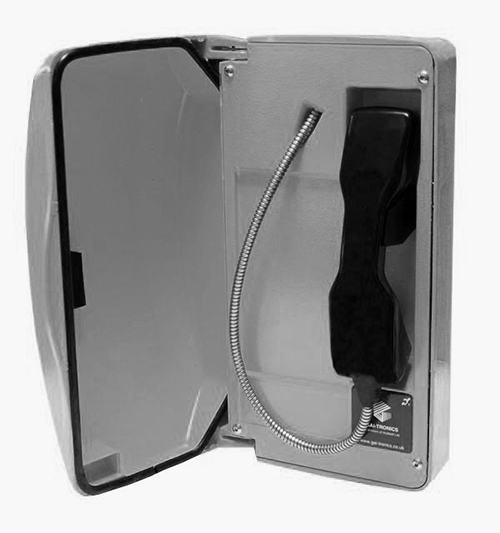
I attached some pictures of an SPT from around here, and what's inside them. A lot more complex than the UK I bet.
I suspect yours fair a bit better than ours tend to as ours only have their housing to protect them from the weather.

Our two main types are the older Racal:

RA708-CB-G-C-NR.png

and the newer Gai-tronics Titan:
87037914.jpg
 

noddingdonkey

Member
Joined
2 Nov 2012
Messages
916
Phoning 999 should be sufficient, but direct contact with a signaller is faster.

The report from a bridge strike near Hungerford in 2015 where contacting 999 wasn’t fast enough may be of interest to this thread.
Are the signs giving details of the correct number and statement to make in the event of a bridge strike a result of that incident?

On the subject of emergency calls from mobile phones I read something suggesting that the ability to make 999 calls from a device without a SIM had been removed due to untraceable hoax calls.
 

RailwayRookie

Member
Joined
28 Jul 2023
Messages
272
Location
Norfolk
Are the signs giving details of the correct number and statement to make in the event of a bridge strike a result of that incident?

There will be a phone number and either a structure number or a distance with the line reference.
Some have specific phrasing to use and instructions to call the public emergency number straight after but there's not really a consistency to them.

There's some minor variations in signage but all will have a phone number a reference to the bridge in question.
 

alxndr

Established Member
Joined
3 Apr 2015
Messages
1,679
Are the signs giving details of the correct number and statement to make in the event of a bridge strike a result of that incident?
One of the recommendations made in that report was:
The intent of this recommendation is that members of the public have immediate access to the contact details for the railway in the event of an accident on an overline bridge that endangers the railway. Network Rail should develop and implement a programme for the timely installation of identification plates on all overline bridges with a carriageway for which it is responsible (unless the consequence of a parapet falling onto the tracks or a road vehicle incursion at a particular bridge are assessed as likely to be minor). Installation should be prioritised so that those bridges assessed as being at highest risk are fitted first. Network Rail should also modify its standards relating to the installation of identification plates accordingly (paragraph 103b). This recommendation may also apply to other infrastructure managers.
On Google streetview you can see that captures prior to the incident (2009, 2010, 2011) show only a white square where once upon a time there was probably a bridge reference of some form (probably BHL 63m 64c, but there's nothing left of it by the time the images were captured). The soonest after the incident is in August 2016 which shows two shiny new ID plates even though the parapet is yet to be replaced.

That said, the standard in force at the time of that incident states that:
Identification plates for the use of the public may be installed on Bridges at risk from Bridge Strikes. Where installed, such plates shall be provided on both approaches to the Bridge.
...
The conditions for issuing a Signal Box Special Instruction do not apply to an entry for a Bridge in the Signal Box Special Instruction Bridge Strike Appendix Schedule that permits trains to continue to run prior to an examination of the Bridge following a Strike by a light vehicle: thus it is unnecessary for identification plates to be in place.
yet as far as I can see it wasn't replaced until 2023 with a standard which states that pretty much everywhere gets an ID plate:
Identification plates for the use of the public shall be installed on all Overline Bridges.
...
Identification plates for the use of the public shall be installed on Underline Bridges over public roads or Navigable Waterways that are on the Register (see clause 6.1)
...
Identification plates for the use of the public shall be installed on all Footbridges featuring a span which passes over both the railway and adjacent road.
 

Llanigraham

On Moderation
Joined
23 Mar 2013
Messages
6,487
Location
Powys
A guy visiting the UK who sees an emergency on a railway line won't have a GSM-R radio in his pocket will he?

As for there not being that many SPTs .. they're found on or near just about all signal posts that aren't distant signals.

To answer your question OP, yes if the nearest phone is an SPT then absolutely use that. Level crossings will have a level crossing telephone (in a yellow case) that do the same job. If no phones are available then it's 999 and you can signal a train to stop by raising both hands in the air or waving your phone light vigorously.

Are they?
Of the 5 relevant signals I controlled only 1 had a SPT, and that figure was similar at all the neighbouring Boxes.

And I didn't suggest he would have a GSM-R phone in his pocket.
 

ian_99

Member
Joined
2 Jan 2024
Messages
19
Location
Belgium
To answer your question OP, yes if the nearest phone is an SPT then absolutely use that. Level crossings will have a level crossing telephone (in a yellow case) that do the same job. If no phones are available then it's 999 and you can signal a train to stop by raising both hands in the air or waving your phone light vigorously.
Thanks for the to-the-point answer. I'm guessing for an emergency a "structured communication/procedure" is not necessary.

I suspect yours fair a bit better than ours tend to as ours only have their housing to protect them from the weather.

Our two main types are the older Racal:

RA708-CB-G-C-NR.png

and the newer Gai-tronics Titan:
87037914.jpg
Looks exactly what I imagined, a phone in a box. I wouldn't say ours are better, they do the job just fine but it's the procedure(s) you have to do when you got to use them that makes it complicated.

On Google streetview you can see that captures prior to the incident (2009, 2010, 2011) show only a white square where once upon a time there was probably a bridge reference of some form (probably BHL 63m 64c, but there's nothing left of it by the time the images were captured). The soonest after the incident is in August 2016 which shows two shiny new ID plates even though the parapet is yet to be replaced.
I'll keep an eye out for those next time, never paid attention to it. I only remember noticing a "suicide prevention" number on a bridge.

== Doublepost prevention - post automatically merged: ==

Are they?
Of the 5 relevant signals I controlled only 1 had a SPT, and that figure was similar at all the neighbouring Boxes.

And I didn't suggest he would have a GSM-R phone in his pocket.
Are they placed by whoever deems it to be a "strategic location" or some other criteria? We got clear guidelines (one of very few) as to when there should be a SPT, on every managed signal. There's just one or two that are an exception in the entire country.
 

Llanigraham

On Moderation
Joined
23 Mar 2013
Messages
6,487
Location
Powys
Are they placed by whoever deems it to be a "strategic location" or some other criteria? We got clear guidelines (one of very few) as to when there should be a SPT, on every managed signal. There's just one or two that are an exception in the entire country.
The only SPT we had was on the DOWN Outer Home, so DOWN Inner Home, DOWN Section, UP Home and UP Section did not have SPT's.
And to be honest the only time the SPT got used was by the P'way Walking Patrol to test it. At any other time comms were by the Driver's mobile.
 

etr221

Established Member
Joined
10 Mar 2018
Messages
1,584
A thought I have is that for any 'risky' locations (including level crossings, bridges, and many more) where the public might be, there should be a standard 'Emergency Location Marker' saying (essentially) 'Dial 999 and give this location' - see https://en.wikipedia.org/wiki/United_States_National_Grid#Emergency_Location_Marker_(ELM) for an American version of what I have in mind, although I would be inclined to also have a textual description when appropriate.
 

king_walnut

On Moderation
Joined
16 Oct 2013
Messages
292
And I didn't suggest he would have a GSM-R phone in his pocket.

So why did you say that about GSM-R?

He made it clear that he is a trainee driver in a different country and he asked what the best course of action would be if he was visiting the UK and saw an emergency on the track. Should he use an SPT if he sees one or should he phone 999? That was his question, in essence.

Then you advise him that a GSM-R is the best way.

How would a tourist have access to a GSM-R?
 

ian_99

Member
Joined
2 Jan 2024
Messages
19
Location
Belgium
The only SPT we had was on the DOWN Outer Home, so DOWN Inner Home, DOWN Section, UP Home and UP Section did not have SPT's.
And to be honest the only time the SPT got used was by the P'way Walking Patrol to test it. At any other time comms were by the Driver's mobile.
I will have to look these terms up as I got no idea what they mean...
 

transportphoto

Established Member
Associate Staff
Jobs & Careers
Quizmaster
Joined
21 Jan 2010
Messages
5,554
I will have to look these terms up as I got no idea what they mean...
They name a series of signals relative to a signal box area (based on semaphore signalling.)

SPT: Signal Post Telephone
Up and Down: Direction of traffic.
Section/Home: Describe the area of track which the signal controls/permits access to.

I haven’t read it for accuracy, however this old thread may be helpful in gaining a wider understanding on the topic of signalling: https://www.railforums.co.uk/threads/semaphore-signals.222075/
 

Gloster

Veteran Member
Joined
4 Sep 2020
Messages
12,961
Location
Up the creek
I will have to look these terms up as I got no idea what they mean...

Standard practice is to call lines running from London or the more important (railway-wise) location as Down lines and those going towards the more important location Up lines (pairs/impairs or v.v.).

An Outer Home is the first Stop signal controlled by a manual signal box that a train comes to; the Inner Home will usually be the next one if there are several signals. A Section signal is the last one controlled by a signal box and is the one that authorises the train to pass into the section leading to the next signal box. The exact terminology can vary a bit if there are several signals and also (historically) in different parts of the country, but that is the basics.
 

ian_99

Member
Joined
2 Jan 2024
Messages
19
Location
Belgium
They name a series of signals relative to a signal box area (based on semaphore signalling.)

SPT: Signal Post Telephone
Up and Down: Direction of traffic.
Section/Home: Describe the area of track which the signal controls/permits access to.

I haven’t read it for accuracy, however this old thread may be helpful in gaining a wider understanding on the topic of signalling: https://www.railforums.co.uk/threads/semaphore-signals.222075/
Thanks! I have just read some pages about the basic semaphores and start to get the hang of a "home" and "section" signal. Our regulations don't go very in depth in the signalling part (1500 pages is enough as it is
:s
), but I somewhat understand the basics of these terms now.

Standard practice is to call lines running from London or the more important (railway-wise) location as Down lines and those going towards the more important location Up lines (pairs/impairs or v.v.).

An Outer Home is the first Stop signal controlled by a manual signal box that a train comes to; the Inner Home will usually be the next one if there are several signals. A Section signal is the last one controlled by a signal box and is the one that authorises the train to pass into the section leading to the next signal box. The exact terminology can vary a bit if there are several signals and also (historically) in different parts of the country, but that is the basics.
This feels very relatable, we got track "A" and track "B", "A" being the one that usually goes from Brussels, "B" the one going to Brussels, easy to remember! Our current signalling system works a bit different to the old semaphore ones that's for sure... All small ignal boxes are gone even!

I'll probably open a new thread sometime soon to go more in depth about all the differences as it might get too off-topic. The international transport section seems best fitted.
 

philthetube

Established Member
Joined
5 Jan 2016
Messages
4,180
Correctly a crossing-keeper is a member of staff who is only concerned with closing the barriers to let a train pass and opening them again afterwards: they have no signalling function. In many places the signalman opens and closes the gates, but they are called a signalman if they also (and primarily) oversee the signalling of trains.
or, on rare occasions keeping the gates open to trains and letting cars and pedestrians through on request...

Spittal level crossing is an example
 

bengley

Established Member
Joined
18 May 2008
Messages
1,987
In any case where you need to stop trains urgently, 999 is a poor option.
Nobody is going to criticise you for using an SPT (on a platform) or other type of lineside phone (on a platform) in a genuine emergency. I wouldn't stretch to putting myself in danger by going lineside to use the aforementioned phones if I wasn't PTS trained.
 

ian_99

Member
Joined
2 Jan 2024
Messages
19
Location
Belgium
or, on rare occasions keeping the gates open to trains and letting cars and pedestrians through on request...

Spittal level crossing is an example
Interesting! If it wasn't so far away I'd go have a look there next weekend.

In any case where you need to stop trains urgently, 999 is a poor option.
Nobody is going to criticise you for using an SPT (on a platform) or other type of lineside phone (on a platform) in a genuine emergency. I wouldn't stretch to putting myself in danger by going lineside to use the aforementioned phones if I wasn't PTS trained.
Putting yourself in safety is always your first priority, as selfish as it might sound.
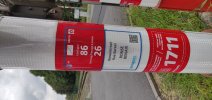
I also added a picture of a railway crossing post that shows what anyone can do here in an emergency, "1711" is the Infrabel (our railway infrastructure manager) emergency number. It also shows the line and level crossing number. This of course is much more direct than dialing 112 (or 999) but barely anyone knows the existance of these stickers or just panics. Accidents on level crossings are still very common, daily you can see a person crossing one with closed barriers...
 

Attachments

  • IMG_20240907_191404.jpg
    IMG_20240907_191404.jpg
    2.6 MB · Views: 26
Status
Not open for further replies.

Top