• Our new ticketing site is now live! Using either this or the original site (both powered by TrainSplit) helps support the running of the forum with every ticket purchase! Find out more and ask any questions/give us feedback in this thread!

Understanding Loading Gauge

Status
Not open for further replies.

Greg Wetzel

Member
Joined
18 Aug 2019
Messages
48
Location
London
So, if I'm getting this right, (please call me out if I'm not), it has to do with the width and height when it comes to wagons being able to cross a route with bridges and tunnels...? Also, when reading about the incident mentioned about the steamer striking the bridge, width and height of locomotives going on routes and structures also is used to determine if they can run on a route...?
 
Sponsor Post - registered members do not see these adverts; click here to register, or click here to log in
R

RailUK Forums

Karl

On Moderation
Joined
16 Aug 2011
Messages
710
Location
Bamber Bridge
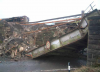
Here it is:
g01.jpg

From http://www.combsmr.co.uk/g01.html

(It should only have been operated with a sub-fleet of 08s that had their cabs lowered.)

It should've gone to Specsavers!

These buggers knew how to do it...
https://flic.kr/p/botDMv
 

krus_aragon

Established Member
Joined
10 Jun 2009
Messages
6,105
Location
North Wales
So, if I'm getting this right, (please call me out if I'm not), it has to do with the width and height when it comes to wagons being able to cross a route with bridges and tunnels...? Also, when reading about the incident mentioned about the GWR steamer striking the roof of a tunnel, width and height of locomotives going on routes and structures also is used to determine if they can run on a route...?
Yes, that's the loading gauge, pretty much.

Issues of heavy locomotives and trains (specifically the load on each axle) are covered by Route Availability (RA). But physical dimensions are indeed the domain of the loading gauge.
 

edwin_m

Veteran Member
Joined
21 Apr 2013
Messages
28,668
Location
Nottingham
So, if I'm getting this right, (please call me out if I'm not), it has to do with the width and height when it comes to wagons being able to cross a route with bridges and tunnels...? Also, when reading about the incident mentioned about the steamer striking the bridge, width and height of locomotives going on routes and structures also is used to determine if they can run on a route...?
Platforms are also significant - there is a trade-off here between allowing freight trains to pass and minimising the stepping gap for passengers.

Dynamic movements of the train (lurching, swaying etc) also come into it. A train may clear a structure at low speed but can't be guaranteed to if moving faster.
 

themiller

Established Member
Joined
4 Dec 2011
Messages
1,382
Location
Cumbria, UK
At the end of the day it would be up to Network Rail.

Unless you have a product made at A, has a route cleared to B, where the product is used, with enough tonnage for a long enough timescale, how do the finances stack up against the swapbody? If the traffic ends, what use are the wagons to anybody else?
Since the wagons generally belong to multinational leasing companies, they should have no problem moving them to Europe! If they’re of modular construction, they could be repurposed in this country as were some of the HAAs for example.
 

3973EXL

Established Member
Joined
2 Feb 2017
Messages
2,741
Since the wagons generally belong to multinational leasing companies, they should have no problem moving them to Europe! If they’re of modular construction, they could be repurposed in this country as were some of the HAAs for example.
But they already have even bigger vans in Europe.

If there was the traffic in this country, and the finances made sense, don't you think somebody would have done it? The alternative is ISO container units and swapbodies in varies sizes which can also be moved be road/sea at either end without transhipping the load.
 

Legolash2o

Member
Joined
27 Sep 2018
Messages
687
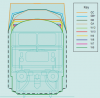
I got given a presentation from NR about gauges and RA consequences (attached images at the bottom).

How much of the routes from the ports to Drax is W10/12. Build them to the largest gauge, they can't go anywhere else.
Drax had the wagons built to take maximum advantage of the go anywhere gauge.
Drax is W8 (orange). Quite a lot of W12 around Doncaster (blue)

Gauge-Drax.png
 

Attachments

  • RA.png
    RA.png
    541.3 KB · Views: 62
  • Gauge Platform.png
    Gauge Platform.png
    1.1 MB · Views: 61
  • Gauge Height.png
    Gauge Height.png
    382.6 KB · Views: 76
  • Gauges.png
    Gauges.png
    230 KB · Views: 81
Last edited:

ac6000cw

Established Member
Joined
10 May 2014
Messages
3,911
Location
Cambridge, UK
The 'Gauges.png' attached to post #37 illustrates the 'container specific' versus W6 gauges problem nicely - W6 is wider than W8/W10/W12, so although you get more height in the upper corners, you loose width at the sides and sometimes height in the middle. For bulk commodities the maximum volume of material like biomass pellets that can be carried in hopper wagons designed to W6 or W10 might not be very different, and the W10 version would have more limited routing possibilities.

Also don't forget that container wagons only become W8/10/12 when loaded with containers - when empty they can run anywhere for maintenance etc. If you built a van type wagon to W12, it could only ever run on W12 clearance routes, loaded or empty.
 
Last edited:

Greg Wetzel

Member
Joined
18 Aug 2019
Messages
48
Location
London
What's the standard gauge in Ireland? And, could locomotives in Ireland run on the 4 foot 8 1/2 standard gauge in Britain, or would there be issues doing so?
 

krus_aragon

Established Member
Joined
10 Jun 2009
Messages
6,105
Location
North Wales
The common track gauge in Ireland is 5ft 3in. A sizeable number of carriages have been built to British designs for use in Ireland over the decades (BR Mark 2D and Mark 3 coaches, for example), but vehicles built for the Irish loading gauge would probably be too wide to run on GB railways, even after regauging their bogies/wheels.

I've found Irish trains to be noticeably wider on the inside than GB trains, particularly the Enterprise service between Dublin and Belfast.
 
Status
Not open for further replies.

Top