• Our new ticketing site is now live! Using either this or the original site (both powered by TrainSplit) helps support the running of the forum with every ticket purchase! Find out more and ask any questions/give us feedback in this thread!

UK switching to electric vehicles discussion

johncrossley

Established Member
Joined
30 Mar 2021
Messages
4,373
Location
London
That's the other thing the incumbents are getting wrong. We have to have the Kia "serviced" to maintain the warranty.

Can't you get it serviced at an independent, like you can with an ICE car even whilst the warranty is still in force? I'm coming to the view that the long warranties from Kia and Hyundai are a sales method to encourage you to get your car serviced with a dealer for longer. People who have a more typical 3 year warranty are presumably more likely to get their car serviced away from a dealer sooner.
 
Sponsor Post - registered members do not see these adverts; click here to register, or click here to log in
R

RailUK Forums

trebor79

Established Member
Joined
8 Mar 2018
Messages
4,884
Can't you get it serviced at an independent, like you can with an ICE car even whilst the warranty is still in force? I'm coming to the view that the long warranties from Kia and Hyundai are a sales method to encourage you to get your car serviced with a dealer for longer. People who have a more typical 3 year warranty are presumably more likely to get their car serviced away from a dealer sooner.
To be honest I wouldn't bother getting an electric car serviced at all. The Tesla model of test the brake fluid once a year and fix stuff when it breaks is all that's needed.
Engines need a lot of servicing to keep working reliably. Batteries and motors do not.
 

jon0844

Veteran Member
Joined
1 Feb 2009
Messages
30,836
Location
UK
That's the other thing the incumbents are getting wrong. We have to have the Kia "serviced" to maintain the warranty. A wasted day and £250 for them to provide a report saying the tyre pressures and treads were ok (which we already knew) and 95% of the rest of it was a load of blank tick boxes that apply only to ICE.

Absolute rip-off.

The legacy brands really really need to buck their ideas up. If that means abandoning the dealership model, so be it.

I got my EV serviced by a third-party because I wasn't going to pay dealership prices for what was a pollen filter change and new brake fluid. That was it, plus cursory glances at everything else and a plug in to the OBD port to check for error codes and if there was a software update (my car does these OTA so I was already up to date).

It still cost way more than I would have liked, but a lot less than a main dealer wanted - with their price almost identical to the ICE version of the car. As you say, it's to keep the warranty. Now, we all know car makers can't just invalidate a warranty even if the car wasn't serviced if it can be proven the fault wasn't caused by the lack of a service, but most people don't want that battle - and the car makers know this.

As you say, they need to buck up their ideas because even though Tesla's are quite unique, other EVs can be serviced for around the £50-60 mark, perhaps every two years or so. I think a lot of people are likely to be happy to do this for peace of mind, although I suspect many may think more is done than actually is. For a start, cars under warranty will still require the owner to raise a fault. It isn't something they're going to check at a service.

If there's a recall, that shouldn't require you doing a service either as they should have already contacted you.
 

cactustwirly

Established Member
Joined
10 Apr 2013
Messages
8,406
Location
UK
The anti-EV brigade (some funded by those with vested interests, others just going along with it because they like the sound of their petrol engine going 'vroom vroom') will fade away.

The fossil fuel companies won't waste money once the battle is lost, and some will reluctantly acknowledge the need to do more themselves (EV charging that is done properly, not so badly it's as if they want to make the experience bad so people go back to petrol/diesel).

A lot of the die-hard petrolheads will die off, literally, and the rest will at some point have been in so many electric cars, buses, coaches or vans driven by others that they'll find it hard to keep spouting the same myths over and over. Nobody will care. They'll eventually capitulate and switch.

Only those with true classic cars will want to keep an ICE car. They'll almost certainly be driving an EV day to day, perhaps taking their ICE car in a trailer towed by their EV to a track every once in a while.

Others will convert their classics to electric, and there have been some stunning conversions to older cars from the 70s and 80s (and older) which will likely only continue to grow as a way to keep such vehicles on the road without paying the crazy costs of fuel ten years from now. Not least many ICE cars may end up banned from city centres as low emission zones become zero emission zones.

So, long story short, I don't think we'll see the incentives remain for EVs for that long because prices should come down markedly anyway (they already are). As said above, unless we do something silly like ban Chinese EVs to help the incumbents, competition should bring prices down.

The few remaining ICE cars, and hybrids, will have got to the point where they're now more expensive to make because of the limited quantities made - so that too will swing sales towards EVs.

If the car makers think that axing targets means they can just go back to selling loads of 'cheap' 1 litre 3 cylinder petrol cars for city cars and whatever engine they pick for your family SUV/crossover, it will be pointless because everyone will have experienced the comfort and performance of an EV by then - a family member, relative, taxi driver etc. Why would they want a noisy car that costs 2-3 times more to service every year and fuel is now even more expensive, plus a lot of petrol stations have closed?

We are very much at the point where we can say;


Yes. It's happening now and can't be stopped.
I personally think that is decades away
You have companies like BMW investing in EVs, but also in new technologies for ICE. The new M3 is Euro 7 compliant despite being a pure ICE with a 3.0L engine, no hybrid technology. BMW have created an all new ignition system which is more efficient

BMW wouldn't have spent all that money and R&D if the market was dead
 

jon0844

Veteran Member
Joined
1 Feb 2009
Messages
30,836
Location
UK
I personally think that is decades away
You have companies like BMW investing in EVs, but also in new technologies for ICE. The new M3 is Euro 7 compliant despite being a pure ICE with a 3.0L engine, no hybrid technology. BMW have created an all new ignition system which is more efficient

BMW wouldn't have spent all that money and R&D if the market was dead

That's hardly a mainstream car. Assuming we won't hit 100% EV sales, there's going to be plenty of scope for performance cars to continue to be built out of the percentage of cars that aren't EVs.
 

E27007

Member
Joined
25 May 2018
Messages
1,032
That's the other thing the incumbents are getting wrong. We have to have the Kia "serviced" to maintain the warranty. A wasted day and £250 for them to provide a report saying the tyre pressures and treads were ok (which we already knew) and 95% of the rest of it was a load of blank tick boxes that apply only to ICE.
Absolute rip-off.

I bought my Tesla used from a car supermarket. There is no servicing required on a Tesla. It has 27,000 miles on it and was 2 years old.
6 months later I thought I could hear a dodgy wheel bearing. Logged it on the app, arranged a date and time at my convenience to take it in. Wandered into town, technician called me a couple of hours later to say the wheels bearings are fine but the rear drive unit (motor and gearbox) needed replacing. They'll loan me another car for the approx 2 weeks it will take to get a new one delivered.
So I go back to Tesla, walk up to the loan car and just open the door like I do with my own. All my settings and preferences are automatically loaded. It had free supercharging.
I didn't have to use the word "warranty" once. Superb service.
After I got it back the heat pump was constantly hunting and annoying me. Logged that on the app. A few hours later I get a message "We've had a look remotely and everything seems ok, but we've run a bleed cycle on the coolant system as it's possible there was still some air trapped from the motor replacement. Let us know if you still have a concern." Problem solved.
It's just a completely different ownership experience from the legacy brands.

The car is now 5.5 years old and has down nearly 111,000 miles. My total spend on maintenance?
6 tyres (the tyres it came with were not new, they seem to last about 50,000+ miles and I don't drive like a monk).
2 sets of air conditioning filters @ £50 (DIY fit).
2 sets of windscreen wiper blades.
Front suspension control arm replacement £120.

Err, that's it!

The legacy brands really really need to buck their ideas up. If that means abandoning the dealership model, so be it.
If I understand your post, your Tesla has a " bumper to bumper" warranty and no requirements for inspection or servicing "of any kind" by Tesla, and you can simply drive until something fails and Tesla will pick up the bill without hesitation.
So what exactly are the conditions you must observe to maintain security of the warranty with Tesla? What would cause Tesla to decline a repair under the warranty?
 

Mawkie

Established Member
Joined
17 Feb 2016
Messages
1,242
If I understand your post, your Tesla has a " bumper to bumper" warranty and no requirements for inspection or servicing "of any kind" by Tesla, and you can simply drive until something fails and Tesla will pick up the bill without hesitation.
So what exactly are the conditions you must observe to maintain security of the warranty with Tesla? What would cause Tesla to decline a repair under the warranty?
Tesla Warranty PDF is here.
Pages 7, 8 & 9 cover exclusions, don't particularly want to fill the forum with legalese, so the link is there. Seems like general stuff I think. I honestly haven't read many warranty documents, so does anything stand out that other marques wouldnt have in their warranty limitations documents?

Edit to add pictures of the Tesla app service menu.
Screenshot_2026-08-16-08-15-12-42_dea0ed4dc7fea9051b966dd91d80d9ae.jpg
A serious looking red dot let's you know the required action. (Pic shows a list of potential service requests and a maintenance section with a red dot highlighting a necessary action.)

Screenshot_2026-08-16-08-15-39-36.jpg
When you press the red dot you find out it's a cabin filter (that can be done by yourself if you're a masochist with tiny hands.)

Wipers are yellow dots as I replaced last year, but have another set of Bosch in the garage. Tyre rotation, which I'm not sure anyone does anymore.

So nothing major.

For what it's worth, I don't think it's helpful to suggest that a Tesla (or any other car actually) doesn't need servicing. Plainly, brake fluid is hygroscopic, so will need replacing every 2/3 years ideally. Tesla brakes are particularly susceptible to overhaul as they are used so infrequently! The earlier 12v lead acid batteries can fail like all car batteries (newer cars have 16v lithium-ion and seem very sturdy).

But for the specific terms of the warranty, no, there is no traditional servicing requirement from Tesla.
 
Last edited:

trebor79

Established Member
Joined
8 Mar 2018
Messages
4,884
If I understand your post, your Tesla has a " bumper to bumper" warranty and no requirements for inspection or servicing "of any kind" by Tesla, and you can simply drive until something fails and Tesla will pick up the bill without hesitation.
Correct. The whole vehicle warranty is 50,000 miles or 5 years, and the battery and drivetrain 120,000 miles or 8 years.
My car hadn't been seen by Tesla since the day the original owner drove it away brand new. Like I say, I didn't have to even say the word warranty - just approved the work in the app and it was already 100% discounted under the warranty.
So what exactly are the conditions you must observe to maintain security of the warranty with Tesla? What would cause Tesla to decline a repair under the warranty?
I think there are some specific things like racing or using as a taxi. But nothing that going to catch out the average Joe. Obviously consumables like tyre, wipers are not covered.
For what it's worth, I don't think it's helpful to suggest that a Tesla (or any other car actually) doesn't need servicing. Plainly, brake fluid is hygroscopic, so will need replacing every 2/3 years ideally.
And that gets tested at MOT.
Tesla brakes are particularly susceptible to overhaul as they are used so infrequently!
Oh yes, I forgot I did pay £100 to have the brakes dismantled, cleaned and greased.
The earlier 12v lead acid batteries can fail like all car batteries (newer cars have 16v lithium-ion and seem very sturdy).

But for the specific terms of the warranty, no, there is no traditional servicing requirement from Tesla.
And nor should there be. The legacy manufacturers are just propping up their (usually terrible) dealers.
 
Last edited:

Lucan

Established Member
Joined
21 Feb 2018
Messages
1,246
Location
Wales
I bought my Tesla used from a car supermarket. There is no servicing required on a Tesla. It has 27,000 miles on it and was 2 years old.
6 months later I thought I could hear a dodgy wheel bearing. Logged it on the app, arranged a date and time at my convenience to take it in. Wandered into town, technician called me a couple of hours later to say the wheels bearings are fine but the rear drive unit (motor and gearbox) needed replacing. They'll loan me another car for the approx 2 weeks it will take to get a new one delivered.
So I go back to Tesla, walk up to the loan car and just open the door like I do with my own. All my settings and preferences are automatically loaded.
Basically, your car is under the control of Tesla, a company owned by a megalomanic. I find that creepy even without the megalomaniac factor.
I don't think it's helpful to suggest that a Tesla (or any other car actually) doesn't need servicing. Plainly, brake fluid is hygroscopic, so will need replacing every 2/3 years ideally. Tesla brakes are particularly susceptible to overhaul as they are used so infrequently!
Very true.
And that gets tested at MOT.
No it doesn't. Believe me, I have been the deputy foreman in a small dealer's workshop.

No necessarily limited to EV's, but cars are getting increasingly "smart" such that it is becoming impossible for any other than a main dealer to do certain jobs on it, which rules out smaller independent workshops or DiY. From my experience in the motor trade, I would trust most independent workshops to do a good job more than a main dealer. All the latter are interested in is superficial servicing of fairly new vehicles. Above all, I trust my own DiY work more than any of them,

Skipping servicing, or not having it done by a main dealer, or repairs not being done by a main dealer (if that is even possible), will, in future cars, result in them being remotely immobilised. As will anything else the manufacturer doesn't like. Tesla, BMW and John Deere (tractors) are leaders in this trend. The fight against restricting work to dealers, or preventing any repair work at all, is the Right to Repair movement, which covers more than just cars of course.

Meanwhile I'm holding on to my 20 year old car (IC of course) as long as possible because it costs me very little each year, I can repair it myself, and because I am not being monitored by Big Brother : not because I'm a petrol head or like to hear "Brm-brm", in fact it is very smooth and quiet having been considered a luxury model at the time. I could poke similar fun at EV fans who quote neck-jerking acceleration as one of its advantages, and nothing is more red-neck than the atrocious Tesla Cybertruck, which can do 0-60 mph in under 4 seconds - fortunately not in the UK but I'd hate to be a pedestrian on a crossing when the light goes green for one of those.
 

Mawkie

Established Member
Joined
17 Feb 2016
Messages
1,242
No necessarily limited to EV's, but cars are getting increasingly "smart"
As you admit elsewhere, the technology aspect of new cars is not limited to EVs.

Skipping servicing, or not having it done by a main dealer, or repairs not being done by a main dealer (if that is even possible), will, in future cars, result in them being remotely immobilised. As will anything else the manufacturer doesn't like. Tesla, BMW and John Deere (tractors) are leaders in this trend.
I have heard about John Deere immobilising tractors, but haven't really heard that about consumer manufacturers. The flip side to that 'control' is the ability of manufacturers to restrict access to dangerous vehicles. For example, Tesla will ban cars that have been previously written off - for example Cat S) from accessing Superchargers until the vehicle has been inspected and confirmed safe. This is good for everyone.

Meanwhile I'm holding on to my 20 year old car (IC of course) as long as possible because it costs me very little each year
I mean, you can until every small town in the country has a pollution control zone and bans ICE cars. Or local authorities charge extortionate fees for parking ICE cars in town centres, or ban ICE from buying resident's parking permits. Eventually your car will become unecomical to keep on the road, and if you do so few miles that the maintenance isn't much, then your few miles won't matter in the big scheme of things.

Of course there will remain a second hand market for ICE cars, so you can probably carry on driving them for many decades if you want, but I doubt you will because of the restrictions such as the ones I noted above.
 

Bald Rick

Veteran Member
Joined
28 Sep 2010
Messages
35,571
Personally I cant see there being complete bans on ICEs in towns / cities except in a few edge cases. Within a decade around half the cars on the riad will have a plug and almost all the rest will be Euro6 or better. Tailpipe pollutants will be negligible. Its already heading that way in central London.
 

E27007

Member
Joined
25 May 2018
Messages
1,032
So, some realities of EV ownership.

Tesla model 3 bought used 2 year old 27,000 miles in May 2023. Has just passed 110,000 miles. I have bought 6 tyres. Total maintenance spend other than tyres and windscreen washer fluid £240:
Front suspension control arms £120
Air conditioning filters change *2 £80
Wiper blades £40.
.
So how many "sealed-for-life" systems in your Tesla, battery coolant, the reduction gear coupling the electric motor and the roadwheels, does the reduction gear contain oil with a service life?
 

trebor79

Established Member
Joined
8 Mar 2018
Messages
4,884
Basically, your car is under the control of Tesla, a company owned by a megalomanic. I find that creepy even without the megalomaniac factor.
:rolleyes:
Tesla is actually a public stock company, but whatever.
Very true.

No it doesn't. Believe me, I have been the deputy foreman in a small dealer's workshop.

No necessarily limited to EV's, but cars are getting increasingly "smart" such that it is becoming impossible for any other than a main dealer to do certain jobs on it, which rules out smaller independent workshops or DiY. From my experience in the motor trade, I would trust most independent workshops to do a good job more than a main dealer. All the latter are interested in is superficial servicing of fairly new vehicles. Above all, I trust my own DiY work more than any of them,
Tesla publish the complete workshop manuals for every maintenance task on their website, free of charge.
You can buy all the parts.

So perfect for a proud DIYer.
So how many "sealed-for-life" systems in your Tesla, battery coolant, the reduction gear coupling the electric motor and the roadwheels, does the reduction gear contain oil with a service life?
Well reduction gearboxes in industrial service might have an oil change once a year, so 8,000 hours service let's say. 8,000 hours driving will be about 250,000 miles so, yeah, I think it'll be fine.
Never changed the oil in my ICE gearboxes either.
 

Snow1964

Established Member
Joined
7 Oct 2019
Messages
11,012
Location
West Wiltshire
At the moment there are not a lot of cheap small used electric cars, Renault Zoe, Smart ForTwo and ForFour and the VW trio, VW Up, Seat Mii and Skoda e-Citigo. Basically small EVs that were on sale 4+ years ago

But now they are becoming mainstream (Whereas 2 years ago were almost non existent) eg :
Renault 4 e-tech, Renault 5 e-tech, BYD Dolphin Surf, Citroen e-C3, Dacia Spring, Fiat Grande Panda, Nissan Micra, Alpine A110, Kia EV2, CUPRA Raval, Mini Cooper electric, Honda super-N, Leapmotor T03 etc.

Got smaller family size, eg :
BYD Dolphin, Kia EV3, Nissan Leaf, Suzuki Vitara etc

Then there are a few more small family cars due next few months :
VW id-polo, Skoda Epiq, Hyundai Ioniq3, Nissan Juke etc

And a few more city / small cars
Kia EV1, Renault Twingo, Smart #2, new Dacia Spring etc.

The list of bigger electric cars is now very long, but fairly irrelevant to those on limited budgets, until they become old and cheap enough.

At the moment a number of these smaller cars are available with £2-3k deposits, and £200-300 a month. Which when you factor in anyone charging at home might be saving £70-130 a month on fuel is not a bad deal, once major repairs are needed on an old car.

Also there is still the covid time, low production, which means a limited supply of 5-6 year old used cars. So buyers who would have been spending say £150 financing a used 5 year old car, have an alternative. For £250 a month can have new electric car, with £100/month fuel saving. Same net £150 per month.

It might be whilst electric car sales seem to be doing well in rural areas (where driveways are common, and fuel stations sparse), but much slower in cities where home charging is not possible
 

jon0844

Veteran Member
Joined
1 Feb 2009
Messages
30,836
Location
UK
I'm not sure we will see many ZEZs simply because ICE cars will die out to the extent that the odd few remaining don't matter within 20 years or so.

There don't have to be too many to hit values of cars that can't go into such towns or cities. Or just make them hard to sell at all.

I sold my diesel ahead of the changes in London because I knew the value would crash, and thanks to Covid I got more for the car than it was valued at.

I don't see that happening next time.

Obviously someone who keeps their ICE car and can service it themselves and run it for years and years won't be that bothered, but those who buy a new ICE car in five or ten years time (unless it's, say, a performance car intended mostly or exclusively for track use) absolutely will.

I think the uncertainty will put many off even if they push back deadlines over and over under pressure (lobbying) by the fossil fuel companies.
 

Snow1964

Established Member
Joined
7 Oct 2019
Messages
11,012
Location
West Wiltshire
Obviously someone who keeps their ICE car and can service it themselves and run it for years and years won't be that bothered, but those who buy a new ICE car in five or ten years time (unless it's, say, a performance car intended mostly or exclusively for track use) absolutely will.
The potential flaw in the reasoning is it assumes petrol stations will stay open.

At least one report has suggested most will have closed down or been converted to EV hubs by 2038. But that is a prediction, what actual happens in decades time is crystal ball gazing.

What is factual is that they have been closing at about 1.3% per year in last couple of years (about 90 per year)

Meanwhile home chargers have risen from about 1m at end of 2024 to around 1.4m now (and going up by estimated 22-25k per month)

All suggests that a time will come in 2030s when keeping fuel stations open collapses financially, due to lower volumes. As they come up for major servicing or new pumps, going to be closed rather than repaired. And eventually people will have to make detours to find a remaining one.
 

Harpers Tate

Established Member
Joined
10 May 2013
Messages
2,033
I recently traded my 2019 (69) 52k Hyundai Ioniq EV top spec (hatchback). The dealer sold it on in about three weeks at an advertised price of about £8.5k. There are others similar out there. The Ioniq is probably the (or one of the) most efficient/economic car(s) there is.
 

jon0844

Veteran Member
Joined
1 Feb 2009
Messages
30,836
Location
UK
The potential flaw in the reasoning is it assumes petrol stations will stay open.

At least one report has suggested most will have closed down or been converted to EV hubs by 2038. But that is a prediction, what actual happens in decades time is crystal ball gazing.

What is factual is that they have been closing at about 1.3% per year in last couple of years (about 90 per year)

Meanwhile home chargers have risen from about 1m at end of 2024 to around 1.4m now (and going up by estimated 22-25k per month)

All suggests that a time will come in 2030s when keeping fuel stations open collapses financially, due to lower volumes. As they come up for major servicing or new pumps, going to be closed rather than repaired. And eventually people will have to make detours to find a remaining one.

I think you'll still be able to get fuel for some time, but you're definitely right that it will become a lot harder. Will supermarkets want to take up valuable real estate for a load of pumps (and the ongoing maintenance of them, the tanks below that need maintenance etc) because cheap fuel used to get people to shop there? If everyone has an EV, perhaps convert more of the car park, but most people simply won't need to fuel or charge anything and will be going there to, well, shop.

While we can see in recent years supermarkets haven't been quite as competitive (it wasn't proven, but it certainly looks like they colluded to keep prices high - shortly after Asda was taken over and Morrisons sold off their petrol stations), the general idea was to use fuel to get people in. That simply won't work in the future.

Take away those places and you're now looking at the petrol stations that will remain. Probably the likes of motorway services that already charge a fortune. After all, get rid of the cost of maintaining a petrol station and that land could be used for anything more lucrative. Maybe a block of flats. Maybe car parking, so the main store can expand into spaces nearer to the main building and so on.

For those who want to drive their classic cars, I can see the tracks offering to fuel vehicles that most likely come on a trailer or lorry hauled by an electric vehicle. The people in that league won't care about the high price. They can still take their classics to car shows and do most of what they do now.

Ordinary motorists will have long transitioned to electric.
 

Snow1964

Established Member
Joined
7 Oct 2019
Messages
11,012
Location
West Wiltshire
Looks like Hertfordshire is latest local authority to partner with charging companies to add charging for those without home charging. 4000 chargers (8000 sockets)

Published: 18/08/2026 15:19:20​

We've partnered with three electric vehicle chargepoint operators to install thousands of new electric vehicle (EV) public chargepoints, marking a major step forward in expanding the county’s charging network.
Urban Fox Networks (UK) Ltd, Believ Limited and Zest Eco Ltd will work with the council over the next three years to deliver more than 4,000 new chargepoints (or over 8,000 chargepoint sockets), targeting the areas where they are needed most.
This phase builds on an existing network of over 2,500 chargepoints (5,000+ sockets) across Hertfordshire, with the focus now on identifying sites where demand is greatest, particularly for residents without off-street parking.
Residents shaping where chargers go
Resident feedback has already helped identify potential locations and, as the programme moves forward, communities will have the opportunity to comment on proposals and shape how and where installations are delivered.

Quite a few councils now have these roll outs of kerbside slow charging for residents being added in their area.
 

Mawkie

Established Member
Joined
17 Feb 2016
Messages
1,242
Quite a few councils now have these roll outs of kerbside slow charging for residents being added in their area.
I'm still keen to understand how a lamppost charger can charge 54p for a 5 kW rate where the majority of the infrastructure is already there. If I leave my car there for 10 hours, I'd get about 170 miles added and charged £23.00 ish. The pricing is unnecessarily complex too (see below).

If I go to the dedicated Tesla Supercharger I get 250 kW charging @ 21p, charge for 30 mins, and get 300 miles for £11.00 ish. One is a lamppost and the other is a 36 bay Supercharger hub on a motorway service area.

C'mon, charging at the moment is like the Wild West!
Screenshot_2026-08-18-22-05-18-39_0307b0bcda5acb6cf1c200481410f417.jpg
(Picture shows the complex charging costs of a simple lamppost 5kW charger)

So I'm happy more on street charging is coming to Herts, but a lot will depend on pricing. To truly compare to home charging it will have to be 25p or less.
 

cactustwirly

Established Member
Joined
10 Apr 2013
Messages
8,406
Location
UK
I'm still keen to understand how a lamppost charger can charge 54p for a 5 kW rate where the majority of the infrastructure is already there. If I leave my car there for 10 hours, I'd get about 170 miles added and charged £23.00 ish. The pricing is unnecessarily complex too (see below).

If I go to the dedicated Tesla Supercharger I get 250 kW charging @ 21p, charge for 30 mins, and get 300 miles for £11.00 ish. One is a lamppost and the other is a 36 bay Supercharger hub on a motorway service area.

C'mon, charging at the moment is like the Wild West!
View attachment 209848
(Picture shows the complex charging costs of a simple lamppost 5kW charger)

So I'm happy more on street charging is coming to Herts, but a lot will depend on pricing. To truly compare to home charging it will have to be 25p or less.
£23 for 170 miles isn't hugely different in terms of cost to running an efficient petrol
 

Mawkie

Established Member
Joined
17 Feb 2016
Messages
1,242
£23 for 170 miles isn't hugely different in terms of cost to running an efficient petrol
We've long established that 50/55p is the same cost as running a petrol car. Which is why people love charging at home for 5p or 8p. So Shell's outrageous 92p kWh is basically price-gauging in plain sight.

The point I'm making is that there are huge infrastructure costs involved in providing the grid connections, then ongoing costs to the DNO, purchase costs for hardware, maintenance, development costs for apps, and on and on and on.

If some CPOs can do all of this for 21p and have super fast charging with enormous ongoing monthly costs, then basically hacking a lamppost can be much, much, much cheaper than they are. It can only be profiteering.

I wonder what the commercial relationship is between councils and the CPOs?
 

450.emu

Member
Joined
21 May 2015
Messages
287
I have an EV but due to living in a first floor maisonette, I have no choice but to use public charging. The charging is quick enough (30 40 mins) and lasts me for most of the week. I wished EVs could charge that little bit faster though. There are too many apps to pick from when it comes to charging a car, which is too time consuming
 

styles

Established Member
Joined
7 Dec 2014
Messages
4,614
Location
Gwynedd
I have an EV but due to living in a first floor maisonette, I have no choice but to use public charging. The charging is quick enough (30 40 mins) and lasts me for most of the week. I wished EVs could charge that little bit faster though. There are too many apps to pick from when it comes to charging a car, which is too time consuming
Yeah I wish there was a universal protocol for the apps to use which all charging companies would be obliged to use (even if they also have their own apps with dedicated features).

See also - car parking.
 

Noddy

Established Member
Joined
11 Oct 2014
Messages
1,630
Location
UK
I'm still keen to understand how a lamppost charger can charge 54p for a 5 kW rate where the majority of the infrastructure is already there. If I leave my car there for 10 hours, I'd get about 170 miles added and charged £23.00 ish. The pricing is unnecessarily complex too (see below).

If I go to the dedicated Tesla Supercharger I get 250 kW charging @ 21p, charge for 30 mins, and get 300 miles for £11.00 ish. One is a lamppost and the other is a 36 bay Supercharger hub on a motorway service area.

C'mon, charging at the moment is like the Wild West!
View attachment 209848
(Picture shows the complex charging costs of a simple lamppost 5kW charger)

So I'm happy more on street charging is coming to Herts, but a lot will depend on pricing. To truly compare to home charging it will have to be 25p or less.

Tesla Supercharging has been massively (and I mean massively) subsidised by the main business as a way of selling EVs. Their rates still reflect this (although they are creeping up to reflect the real world cost and at some locations their open to all pricing is more expensive than other alternatives). Char.gy on the other hand are owned by a private equity fund like most UK charging firms. In Char.gy’s case they’ve invested over 100million in the business and aren’t going to recoup that money selling electricity at 7p kWh through a 5kw charger. That’s £6.72 ex VAT per day even if a car was plugged for 24hours and as we all know a good proportion of lamppost chargers are inactive most of the time (I don’t know if this is true but Google AI claims utilisation is 30-40% in central London but lower in suburban areas). Wholesale electricity prices are currently in the range of 8-12p kWh hour so they’d be losing money just on the electricity alone. Even at 25p kWh that’s £24 per day ex VAT per charger, and that probably wouldn’t cover all their running costs. And as I say a lot of the time lamppost chargers are inactive so are costing the business money rather than earning a return on investment. I’m not saying it’s right, but it’s the reality of the situation. Fundamentally you have to exclude Tesla if doing price comparison because their prices don’t reflect their investment costs.

With specific reference to the complexity point I think that’s just ZapMap making a hash of things. It’s pretty clear on the Char.gy website:

1787121632580.png

In other excellent news I saw this on the BBC website:

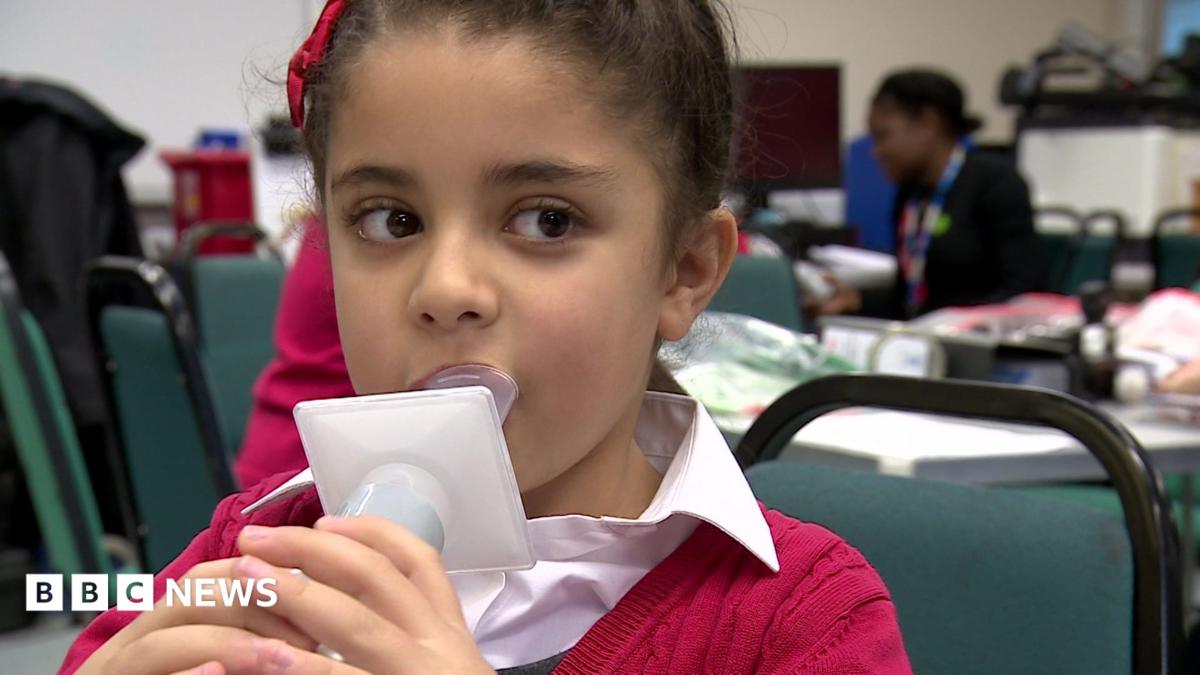
Scientists say they have been "stunned" by how quickly young children's lungs began to recover and grow after pollution restrictions were brought in where they lived.

Researchers found that children in London whose lung growth had been stunted by pollution showed impressive improvements after the introduction of an Ultra Low Emission Zone (Ulez) in 2019 reduced emissions.

The study followed more than 3,400 primary school children in London and Luton and provides what scientists believe is the strongest evidence yet that local clean air zones could help reduce some of the harm caused by pollution during childhood.

But independent researchers caution that other factors must also be considered.

Air pollution can stunt the growth of young children's lungs leaving them at an increased risk of asthma, heart disease, diabetes and even premature death.

Children are also more vulnerable to pollution because their lungs and immune systems are still developing. And when outside, they tend to be closer to the ground and nearer sources of exhaust fumes, for example.

In 2020 Ella Adoo-Kissi-Debrah, a nine-year-old girl from London who died following an asthma attack in 2013, became the first person in the UK to have air pollution listed as a cause of death.

In the study, researchers recruited six to nine-year-olds attending primary schools in London's ultra low emission zone and followed the same children for five years, comparing them to similar children (in terms of socio-economic background, physical activity and ethnicity) in Luton.

Children in the study had annual lung function and capacity tests in the year before Ulez came in and for four years after.

Initial results showed children's lungs in London were smaller in capacity than those in Luton, which is less polluted than London but has a similar mix of pollutants.

At the end of the study the children's lung capacity reached near identical levels in both groups.

"While we would expect children's lungs to grow year on year, our results indicate that the London children's lung growth had accelerated during the four years to 'catch up' with the control group in Luton to reach similar levels of lung capacity," researchers say.

"I was absolutely stunned when I first saw the results," Prof Chris Griffiths, a senior author on the study, at Queen Mary University of London, told the BBC.

"The speed of catch up in lung capacity in the London group was surprising and impressive.

"This shows an ambitious clean air zone can drive pollution levels down, rapidly restoring children's stunted lung growth."

The main test measured how much air a child could forcibly breathe out in one second after a big breath in.

In practical terms the improvements could mean children in the London group could run as fast as the Luton group without getting out of breath or blow out of the same number of candles for example, Griffiths explained.

Another way of testing for lung capacity used in the study showed significant improvements too, though not to the same extent - implying there are still gains to be made.

Overall the proportion of children in London whose lung capacity was deemed "clinically impaired" (suggesting lung damage resulting in coughs or breathlessness) fell from 14% to 9%.

In Luton - where some smaller scale measures were put in place to tackle air pollution - the figures were 9% to 7%.

The team's measurements also showed the level of nitrogen dioxide children were exposed to fell faster in London than in Luton over this time.

Researchers say this is key as it likely demonstrates that the improved lung growth they saw was related to air quality improvements following the implementation of Ulez.

London's Ulez was first introduced in 2019 by Mayor Sadiq Khan in a bid to "clean up London's air". London had high levels of the harmful gas nitrogen dioxide which comes from motor vehicles.

Older, more polluting vehicles had to pay a daily charge to drive in central London. The measures were later expanded to cover the whole capital. While many supported the policy it provoked political opposition and protests.


The sooner we completely get rid of ICE cars the better.
 
Last edited:

trebor79

Established Member
Joined
8 Mar 2018
Messages
4,884
Tesla Supercharging has been massively (and I mean massively) subsidised by the main business as a way of selling EVs. Their rates still reflect this (although they are creeping up to reflect the real world cost and at some locations their open to all pricing is more expensive than other alternatives).
I'm not sure it's as simple as that. Certainly in the early days Tesla supercharging was subsidised as a way to sell cars - eg free supercharging for life. My understanding is that discharging is cheaper now because Tesla builds their own charging requirement, so it's all vertically integrated and means they can deploy much more cheaply than others.
Prices are creeping up because wholesale electricity prices are rising.
 

AM9

Veteran Member
Joined
13 May 2014
Messages
16,004
Location
St Albans
So I'm happy more on street charging is coming to Herts, but a lot will depend on pricing. To truly compare to home charging it will have to be 25p or less.
Depending on the detail of the installation, I wonder how many disputes there will be over kerbside charging facilities, - e.g.
will there be any restriction on IC vehicle parking by points?​
will residents get possessive about the point outside their property?​
will charger cables pose a safety hazard to the free flow of pedestrians?​
I'm sure it won't be trouble free.
 

Top