• Our new ticketing site is now live! Using either this or the original site (both powered by TrainSplit) helps support the running of the forum with every ticket purchase! Find out more and ask any questions/give us feedback in this thread!

UK switching to electric vehicles discussion

thejuggler

Established Member
Joined
8 Jan 2016
Messages
1,654
That's nonsense and is what's often trotted out by those railing against electric vehicles. It's ideal for what you call a typical user, most don't do much more than that in a week.
It isn't nonsense if you are a vehicle manufacturer. It is an immediate barrier which severly reduces the potential customer base.

Same reason that despite most car journeys only transporting 1 or 2 people, very few manufcturers produce cheap 2 seater vehicles.
 
Sponsor Post - registered members do not see these adverts; click here to register, or click here to log in
R

RailUK Forums

Topological

Established Member
Joined
20 Feb 2023
Messages
4,332
Location
Swansea
130 miles would not really suit me as a range. I do 55 miles to Pontypool station car park and then come back another day. That would be 110. However, because of either going over the hills via the A465, or the slightly higher speed M4, both seem to eat up the "miles remaining" faster than the miles covered if I borrow the EQA (which I do more while the diesel price is high). I should drive more economically, but...
 

jon0844

Veteran Member
Joined
1 Feb 2009
Messages
30,950
Location
UK
It isn't nonsense if you are a vehicle manufacturer. It is an immediate barrier which severly reduces the potential customer base.

Same reason that despite most car journeys only transporting 1 or 2 people, very few manufcturers produce cheap 2 seater vehicles.

With the exception of sports cars, few cars have two seats. Smart made them and I'm surprised they haven't made another (the new cars are way bigger) but there may be other reasons like Euro NCAP ratings.

There's the Citroen Ami and others (not actually cars) and other small cars you can buy, but people here usually ridicule them and so few would buy them for that reason. They do sell well in places like France and Italy, and all have far lower ranges - but also much more motor efficiency so are even cheaper to run.
 

The Ham

Veteran Member
Joined
6 Jul 2012
Messages
12,043
It isn't nonsense if you are a vehicle manufacturer. It is an immediate barrier which severly reduces the potential customer base.

Same reason that despite most car journeys only transporting 1 or 2 people, very few manufcturers produce cheap 2 seater vehicles.

Average car use per year is around 8,000 miles a year, even if you were double and (16,000 miles a year) and only drive on weekdays (so replicating nearly all milage for work based travel) you'd be doing 62 miles a day.

Yes you'd have to charge overnight every night with a car with a real world winter range of 90 miles, however you'd still not need to charge our and about and so we're not into the realm of that stort of cheap car being a limiting factor.

However, given the way which the averages are likely to work someone doing 16,000 miles in a year is likely to be easily in the top 10% of driver milages, quite likely even within the top 5%.

It would be like saying that there's no market for a car without Aircon because no one would want to drive for two hours a day without Aircon (whilst few people would want to drive for two hours a day without Aircon, those who typically buy cars without Aircon are also not likely to be driving those sorts of distances).

As a car manufacturer of you can sell one of your cars which is easily capable of doing the daily milage of someone in the top 10% of milages, then I don't think that's likely to be an issue.

Where it might be an issue is for those who do lower annual milage but do long journeys.

However, the average is that a person will make 17 trips a year of over 50 miles with about 6 of those being over 100 miles.

However as someone who does about 12 trips a year of over 150 miles (so I'm dragging the average up and likely in the top 15% of people for number of such trips), such a car is suitable, you just have an enforced break on a 2.5+ hour journey (not really that much of an issue as most people would be a wee break in that time).

Can you therefore provide an example of a typical driver where such a limit could be an issue for them, so we can understand why you think it's such a fundamental issue?

To date, just people trying to justify why such an EV isn't suitable have given edge cases, however I'm sure someone will surprise us with there answer at some point.
 

450.emu

Member
Joined
21 May 2015
Messages
287
Don’t pay with a credit/debit card. Use Electroverse or ZapPay (or Tesla if you’re that way inclined). It avoids the preauthorisation fees and cover virtually all major CPOs (Gridserve are the only major one not to be part of Electroverse for example). You can often get cheaper charging this way too.


Tesla early cars were built to do battery swapping but they realised a) there are issues around ownership of the battery, b) cars were heavier c) it was useless if you could charge at home and d) in the real world with fast charging and good routing it wasn’t really a time saver.

Nio (high end Chinese brand) do offer this service in certain regions but it’s never massively taken off because it’s not really the real world time saving it appears it might be. Nio are due to launch in the UK this year and perhaps for those who do very high mileage but can never charge at home it might be useful but at that’s such a small niche I don’t think it’s going to take off in a huge way.
I think this is true, sadly... plus the weight of batteries would not really make it possible. Opportunity Charging could be a good idea.

I have a Zapmap card, so I will give it a go. Only thing is when I tap on the RFID pad it doesn't authorise despite plenty in my account. Thanks for the advice :)
 

johncrossley

Established Member
Joined
30 Mar 2021
Messages
4,455
Location
London
With the exception of sports cars, few cars have two seats. Smart made them and I'm surprised they haven't made another (the new cars are way bigger) but there may be other reasons like Euro NCAP ratings.

Smart are bringing back the Fortwo according to


For nearly 30 years, the fortwo has shaped the streets like few other vehicles: uncompromisingly compact, agile, and instantly recognizable. For many, it’s more than just a car – it’s a part of urban culture and lifestyle. And now, it returns as the smart #2.

Recognized for agility, safety and packed with innovative tech – this iconic two-seater delivers a driving feel and fresh take on the urban compact car segment and shows us what clever city driving really looks like.

A new chapter is about to begin – be part of it from day one. Sign up for the smart newsletter and stay up to date on the smart #2.
 

jon0844

Veteran Member
Joined
1 Feb 2009
Messages
30,950
Location
UK
Smart are bringing back the Fortwo according to


That's great news! While the range was pretty poor on their shortly produced EV version of the Fortwo, it has become quite a popular second-hand choice but pretty rare.

Today's version should be able to offer a far bigger battery (relatively speaking) and faster charging, and the brand is generally considered cool - so someone who would shun an Ami (even if they did a proper car version that could do proper road speeds) would likely be more than happy with the Smart car.
 

johncrossley

Established Member
Joined
30 Mar 2021
Messages
4,455
Location
London
However, given the way which the averages are likely to work someone doing 16,000 miles in a year is likely to be easily in the top 10% of driver milages, quite likely even within the top 5%.

This is what I get by putting "uk annual miles driven by decile" into Google AI
Estimated Mileage Distribution

Group / Percentile Approx. Annual MilesKey Driver Characteristics
Bottom 10%< 1,500Very occasional users, often older drivers or city dwellers.
20th - 40th Percentile1,500 – 4,000The most common bracket; 59% of London vehicles drive under 5k miles.
Median (50th Percentile)~5,500Half of all GB vehicles drive less than ~5,500 miles per year.
60th - 80th Percentile5,500 – 10,000Typical daily commuters and family car users.
Top 10% (High Milers)> 12,000Long-distance commuters and business "work horses".
Top 5%> 15,000Professional drivers or extreme commuters; only ~4.5% of vehicles exceed this.

That's great news! While the range was pretty poor on their shortly produced EV version of the Fortwo, it has become quite a popular second-hand choice but pretty rare.

There were electric versions of all three standard 2 seat Smart cars (models 450, 451 and 453) so they were actually making 2 seat electric Smart cars for many years, but the earlier versions didn't sell very well.
 

jon0844

Veteran Member
Joined
1 Feb 2009
Messages
30,950
Location
UK
There were electric versions of all three standard 2 seat Smart cars (models 450, 451 and 453) so they were actually making 2 seat electric Smart cars for many years, but the earlier versions didn't sell very well.

My guess is they were silly money? Wasn't the Renault Zoe over £30k at the time? Likewise the BMW i3.

Sure, a Smart car today isn't going to be as cheap as other small cars (e.g. Dacia Spring, Renault Twingo etc) because of the marque, but I'm sure it will be nearer £20-23k, possibly less depending on grants. £30k from 4-5 years ago is also going to be far higher in today's money so the difference will be even greater.

Like the BMW, the electric Smart cars still seem to be quite pricey today.
 

bspahh

Established Member
Joined
5 Jan 2017
Messages
2,444
This is what I get by putting "uk annual miles driven by decile" into Google AI
Table NTS0904 from the government National Traffic Survey surveyed about 8,000 drivers and reports their annual mileage as a percentage in different bins. The most common bin is from 5000 to 6999 miles per year, which is the "5k-7k" column in the table below.

Code:
Year 0-0.5k 0.5k-1k 1k-2k 2k-3k 3k-4k 4k-5k 5k-7k 7k-9k 9k-12k 12k-15k 15k-17k 18k-21k 21k-30k 30k+ Sample size
2002  1         1     4     5     6     6    19    14    18      11       6       4       3      3     7,346
2003  1         1     3     5     7     6    19    13    18      11       5       4       2      3     7,849
2006  1         1     4     5     6     6    19    15    19      11       5       3       2      2     8,117
2007  1         1     3     5     7     6    21    14    18      10       5       4       2      2     7,942
2008  1         1     3     5     7     6    21    15    18      10       5       3       2      2     7,676
2009  1         1     3     6     8     6    21    15    18      10       4       3       2      2     8,180
2010  1         1     4     6     7     7    21    15    18      10       5       3       2      2     7,941
2011  1         1     4     5     8     7    21    14    19       9       5       3       2      2     7,491
2012  1         1     4     6     8     7    22    15    17       9       4       3       1      2     7,923
2013  1         1     4     6     8     7    21    15    17       9       4       3       2      2     8,324
2014  1         1     4     6     8     7    22    15    18       8       4       3       2      2     7,967
2015  1         1     4     6     8     7    22    15    17       8       4       3       2      2     8,173
2016  2         1     4     6     8     7    22    15    18       8       4       3       2      2     8,104
2017  2         1     5     5     8     7    22    15    17       8       4       3       1      1     7,552
2018  1         1     4     6     8     7    22    16    17       8       4       3       1      1     7,469
2019  1         1     4     7     8     8    22    16    17       7       4       3       1      1     7,495
2020  2         2     6     7     9     9    22    15    16       6       2       2       1      1     3,631
2021  4         4     9    11    11     9    21    12    10       3       2       1       1      0     5,364
2022  2         2     5     7    10     9    23    16    14       6       3       2       1      1     4,733
2023  2         2     5     7     9     9    23    16    15       6       4       2       1      1     8,161
2024  2         1     5     7     9     8    23    16    16       6       3       2       1      1     9,861
Cuml  2         3     8    15    24    32    55    71    87      93      96      98      99    100

The bottom line in the table is the cumulative sum of the percentages for 2024, so 55% drove between 0 and 6999 miles.
 
Last edited:

Bald Rick

Veteran Member
Joined
28 Sep 2010
Messages
35,965
Table NTS0904 from the government National Traffic Survey surveyed about 8,000 drivers and reports their annual mileage as a percentage in different bins. The most common bin is from 5000 to 6999 miles per year, which is the "5k-7k" column in the table below.

Code:
Year 0-0.5k 0.5k-1k 1k-2k 2k-3k 3k-4k 4k-5k 5k-7k 7k-9k 9k-12k 12k-15k 15k-17k 18k-21k 21k-30k 30k+ Sample size
2002  1         1     4     5     6     6    19    14    18      11       6       4       3      3     7,346
2003  1         1     3     5     7     6    19    13    18      11       5       4       2      3     7,849
2006  1         1     4     5     6     6    19    15    19      11       5       3       2      2     8,117
2007  1         1     3     5     7     6    21    14    18      10       5       4       2      2     7,942
2008  1         1     3     5     7     6    21    15    18      10       5       3       2      2     7,676
2009  1         1     3     6     8     6    21    15    18      10       4       3       2      2     8,180
2010  1         1     4     6     7     7    21    15    18      10       5       3       2      2     7,941
2011  1         1     4     5     8     7    21    14    19       9       5       3       2      2     7,491
2012  1         1     4     6     8     7    22    15    17       9       4       3       1      2     7,923
2013  1         1     4     6     8     7    21    15    17       9       4       3       2      2     8,324
2014  1         1     4     6     8     7    22    15    18       8       4       3       2      2     7,967
2015  1         1     4     6     8     7    22    15    17       8       4       3       2      2     8,173
2016  2         1     4     6     8     7    22    15    18       8       4       3       2      2     8,104
2017  2         1     5     5     8     7    22    15    17       8       4       3       1      1     7,552
2018  1         1     4     6     8     7    22    16    17       8       4       3       1      1     7,469
2019  1         1     4     7     8     8    22    16    17       7       4       3       1      1     7,495
2020  2         2     6     7     9     9    22    15    16       6       2       2       1      1     3,631
2021  4         4     9    11    11     9    21    12    10       3       2       1       1      0     5,364
2022  2         2     5     7    10     9    23    16    14       6       3       2       1      1     4,733
2023  2         2     5     7     9     9    23    16    15       6       4       2       1      1     8,161
2024  2         1     5     7     9     8    23    16    16       6       3       2       1      1     9,861
Cuml  2         3     8    15    24    32    55    71    87      93      96      98      99    100

The bottom line in the table is the cumulative sum of the percentages for 2024, so 55% drove between 0 and 6999 miles.

And that shows that only 7% of people are driving for more than 300 miles a week, or put it another way, needing to charge a typical Ev more thsn every 6days or so.
 

johncrossley

Established Member
Joined
30 Mar 2021
Messages
4,455
Location
London
My guess is they were silly money? Wasn't the Renault Zoe over £30k at the time? Likewise the BMW i3.

According to


the third generation was EUR 16,000 in 2012, plus EUR 60 per month for battery rental.
The new generation smart fortwo electric drive will have a starting price under €16,000 plus the monthly rental fee for the battery.

The new smart fortwo electric drive will be launched spring 2012 on more than 30 markets around the world.

In Germany, the fortwo electric drive will be available to order for less than €16,000 ($22,169) before tax – plus less than €60 ($83) per month for battery rental.
 

Noddy

Established Member
Joined
11 Oct 2014
Messages
1,656
Location
UK
I think this is true, sadly... plus the weight of batteries would not really make it possible. Opportunity Charging could be a good idea.

I have a Zapmap card, so I will give it a go. Only thing is when I tap on the RFID pad it doesn't authorise despite plenty in my account. Thanks for the advice :)

When using an Electroverse or ZapPay RFID card just be aware on some chargers (depending on model/CPO) the RFID reader isn’t on the payment terminal but somewhere else on the charger and it’s not always clearly labelled.

-

In other news there is clear evidence that demand for second hand EVs is massively rising. I imagine this is probably also true for new EVs as well. As they will be available for a quick delivery I guess now is the time to time to actually sell all these mythical pre-registered EV that are supposed to be filling up fields across the UK…

Rising fuel prices, sparked by the war in the Persian Gulf, and falling energy costs have led to a spike in sales for used EV, dealers have told Autocar.

The wholesale cost of crude oil has risen by more than a third since the first US strikes hit Iran on 28 February. This has pushed diesel prices in the UK up by an average of 40p per litre and petrol by 20p – both records for monthly increases, according to the RAC – which has piled more pressure on households battling the increased cost of living.

Since those price rises began, leads on Autotrader for EVs have increased by 28% for new cars and 15% for used. “When people feel that traditional fuel is vulnerable to global events, the appeal of electric becomes far stronger, so the conflict is acting as a significant catalyst for EV interest across the UK market,” said Ian Plummer, Autotrader’s chief customer officer.

Indeed, dealers have told Autocar that they are recording an increase in EV sales. One of them is Browns of Richmond, a used EV dealership in North Yorkshire, where enquiries have doubled and sales have increased by 60%….


== Doublepost prevention - post automatically merged: ==

I think this is true, sadly... plus the weight of batteries would not really make it possible.

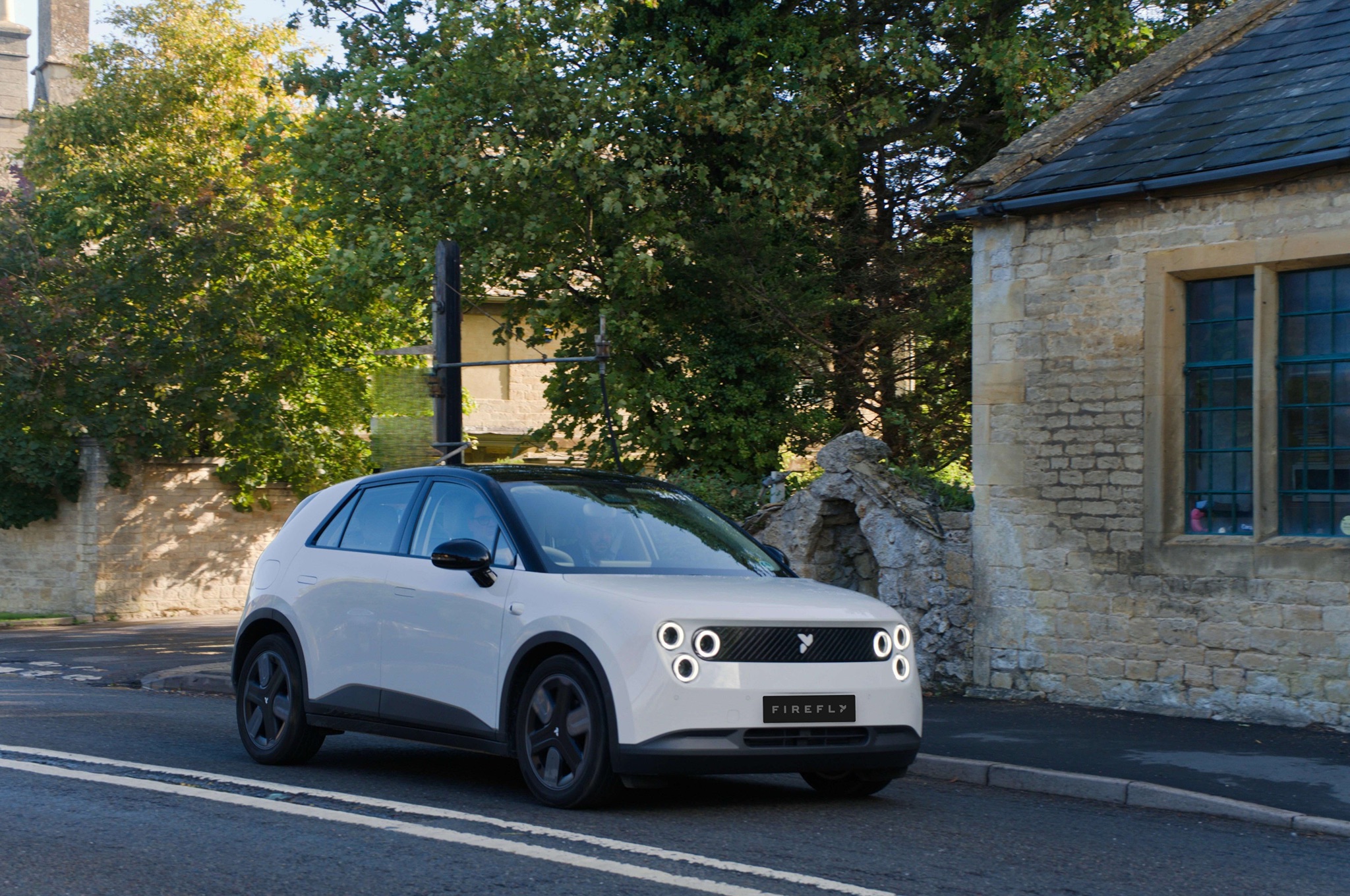
Nio’s Firefly subrand which due to launch its supermini this year which has battery swap technology (but currently no stations in the UK).


Heads up, there’s yet another new electric car brand on the way in 2026 – Nio has confirmed its Firefly brand will make it to the UK in 2026 with a new electric supermini. This first model from the Chinese brand will also take the name of the brand, which won't be at all confusing.

The company recently announced that it had started production of right-hand drive versions of its Firefly EV, which will be sent to the Singapore market in the first instance but will arrive in the UK in 2026, according to news agency Reuters, which said that the company was refocusing on markets with less punitive trade tariff measures in place with China where the car is being manufactured.

The Firefly is intended to be a premium supermini along the lines of the Mini Cooper Electric. Its design is notable for the trios of lights front and rear and a pared back, minimalist interior dominated by a 13.2in central touchscreen and a squared off steering wheel.

We're also quite excited about the many storage options inside the cabin, including under the front and rear seats and in the middle of the front bench. There's also a reasonably sized frunk, which has a plughole in the bottom in case you want to transport fish or fill it with ice at a picnic.

The Firefly EV is equipped with a 143hp e-motor that manages 0–62mph in 8.1secs and a 42kWh LFP battery that’s apparently good for 205 miles on theWLTP cycle. The battery offers a peak charge rate of 100kW, though a recharge time from 10 to 80% in 29 minutes shows that’s carefully managed by the car’s computer system.

Firefly is a newly launched sub-brandof Nio, a Chinese carmaker that’s best known for its battery swap tech. The Firefly is said to be compatible with Nio’s next generation battery swap setup, but we don’t know whether that will be available in the UK.

Firefly will focus on building small electric cars, starting with this electric supermini the company describes as “more than just a car, it represents a lifestyle defined by the freedom to glow”, which gives us a good idea of the marketing onslaught we’ll face next year. The Firefly is already on sale in the Netherlands from €29,900 (£26,300) and also Norway, and in the coming months is set to expand further across Europe.

It'll have to hurry up in the UK, though, because as we found out recently, Chinese carmakers are taking an increasing share of the market. Check out all the other new cars that are arriving in 2026 here.

 
Last edited:

GRALISTAIR

Established Member
Joined
11 Apr 2012
Messages
10,565
Location
Preston Lancs
To answer the original question posed “ Every time there is a Middle East or other type situation, the more the switch to electric vehicles becomes probable “
 
Last edited:

Mawkie

Established Member
Joined
17 Feb 2016
Messages
1,285
Nio seem to offer many solutions.

1. You never own the battery, so no worries about degradation.

2. The apparently longed-for 3 minute refuel is comparable to ICE cars.

3. You can have a small (light) battery for day to day use and swap to a larger, longer range, battery for a month at a time for those long distance driving holidays.

4. You can battery swap, and charge at home - so a mix and match system that seems to suit everyone.

If Nio were smart, I'm sure they would be cooperating with the national grid to have their battery swap stations providing surplus stored power back in the grid at certain times of the day.

But it's not exactly clear to me how much this flexibility costs. I believe UK motorists are reluctant to move into a subscription model, and it's not transparent on their website how much it costs.

I had a look on the Nio Netherlands website and they don't give many answers.

There does seem to be very limited availability on swap stations, for example, currently just 13 in the whole of Germany. If you swap to a larger battery you have to return that battery to the same swap station which doesn't seem very consumer friendly.

Additionally, the cars seem very expensive considering you aren't buying the battery. What happens if Nio decides to withdraw from a particular market in the future? Do they transfer the battery to you for some (as yet undeclared) cost? Do they brick your car until you pay up?

Would be interesting to hear from actual owners and their experiences.
 

jon0844

Veteran Member
Joined
1 Feb 2009
Messages
30,950
Location
UK
The idea of swapping batteries seems crazy to me. The limited number of locations and the risk of being given a dodgy battery really puts me off.

I also don't see why it's even needed when you can charge your own battery in the time you need to take a break anyway.

The idea you could go for a larger battery on occasion sounds great, but do you pay more for that? Do you pay per hour, day or week? You have to return to the same place, which sounds terrible, plus what happens if and when the service fails (as I have no doubt it will?) You now have the wrong battery for your needs and may not be able to change it again.

If every car had a standard battery pack size then at least there would be a bigger potential market but they don't.
 

Peter Sarf

Established Member
Joined
12 Oct 2010
Messages
9,783
Location
Croydon
I answered at 0915hrs today.

Apologies - how did I miss that !.
That, IMO, illustrates in a nutshell the biggest obstacle to overcome. And I don't mean charging time.

I mean getting ICE users to unlearn what they have become accustomed to and making it a requirement for their "acceptance" of EVs: that you go somewhere special, spend ~5 minutes refuelling while you watch it happen (unable to do anything else but stand there gripping the pump nozzle), and then leaving to go back home or carry on. 5 minutes PLUS the journey time to and from, whatever that may be.

Changed thinking is required. You go to (say) nearby Morrisons or Sainsbury's to shop once every (depends on your usage). You plug in, leave the car unattended while you go in the store, shop, pay and leave. You return to your car to find it well topped up, unplug and leave.

You go out for a meal. You choose somewhere that has or is near to a charger. You plug in, enter the eatery, order, eat, pay, leave. You unplug and carry on.

etc.

The net cost in time has been barely a minute or two. The elapsed time may well have been, say, 30 minutes - but it's 30 minutes you were going to be doing something else anyway. The key to unthinking fuelling as a standalone separate action is acknowledging that you can do it in parallel with something else you were already going to do whether that's shopping, sightseeing, eating out, whatever.
I use a car as little as possible so I would very rarely be taking the car to a restaurant or a supermarket. I usually walk or use the bus.
I am struggling to find how many home chargers there are, but appears it was estimated at around 1.3m at end of 2025, and increasing by about 30,000 per month, so must be around 1.4m now.

Figures suggest 1.88m pure electric cars in UK at end of Feb 2026 (March sales figures due next week).

Might be some households with 2 EVs, but with about 1.4m home chargers, and about 1.9m EVs, it rather confirms majority with electric cars, can charge at home.
This does fit in with what I would expect. People with a driveway are much more likely to find an EV usable.
BUT people with a driveway are probably more likely to be buying a newer car so evidence of take up buy driveway-less people will lag ten years or so behind anyway.
As others have already said, If you drive an EV, you have to change your driving method, because of the practicality of charging,
Over time you adapt,

I'm not actually anti EV, I do agree they're the future, wither we like it or not, but for me, the problems of at home charging, right now make it something I can't consider, and it would need me to change where I shop, to take advantage of car park charging, because where i normally shop, has no charging points and then, theres the size, even smaller cars, are now the size of a medium family car, and on street parking is already difficult where i am, parking is of a premium, and 3 larger cars, take the space of 4 smaller cars, so less cars can park.

For me the issue isn't actually the car, its the lack of parking, and able to charge.
Same here. An EV world would be better but frustratingly not for me yet.
Two reasons Lack of home charging and the desire to buy at banger age.
And that shows that only 7% of people are driving for more than 300 miles a week, or put it another way, needing to charge a typical Ev more thsn every 6days or so.
So a slow charge on the driveway is going to cover most EV users.


Fingers crossed public charging will get cheaper by the time I buy an EV banger. Realistically ICE fuel costs will also have risen.

It will be interesting to see if car ownership amongst driveway-less people drops as the availability of ICE cars drops.
Then EVs will have achieved a decrease in car use overall.

I just thought about battery size. Second hand EVs with the larger batteries will be more attractive as their declining capacity will still be usable.
A caveat is that a bigger battery that a driver rarely uses is extra weight being lugged around !.
That will show up as more cost for EV banger owners.
I suspect a lot of ICE banger owners do not fill right up - a 75% empty fuel tank is not much of a weight penalty.

I think one thing we can be sure of is that driveway-less car ownership and use will be a different set of issues/advantages/disadvantages compared to those factors for people with a driveway.

Public Charger availability.
Charging speed (because no home charging).
Public Charging cost.
Battery charging speed (of an old battery)
Range (of an old battery).
Battery reliability (of an old EV design)

Some of "old" relates to old tech in today's terms (battery management). Hopefully (likely ?) old in ten years time does not have such significant issues.
 

Bikeman78

Established Member
Joined
26 Apr 2018
Messages
6,196
Teslas now seem to be the "weapon of choice" for the entitled, in my experience. There's a class of Tesla driver who relies far too much on the active cruise control, and as a result they tailgate constantly, trusting that the car will get them out of trouble.
Is the following vehicle within the minimum braking distance for a given speed? If so then the active cruise control is useless.
 

martin butler

Member
Joined
9 Oct 2018
Messages
883
I know I'm going to be ridiculed for asking this, but will we ever see a self-charging electric car, either through compositive body's that incorporate solar materials, or through a on board charger such as a small alternator that runs off a non driven axle? that might, whilst not fully recharging be enough to extend the charge to extend the distance a car can travel before it needs to recharge.
 

JamesT

Established Member
Joined
25 Feb 2015
Messages
4,910
I know I'm going to be ridiculed for asking this, but will we ever see a self-charging electric car, either through compositive body's that incorporate solar materials, or through a on board charger such as a small alternator that runs off a non driven axle? that might, whilst not fully recharging be enough to extend the charge to extend the distance a car can travel before it needs to recharge.
There are several cars out there with solar panels on the roof. Hyundai claim to be the first with their Sonata hybrid in 2019.
 

Peter Sarf

Established Member
Joined
12 Oct 2010
Messages
9,783
Location
Croydon
I know I'm going to be ridiculed for asking this, but will we ever see a self-charging electric car, either through compositive body's that incorporate solar materials, or through a on board charger such as a small alternator that runs off a non driven axle? that might, whilst not fully recharging be enough to extend the charge to extend the distance a car can travel before it needs to recharge.
My bold.

I am afraid that would rely on perpetual motion not being a myth - in a nutshell, what you propose is impossible. The energy required to drive the alternator would slow the car down.
Mind you when you so want to slow the car down then that would be good - but it happens already and is called "regenerative braking".
 

Harpers Tate

Established Member
Joined
10 May 2013
Messages
2,054
I know I'm going to be ridiculed for asking this, but will we ever see a self-charging electric car, either through compositive body's that incorporate solar materials, or through a on board charger such as a small alternator that runs off a non driven axle? that might, whilst not fully recharging be enough to extend the charge to extend the distance a car can travel before it needs to recharge.
"Ever" is a long time. So maybe. But with the present state of the art a solar equipped vehicle doesn't produce enough electricity to make a material difference; the surface area isn't large enough. And as for generating power off an unpowered axle - if I understand your thinking correctly you are talking about perpetual motion, and that's impossible and always will be. Any such generation will increase drag and thereby power used to propel by more than the amount generated. We already have regeneration when braking, descending etc.
I use a car as little as possible so I would very rarely be taking the car to a restaurant or a supermarket. I usually walk or use the bus.
Me too. But what I don't need to do is drive my car to a petrol station to fill it up. The (unnecessary, you might say) trip to a supermarket to fill up is nothing more than a means of offsetting the charging time - by occupying yourself doing something you were going to do anyway as it does so. And the fact it's "unnecessary" is itself offset by not (ever) having to drive to a fuel station.
 

Topological

Established Member
Joined
20 Feb 2023
Messages
4,332
Location
Swansea
This talk of mileage makes me wonder how many people actually know their annual mileage? Probably the national traffic survey is more accurate than just asking randomly as I expect people would check before filling in an official question.

I guessed horribly wrong when trying to insure the first year. Luckily, it is easy enough to add miles and the car itself was not on a contract. In the end the answer was 25,000. I had guessed 8,000 to begin with.

We then got a second car contracted to 10,000 and I need to think what to do to if replacing the diesel (which is still doing 23,000).

The reason for reflecting on these numbers, is that they are the numbers that help evaluate if the switch to electric is really worthwhile. Clearly for 25,000 miles the fuel costs are going to make a huge difference.

The long trips are a thought. Heathrow is 180 miles from my house and I go there quite a lot. I would want to do the 360 miles without charging if at all possible. However, a lot of cars are now claiming 480+ so that would be fine for the purpose. Visiting my parents is an almost 400-mile round trip (though they have a charger now), and if I did go to Manchester, it would be 420 via the motorways (so that would still be tight on a 480-mile battery). I do sometimes go further than that, but for those purposes a stop in the services for longer than I currently do would be fine. There are also ample just off motorway supermarkets or restaurants with chargers.

I think there are two numbers to reflect on. Overall mileage to estimate savings from using electricity and the actual long trips made (and their honest frequency).
 

Mawkie

Established Member
Joined
17 Feb 2016
Messages
1,285
I know I'm going to be ridiculed for asking this, but will we ever see a self-charging electric car, either through compositive body's that incorporate solar materials.
No silly questions in my book. It's a tempting idea. Sono Motors tried to make a car covered in solar panels but it appears it was doomed to failure. Can have a little read about it on this Car Magazine article, or a further Google search for Sono Sion.

Other options include this self invented, self mounted, roof box thing attached to a Tesla.

Screenshot_2026-04-05-11-43-48-52_3aea4af51f236e4932235fdada7d1643.jpg
I'm sure the biggest manufacturers in the world have given a lot of thought to it, but can't make it economically viable - although given the amount of time cars generally spend parked up, a few extra miles for a roof mounted panel might be worth it for some.
 

Phillipimo

Member
Joined
5 Jan 2013
Messages
237
Location
Portsmouth
I know I'm going to be ridiculed for asking this, but will we ever see a self-charging electric car, either through compositive body's that incorporate solar materials, or through a on board charger such as a small alternator that runs off a non driven axle? that might, whilst not fully recharging be enough to extend the charge to extend the distance a car can travel before it needs to recharge.
Solar panels could slightly extend range but the issue is that the sun isn't powerful enough. The average power of sunlight on earths surface is about 1000 watts per square metre. So a completely covered car with say 4x2 metres of 100%* efficient solar panels would only generate 8kW which is similar to slow charging at home, or 10hp to power you along.
If pure solar cars were possible we'd all be cooked alive so I think I know what I prefer.
*Current technology is about 20%, see "Shockley–Queisser limit".
 

The Ham

Veteran Member
Joined
6 Jul 2012
Messages
12,043
Solar panels could slightly extend range but the issue is that the sun isn't powerful enough. The average power of sunlight on earths surface is about 1000 watts per square metre. So a completely covered car with say 4x2 metres of 100%* efficient solar panels would only generate 8kW which is similar to slow charging at home, or 10hp to power you along.
If pure solar cars were possible we'd all be cooked alive so I think I know what I prefer.
*Current technology is about 20%, see "Shockley–Queisser limit".

I've seen solar panels quoting 24%.

Also, there was a recent scientific report which talked about being able to use spin to get two bits of the cherry (so to speak) which without anything else could double efficiency rates.

On car based systems someone did the maths and the extra weight of the panels reduced the range by about what it would add to the car, unless the car is parked up for days on end.

This talk of mileage makes me wonder how many people actually know their annual mileage? Probably the national traffic survey is more accurate than just asking randomly as I expect people would check before filling in an official question.

I guessed horribly wrong when trying to insure the first year. Luckily, it is easy enough to add miles and the car itself was not on a contract. In the end the answer was 25,000. I had guessed 8,000 to begin with.

We then got a second car contracted to 10,000 and I need to think what to do to if replacing the diesel (which is still doing 23,000).

The reason for reflecting on these numbers, is that they are the numbers that help evaluate if the switch to electric is really worthwhile. Clearly for 25,000 miles the fuel costs are going to make a huge difference.

The long trips are a thought. Heathrow is 180 miles from my house and I go there quite a lot. I would want to do the 360 miles without charging if at all possible. However, a lot of cars are now claiming 480+ so that would be fine for the purpose. Visiting my parents is an almost 400-mile round trip (though they have a charger now), and if I did go to Manchester, it would be 420 via the motorways (so that would still be tight on a 480-mile battery). I do sometimes go further than that, but for those purposes a stop in the services for longer than I currently do would be fine. There are also ample just off motorway supermarkets or restaurants with chargers.

I think there are two numbers to reflect on. Overall mileage to estimate savings from using electricity and the actual long trips made (and their honest frequency).

Next time you park at a services time goes long you take from locking the car to unlocking again, chances are you'd be stopped for 7 minutes.

With decent charge rate (for example the Polestar 2 can charge at 205kW) that sort of stop would add 50 miles, which isn't insignificant given that you've not added any extra time.

The extra amount of time needed is unlikely to be significant, unless you want to fully charge and depending on how much further you're going that may be unnecessary.

As an example, no one is going to charge to 80% only to arrive where their going with 70% range, unless you need that range for the return journey.

As an example, we're planning a trip where the destination doesn't have charging, our car can get there, but we'd need to change almost as soon as we leave, however we'd then need a second charge to get back home.

Therefore it's better for us to stop for 20 minutes about 2/3rds the way and then again about 1/2 way back, than it would split the journey up at better points, rather than near the destination for 30 minutes and about 40 miles from home for 10 minutes.
 

Topological

Established Member
Joined
20 Feb 2023
Messages
4,332
Location
Swansea
But if you are an antisocial bugger like me, who likes to go and park far from the service station building, then the chargers are not ideal :lol:

The serious point is that absolutely there would be time to get some charge into the car at every stop. I am just targeting a big battery car because of my own silly habits (and because I am lucky enough that I can).
 

bspahh

Established Member
Joined
5 Jan 2017
Messages
2,444
The long trips are a thought. Heathrow is 180 miles from my house and I go there quite a lot. I would want to do the 360 miles without charging if at all possible. However, a lot of cars are now claiming 480+ so that would be fine for the purpose. Visiting my parents is an almost 400-mile round trip (though they have a charger now), and if I did go to Manchester, it would be 420 via the motorways (so that would still be tight on a 480-mile battery). I do sometimes go further than that, but for those purposes a stop in the services for longer than I currently do would be fine. There are also ample just off motorway supermarkets or restaurants with chargers.

I think there are two numbers to reflect on. Overall mileage to estimate savings from using electricity and the actual long trips made (and their honest frequency).
If the 480 mile range is the WLTP value, and you drive to Heathrow on a motorway, you're unlikely to make it without charging, certainly not in cold weather. https://ev-database.org/ has values which are likely to be closer to the real world range.

The Mercedes WWW site says:

Figures shown are for comparability purposes; only compare with other vehicles tested to the same technical procedures. Figures may not reflect real life driving results, which will depend upon a number of factors including the starting charge of the battery, factory-fitted options, accessories fitted (post registration), variations in weather, driving styles and vehicle load. Further information about the test used to establish range, power consumption and CO₂ figures can be found at www.mercedes-benz.co.uk/WLTP

For example, a Mercedes CLA 250 has a 483 mile WLTP range, but EV Database says the range at a constant 70mph at 23°C and no A/C, is 345 miles.

I have a KIA EV3 with a heat pump for which KIA quotes a WLTP "Combined" range of 361 miles. EV Database says the 70mph range at -10°C is 200 miles, or 260 miles at 23°C.

On Christmas day, I drove 205 miles cruising at 60mph on fast A roads and 70mph on motorways and dual carriageways, with a few suburban miles. It was near 0°C, I had 4 passengers and we were using the heating and heated seats to be cosy and warm. With hindsight, I would have got home with 8% charge left (which would have given 220 mile total range), but I had my family with me, it was a cold Christmas day, and I didn't feel lucky, so I stopped for a 10 minute charge to be safe.
 

Topological

Established Member
Joined
20 Feb 2023
Messages
4,332
Location
Swansea
The one I was looking at says real range 685km or 425 miles under standard conditions. So yes, smaller than the 481, but about what I was expecting based on the experience with the EQA versus its claimed mileage. Probably would still look for a little boost to that at a services though, it's a bit tight and it is often cold.
 

Harpers Tate

Established Member
Joined
10 May 2013
Messages
2,054
You'd get +/- 10% more range on motorways/good A's if you cruise at 60 rather than 70. The extra time taken driving may be less than any extraneous (i.e. not otherwise being used by you for R&R, physical needs, whatever) charging stops you might potentially avoid.
 

Top