• Our new ticketing site is now live! Using either this or the original site (both powered by TrainSplit) helps support the running of the forum with every ticket purchase! Find out more and ask any questions/give us feedback in this thread!

UK switching to electric vehicles discussion

MotCO

Established Member
Joined
25 Aug 2014
Messages
6,137
Or, put another way, as we charge EVs, not people….

Norway has 27,500 public chargers for 800,000 EVs on their roads, ie 29 EVs per charger, whereas we have 65,000 public chargers for 1.4m EVs on our roads, ie 21.5 EVs per charger.

So we’re better.

Statistics, eh….
I knew you would find a flaw in my argument :frown:

== Doublepost prevention - post automatically merged: ==

I think you mean 1 charger per 200 people. ;)
Perhaps I did. :frown:
 
Last edited:
Sponsor Post - registered members do not see these adverts; click here to register, or click here to log in
R

RailUK Forums

Noddy

Established Member
Joined
11 Oct 2014
Messages
1,656
Location
UK
Not really a fair comparison. The population of Norway is around 5.5m, and they have 27,500 public EV chargers, so around 200 public chargers per person. The UK population is around 68m and we have 65,000 public chargers, so around 1,000 public chargers per person. To match Norway we need to increase the number of public chargers five-fold - not impossible, but a big ask.

Or, put another way, as we charge EVs, not people….

Norway has 27,500 public chargers for 800,000 EVs on their roads, ie 29 EVs per charger, whereas we have 65,000 public chargers for 1.4m EVs on our roads, ie 21.5 EVs per charger.

So we’re better.

Statistics, eh….

Also there aren’t 65000 chargers in the UK. According to ZapMap there were 74000 public chargers at the end of December. So that’s 18.9 vehicles per public charger.
 

MotCO

Established Member
Joined
25 Aug 2014
Messages
6,137
I have done some analysis of DVLA data (publicly available spreadsheets here: https://www.gov.uk/government/statistical-data-sets/vehicle-licensing-statistics-data-files) on cars or light vans licenced for use. The latest data is for 2023 when it shows 32,813,329 vehicles were licenced, of these 5,307,434 (16.2%) were first registered in 2008 or earlier so were then at least 15 years old and 1,278,741 (3.9%) were registered in 2003 or earlier and were at least 20 years old. Only 411,206 (1.25%) were at least 25 years old.

I was listening to a recent Autoalex podcast the other day, and they made an interesting observation that modern cars are so much more complex and thus less reliable than say 10 years ago, such that there may not be many 15 - 20 year old cars around in 20 years' time because they will no longer work! Probably only relates to ICEs.
 

dcbwhaley

On Moderation
Joined
4 Aug 2018
Messages
839
I was listening to a recent Autoalex podcast the other day, and they made an interesting observation that modern cars are so much more complex and thus less reliable than say 10 years ago, such that there may not be many 15 - 20 year old cars around in 20 years' time because they will no longer work! Probably only relates to ICEs.
Modern ICE cars generally fail with electrical faults: often requiring expensive computer replacements.
Even my 1988 Golf GTI had very ropy wiring but it was accessible and repairable.
No reason to suppose that EVs, with even more electrical equipment, should be immune from those failures
 

trebor79

Established Member
Joined
8 Mar 2018
Messages
4,912
That (Dacia Spring) will be one to watch. We will see if corners have been cut on battery life of course. But this might be a sign of the inevitable (me hoping) drop in new prices as new tech matures. Usually without any compromise on quality.
I expect the battery will last even longer than other vehicles. The cells are all made by one of about three companies, and the Spring has a very low power motor and doesn't charge particularly quickly, so the battery is going to have a very easy life indeed.
It's not a Tesla sometimes pulling 350kW when driving and then having 250kW shoved up it when plugged into a supercharger.
 

Bald Rick

Veteran Member
Joined
28 Sep 2010
Messages
35,960
Also there aren’t 65000 chargers in the UK. According to ZapMap there were 74000 public chargers at the end of December. So that’s 18.9 vehicles per public charger.

Even better!

Or to put it yet another way, for the UK to reach the same ratio of chargers to EVs as Norway, we would have to double the number of EVs sold this year compared to 2024, and not install any new chargers. Then at the end of the year we’d be the same.

Neither is likely. At a push we’ll have about half a million new EVs on the road this year, and another 20,000 chargers, so our ratio of EVs per charger will come down to 20:1.

I wonder if the Daily Telegraph will be reporting this good news?
 

Peter Sarf

Established Member
Joined
12 Oct 2010
Messages
9,779
Location
Croydon
Even better!

Or to put it yet another way, for the UK to reach the same ratio of chargers to EVs as Norway, we would have to double the number of EVs sold this year compared to 2024, and not install any new chargers. Then at the end of the year we’d be the same.

Neither is likely. At a push we’ll have about half a million new EVs on the road this year, and another 20,000 chargers, so our ratio of EVs per charger will come down to 20:1.

I wonder if the Daily Telegraph will be reporting this good news?
What would be interesting is to plot a graph showing the ratio of EVs to chargers for each year since EVs first appeared. Obviously "first year " is open to debate. So my second thought was to plot a graph of ratio of chargers/EVs vs ratio of EVs/ICEs.

I am wondering if we are actually ahead of other countries that are (or were) at the same stage of take up and the aforementioned graphs might be illuminating.
Be nice to know if the UK is more prepared for the take-up of EVs.

I also felt 20 EVs per charger sounds quite healthy. But then it helps if those chargers are where people need them.

Another thought is how we compare regarding rapid chargers ?.
Not that I am too keen on rapidly charging batteries generally - it hammers other kinds of non-EV batteries.
 

Noddy

Established Member
Joined
11 Oct 2014
Messages
1,656
Location
UK
What would be interesting is to plot a graph showing the ratio of EVs to chargers for each year since EVs first appeared. Obviously "first year " is open to debate. So my second thought was to plot a graph of ratio of chargers/EVs vs ratio of EVs/ICEs.

I am wondering if we are actually ahead of other countries that are (or were) at the same stage of take up and the aforementioned graphs might be illuminating.
Be nice to know if the UK is more prepared for the take-up of EVs.

I also felt 20 EVs per charger sounds quite healthy. But then it helps if those chargers are where people need them.

Another thought is how we compare regarding rapid chargers ?.
Not that I am too keen on rapidly charging batteries generally - it hammers other kinds of non-EV batteries.

Zap Map produce many reports which will help answer some of your questions around charger numbers and speed of installation.

EV charging statistics 2024​

The UK’s electric vehicle (EV) public charging infrastructure is continually growing and changing shape to meet the needs of EV drivers. It covers a broad range of use cases from high powered en-route chargers for EV drivers on longer journeys, to charge points at hotels, attractions and other destinations and low powered chargers on-street to support those who do not have access to a charge point at home. This is all in addition to the estimated 850,000 charge points installed at home or work where the majority of charging still takes place.
The Zapmap Insights team analyses the comprehensive Zapmap database of charging points to track the growth and composition of the UK's charging infrastructure and provides a series of graphs, which are updated monthly. Individual charge points can be viewed on the Zapmap app.

How many public charging points are there in the UK?​

At the end of December 2024, there were 73,699 electric vehicle charging points across the UK, across 37,011 charging locations and 108,410 connectors.
Last month, 1,105 net new charging devices were added to the Zapmap database.
The four speeds or power ratings that are tracked are defined as slow (3-7kW), fast (8-49kW), rapid (50-149kW) and ultra-rapid (150kW+). These new bandings reflect those referenced in the government's new Public Charge Point Regulations.


Octopus Electroverse also produce a quarterly report on the state of charging in the UK and across Europe (most recent was published October 2024). The country comparisons are towards the end of the report (page 10 onwards):


(Mods apologies for no quote but it’s a graphic rich pdf report with very little text).
 
Last edited:

jon0844

Veteran Member
Joined
1 Feb 2009
Messages
30,947
Location
UK
Given the way they're being rolled out by a number of different private companies, there is likely to become saturation in some locations - which will hopefully spark a price war rather than price fixing - but in the longer term, I wonder how many might be decommissioned once destination charging becomes more of a thing (these are the stats that we really want, but will be harder to obtain). Add in people realising they can charge at home and not use public chargers much, if at all, and I don't think we really need worry too much about how many chargers there are.

I also think that there must be a fair number of first-gen chargers that are either slow or very unreliable that might not get replaced, for the above reason (saturation).

Ultimately, people are going to be able to charge their EVs without a big problem. I've had nervous moments with a near empty fuel tank in the middle of nowhere at night (when I was doing large mileages) and your expected petrol station is closed/not working/empty and you are now driving with a flashing warning light to the next one - and back when I was doing this, it was using maps not satnav. People ran out of fuel (and people still do) but I bet most people don't worry about it in the way they're convinced is going to be a nightmare if they get an EV.
 

stuu

Established Member
Joined
2 Sep 2011
Messages
3,774
Modern ICE cars generally fail with electrical faults: often requiring expensive computer replacements.
Even my 1988 Golf GTI had very ropy wiring but it was accessible and repairable.
No reason to suppose that EVs, with even more electrical equipment, should be immune from those failures
Do EVs have more electrical equipment? I'd be surprised if they do. They don't need all the pumps and fans and engine management systems etc.
 

dcbwhaley

On Moderation
Joined
4 Aug 2018
Messages
839
Do EVs have more electrical equipment? I'd be surprised if they do. They don't need all the pumps and fans and engine management systems etc.
Of course they do: traction motors, traction batteries, motor controllers. regenerative braking equipment
 

Peter Sarf

Established Member
Joined
12 Oct 2010
Messages
9,779
Location
Croydon
Thanks @Noddy

Interesting that Shell have a lot more chargers than others. Then in the pie chart I saw BP crop up with more faster chargers than shell. So there is a speed vs quantity debate to be had there. Assuming the chargers are on petrol station forecourts then it looks like a Shell petrol station will be cluttered with cars on a slow charge. For BP fewer cars can be charged but faster. Given the limited space on petrol stations I would assume a fast charge at a BP even if having to queue is more attractive than a slow charge at a Shell.

For people who cannot have a home charger then t is going to be more expensive but also require organising work to stay charged.
 

AM9

Veteran Member
Joined
13 May 2014
Messages
16,061
Location
St Albans

For people who cannot have a home charger then t is going to be more expensive but also require organising work to stay charged.
"More expensive than charging at home but no costs for home with off-street parking, or charging equipment supply and fitting. In all probability when the market is mature, cheaper than petrol/diesel too!
 

Noddy

Established Member
Joined
11 Oct 2014
Messages
1,656
Location
UK

Thanks @Noddy

Interesting that Shell have a lot more chargers than others. Then in the pie chart I saw BP crop up with more faster chargers than shell. So there is a speed vs quantity debate to be had there. Assuming the chargers are on petrol station forecourts then it looks like a Shell petrol station will be cluttered with cars on a slow charge. For BP fewer cars can be charged but faster. Given the limited space on petrol stations I would assume a fast charge at a BP even if having to queue is more attractive than a slow charge at a Shell.

For people who cannot have a home charger then t is going to be more expensive but also require organising work to stay charged.

No, Shell garages are not cluttered with slow chargers! Shell have a massive lamppost charging network (9422 lamppost chargers according to the Electroverse report I linked to above), as well as rapid chargers which are typically but not always sited at Petrol stations. BP don’t have a lamppost charging network.
 
Last edited:

jon0844

Veteran Member
Joined
1 Feb 2009
Messages
30,947
Location
UK
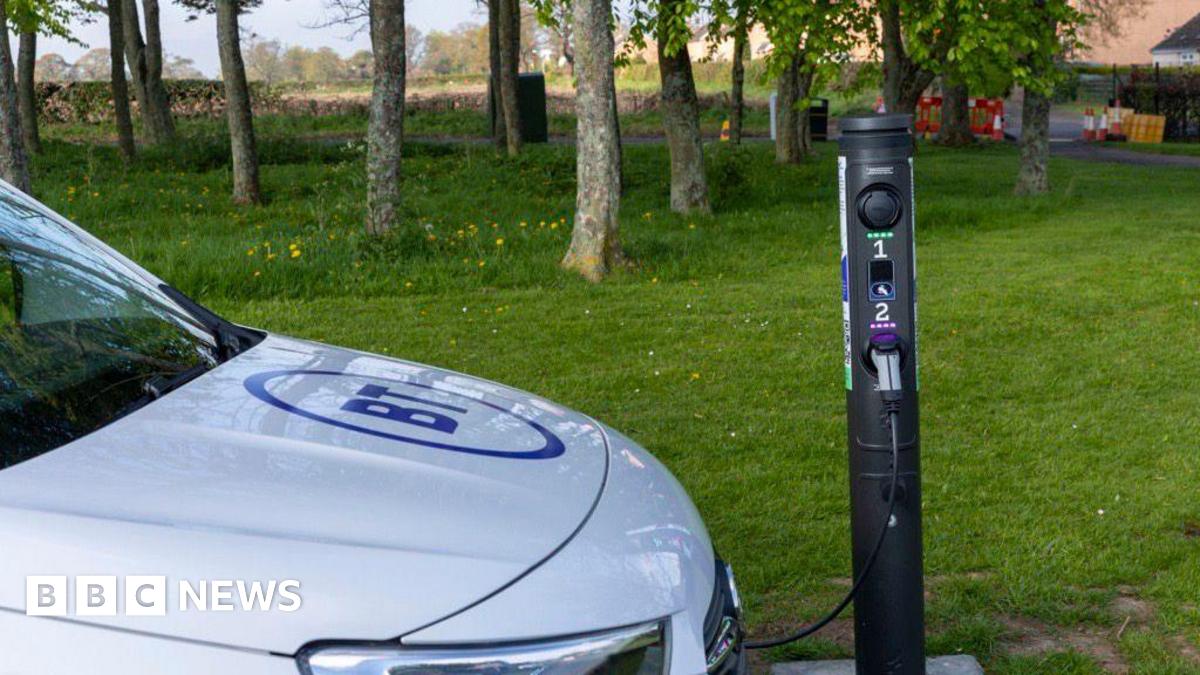
Just seen this on BBC website. Apologies if already here.

It did seem a little odd given the locations of such cabinets weren't likely to be that good for car charging. Seemed more like a company wanting to get in on something it had no business to be involved with.

Stick with adding power sockets to lamp posts.
 

stuu

Established Member
Joined
2 Sep 2011
Messages
3,774
Well o
Of course they do: traction motors, traction batteries, motor controllers. regenerative braking equipment
Obviously, but is that more or less electrical equipment than an ICE is the point I was wondering. I would also imagine that it's all in much less hostile environment than an engine bay
 

The Ham

Veteran Member
Joined
6 Jul 2012
Messages
12,042
Maybe some government will actually apply some common sense and begin the process of reversing car dependency. Maybe not. Make that "probably not". Either way, it's flawed to predict one side of a situation (more EVs) whilst at the same time using the present situation on the other (charging network). Better to predict that BOTH things will change more or less in parallel.

The development of Active Travel England has helped with the likelihood that walking and cycling could be more viable for more people.

That's a good way to sum it up. Perhaps nearer sub £3k I am afraid - there are a lot of low paid essential workers who rely on a car. Especially with females who feel a bit vulnerable on public transport even if it is available in London.

The price people would be willing to pay for an may be different to what they would pay for an ICE.

For instance, if a car has a decent range and for people who have off-street parking (especially if solar panels become more widespread and they have them in their home) then the running costs could be lower and so be willing to pay a higher upfront cost.
 

Bald Rick

Veteran Member
Joined
28 Sep 2010
Messages
35,960
Of course they do: traction motors, traction batteries, motor controllers. regenerative braking equipment

Usually one motor. Occaisonally two. And the motor is also the ‘regen braking equipment’. The ‘motor controllers’ essentially replace a much more complex engine managemnet system.

And there’s no motors / control equipment required for fuel pumps, injectors, cooling fans, starter motor, no alternator, no ignition electrics, no monitoring kit for various bits of the engine and exhaust (I’ve just had a failed NOx sensor, £600…) etc etc etc etc ad nausem.
 

Peter Sarf

Established Member
Joined
12 Oct 2010
Messages
9,779
Location
Croydon
No, Shell garages are not cluttered with slow chargers! Shell have a massive lamppost charging network (9422 lamppost chargers according to the Electroverse report I linked to above), as well as rapid chargers which are typically but not always sited at Petrol stations. BP don’t have a lamppost charging network.
Thanks. I did not realise Shell had chargers on the street. That is kind of more commitment to EVs than just adapting you petrol forecourts.

If every lamp post had an EV charging socket I wonder if that would be plenty ?.
The development of Active Travel England has helped with the likelihood that walking and cycling could be more viable for more people.


The price people would be willing to pay for an may be different to what they would pay for an ICE.

For instance, if a car has a decent range and for people who have off-street parking (especially if solar panels become more widespread and they have them in their home) then the running costs could be lower and so be willing to pay a higher upfront cost.
The snag will be low paid people who just do not have enough saved up to buy something better - even if it is cheaper in the long run.
They are the kind of people who so easily slide into uncontrollable debt - once you borrow to make ends meet you are on a downward spiral.
Usually one motor. Occaisonally two. And the motor is also the ‘regen braking equipment’. The ‘motor controllers’ essentially replace a much more complex engine managemnet system.

And there’s no motors / control equipment required for fuel pumps, injectors, cooling fans, starter motor, no alternator, no ignition electrics, no monitoring kit for various bits of the engine and exhaust (I’ve just had a failed NOx sensor, £600…) etc etc etc etc ad nausem.
Oh crickey. I have noticed how expensive those little sensors can be attached to the exhaust. Luckily I have never needed to replace one myself.
 

Bald Rick

Veteran Member
Joined
28 Sep 2010
Messages
35,960
If every lamp post had an EV charging socket I wonder if that would be plenty ?.

A quick google suggests there are about 6 million lamp posts in the country, so yes that would be more than enough. Albeit I wouldn’t fancy using the posts in the central reservation of the M1.
 

jon0844

Veteran Member
Joined
1 Feb 2009
Messages
30,947
Location
UK
A quick google suggests there are about 6 million lamp posts in the country, so yes that would be more than enough. Albeit I wouldn’t fancy using the posts in the central reservation of the M1.

Fine for the M25 though....
 

Energy

Established Member
Joined
29 Dec 2018
Messages
5,135
It did seem a little odd given the locations of such cabinets weren't likely to be that good for car charging. Seemed more like a company wanting to get in on something it had no business to be involved with.
Almost certainly. The power supplies to most of the cabinets is quite weak having only been envisioned for telecoms equipment.

BT typically has 1 active cabinet per 288 or so houses. Where there isn't off-street parking it is nowhere near enough, and where there is off street parking it wouldn't be used.
A quick google suggests there are about 6 million lamp posts in the country, so yes that would be more than enough
The houses-per-lampost on specific streets matters more though and can vary. I picked a random street in Liverpool made up of entirely terraced housing and there are only 4 lamp posts for 35+ houses. Of course, adding some EV charging bollards solves this.

The main problem for terraced housing is that parking needs to be sufficient. 1 charger per 3/4 houses is adequate but only works if there is sufficient parking that those who aren't currently charging can park elsewhere. Many of the terraced streets here are already on parking permits, perhaps a good solution is to limit households to 1 permit initially. Then one month or so after that additional permits are allowed if the number of permits < 85% of the number of spaces.
 

Peter Sarf

Established Member
Joined
12 Oct 2010
Messages
9,779
Location
Croydon
A quick google suggests there are about 6 million lamp posts in the country, so yes that would be more than enough. Albeit I wouldn’t fancy using the posts in the central reservation of the M1.
I wonder, then what sort of extension lead would I need :oops:.
 

Lloyds siding

Member
Joined
3 Feb 2020
Messages
626
Location
Merseyside
Almost certainly. The power supplies to most of the cabinets is quite weak having only been envisioned for telecoms equipment.

BT typically has 1 active cabinet per 288 or so houses. Where there isn't off-street parking it is nowhere near enough, and where there is off street parking it wouldn't be used.

The houses-per-lampost on specific streets matters more though and can vary. I picked a random street in Liverpool made up of entirely terraced housing and there are only 4 lamp posts for 35+ houses. Of course, adding some EV charging bollards solves this.

The main problem for terraced housing is that parking needs to be sufficient. 1 charger per 3/4 houses is adequate but only works if there is sufficient parking that those who aren't currently charging can park elsewhere. Many of the terraced streets here are already on parking permits, perhaps a good solution is to limit households to 1 permit initially. Then one month or so after that additional permits are allowed if the number of permits < 85% of the number of spaces.
There's problems with charging in urban areas according to the Echo
Liverpool Echo article 'Police ticketed 40 drivers last night'

Not sure about a 'weak power supply' to cabinets...have you put your hand on one of the fibre cabinets with cooling fans?
 

Energy

Established Member
Joined
29 Dec 2018
Messages
5,135
There's problems with charging in urban areas according to the Echo
Liverpool Echo article 'Police ticketed 40 drivers last night'
Liverpool has some lamp post chargers but it is far from every street and they often aren’t well thought out.
Not sure about a 'weak power supply' to cabinets...have you put your hand on one of the fibre cabinets with cooling fans?
If you want an exact figure you’ll need to dig through the datasheets but IIRC the Huawei cabinets are only around 400W max. Even the lamppost chargers are 5kW.
 

AM9

Veteran Member
Joined
13 May 2014
Messages
16,061
Location
St Albans
The main problem for terraced housing is that parking needs to be sufficient. 1 charger per 3/4 houses is adequate but only works if there is sufficient parking that those who aren't currently charging can park elsewhere. Many of the terraced streets here are already on parking permits, perhaps a good solution is to limit households to 1 permit initially. Then one month or so after that additional permits are allowed if the number of permits < 85% of the number of spaces.
Given that most charging at home (whether on a public lampost/bollard or an a private charger) will be overnight when energy is likely to be cheaper, then those EVs will be occupying the same spaces that their owner's IC vehicles occupied previously. In other words, if there's space now then so there will be in the future.
 

The Ham

Veteran Member
Joined
6 Jul 2012
Messages
12,042
Given that most charging at home (whether on a public lampost/bollard or an a private charger) will be overnight when energy is likely to be cheaper, then those EVs will be occupying the same spaces that their owner's IC vehicles occupied previously. In other words, if there's space now then so there will be in the future.

Arguably, if household sizes continue to fall and the number of people over 80 continue to be a larger percentage of the population, then it could be that demand for parking on street starts to reduce (even though population continues to rise).
 

AM9

Veteran Member
Joined
13 May 2014
Messages
16,061
Location
St Albans
Arguably, if household sizes continue to fall and the number of people over 80 continue to be a larger percentage of the population, then it could be that demand for parking on street starts to reduce (even though population continues to rise).
Yes, I've never thought of that possible trend. My about EVs occupying the space that IC vehicles currently do is a counter to these claims by EVphobes that terraced streets won't have space for them. Kerbside chargers at a suitable spacing will suffice.
.... Just waiting for the next contrived reason for continued fossil fuel burning. :rolleyes:
 

PeterC

Established Member
Joined
29 Sep 2014
Messages
4,786
Yes, I've never thought of that possible trend. My about EVs occupying the space that IC vehicles currently do is a counter to these claims by EVphobes that terraced streets won't have space for them. Kerbside chargers at a suitable spacing will suffice.
.... Just waiting for the next contrived reason for continued fossil fuel burning. :rolleyes:
On-street charging will reduce the number of parking spaces available as they are only for use while charging. Just sticking charging bays in without reviewing the underlying structure of on-street parking in an area will just cause the sort of disruption thar GBNews will love.
 

Top