It's very noticeable that, especially in headlines, rail passengers are just about all called "commuters" now. I guess that the usual headline rule applies. - use shortcuts wherever possible to make a headline more punchy. But is the C-word coming into general use as a result?

-
Our new ticketing site is now live! Using either this or the original site (both powered by TrainSplit) helps support the running of the forum with every ticket purchase! Find out more and ask any questions/give us feedback in this thread!
You are using an out of date browser. It may not display this or other websites correctly.
You should upgrade or use an alternative browser.
You should upgrade or use an alternative browser.
Trivia: When did the media start calling all train passengers "commuters"?
- Thread starter fandroid
- Start date
- Status
- Not open for further replies.
Sponsor Post - registered members do not see these adverts; click here to register, or click here to log in
R
RailUK Forums
zwk500
Veteran Member
News reports have been using Commuters for ages. Especially for the annual season ticket price wise, which is understandable as Season tickets would be mostly bought by commuters.
swt_passenger
Veteran Member
- Joined
- 7 Apr 2010
- Messages
- 34,308
I’d think it’s been commented on in various Rail forums for at least 20 years or more.

I find it an annoying term, an absurd lazy reductionism especially as applied to long-distance intercity travellers, most of whom, especially outside the peak, aren't travelling to or from work. I suspect it's part of a general policy of disparagement in parts of the press, referring to rail travel only as experienced by those who have little choice of mode for their regular work journeys.
It's typical of the lazy journalism we so often see regarding railways.
There is no assumption that everyone driving a car is going to or from their place of work but 'commuters' has been used by the media to describe all railway passengers for some time, but maybe increasingly so.
I remember many years ago passengers who were stuck for hours on the northern section of the Far North Line being called commuters and wondered how many were actually travelling home from work.
There is no assumption that everyone driving a car is going to or from their place of work but 'commuters' has been used by the media to describe all railway passengers for some time, but maybe increasingly so.
I remember many years ago passengers who were stuck for hours on the northern section of the Far North Line being called commuters and wondered how many were actually travelling home from work.

DarloRich
Veteran Member
I suspect it is just to make a better headline rather than a conspiracy!I find it an annoying term, an absurd lazy reductionism especially as applied to long-distance intercity travellers, most of whom, especially outside the peak, aren't travelling to or from work. I suspect it's part of a general policy of disparagement in parts of the press, referring to rail travel only as experienced by those who have little choice of mode for their regular work journeys.

Mcr Warrior
Veteran Member
- Joined
- 8 Jan 2009
- Messages
- 17,305
Didn't passengers with weekly or longer season tickets once (some time ago) get referred to as "contractors" (rather than "commuters")?
spyinthesky
Member
Probably as long as Showbiz personalities became celebrities.

tbtc
Veteran Member
I suspect it's part of a general policy of disparagement in parts of the press, referring to rail travel only as experienced by those who have little choice of mode for their regular work journeys.
I could argue that if anything the opposite is true, the media are treating all passengers as doing important journeys, being the hard workers that the economy relies on etc - commuters are seen by the media as “the right sort of passenger” (And therefore worthy of subsidy, unlike certain other people in trains who the media may be less kind about!)
And commuters were (certainly pre-Covid) a huge chunk of passenger numbers/ railway revenue
But it’s probably just a handy shorthand for journalists, just like the way that football fans still represent “The terraces” despite it being many years since all-seater grounds at higher levels, people on flights to Mediterranean countries are all “holidaymakers” even if some people are heading to Spain etc for business
zwk500
Veteran Member
Possibly, although the word commuter came from passengers who 'commuted' their fares by buying what became season tickets.Didn't passengers with weekly or longer season tickets once (some time ago) get referred to as "contractors" (rather than "commuters")?

PG
Established Member
Probably about the same time that the railway industry substituted customers in place of passengersIt's either that or customers.

Mcr Warrior
Veteran Member
- Joined
- 8 Jan 2009
- Messages
- 17,305
Didn't passengers with weekly or longer season tickets once (some time ago) get referred to as "contractors" (rather than "commuters")?
Possibly, although the word commuter came from passengers who 'commuted' their fares by buying what became season tickets.
The term "contractor" was certainly mentioned in a September 1904 newspaper article about passengers on the Manchester and South Junction Railway who were found (during an "all tickets must be shown" inspection) by ticket collectors to have either left their season tickets at home, or not to have had one in the first place.
Wonder when the term "commuter" (meaning the holder of a reduced rate "commutation ticket") was first used in the UK?
Believe it may have had 19th Century U.S. railroad origins.
Deepgreen
Established Member
Not just rail passengers either - many reports refer to drivers as commuters.
== Doublepost prevention - post automatically merged: ==
== Doublepost prevention - post automatically merged: ==
== Doublepost prevention - post automatically merged: ==
Yes.The term "contractor" was certainly mentioned in a September 1904 newspaper article about passengers on the Manchester and South Junction Railway who were found (during an "all tickets must be shown" inspection) by ticket collectors to have either left their season tickets at home, or not to have had one in the first place.
Wonder when the term "commuter" (meaning the holder of a reduced rate "commutation ticket") was first used in the UK?
Believe it may have had 19th Century U.S. railroad origins.
== Doublepost prevention - post automatically merged: ==
As it's only one letter shorter than 'passengers', not much of a shorthand!I could argue that if anything the opposite is true, the media are treating all passengers as doing important journeys, being the hard workers that the economy relies on etc - commuters are seen by the media as “the right sort of passenger” (And therefore worthy of subsidy, unlike certain other people in trains who the media may be less kind about!)
And commuters were (certainly pre-Covid) a huge chunk of passenger numbers/ railway revenue
But it’s probably just a handy shorthand for journalists, just like the way that football fans still represent “The terraces” despite it being many years since all-seater grounds at higher levels, people on flights to Mediterranean countries are all “holidaymakers” even if some people are heading to Spain etc for business
But it’s probably just a handy shorthand for journalists, just like the way that football fans still represent “The terraces” despite it being many years since all-seater grounds at higher levels, people on flights to Mediterranean countries are all “holidaymakers” even if some people are heading to Spain etc for business
It might very well be short hand. It's still the wrong word if talking about all rail passengers.
Last edited by a moderator:

Dr Hoo
Established Member
I think that there's a bit more subtlety in the use of 'commuters' in a journalistic context. There is an implication of regular (or 'frequent') travel. I.e. that 'long-suffering commuters' have to face high/rising fares, overcrowding, cancellations, rail replacement buses or whatever time after time. Similarly traffic congestion, lack of parking, roadworks, etc. for those commuting by road.
A 'typical' rail user quite possibly only makes one or two trips on trains per year, e.g. on the St Ives branch park and ride whilst on holiday or on the one day that their car is being serviced. These might well shrug off a poor quality/value trip on the basis that they don't have to look forward to the same thing again soon. These people could not sensibly be described as 'rail commuters'.
It is interesting that Dr Richard Beeching didn't really use the term; preferring to mention 'suburban traffic' or 'season ticket holders'. However, Geoffrey Freeman Allen, in British Rail After Beeching, written in 1965, has a whole chapter on 'The Commuter Problem' albeit from a traditional suburban perspective.
A 'typical' rail user quite possibly only makes one or two trips on trains per year, e.g. on the St Ives branch park and ride whilst on holiday or on the one day that their car is being serviced. These might well shrug off a poor quality/value trip on the basis that they don't have to look forward to the same thing again soon. These people could not sensibly be described as 'rail commuters'.
It is interesting that Dr Richard Beeching didn't really use the term; preferring to mention 'suburban traffic' or 'season ticket holders'. However, Geoffrey Freeman Allen, in British Rail After Beeching, written in 1965, has a whole chapter on 'The Commuter Problem' albeit from a traditional suburban perspective.
Trainfan2019
Member
- Joined
- 9 Aug 2019
- Messages
- 530
I seem to think the term commuters and also passengers have been in use for some time.
It's the 'customers' term that really irritates me when referring to people who travel on trains though. Another one of those trendy modernisms, like the current extreme overuse of the word 'literally'.
My preference is always to be classed as a passenger, not a commuter as I sometimes use trains on non work days and definitely not a customer.
It's the 'customers' term that really irritates me when referring to people who travel on trains though. Another one of those trendy modernisms, like the current extreme overuse of the word 'literally'.
My preference is always to be classed as a passenger, not a commuter as I sometimes use trains on non work days and definitely not a customer.
zwk500
Veteran Member
As I also will quite often buy a coffee or snack from the station and am paying for my ticket I am quite happy to be considered a customer, as long as they do not forget that I am also a passenger.I seem to think the term commuters and also passengers have been in use for some time.
It's the 'customers' term that really irritates me when referring to people who travel on trains though. Another one of those trendy modernisms, like the current extreme overuse of the word 'literally'.
My preference is always to be classed as a passenger, not a commuter as I sometimes use trains on non work days and definitely not a customer.

43096
On Moderation
- Joined
- 23 Nov 2015
- Messages
- 18,882
I disagree. Using “customers” emphasises that the passengers have paid for a service and therefore have expectations. The railway too often sees passengers as an inconvenience/self-loading-cargo and treats them as such. I’m looking at you, SWR, after last night’s quite stunning display of incompetence on services through Feltham.I seem to think the term commuters and also passengers have been in use for some time.
It's the 'customers' term that really irritates me when referring to people who travel on trains though. Another one of those trendy modernisms, like the current extreme overuse of the word 'literally'.
My preference is always to be classed as a passenger, not a commuter as I sometimes use trains on non work days and definitely not a customer.

TT-ONR-NRN
Veteran Member
Which is much better, as customers are people who pay and receive a service. Passengers are simply travellers from a to b. I’d prefer to be called a customer.Probably about the same time that the railway industry substituted customers in place of passengers
Ironically, I often find on the UK railway that I’m not treated like a customer at all though.
== Doublepost prevention - post automatically merged: ==
Edit: Sorry, I’ve inadvertently repeated everything you said without seeing this post, but yes I completely agreeI disagree. Using “customers” emphasises that the passengers have paid for a service and therefore have expectations. The railway too often sees passengers as an inconvenience/self-loading-cargo and treats them as such. I’m looking at you, SWR, after last night’s quite stunning display of incompetence on services through Feltham.

I disagree. Using “customers” emphasises that the passengers have paid for a service and therefore have expectations. The railway too often sees passengers as an inconvenience/self-loading-cargo and treats them as such.
Except that BR started doing it in the early 90s and you’re still complaining about the railway’s* attitudes thirty years later, suggesting it makes little practical difference to anything.
Personally I’m perfectly happy being referred to as a passenger. The preoccupation some have with being referred to as a customer rather smacks of self importance, and only ever seems to arise on here!
*whatever “the railway” actually means for these purposes.
Last edited:
tbtc
Veteran Member
It might very well be short hand. It's still the wrong word if talking about all rail passengers.
Of course any shorthand used doesn’t convey the wide range of reasons why people make journeys by train
But I’d rather that, if the media do use one word as shorthand (which they do when talking about most groups, e.g. @FtoE ‘s excellent point out about “revellers”, a word that’s only ever seen in the media rather then one used by normal human beings!) that they used “commuters” because the press see “commuters” as being Good People.
As far as journalists (and therefore politicians etc) are concerned, the country relies on commuters, commuters are decent tax paying sorts, commuters are getting out of bed each morning to Make Britain Great (Rather than being “feckless” spongers, another tabloid shorthand!), commuters are the target voters in elections
In short, using “commuters” as shorthand enforces this idea that people on trains are doing essential tasks, we need to subsidise these people.
If you want to be accurate and get the media to mention that some people on trains are only doing so to tick off part of their track atlas in red pen/ going to their girlfriend’s house for the weekend/ part of a County Lines drugs operation etc etc then congratulations on the accuracy but you’re now telling a story about NON-essential journeys, the kind of leisure trips that newspaper readers may be less inclined to subsidise by billions of pounds a year
Perception matters , sometimes perception matters more than accuracy; if the media want to use a word that suggests all people on trains are worthy of subsidy then I’m not going to argue!
I disagree. Using “customers” emphasises that the passengers have paid for a service and therefore have expectations. The railway too often sees passengers as an inconvenience/self-loading-cargo and treats them as such. I’m looking at you, SWR, after last night’s quite stunning display of incompetence on services through Feltham.
Which is much better, as customers are people who pay and receive a service. Passengers are simply travellers from a to b. I’d prefer to be called a customer.
Ironically, I often find on the UK railway that I’m not treated like a customer at all though.
== Doublepost prevention - post automatically merged: ==
Edit: Sorry, I’ve inadvertently repeated everything you said without seeing this post, but yes I completely agree
Another vote for “customers” here!
Customers have rights, customers require customer service, customers can remove their “custom” and vote with their feet - being a customer means that people need to be treated well and taken seriously
Passengers sounds more like an inconvenience or a term for something that has no other options, like a wagon of some awkward material that has no option other than to go by rail (but might be dumped in a siding overnight if it’s too much hassle)
The railway does better where it treats people like customers rather than passengers
I know the use of the word "customers" came in for a lot of stick when BR started using it, but I respect it as a genuine attempt to instill a bit of customer service mentality into staff who may previously have given "passengers" as much care as "freight", ie just regarding them as some form of cargo. Getting it right in all circumstances is actually quite difficult and it needs never-ending attention from managers and supervisors for it to still survive during serious disruption.Another vote for “customers” here!
Customers have rights, customers require customer service, customers can remove their “custom” and vote with their feet - being a customer means that people need to be treated well and taken seriously
Passengers sounds more like an inconvenience or a term for something that has no other options, like a wagon of some awkward material that has no option other than to go by rail (but might be dumped in a siding overnight if it’s too much hassle)
The railway does better where it treats people like customers rather than passengers

NorthernSpirit
Established Member
- Joined
- 21 Jun 2013
- Messages
- 2,277
To me its all Newspeak.I find it an annoying term, an absurd lazy reductionism especially as applied to long-distance intercity travellers, most of whom, especially outside the peak, aren't travelling to or from work. I suspect it's part of a general policy of disparagement in parts of the press, referring to rail travel only as experienced by those who have little choice of mode for their regular work journeys.
A commuter, would, in my view, generally be someone who is in a suit and tie or necklaced up and is heading to their office. During break times when they're milling around a city centre eatery they would be seen as "office wollers" (especially where I work which uses the terms "office wollers" and "suit and tie brigade" frequently). Now if ther term "rail passenger(s)" was used in broad sense then it would also include the tradesman, the logistics operative, the unemployed, the retired and the family on a day out.
Other terms the media/press seem to overuse is the terms "impacted", "iconic", "feared" and "spokesperson". Impacted only applies of its a tooth or two vehicles which have collided and have left an impact in a wall. The other term is spokesperson, which I deem extremly rude and patronising as a spokesman is shorthand for spokeshuman.
I did have someone the other week who said "the customer is always right". Mate, you're not a customer because you have no intention of paying.Except that BR started doing it in the early 90s and you’re still complaining about the railway’s* attitudes thirty years later, suggesting it makes little practical difference to anything.
Personally I’m perfectly happy being referred to as a passenger. The preoccupation some have with being referred to as a customer rather smacks of self importance, and only ever seems to arise on here!
*whatever “the railway” actually means for these purposes.
zwk500
Veteran Member
It's also a complete misconception imported from American corporate management types. When I joined one employer I was told 'the customer isn't always right, but they do have the right to be wrong with dignity'I did have someone the other week who said "the customer is always right". Mate, you're not a customer because you have no intention of paying.
zwk500
Veteran Member
Well, in those matters it is the customer's opinion which is neither right or wrong!Yes, the customer is always right in matters of taste
fishwomp
Established Member
Yes, and even HS2 passengers are going to be commuters:It's very noticeable that, especially in headlines, rail passengers are just about all called "commuters" now. I guess that the usual headline rule applies. - use shortcuts wherever possible to make a headline more punchy. But is the C-word coming into general use as a result?
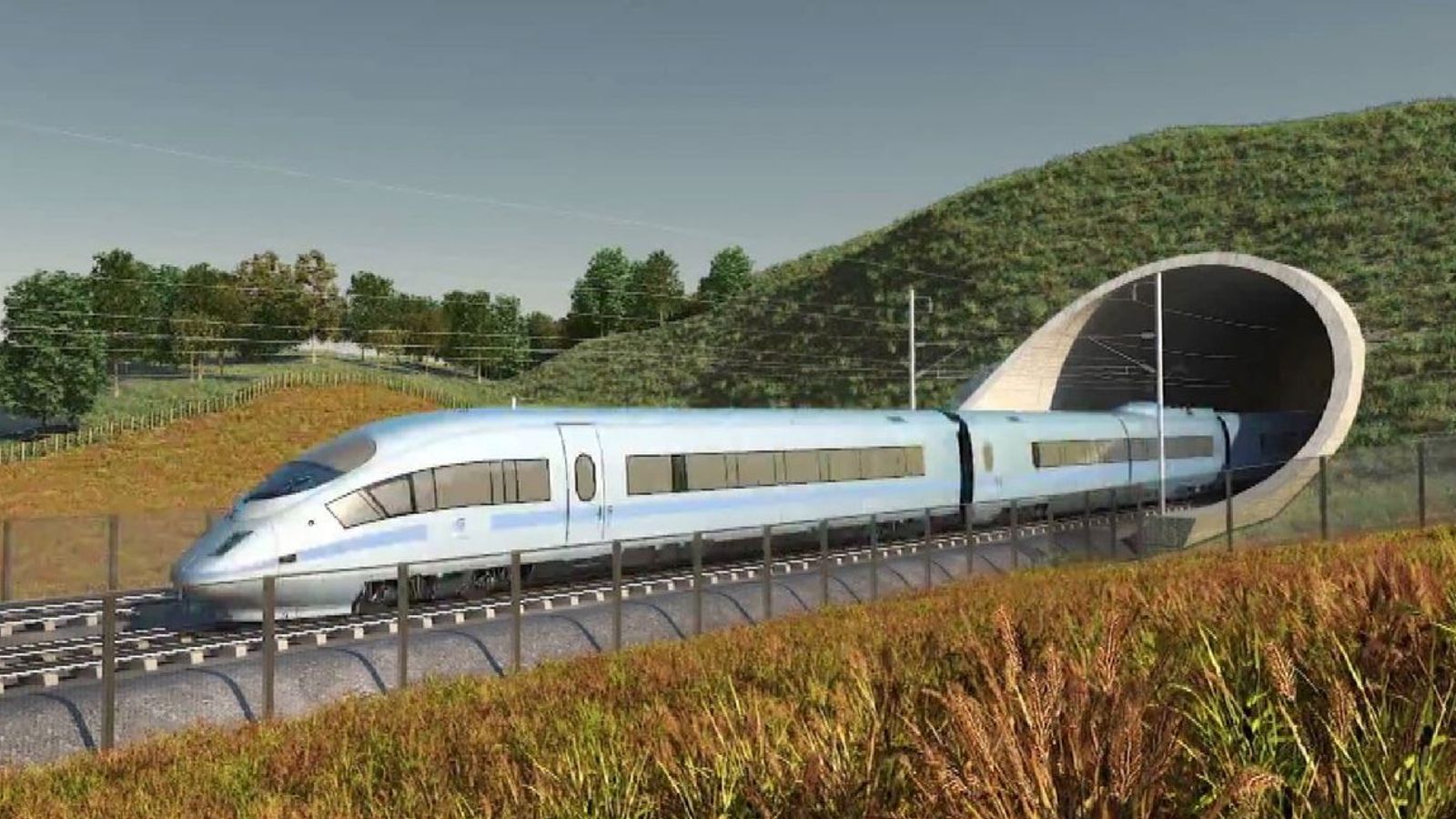
Delayed and over-budget HS2 may not run to central London for another 15 years - or ever
High-speed trains would instead stop at a new hub in Old Oak Common where commuters would continue their journeys into central London using the Elizabeth Line, according to reports.
Hilarious idea.
- Status
- Not open for further replies.