• Our new ticketing site is now live! Using either this or the original site (both powered by TrainSplit) helps support the running of the forum with every ticket purchase! Find out more and ask any questions/give us feedback in this thread!

Trivia - Bus routes which change countries

zero

Established Member
Joined
3 Apr 2011
Messages
1,601
CSAD Liberec route 691 manages 3 different countries and 5 border crossings in 90 minutes.

It starts in Czechia at Hradec nad Nisou, briefly visits Poland for the first time at Porajow, then crosses into Germany at Zittau. Back out of Germany and into Poland at Bogatynia, across the border to Czechia at Frydlant then again into Poland where it terminates at Svieradow Zdroj.
Very interesting. Looks likes you can't get on or off during the first sojourn into Poland (Porajów).

Do they accept cash for fares and if yes, which currencies as it sounds feasible for local journeys in both CZ and PL (and maybe Zittau, though there are probably several German-only alternatives). I am also curious as to whether drivers speak all three languages?

Similarly for routes mentioned in this thread that serve multiple language areas. My only experiences are that the French drivers between Saint Louis and Basel didn't speak any German, meanwhile the driver from Luxembourg to Saarbrücken spoke German only and no French or English.
 
Sponsor Post - registered members do not see these adverts; click here to register, or click here to log in
R

RailUK Forums

stadler

Established Member
Joined
5 Jun 2023
Messages
3,304
Location
Horsley
CSAD Liberec route 691 manages 3 different countries and 5 border crossings in 90 minutes.

It starts in Czechia at Hradec nad Nisou, briefly visits Poland for the first time at Porajow, then crosses into Germany at Zittau. Back out of Germany and into Poland at Bogatynia, across the border to Czechia at Frydlant then again into Poland where it terminates at Svieradow Zdroj.
Excellent find there. That is a very rare one to find a local bus route serving three countries. It looks like there are two routes. They have both the 691 and 692 serving all three countries.

• Route 691 - 3 Countries and 5 Borders:

Swieradow Zdroj (PL) - Nove Mesto Pod Smrkem (CZ) - Frydlant (CZ) - Bogatynia (PL) - Sieniawka (PL) - Zittau (DE) - Porajow (PL) - Hradek Nad Nisou (CZ)


• Route 692 - 3 Countries and 2 Borders:

Frydlant (CZ) - Bogatynia (PL) - Sieniawka (PL) - Porajow (PL) - Zittau (DE)


I can not say for certain but these two routes may possibly be the only local bus routes in the world to operate in three countries.

I have just booked a ticket for the Expressway route 30 (Donegal to Dublin) for a journey from Belleek to Enniskillen. The journey is wholly within the UK, but the fare is in Euros. I do not know whether people paying on boarding at stops in Northern Ireland can pay with sterling, but advance bookings are certainly in Euros.
From my experience they usually accept both currencies on NI and ROI cross border bus routes if paying in cash. Bus Eireann are cheaper if paying with EUR. Translink Ulsterbus are cheaper if paying with GBP. They seem to use a rather poor exchange rate.

Very interesting. Looks likes you can't get on or off during the first sojourn into Poland (Porajów).

Do they accept cash for fares and if yes, which currencies as it sounds feasible for local journeys in both CZ and PL (and maybe Zittau, though there are probably several German-only alternatives). I am also curious as to whether drivers speak all three languages?

Similarly for routes mentioned in this thread that serve multiple language areas. My only experiences are that the French drivers between Saint Louis and Basel didn't speak any German, meanwhile the driver from Luxembourg to Saarbrücken spoke German only and no French or English.
They accept cash and they seem to accept all three of the currencies (CZK and PLN and EUR) for payment onboard the 691 and 692 routes.


Tickets can be sold on the bus, in the currencies CZK, PLN, and EUR.

CZK is the cheapest. PLN is the middle rate. EUR is the most expensive. For example a journey going one fare stage within the same or neighbouring village on the 691 or 692 would cost the following:

CZK18.00 (£0.64)
PLN3.50 (£0.72)
EUR1.00 (£0.88)

Fare condition number 23 on page 17 of the following document covers currency on the 691 and 692 routes:


I would be curious about the languages spoken by drivers too. You would think it would be very hard to find enough drivers who speak all three. There is a small bit of mutual intelligibility between Czech and Polish so maybe they could get by with speaking only one of those.
 
Last edited:

zero

Established Member
Joined
3 Apr 2011
Messages
1,601
They accept cash and they seem to accept all three of the currencies (CZK and PLN and EUR) for payment onboard the 691 and 692 routes.


CZK is the cheapest. PLN is the middle rate. EUR is the most expensive. For example a journey going one fare stage within the same or neighbouring village on the 691 or 692 would cost the following:

CZK18.00 (£0.64)
PLN3.50 (£0.72)
EUR1.00 (£0.88)

The fare tables show various oddities which mimic the complexity of airline fares.

CZK fares are only available when at least one of your origin or destination are in CZ. When paying a CZK fare by bank card / app, there is a 20% discount on the cash fare (rounded to the nearest whole Kč; nearest half Kč for concessions), e.g. the CZK 18 fare becomes CZK 15.

Fares in EUR and PLN are available for all possible journeys, but only in cash. This implies that card / app are not accepted for journeys in DE only, PL only or between DE and PL.

So a journey from PL to PL can be paid with euros but not CZK (even though it might pass through CZ and not DE), while a journey entirely in CZ that doesn't pass through PL can be paid with PLN but it would be much cheaper to use card.

The exchange rate used is not uniform either.

When paying with euros, going from Świeradów-Zdrój to Zittau costs €4.80, but to continue past Zittau to Hrádek it is only €4.50. However when paying PLN both journeys cost the same at 20,5zł (~€4.80). Furthermore, as Hrádek is in CZ there is the option to pay 73Kč (€3) by card or 90Kč (€3.70) by cash, so you could say you are going to Hrádek but get off early.
 

Jamesrob637

Established Member
Joined
12 Aug 2016
Messages
6,072
Probably many around Lago Maggiore and Lago Lugano, as well as Lac Leman (the first two being CH-IT and the latter being CH-FR)
 

danm14

Member
Joined
24 Jun 2017
Messages
757
I have just booked a ticket for the Expressway route 30 (Donegal to Dublin) for a journey from Belleek to Enniskillen. The journey is wholly within the UK, but the fare is in Euros. I do not know whether people paying on boarding at stops in Northern Ireland can pay with sterling, but advance bookings are certainly in Euros.
They can pay in Sterling.

The general arrangement is that a 1:1 exchange rate is used, and any change is given in Euro. The driver pays the fare in in Euro and pockets the difference. The company is aware and chooses to turn a blind eye.

For example, if a passenger tenders a £20 (€23) note for a €5 fare, the company gets €5, the passenger gets €15 and the driver pockets €3.

Drivers loved the Dublin-Belfast route when Bus Eireann ran it because of how much they could supplement their income.
 

Whisky Papa

Member
Joined
8 Aug 2019
Messages
737
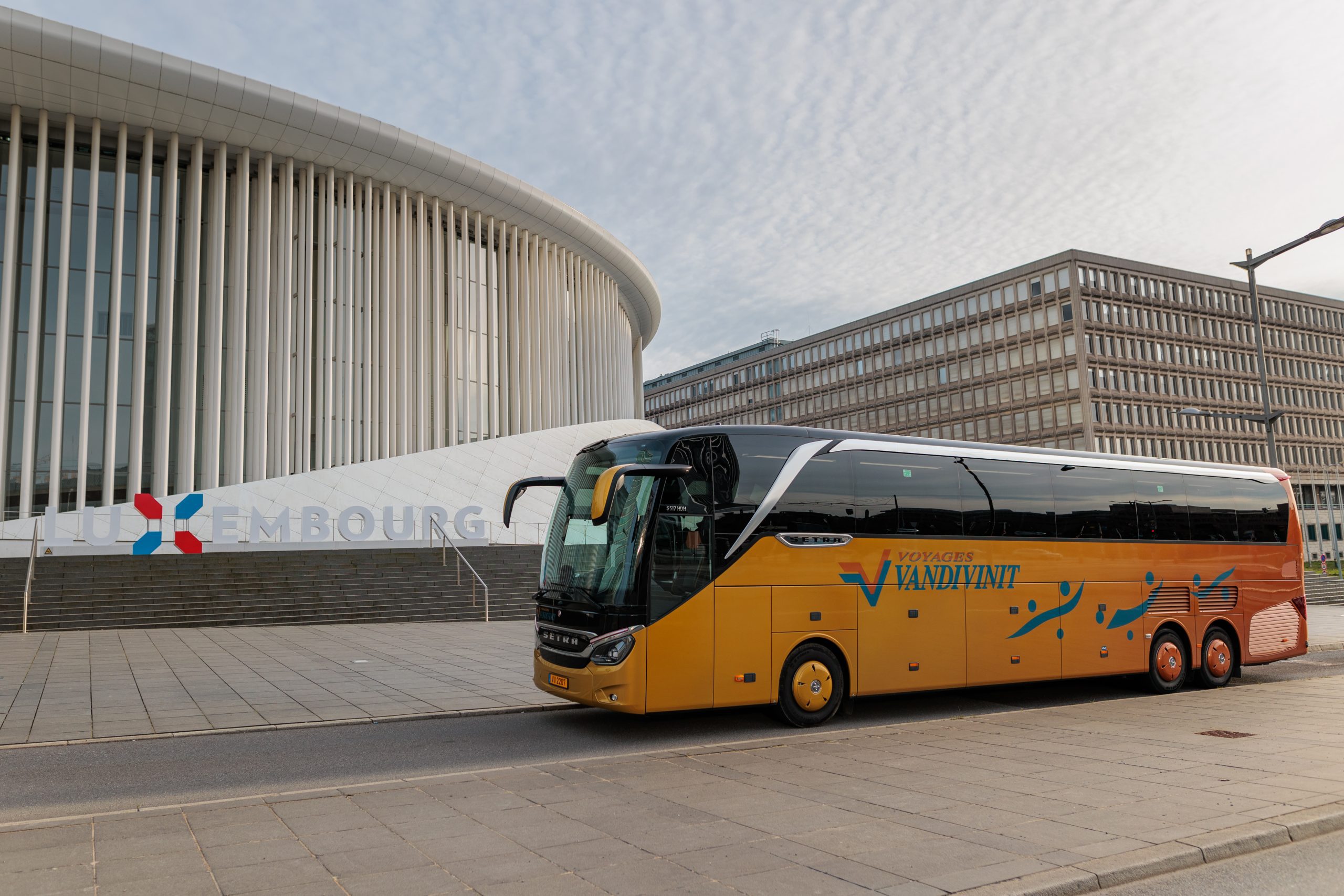
I've visited Luxembourg a lot, and the buses with trailers you refer to often headed to France - mainly Thionville but also Metz and Yutz. The contractor for this route was a Luxembourgish company called "Voyages Vandivinit" - like Voyages Emile Weber, more known for package holidays.


They would head away from France but circle back via Kirchberg, where there were lots of (French) employees taking advantage of generous Luxembourgeois salaries

There were/are also lots of buses to Germany - I use the one to Saarbruecken frequently, but that's more like a coach.

There's a nice interactive map here of services over the border (which, unlike the rest of transport in Lux, are not free)


Many thanks for that. Sadly I lost a lot of photos from that trip due to a faulty memory card, but I do have a photo of an Emile Weber artic at the airport. Perhaps I will get back there one day, although I suspect it would be an expensive holiday at current exchange rates!

It's in the list I've linked earlier this topic. But Zeeuws-Vlaanderen is odd indeed. There is also route 19 which runs from Hulst to Roosendaal via Belgium. Previously it ran to Breda with stop in Antwerp.
In the past there also has been a Dutch bus 12 Oostburg - Maldegem, with Dutch fare system only despite 50% of the stops was in Belgium.

Furthermore Zeeuws-Vlaanderen has route 6 to Zelzate and route 50 extends to Gent on weekends.

Ah yes, spotted your link now, thanks.
 

StephenHunter

Established Member
Joined
22 Jul 2017
Messages
2,918
Location
London
The difficulty is that some countries have no direct equivalent of the British distinction between bus and coach services. That derived from the 1930 Road Traffic Act which of course only applied here.

If it looks like a coach, it's a coach service?
 

JGurney

Member
Joined
10 Oct 2021
Messages
415
Location
Saltburn / Danby
If it looks like a coach, it's a coach service?
Do you mean if the vehicle "looks like a coach" or if the route's ticketing arrangements "looks like a coach" service?

E.g. the service between Aegina and Agia Maria, in Greece, has been operated both by low floor buses with plastic seats and with high-floor coaches with leather upholstery, with either showing up apparently at random. Passengers boarding at Aegina bus station are supposed to have bought tickets in advance from the office but those boarding at the roadside stops, farm gates, etc, pay cash to the driver. Coach or bus service?
 

stadler

Established Member
Joined
5 Jun 2023
Messages
3,304
Location
Horsley
The fare tables show various oddities which mimic the complexity of airline fares.

CZK fares are only available when at least one of your origin or destination are in CZ. When paying a CZK fare by bank card / app, there is a 20% discount on the cash fare (rounded to the nearest whole Kč; nearest half Kč for concessions), e.g. the CZK 18 fare becomes CZK 15.

Fares in EUR and PLN are available for all possible journeys, but only in cash. This implies that card / app are not accepted for journeys in DE only, PL only or between DE and PL.

So a journey from PL to PL can be paid with euros but not CZK (even though it might pass through CZ and not DE), while a journey entirely in CZ that doesn't pass through PL can be paid with PLN but it would be much cheaper to use card.

The exchange rate used is not uniform either.

When paying with euros, going from Świeradów-Zdrój to Zittau costs €4.80, but to continue past Zittau to Hrádek it is only €4.50. However when paying PLN both journeys cost the same at 20,5zł (~€4.80). Furthermore, as Hrádek is in CZ there is the option to pay 73Kč (€3) by card or 90Kč (€3.70) by cash, so you could say you are going to Hrádek but get off early.
It is very odd. One of the most complex and least logical fare structures i have seen. Both the 691 and 692 are operated by a Czech based company so you would think that they would be happy to accept CZK for journeys in other countries. Surely that is their preffered currency. It makes no sense that they are happy to take PLN or EUR for Czech domestic journeys or PLN for German domestic journeys or EUR for Polish domestic journeys but yet they will not accept CZK for any Polish or German domestic journeys. I would love to know their logic in only accepting CZK if you are travelling to or from Czech Republic stops. I can not think of any logical reason for this.

They can pay in Sterling.

The general arrangement is that a 1:1 exchange rate is used, and any change is given in Euro. The driver pays the fare in in Euro and pockets the difference. The company is aware and chooses to turn a blind eye.

For example, if a passenger tenders a £20 (€23) note for a €5 fare, the company gets €5, the passenger gets €15 and the driver pockets €3.

Drivers loved the Dublin-Belfast route when Bus Eireann ran it because of how much they could supplement their income.
I wonder how it works on Translink operated cross border routes. That same arrangement of a GBP 1:1 EUR exchange rate would not work on Translink without them loosing money as their fares are priced in pounds instead or euros. They must use an official exchange rate. Or i suppose they could use a GBP 1:2 EUR rate possibly and do what Bus Eireann drivers do. I would be interested to hear if anyone has paid in EUR on Translink cross border routes as i have only ever paid in GBP on these.

Are we allowing coach services in this?
The difficulty is that some countries have no direct equivalent of the British distinction between bus and coach services. That derived from the 1930 Road Traffic Act which of course only applied here.
If it looks like a coach, it's a coach service?
Do you mean if the vehicle "looks like a coach" or if the route's ticketing arrangements "looks like a coach" service?

E.g. the service between Aegina and Agia Maria, in Greece, has been operated both by low floor buses with plastic seats and with high-floor coaches with leather upholstery, with either showing up apparently at random. Passengers boarding at Aegina bus station are supposed to have bought tickets in advance from the office but those boarding at the roadside stops, farm gates, etc, pay cash to the driver. Coach or bus service?
That is a very complex question. The distinction between buses and coaches gets very blurred once you leave the UK and look at other countries. Or in fact once you leave England and Wales it gets blurred. Scotland has lots of West Coast Motors and Scottish Citylink routes using coaches but that run like local buses and stop everywhere. Northern Ireland and the Republic Of Ireland have dozens of short distance local bus routes that oddly use coaches.

Iceland is another place where the distinction between buses and coaches is rather blurred. Straeto operate long distance coaches across the entire length of the country with journey times of up to eight hours. But yet they have no online booking or advance booking or reserved seats and they stop at every minor little place along the way and you can hail the coach anywhere in rural areas. Tickets are a set price and can only be purchased from the driver. So it operates more like a local bus despite being a long distance coach. Faroe Islands also operates their coaches exactly like this all across the territory. New Jersey Transit in the USA also operates lots of short distance local bus routes using coaches.

I would say some services like Flixbus and National Express and Greyhound and Megabus are definitely coaches and have a very clear distinction. But it gets more blurred when you look at other services. There is a clear distinction between bus vehicles and coach vehicles but i am not sure that there really is a universally agreed definition between bus services and coach services.
 

JGurney

Member
Joined
10 Oct 2021
Messages
415
Location
Saltburn / Danby
. Northern Ireland and the Republic Of Ireland have dozens of short distance local bus routes that oddly use coaches.
This used to be common in England as well. It was often due to small companies which operated a few market day buses in addition to their main business of private hire and excursions not seeing any point buying a separate vehicle for them
One typical example was South Dorset Coaches. They mainly did private hire and excursions but also ran two Thursday-only buses, Kimmeridge to Wareham and Creech to Wareham. There was no point buying a bus just to cover a limited mileage on Thursdays only, so the bus routes were operated using coach vehicles.
Sometimes large companies used coaches for longer or limited stop bus services. E.g. Tees used to use coaches for the 93 (Middlesbrough - Scarborough), X4 (Bishop Auckland - Saltburn) and X56 (Middlesbrough - Whitby) bus routes until accessibility needs led to the adoption of low floor buses.
i am not sure that there really is a universally agreed definition between bus services and coach services.
There is no reason to expect one, since it is a British administrative concept.
 

zero

Established Member
Joined
3 Apr 2011
Messages
1,601
I wonder how it works on Translink operated cross border routes. That same arrangement of a GBP 1:1 EUR exchange rate would not work on Translink without them loosing money as their fares are priced in pounds instead or euros. They must use an official exchange rate. Or i suppose they could use a GBP 1:2 EUR rate possibly and do what Bus Eireann drivers do. I would be interested to hear if anyone has paid in EUR on Translink cross border routes as i have only ever paid in GBP on these.

When I visited Gibraltar in 2010 both GBP and EUR were accepted on buses and the fare was £1.80 or €2.40 with change given. €2.40 was about £2.10 at the time I believe. Some of the drivers got flustered when I paid in GBP as they expected tourists to have euros. I can't remember what exchange rate was used on my subsequent trips.

A similar thing happened in Feldkirch (Austria) when I boarded a Liechtenstein bus and proffered CHF, the driver said I should have told him I was paying in francs first as he was expecting euros and had to reselect the ticket on his machine or something. I can't remember what exchange rates were used.
 

stadler

Established Member
Joined
5 Jun 2023
Messages
3,304
Location
Horsley
When I visited Gibraltar in 2010 both GBP and EUR were accepted on buses and the fare was £1.80 or €2.40 with change given. €2.40 was about £2.10 at the time I believe. Some of the drivers got flustered when I paid in GBP as they expected tourists to have euros. I can't remember what exchange rate was used on my subsequent trips.

A similar thing happened in Feldkirch (Austria) when I boarded a Liechtenstein bus and proffered CHF, the driver said I should have told him I was paying in francs first as he was expecting euros and had to reselect the ticket on his machine or something. I can't remember what exchange rates were used.
I am surprised that the drivers in Gibraltar would expect tourists to pay in euros. They have an airport so lots of people visit Gibraltar directly from the UK or other non eurozone countries. Last time i was in Gibraltar i paid solely in GBP on buses. Most other people i observed were paying in GBP too but it was mostly locals on the buses i used. I recall i only noticed two occassions of people paying in EUR in Gibraltar who were both clearly tourists.

Gibraltar still accepts GBP and EUR on their buses but the exchange rates for paying in EUR are awful. Paying in EUR results in a much higher fare. For a day ticket you are paying almost £2.00 extra for a EUR purchase. If you want a 40 trip ticket then you pay almost £12.00 extra. They are the worst exchange rates i have seen on any bus route that accepts multiple currencies.

The current bus fares in Gibraltar are as follows (with the current exchange rates in brackets) and they have been the same price for years:


Calypso Transport:
Routes: 5/10/X5

• £1.60 (€1.84) / €2.40 (£2.09) - Adult Single
• £2.40 (€2.75) / €3.60 (£3.14) - Adult Return
• £6.00 (€6.89) / €9.00 (£7.84) - Adult Day

• £10.00 (€11.48) / €15.00 (£13.07) - Adult 10 Trip
• £20.00 (€22.96) / €30.00 (£26.14) - Adult 20 Trip
• £30.00 (€34.43) / €45.00 (£39.21) - Adult 30 Trip
• £37.00 (€42.47) / €55.50 (£48.36) - Adult 40 Trip

• £1.30 (€1.49) / €2.00 (£1.74) - Child Single
• £2.00 (€2.30) / €3.00 (£2.61) - Child Return
• £4.00 (€4.59) / €6.00 (£5.23) - Child Day

• £1.20 (€1.38) / €1.80 (£1.57) - Pensioner Single
• £1.60 (€1.84) / €2.40 (£2.09) - Pensioner Return


Gibraltar Bus Company:
Routes: 1/2/3/7/8/9

• £1.80 (€2.07) / €2.40 (£2.09) - Adult Single
• £2.50 (€2.87) / €3.30 (£2.88) - Adult Return
• £6.00 (€6.89) / €9.00 (£7.84) - Adult Day

• £1.50 (€1.72) / €2.00 (£1.74) - Child Single
• £2.00 (€2.29) / €2.65 (£2.31) - Child Return
• £4.00 (€4.59) / €6.00 (£5.23) - Child Day

• £1.00 (€1.15) / €1.30 (£1.13) - Pensioner Single
• £1.50 (€1.72) / €2.00 (£1.74) - Pensioner Return


Gibraltar Bus Company:
Routes: N1/N8E/N8S

• £2.00 (€2.29) - Adult Single (Euros Not Accepted)


I suppose they must be making a good amount of money on EUR fares from people visiting from Spain who have not bothered with exchanging currency. A lot of shops in Gibraltar seemed to accept EUR too.

One oddity is that the night buses only accept GBP payments. They are the only routes that EUR can not be used on. I suppose they expect that mostly just locals will be using night buses.

It is also always surprising that there are two competing bus companies in Gibraltar running local bus routes despite the tiny size of the place. The state owned Gibraltar Bus Company (1/2/3/7/8/9/N1/N8E/N8S) and also Calypso Transport (5/10/X5) who are privately owned.

I wonder if the Spanish local buses in La Linea De La Concepcion accept GBP for payment. I never thought to ask last time i used those. They must get a lot of people from Gibraltar using them. Their fares are a lot cheaper than Gibraltar at just EUR1.00 (£0.87) Adult Single with cash or EUR0.85 (£0.74) Adult Single with a smartcard or EUR0.75 (£0.65) Child Single or Pensioner Single with cash or a smartcard.

Your mention of Liechtenstein reminds me that Liemobil (the Liechtenstein state owned bus operator) run dozens of cross border routes. They have six routes that cross in to Austria (11/13/14/414/470). They have six routes that cross in to Switzerland (11/12/12E/13/24/37). They even have two routes (11/13) which cross from Austria to Liechtenstein to Switzerland and as a result operate in three countries.

San Marino appears to have just one cross border route (160) which is operated by the Italian based Start Romagna which serves the San Marino village of Gualdicciolo. It runs every thirty minutes from Rimini (Italy) to Novafeltria (Italy) but only two journeys a day (one journey a day in each direction) serves San Marino. The other journeys stay entirely in Italy. I think the two journeys that divert via San Marino are mainly to cater for school students but it is a public route. That seems to be the only cross border local route. San Marino has a fairly extensive bus network of nine local routes (1/2/3D/3S/4/5/6/7/47) operated by the state owned AASS and many of these terminate next to the border post but nothing crosses the border.

There is also the Rimini to San Marino coach route operated jointly by Bonelli Bus (Italy based) and Benedettini Bus (San Marino based) with each operator running half the journeys.

I wonder whether the Vatican City has ever had any cross border bus routes to Italy at any point in the past even if it was just for special events like their train line.

 

danm14

Member
Joined
24 Jun 2017
Messages
757
I wonder how it works on Translink operated cross border routes. That same arrangement of a GBP 1:1 EUR exchange rate would not work on Translink without them loosing money as their fares are priced in pounds instead or euros. They must use an official exchange rate. Or i suppose they could use a GBP 1:2 EUR rate possibly and do what Bus Eireann drivers do. I would be interested to hear if anyone has paid in EUR on Translink cross border routes as i have only ever paid in GBP on these.
Ulsterbus ticket machines are dual currency with one button press needed to switch currency (incidentally, until recently they used the same model used by Bus Eireann, just programmed differently).

If a fare is sold in Euro the Euro fare is printed on the ticket below the Sterling fare.

The Euro fares are calculated with a set exchange rate (which has been €1=87p for the past 7-8 years) rounded up to the next 10c.

Cross-border drivers have a Euro float, give change in Euro and pay in Euro for any fares sold in Euro.

The ticket machine will allow a Euro fare to be sold on any route whether cross-border or not - I have occasionally seen drivers selling Euro fares on Enniskillen-Belfast services without issue, although I don't believe they are obliged to do so on domestic routes.

Tickets bought by card are charged at the Sterling fare, the Euro fare is for cash only.

In my experience station ticket offices will not (or perhaps can not) sell Euro fares even for cross-border journeys, and direct passengers paying in Euro cash to buy from the driver.
 
Last edited:

Moritzplatz

Member
Joined
9 Feb 2025
Messages
28
Location
Portsmouth
Apparently AfD supporters sometimes go there and insist on paying with euros to make the point it is German territory, and I had been mistaken for one of them at first. I later learned that the background to this is that the local people mainly consider themselves Swiss.
The situation has got a little more complicated recently. The AfD - sadly - got the second-highest number of votes in Büsingen am Hochrhein in the 2025 German elections, almost doubling their vote share to 26.1% and finishing only 0.3% behind the victorious CDU.

So although the village's mayor confirmed in a post-election SRF interview that multinational Büsingen seems in many respects to be closer to Switzerland than Germany, there are clearly a number of residents who don't feel the same way.
 
Last edited:

stadler

Established Member
Joined
5 Jun 2023
Messages
3,304
Location
Horsley
The border between Denmark and Germany has a couple of cross border local bus routes between the Padborg (DK) and Flensburg (DE) areas:

• Danish based Sydtrafik runs one cross border local bus route (110). They additionally operate one other route that goes right up to the border post but does not cross (220).

• German based Aktiv Bus Flensburg runs two cross border local bus routes (1 and 7). They additionally operate one other route that goes right up to the border post but does not cross (2).

The buses in Denmark accept DKK cash and the buses in Germany accept EUR cash but i can not find anything on whether they accept each others currencies on cross border routes. Bornholm island buses (BAT) all accept both DKK and EUR (but oddly SEK is not accepted) despite being solely domestic Danish buses so it is possible that other Danish operators like Sydtrafik may accept EUR too.

Also these are a few other cross border local bus routes in the CZ / SK / PL / HU / AT border areas:

• Bus route 293 is a local bus route between Bohumin (Czech Republic) and Hlucin (Czech Republic) that crosses in to Poland (to serve the Polish village of Chalupki on the way) and then back out again. So it crosses the border twice. It is operated by a Czech Republic based company (Transdev Slezsko). I am not sure if PLN is accepted. The timetable shows no stops in Poland which seems very odd. It has to run through the centre of Chalupki which is a decent sized village. I am not sure if the timetable misses out those Polish stops or if it really runs through Poland non stop.

• Bus route 816 is a local bus route between Znojmo (Czech Republic) and Drosendorf (Austria) which crosses the border. It is operated by a Czech Republic based company (IDS JMK). You can pay in both CZK or EUR on any journey that crosses the border.

• Bus route 104 is a local bus route between Brno (Czech Republic) and Laa An Der Thaya (Austria) which crosses the border. It is operated by a Czech Republic based company (IDS JMK). You can pay in both CZK or EUR on any journey that crosses the border.

• Bus route 555 is a local bus route between Rakvice (Czech Republic) and Poysdorf (Austria) which crosses the border. It is operated by a Czech Republic based company (IDS JMK). You can pay in both CZK or EUR on any journey that crosses the border.

• Bus route 910 is a local bus route between Hodonin (Czech Republic) to Veseli Nad Moravu (Czech Republic) that crosses in to Slovakia (to serve the Slovakian villages of Holic and Vradiste and Skalica on the way) and then back out again. So it crosses the border twice. It is operated by a Czech Republic based company (IDS JMK). You can pay in both CZK or EUR on any journey that crosses the border.

• Bus route 105808 (both the Czech Republic and Slovakia seem to love six digit bus routes) is a local bus route between Bratislava (Slovakia) and Rajka (Hungary) which crosses the border. It is run by a Slovakian based bus company (Dominiq). There is no information online about currency. Their website only shows the EUR fares (EUR2.20 Single with cash or an extra 10p at EUR2.30 Single with card). So i am not sure whether they accept HUF onboard.

• Bus route 901 is a local bus route between Bratislava (Slovakia) and Hainburg (Austria) which crosses the border. It is run by a Slovakian based bus company (Arriva Slovakia). It is one of the very few bus routes left in the Bratislava city area that still accepts cash onboard (EUR2.50 Single with cash or card). Another oddity is that passengers are not allowed to use this route for Austrian domestic journeys. You must travel either to or from or within Slovakia to use this bus. Who knows whether they actually bother enforcing this.

I have also had a look at Cieszyn (Poland) and Cesky Tesin (Czech Republic) which are neighbouring towns (they are basically one combined town with the border running through it) but they appear to have nothing. No buses cross the border. You have buses going right up to the border on either side but you have to cross on foot. You would think there would be a market for cross border local bus routes here. The nearby towns of Kaczyce (Poland) and Karvina (Czech Republic) are the same with local buses going right up to the border on either side but nothing crossing the border.
 
Last edited:

zero

Established Member
Joined
3 Apr 2011
Messages
1,601
The border between Denmark and Germany has a couple of cross border local bus routes between the Padborg (DK) and Flensburg (DE) areas:

• Danish based Sydtrafik runs one cross border local bus route (110). They additionally operate one other route that goes right up to the border post but does not cross (220).

• German based Aktiv Bus Flensburg runs two cross border local bus routes (1 and 7). They additionally operate one other route that goes right up to the border post but does not cross (2).
I looked into these on my recent trip to the area.

1 and 7 are actually the same route into Denmark. Within Germany, they jointly provide an even 6bph daytime frequency between the Flensburg bus station and the northern limit of Flensburg. (On the southern end route 1 continues to the train station while route 7 continues to a suburb, i.e. 3bph each.)

On the northern end, the 3bph numbered route 1 are extended towards Kruså, but when the vehicles return they are numbered route 7. (Which means buses on route 7 that terminate at the northern edge of Flensburg become route 1 going back.) However on Sunday mornings and at 7pm on Mon-Sat, buses returning from Denmark operate as route 1. Route 1/7 still operates after 7pm but is confined to Germany.

Route 2 operates from 8pm. It is unclear why route 2 does a U turn before reaching the border instead of going the extra 400m to Kruså bus interchange like the daytime buses, but you can walk it (closer to 600m as the bus stop is further into Germany than it needs to be).

The Aktiv Flensburg site says Danish route 110 accepts Euro but will give change in DKK. However I cannot find anything confirming this on the Sydtrafik site.

The English version of the Midttrafik site says, in regards to bus 912X from Billund Airport to Aarhus (an entirely domestic journey), "You can also pay with cash, DKK, NOK, SEK, Euro, £ and US$. The driver determines the exchange rate." This sounds similar to the Northern Ireland euro situation mentioned above.

The Danish version does not have the equivalent of this text, but elsewhere it mentions that the driver can refuse cash payments if no change is available, thus having the exact fare is recommended where possible. I will also note here that the fare for bus 912X was DKK 164 rather than 166 as stated on the website.

• Bus route 816 is a local bus route between Znojmo (Czech Republic) and Drosendorf (Austria) which crosses the border. It is operated by a Czech Republic based company (IDS JMK). You can pay in both CZK or EUR on any journey that crosses the border.

• Bus route 555 is a local bus route between Rakvice (Czech Republic) and Poysdorf (Austria) which crosses the border. It is operated by a Czech Republic based company (IDS JMK). You can pay in both CZK or EUR on any journey that crosses the border.
816 and 555 are primarily domestic CZ routes which operate roughly hourly.

Route 816 extends 3 daily journeys into Austria on summer weekends. The rest of the year the extension must be prebooked by phone. On weekdays year-round, 2 daily journeys can be prebooked to extend into Austria. If my translation is correct, buses that will or can go into Austria offer EUR payment, including for CZ-only journeys.

Route 555 operates three cross-border journeys on summer weekends between Podivín and Falkenstein im Weinviertel. Four other journeys can be extended to Schrattenberg, the first stop in Austria, by phone prebooking. Rakvice is only served twice a day on weekdays.

• Bus route 910 is a local bus route between Hodonin (Czech Republic) to Veseli Nad Moravu (Czech Republic) that crosses in to Slovakia (to serve the Slovakian villages of Holic and Vradiste and Skalica on the way) and then back out again. So it crosses the border twice. It is operated by a Czech Republic based company (IDS JMK). You can pay in both CZK or EUR on any journey that crosses the border.
The timetable states that EUR is accepted for all journeys on 910, but journeys solely in Slovakia are not allowed.
 

stadler

Established Member
Joined
5 Jun 2023
Messages
3,304
Location
Horsley
I have just been looking at the border crossings between Germany and Poland and they seem to have at least six other cross border local bus routes:

• Bus route 706 operates from Ueckermunde (Germany) to Szczecin (Poland) and is operated by the German based Verkehrsgesellschaft Vorpommern Greifswald (VVG).

• Bus route 705 operates from Pasewalk (Germany) to Szczecin (Poland) and is operated by the German based Verkehrsgesellschaft Vorpommern Greifswald (VVG).

• Bus route 492 operates from Schwedt (Germany) to Krajnik Dolny (Poland) and is operated by the German based Uckermarkische Verkehrsgesellschaft (UVG).

• Bus route 983 runs from Frankfurt (Germany) to Slubice (Poland) and is operated by the German based Stadtverkehrsgesellschaft Frankfurt (SVF).

• Bus route 895 runs from Guben (Germany) to Gubin (Poland) and is operated by the German based Cottbusverkehr (CBV).

• Bus route A runs from Gorlitz (Germany) to Zgorzelec (Poland) and is operated by the German based Gorlitz Verkehrsbetriebe (GVB).

There is also the three country 691 and 692 routes between Germany and Poland and Czech Republic that were already mentioned earlier in this thread.

The border between Estonia and Latvia appears to actually have seven different local bus routes crossing it:

• Bus route 3 - Valga (EE) to Valka (LV)

• Bus route 74 - Parnu (EE) to Metsalkula (EE) to Ikla to Ikla Piiripunkt (EE) to Ainazi (LV)

• Bus route 74-2 - Haademeeste (EE) to Ikla (EE) to Ikla Piiripunkt (EE) to Ainazi (LV)

• Bus route EL74 - Parnu (EE) to Metsalkula (EE) to Ikla (EE) to Ainazi (LV)

• Bus route EL74-1 - Parnu (EE) to Metsalkula (EE) to Ikla (EE) to Ainazi (LV) to Salacgriva (LV)

• Bus route EL76 - Parnu (EE) to Leina (EE) to Ikla (EE) to Ainazi (LV)

• Bus route EL79 - Parnu (EE) to Soometsa (EE) to Ikla (EE) to Ainazi (LV)

All seven routes are operated by Estonian based bus operators. The latter six appear to all be variations of similar routes. They are all almost identical except for minor variations to serve different villages.

I can not seem to find anything crossing the Latvia to Lithuania border or the Poland to Lithuania border. If anyone does know of any routes then i would be interested to hear. The closest i can find is two routes that terminate right by the border. Route 6177 from Daugavpils to the border. Route 6818 from Liepaja to the border. But neither actually cross the border nor do they have connecting routes on the other side.

Also does anyone know if that road in Estonia that passes through Russia has any bus services? If so that would make it the only cross border local bus route that Russia has. There are well maintained bus stops and bus shelters in both of the two villages on either side (Lutepaa and Sesniki) which indicates that there is either a current bus service or one has existed previously but i am struggling to find much online. Is anyone aware of any buses that currently cross this border?
 
Last edited:

zero

Established Member
Joined
3 Apr 2011
Messages
1,601
Also does anyone know if that road in Estonia that passes through Russia has any bus services? If so that would make it the only cross border local bus route that Russia has. There are well maintained bus stops and bus shelters in both of the two villages on either side (Lutepaa and Sesniki) which indicates that there is either a current bus service or one has existed previously but i am struggling to find much online. Is anyone aware of any buses that currently cross this border?
There may have been buses going through Russia in the past, but the road is now permanently closed. There were two sections which passed through Russia. One section was 28m long and this has been diverted about 30m to the southwest to avoid Russia. Border fences have been erected.

The other section was about 850m long and it has been blocked off. A diversionary route between Verhulista and south of Sesniki was widened while awaiting construction of a proper bypass of the Russian territory. If not already done, border fences will be erected in due course.

Lutepää is reportedly empty during winter and dwellings there are only used as summer homes. As it is now a 4km dead end in the Estonian road network it is very unlikely to be served by public transport.
 

stadler

Established Member
Joined
5 Jun 2023
Messages
3,304
Location
Horsley
Ulsterbus ticket machines are dual currency with one button press needed to switch currency (incidentally, until recently they used the same model used by Bus Eireann, just programmed differently).

If a fare is sold in Euro the Euro fare is printed on the ticket below the Sterling fare.

The Euro fares are calculated with a set exchange rate (which has been €1=87p for the past 7-8 years) rounded up to the next 10c.

Cross-border drivers have a Euro float, give change in Euro and pay in Euro for any fares sold in Euro.

The ticket machine will allow a Euro fare to be sold on any route whether cross-border or not - I have occasionally seen drivers selling Euro fares on Enniskillen-Belfast services without issue, although I don't believe they are obliged to do so on domestic routes.

Tickets bought by card are charged at the Sterling fare, the Euro fare is for cash only.

In my experience station ticket offices will not (or perhaps can not) sell Euro fares even for cross-border journeys, and direct passengers paying in Euro cash to buy from the driver.
Thank you for the information. That is certainly a far better exchange rate than what Bus Eireann have. I wonder whether Bus Eireann will switch to the Translink model (of having dual currency ticket machines and an official exchange rate) on their cross border routes once they finally get new ticket machines. Translink switched to modern Wayfarer 6 machines a few years ago but Bus Eireann are still using very old Wayfarer TGX150 machines (and even ancient Wayfarer 3 machines at a few rural depots) which are probably unable to handle multiple currencies.

The situation has got a little more complicated recently. The AfD - sadly - got the second-highest number of votes in Büsingen am Hochrhein in the 2025 German elections, almost doubling their vote share to 26.1% and finishing only 0.3% behind the victorious CDU.

So although the village's mayor confirmed in a post-election SRF interview that multinational Büsingen seems in many respects to be closer to Switzerland than Germany, there are clearly a number of residents who don't feel the same way.
I am not sure that a high amount of people voting for the AFD neccesarily means they prefer remaining part if Germany and not becoming part of Swiss territory. It is perfectly possible that the residents of Busingen Am Hochrhein would vote for a Swiss equivalent of the AFD if the territory was Swiss and their votes for the AFD were not determined by a wish to remain a German territory.

There was a referendum in Busingen Am Hochrhein in 1918 where a very high 96% of residents voted to join Switzerland but the transfer never happened. I wonder what percentage of Busingen Am Hochrhein residents would vote to join Switzerland if a new referendum happened today.

I also wonder what the situation in Campione D Italia is like and whether the residents also feel more Swiss than Italian. I know in recent years Italy has been trying to make their territory less Swiss. It used to be part of the Swiss customs territory but in 2020 it became part of the Italian customs territory which i understand the residents were unhappy about. Post used to be delivered by Swiss Post and they had a Swiss postcode but that was scrapped in 2020 too and Poste Italiane now delivers all their post.

I looked into these on my recent trip to the area.

1 and 7 are actually the same route into Denmark. Within Germany, they jointly provide an even 6bph daytime frequency between the Flensburg bus station and the northern limit of Flensburg. (On the southern end route 1 continues to the train station while route 7 continues to a suburb, i.e. 3bph each.)

On the northern end, the 3bph numbered route 1 are extended towards Kruså, but when the vehicles return they are numbered route 7. (Which means buses on route 7 that terminate at the northern edge of Flensburg become route 1 going back.) However on Sunday mornings and at 7pm on Mon-Sat, buses returning from Denmark operate as route 1. Route 1/7 still operates after 7pm but is confined to Germany.

Route 2 operates from 8pm. It is unclear why route 2 does a U turn before reaching the border instead of going the extra 400m to Kruså bus interchange like the daytime buses, but you can walk it (closer to 600m as the bus stop is further into Germany than it needs to be).

The Aktiv Flensburg site says Danish route 110 accepts Euro but will give change in DKK. However I cannot find anything confirming this on the Sydtrafik site.

The English version of the Midttrafik site says, in regards to bus 912X from Billund Airport to Aarhus (an entirely domestic journey), "You can also pay with cash, DKK, NOK, SEK, Euro, £ and US$. The driver determines the exchange rate." This sounds similar to the Northern Ireland euro situation mentioned above.

The Danish version does not have the equivalent of this text, but elsewhere it mentions that the driver can refuse cash payments if no change is available, thus having the exact fare is recommended where possible. I will also note here that the fare for bus 912X was DKK 164 rather than 166 as stated on the website.


816 and 555 are primarily domestic CZ routes which operate roughly hourly.

Route 816 extends 3 daily journeys into Austria on summer weekends. The rest of the year the extension must be prebooked by phone. On weekdays year-round, 2 daily journeys can be prebooked to extend into Austria. If my translation is correct, buses that will or can go into Austria offer EUR payment, including for CZ-only journeys.

Route 555 operates three cross-border journeys on summer weekends between Podivín and Falkenstein im Weinviertel. Four other journeys can be extended to Schrattenberg, the first stop in Austria, by phone prebooking. Rakvice is only served twice a day on weekdays.


The timetable states that EUR is accepted for all journeys on 910, but journeys solely in Slovakia are not allowed.
Thank you for the information. That is very interesting about those Flensburg and Padborg cross border routes. I was looking at the bus map on the Activ Bus Flensburg website the other day and wondering why the arrow showed it running in one direction only. That is a very odd setup. I wonder what the logic is in running buses across the border as route 1 Northbound mostly and route 7 as Southbound only.

So it appears that during the daytime each vehicle does these complex workings:

• 7 - Tremmerup to Am Lachsbach (Northbound)
• 1 - Am Lachsbach to Bahnhof (Southbound)
• 1 - Bahnhof to Krusau (Northbound)
• 7 - Krusau to Tremmerup (Southbound)
• Repeat The Above Again

Why not just either run the 1 to and from Krusau in both directions and terminate the 7 at Am Lachsbach in both directions or run the 7 to and from Krusau in both directions and terminate the 1 at Am Lachsbach in both directions. That would be so much more logical. I can not understand what their logic is for this weird setup. It just confuses things and passengers have to remember a different number for each direction if they are making cross border journeys.

That is very impressive that Midttrafik accept six currencies on a domestic Danish airport route. That is probably the world record holder for the most amount of currencies accepted on any bus. Reminds me of the Gatwick Express which used to accept seven currencies (GBP CHF EUR USD CAD AUD NZD) for purchases from the ticket inspector onboard. They got rid of that in late 2008 (along with stopping accepting cheques) a few months after National Express lost the franchise and Govia took over.

I wonder why the 910 does not allow Slovakian domestic journeys. Similarly the 901 does not allow Austrian domestic journeys. Perhaps it is to do with their licences only being granted for cross border journeys. Or another similar reason.

There may have been buses going through Russia in the past, but the road is now permanently closed. There were two sections which passed through Russia. One section was 28m long and this has been diverted about 30m to the southwest to avoid Russia. Border fences have been erected.

The other section was about 850m long and it has been blocked off. A diversionary route between Verhulista and south of Sesniki was widened while awaiting construction of a proper bypass of the Russian territory. If not already done, border fences will be erected in due course.

Lutepää is reportedly empty during winter and dwellings there are only used as summer homes. As it is now a 4km dead end in the Estonian road network it is very unlikely to be served by public transport.
Ah i did not realise that had been closed. I am not surprised though. I remember back in the 2000s they were talking about Estonia and Russia swapping land (each would get a equal piece from each other) to remove this road oddity. I am surprised they never followed through on swapping land back in the 2000s as it would have been a much simpler option.
 

danm14

Member
Joined
24 Jun 2017
Messages
757
I wonder whether Bus Eireann will switch to the Translink model (of having dual currency ticket machines and an official exchange rate) on their cross border routes once they finally get new ticket machines. Translink switched to modern Wayfarer 6 machines a few years ago but Bus Eireann are still using very old Wayfarer TGX150 machines (and even ancient Wayfarer 3 machines at a few rural depots) which are probably unable to handle multiple currencies.
The Wayfarer TGX150 machines are capable of handling multiple currencies - they are what Ulsterbus used from the early 2000s until a few years ago.

Bus Eireann just chose not to do that in favour of allowing their drivers to cream off the top.
 

izvor

Member
Joined
11 Jun 2014
Messages
594
Location
on the SER
I have also had a look at Cieszyn (Poland) and Cesky Tesin (Czech Republic) which are neighbouring towns (they are basically one combined town with the border running through it) but they appear to have nothing. No buses cross the border. You have buses going right up to the border on either side but you have to cross on foot. You would think there would be a market for cross border local bus routes here.
It may be relevant that there is history here: after WW1 the Czechoslovak town of Těšín was claimed by Poland, as it had a majority Polish speaking population. In 1938, after the German occupation of the Sudetenland, Poland invaded this part of Czechoslovakia and annexed Těšín.

Some years ago (20?) PKP operated a shuttle rail service across the boundary (restored after WW2) but it didn't last long. It's easy to walk across now.
 

nw1

Established Member
Joined
9 Aug 2013
Messages
9,430
The Salzburg-Berchtesgaden route, can't remember the number but it was (unusually for those used to UK numbering) four digits. Possibly something like 8035.

Just felt like a normal commuter route. No hard border, of course.
 

Andover

Member
Joined
30 Mar 2019
Messages
54
Bus route 104 is a local bus route between Brno (Czech Republic) and Laa An Der Thaya (Austria) which crosses the border. It is operated by a Czech Republic based company (IDS JMK). You can pay in both CZK or EUR on any journey that crosses the border.
I'm not sure this is correct. There is a slightly ambiguous note in the timetable along the lines of "you may also pay by card - in CZK or EUR" but from my experience last year what this seems to mean is "if you wish to pay in EUR, you must pay by card (and the charge will still be in CZK anyway)". I would guess the same is true of the other IDS JMK routes mentioned above.
 

riceuten

Member
Joined
23 May 2018
Messages
950
Many thanks for that. Sadly I lost a lot of photos from that trip due to a faulty memory card, but I do have a photo of an Emile Weber artic at the airport. Perhaps I will get back there one day, although I suspect it would be an expensive holiday at current exchange rates!


Ah yes, spotted your link now, thanks.
Voyages Emile Weber and Voyages Vandivinit often use double decker coaches on these routes nowadays rather than artics.


Rather than the artics


1776085113741.png
 

stadler

Established Member
Joined
5 Jun 2023
Messages
3,304
Location
Horsley
Between France and Spain there are long distance coach routes, but very few local bus services that cross the border. Hendaye and Irun have a local service (15) that does a tour of the sububurbs in each. There a service between Oloron / Bedous and Canfranc that fills in the gap in the railway, but Cerbère to Portbou has nothing. Andorra has a comprehensive local bus service, but sadly none now cross over the border into France to connect with the railway.
I am just looking at this border now and it seems that the France and Spain border has at least eight cross bus local bus routes currently:

• Route 15 - Hendaye (FR) to Irun (ES) - operated by a French based bus company as part of the French Basque "Txik Txak" network

• Route 14 - Hendaye (FR) to Behobia (ES) - operated by a French based bus company as part of the French Basque "Txik Txak" network

• Route 550 - Bedous (FR) to Canfranc (ES) - operated by a French based bus company as part of the French Nouvelle Aquitaine "Transport Nouvelle Aquitaine" network

• Route 525 - Laruns (FR) to Portalet (ES) - operated by a French based bus company as part of the French Nouvelle Aquitaine "Transports Nouvelle Aquitaine" network

• Route 395 - Saint Gaudens (FR) to Les Espagne (ES) - operated by a French bus based company as part of the French Occitanie "Lio Occitanie" network

• Route 560 - Latour De Carol (FR) to Puigcerda (ES) to Perpignan (FR) - operated by a French based bus company as part of the French Occitanie "Lio Occitanie" network

• Route 566 - Latour De Carol (FR) to Puigcerda (ES) to Mont Louis (FR) - operated by a French based bus company as part of the French Occitanie "Lio Occitanie" network

• Route 569 - Latour De Carol (FR) to Puigcerda (ES) to Formigueres (FR) - operated by a French based bus company as part of the French Occitanie "Lio Occitanie" network

The route between Bedous and Canfranc is very unique in that it has no connecting bus routes on either side of the border. It is a completely isolated bus route. I wonder if this is the only cross local border bus route in the world that does not connect with any other bus routes.

There's a bus that parallels the Cote D'Azur TER line east of Nice, including going through Monaco. Unlike the train line though it stops before the Italian border, terminating at Menton.
France and Monaco actually have a total of fourteen different cross border local bus routes:

• 1 - operated by a Monaco based bus company as part of the "Autobus De Monaco" network

• 4 - operated by a Monaco based bus company as part of the "Autobus De Monaco" network

• 11 - operated by a France based bus company as part of the "Zest" network

• 12 - operated by a France based bus company as part of the "Zest" network

• 13 - operated by a France based bus company as part of the "Zest" network

• 18 - operated by a France based bus company as part of the "Zest" network

• 21 - operated by a France based bus company as part of the "Zest" network

• 22 - operated by a France based bus company as part of the "Zest" network

• 24 - operated by a France based bus company as part of the "Zest" network

• 80 - operated by a France based bus company as part of the "Zou" network

• 600 - operated by a France based bus company as part of the "Zou" network

• 602 - operated by a France based bus company as part of the "Zou" network

• B - operated by a France based bus company as part of the "Zest" network

• N1 - operated by a Monaco based bus company as part of the "Autobus De Monaco" network

It makes sense as it is such a small country and it is also the most direct route along the costal area.

France and Italy have an interesting cross border local bus route nearby in the coastal area:

• 25 - operated by a France based bus company as part of the "Zest" network

This route operates from Menton (FR) to Ventimiglia (IT) to Tende (FR) which means that it crosses the border twice.
 
Last edited:

stadler

Established Member
Joined
5 Jun 2023
Messages
3,304
Location
Horsley
One interesting border that has not been mentioned yet is France and Netherlands which have cross border local bus routes. Saint Martin (France) and Sint Maarten (Netherlands) are located in the Caribbean and are part of the same island and the border goes through the island. There are two local bus routes (1 and 4) which cross the border.
 

Top