• Our new ticketing site is now live! Using either this or the original site (both powered by TrainSplit) helps support the running of the forum with every ticket purchase! Find out more and ask any questions/give us feedback in this thread!

Trains running at 'reduced temperatures'

Status
Not open for further replies.

leytongabriel

Member
Joined
27 Jan 2013
Messages
639
The BBC news site reported today that trains in the West Midlands will run at reduced temperatures. Interesting! Any other examples to hand ?
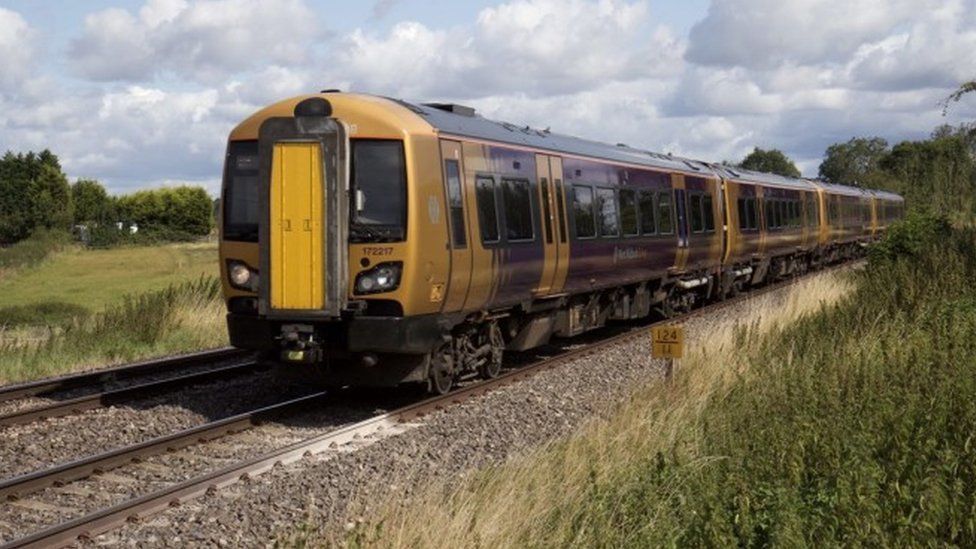
A train
Image source, West Midlands Railway
Image caption:-
Trains will run at reduced temperatures in the hot weather to try and prevent rails from buckling
 
Last edited by a moderator:
Sponsor Post - registered members do not see these adverts; click here to register, or click here to log in
R

RailUK Forums

geoffk

On Moderation
Joined
4 Aug 2010
Messages
3,927
Location
Exeter
I'm considering postponing my three days out with a Devon and Cornwall Rover ticket next week as I can see what might happen - very hot weather, speed restrictions, trains running late, missed connections. I've not yet bought my ticket and have until close on Friday to cancel my overnight stay!
 

E27007

Member
Joined
25 May 2018
Messages
1,037
Trains will run at reduced temperatures in the hot weather to try and prevent rails from buckling

In the statement above for temperatures, substitute speed.

I think the BBC is referring to a Blanket Speed Restriction imposed by P-Way for safety reasons, they are imposed in extremes of weather, Heat, Cold, High Winds, Rain (risk of floods). there may be a rolling stock issue, overheating of traction equipment, but I doubt it. We need to see the Late Notices or the Weekly Operating Notices Publications to unravel this one.
 

swt_passenger

Veteran Member
Joined
7 Apr 2010
Messages
34,243
I think the BBC is referring to a Blanket Speed Restriction imposed by P-Way for safety reasons, they are imposed in extremes of weather, Heat, Cold, High Winds, Rain (risk of floods). it may be a rolling stock issue, overheating of traction equipment, but I doubt it. We need to see the Late Notices or the Weekly Operating Notices Publications to unravel this one.
The BBC do refer to it being a track related speed restriction within the article text, it’s only their photo caption that’s wrong.
 

Mikw

Member
Joined
20 Apr 2022
Messages
545
Location
Leicester
Yeah, it's just what usually happens in hot weather, isn't it? Going slower because of the risk of track deformations.
 

43301

Member
Joined
20 Mar 2022
Messages
190
No doubt the interiors of 158s won't be at 'reduced temperatures'! I can confidently predict that up and down the land, the aircon in 158s will be failing, as normal when the weather gets a bit warm!
 

dk1

Veteran Member
Joined
2 Oct 2009
Messages
19,824
Location
East Anglia
No doubt the interiors of 158s won't be at 'reduced temperatures'! I can confidently predict that up and down the land, the aircon in 158s will be failing, as normal when the weather gets a bit warm!
Hoppers open!!

== Doublepost prevention - post automatically merged: ==

I'm considering postponing my three days out with a Devon and Cornwall Rover ticket next week as I can see what might happen - very hot weather, speed restrictions, trains running late, missed connections. I've not yet bought my ticket and have until close on Friday to cancel my overnight stay!
RR on the Newquay branch too. It could be fun with all the out of course running but get what you mean.
 

Snow1964

Established Member
Joined
7 Oct 2019
Messages
11,051
Location
West Wiltshire
Surely the photo caption is wrong way round
Trains will run at reduced temperatures in the hot weather to try and prevent rails from buckling

Isn’t it the passage of trains disturbs the air around the rails, thus bringing in cooler ambient air (rather than air heated by the hot rails), so helps cool the rails.

Thus really want to run trains faster (and ideally less streamlined ones like freight trains) to prevent buckling rather than fewer trains, or slower trains. Reducing the train speeds increases likelihood of rails staying hot.


Snow1964

Established Member
Joined
7 Oct 2019
Messages
11,051
Location
West Wiltshire
Usually late 20s in my experience.
That seems a bit low, in South East would get that on 20-40 days a year (it is in 80s in Fahrenheit), not exceptional

Surely restrictions should only be at unusual levels, sort of thing that only occurs on say 4 days or less per year, not routine every summer.
 

Alfonso

Member
Joined
22 Jul 2017
Messages
591
I'm considering postponing my three days out with a Devon and Cornwall Rover ticket next week as I can see what might happen - very hot weather, speed restrictions, trains running late, missed connections. I've not yet bought my ticket and have until close on Friday to cancel my overnight stay!
While all of that makes sense, it may affect Devon and Cornwall less than other places as speeds are already pretty low to start with
 

dk1

Veteran Member
Joined
2 Oct 2009
Messages
19,824
Location
East Anglia
That seems a bit low, in South East would get that on 20-40 days a year (it is in 80s in Fahrenheit), not exceptional

Surely restrictions should only be at unusual levels, sort of thing that only occurs on say 4 days or less per year, not routine every summer.
Was always the way here in OHL country but more so these days over what appears newer track.
 

StKeverne1497

Member
Joined
9 Oct 2019
Messages
140
Location
Caerphilly
Genuine question - how much was track buckling a problem in the days before continuously-welded track? I presume even welded track isn't really "continuous" and must have some expansion joints somewhere so if (as some predict) we are going to see more, hotter, summer days as global temperatures rise, is there a case for reducing the distances between these joints as track is relaid?
 

stuartl

Member
Joined
10 Aug 2014
Messages
242
Genuine question - how much was track buckling a problem in the days before continuously-welded track? I presume even welded track isn't really "continuous" and must have some expansion joints somewhere so if (as some predict) we are going to see more, hotter, summer days as global temperatures rise, is there a case for reducing the distances between these joints as track is relaid?
I think that it is pre-stressed when it is laid i.e. 'stretched' so that it can accomodate temprature changes without problem. There is though a limit to the temperature range acording to how much it is pre-stressed. I'm sure someone will know the figures.
 

swt_passenger

Veteran Member
Joined
7 Apr 2010
Messages
34,243
I think that it is pre-stressed when it is laid i.e. 'stretched' so that it can accomodate temprature changes without problem. There is though a limit to the temperature range acording to how much it is pre-stressed. I'm sure someone will know the figures.
The rails are stretched after installation to be “stress free at 27° C”. Above that temperature the rails are going into compression. Rail temperature can get up to 20° above ambient or more.

Network Rail have issued a statement today:
Hot weather can cause a great deal of disruption to the railway so Britain’s rails are pre-stressed to help them resist high temperatures. Our rails have a stress-free temperature of 27 degrees – the UK mean summer rail temperature. Other countries choose different temperatures depending on their climate.

When the air temperature reaches 30 degrees, the temperature on the rail can actually be up to 20 degrees higher. More than three-quarters of track on the network today is modern on concrete sleepers. The movement of trains also generates forces in the track. The higher the speed, the greater the force of a train.

When heat expansion forces are high, trains deliberately slow down to reduce the additional forces they apply to the railway. The need to prevent problems also means there will be fewer trains, but this is better than causing a bigger problem and being unable to run any services.
 
Last edited:

HSTEd

Veteran Member
Joined
14 Jul 2011
Messages
20,281
Did anything ever come of that plan to paint the sides of rails white to reduce their temperature in summer?
 

6Gman

Established Member
Joined
1 May 2012
Messages
9,192
Genuine question - how much was track buckling a problem in the days before continuously-welded track? I presume even welded track isn't really "continuous" and must have some expansion joints somewhere so if (as some predict) we are going to see more, hotter, summer days as global temperatures rise, is there a case for reducing the distances between these joints as track is relaid?
Those of us of a certain age will recall the debates in the early days of cwr (continuously welded rail) balancing the safety record of cwr v jointed track. There were some nasty accidents back then with cwr buckling, but equally all those rail joints on conventional track were themselves a potential source of failure.
 

StKeverne1497

Member
Joined
9 Oct 2019
Messages
140
Location
Caerphilly
Those of us of a certain age will recall the debates in the early days of cwr (continuously welded rail) balancing the safety record of cwr v jointed track. There were some nasty accidents back then with cwr buckling, but equally all those rail joints on conventional track were themselves a potential source of failure.
On a long run of CWR then, do they actually leave expansion gaps - maybe as some kind of "lapped" joint rather than a butt joint to remove some of the problems of the latter? (but I do miss the sound!)

I suppose it's a balance then between "normal" and "exceptional" high (and low) temperatures and whether these two figures should be under review as the climate warms and potentially extremes become more extreme.
 

Horizon22

Established Member
Associate Staff
Jobs & Careers
Joined
8 Sep 2019
Messages
10,953
Location
London
Did anything ever come of that plan to paint the sides of rails white to reduce their temperature in summer?

Yep; you can see it at various critical junctions around the network, even from a passenger's seat at certain places!
 

swt_passenger

Veteran Member
Joined
7 Apr 2010
Messages
34,243
On a long run of CWR then, do they actually leave expansion gaps - maybe as some kind of "lapped" joint rather than a butt joint to remove some of the problems of the latter? (but I do miss the sound!)
[…]
No, I don’t believe so. I’m sure someone mentioned before that CWR can run for many miles between any S&C locations - where the individual rails must have gaps for obvious reasons.
 

swt_passenger

Veteran Member
Joined
7 Apr 2010
Messages
34,243
I found that Wikipedia actually has a reasonable article on the subject (at least it looks that way to my untrained eye). There is a picture of an expansion joint too:
It’s still worth emphasising that those breathers or expansion joints are not fitted in the continuous length of CWR, but have specific uses eg “areas where CWR joins up to jointed track or to certain types of switches and crossings”. @Bald Rick explained this back in a 2019 thread here:


Bald Rick

Veteran Member
Joined
28 Sep 2010
Messages
35,663
I found that Wikipedia actually has a reasonable article on the subject (at least it looks that way to my untrained eye). There is a picture of an expansion joint too:

It’s still worth emphasising that those breathers or expansion joints are not fitted in the continuous length of CWR, but have specific uses eg “areas where CWR joins up to jointed track or to certain types of switches and crossings”

and further worth emphasising that a mile of CWR will want to expand by nearly a metre in length between the coldest and hottest temperatures it is likely to experience, which is an awful lot of expansion joints. Hence why it is stressed : to absorb this expansion Without the need for expansion joints.
 

HSTEd

Veteran Member
Joined
14 Jul 2011
Messages
20,281
and further worth emphasising that a mile of CWR will want to expand by nearly a metre in length between the coldest and hottest temperatures it is likely to experience, which is an awful lot of expansion joints. Hence why it is stressed : to absorb this expansion Without the need for expansion joints.

Maybe we should make rails out of Invar or Inovco! Under 4" for a mile and a hundred celsius temperature swing!

And I know it would be ruinously expensive, I'm joking... sort of
 

Bald Rick

Veteran Member
Joined
28 Sep 2010
Messages
35,663
Maybe we should make rails out of Invar or Inovco! Under 4" for a mile and a hundred celsius temperature swing!

And I know it would be ruinously expensive, I'm joking... sort of

I hope you are!

Perhaps we should just accept that the Laws of physics are universal and that in extremes of weather some things change. It is the same everywhere.
 
Status
Not open for further replies.

Top