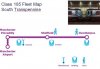
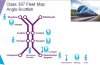
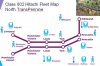
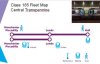
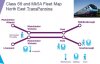
As said by others, the main problem for TPE seems to be Hitachi's production constraints. If they were able to build another few 802s, I doubt a ROSCO would have gone for the Mk5A option. While a fleet of three types rather than four would have been easier, it wouldn't have been possible in the timeframe of the franchise.
Now, that doesn't mean it'll always be that way. The TPE franchise includes an option for a good number of additional pure EMUs. Plausibly these will be a follow-on order for the 397s. Once TP North electrification is done, it should be possible to swap out the 802s for these 397s, with the 802s heading basically anywhere which can make use of bi-mode InterCity units.
The only other way of having a consistent fleet would have been to order AT300 for the WCML services. Ignoring production constraints this would have been perfectly possible, but then an ever-so-slightly-compromised bi-mode design would be used on a service that really has no need for bi-mode operation. The ECML and GWML bi-mode sets make sense given that Kings Cross and Paddington can see a train come in from an electrified origin (e.g. Edinburgh) and then sent back out to an unelectrified destination (e.g. Aberdeen), but that never happens on the TP Scotland services. The only way that TP Scotland AT300 trains could have been used on other services would have been if they were fully fitted with diesel engines, but they would almost never be used. Straight electric AT300s would have allowed fleet commonality but they would be trapped on the western side of the Pennines, and then would cost more to build and run than a pure EMU like the 397.