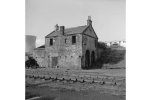
Has anyone any news about what passenger and goods traffic may have been there?
The book
A Regional History of the Railways of Great Britain - Vol. 6 Scotland: The Lowlands & Borders by John Thomas (pub. David & Charles, 1971) has a number of references to traffic handled at the early Townhead station. Some extracts from Thomas's book . . .
"The Garnkirk & Glasgow . . . promoters set out from the start to run the line as a railway in direct opposition to the Monkland Canal and the Monkland railways. The Tennant brothers, whose large chemical works (
said to be the largest chemical factory in the world at that time) adjoined the canal basin at Townhead, Glasgow, were the chief sponsors of the Garnkirk. The Monkland Canal could no longer bring coal in sufficient quantity to the Tennant works. The railway was planned to start from a point close to the works and run east for 8 miles to form a junction with the Monkland & Kirkintilloch line at Gartsherrie, thus providing a direct all-rail route from the Monklands to Glasgow."
-----
"With the Monklands booming, there was more than enough trade to bring prosperity to both the canals and the railways. The following illustrates the steady increase in the Garnkirk & Glasgow's business over the first full five years operations.
1832 - 114,144 tons freight - 62,605 passengers
1833 - 112,471 tons freight - 96,003 passengers
1834 - 132,675 tons freight - 117,743 passengers
1835 - 143,520 tons freight - 136,724 passengers
1836 - 137,827 tons freight - 145,703 passengers."
-----
"The Townhead station of the Garnkirk & Glasgow remained for ten years the only station in Glasgow. Situated inconveniently on the fringe of the city, and with nothing to commend it architecturally, it played little part in the community life of the citizens. The transportation centre remained in Trongate, where the offices of the stagecoach proprietors were situated. Patrons of the railway went by coach from Trongate to the distant railway station, or walked."
-----
"On 1 November 1849 the Caledonian Railway opened a terminus at Buchanan Street to replace the unsatisfactory Townhead station. The Glasgow, Garnkirk & Coatbridge (
as the company had become) had already spent £20,000 on arches over which it hoped to extend the line from Townhead to a point nearer the city centre, but when the GG&C fell to the Caledonian that company's engineer vetoed the scheme on the grounds that the new terminal would stand too high above street level. Access to Buchanan Street station was gained by taking the approach line off the GG&C route at Milton Junction about 2 miles short of the terminus and dropping it down through St Rollox and underneath the Forth & Clyde Canal. Part of this line was cut through deep deposits of chemical waste from the Tennant works. The 'pestilential effluence' of which the first passengers by the new route complained was still in evidence when the line closed 118 years later"
Although the Garnkirk & Glasgow was built to supply Glasgow with industrially useful minerals from the Monklands district - mainly coal, limestone, blackband ironstone and good quality fireclay - it also introduced some enterprising, but often tortuous, options for passenger journeys involving the other Monklands railways with horse coach & canal boat connections. Some of these offerings are described in Thomas's volume, but too intricate to be re-typed here!
The company also dabbled in excursion traffic for Glaswegians. The Garnkirk collaborated with another early industrial railway, the Wishaw & Coltness, to arrange connections involving a horse bus transfer which allowed Glasgow daytrippers to visit the Falls of Clyde waterfalls at New Lanark.
Around the time of its opening the Garnkirk also offered a "Select First-Class Train" each summer afternoon between Glasgow and Gartsherrie.
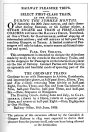 Image shows 1835-vintage advertisement for excursion train from Glasgow to Gartsherrie and back. Source: J. Thomas (1971) as above.