

backontrack
Established Member
I was researching the Highland Railway (was there ever a station at Dalnaraoch?) and I found out about something called the Serpell Report.
Apparently, 1982 is meant to be the nadir of the UK railway network. That year saw (from Wikipedia):
Here's more from Wikipedia:
So Sheffield, Plymouth, Leicester, Derby, Nottingham, Aberdeen, Dundee, Inverness, Swansea, Hull, Sunderland, Middlesbrough, Exeter, Cambridge, Oxford, Bradford, Huddersfield, Halifax, Barnsley, Scarborough, Blackpool, Stirling, Kilmarnock, Perth, Chester, Llandudno, Bangor, Shrewsbury, Cheltenham, Gloucester, Hereford, Worcester, Macclesfield, Walsall, Cannock, Hinckley, Bedford, Luton, Banbury, Leamington, Stratford-upon-Avon, Morecambe, Hartlepool, Lincoln, Grimsby, Rotherham, Ely, Dewsbury, Harrogate, Shipley, Keighley, Skipton, Chesterfield, Taunton, Penzance, Truro, etc...
...would all be without rail services. There would only be one line into both Scotland and Wales. (There'd still be lines to Norwich, Harwich, Portsmouth, Southampton, Brighton, Folkestone, Eastbourne and Southend retaining their services.) It's also interesting to note that the lines are always seen as being 'from' London. Westminster needed (and still needs) to learn that London is not the centre of the universe, thus not everyone wanted/wants to go there. The Transpennine Line would have been a goner, as well as the line between York and Birmingham via Derby. The Midlands Mainline would also be a major casualty.
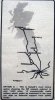
This is what the network would like like:

So we move on to Option B.
Of course it had this. Also, what's to be gained by only running to Westbury? Would it act as a parkway station for the rest of Wiltshire and Somerset?
Also, still no Sheffield. Maggie Thatcher hated Sheffield with a vengeance, having already done for the Woodhead line the previous year.
Now onto Option C:
So basically a lesser Beeching, although C3 has a lot more high-profile closures, such as the Transpennine line and the line to Plymouth.
There were two more options:
Of course it didn't. Probably too much effort for it to think about improving services, and it was easier to close the lines.
Luckily, usage grew and the plan was forgotten. But it's scary to think how close the network came to being massively shrunk.
Apparently, 1982 is meant to be the nadir of the UK railway network. That year saw (from Wikipedia):
This was mostly because of strikes and rostering issues....the lowest number of passenger journeys of the second half of the 20th century, the lowest level of passenger-miles, and the lowest (real) level of passenger revenue since 1968.
Here's more from Wikipedia:
For reference, in 1982, journeys totalling 18,300 million passenger-miles were made; the network comprised 10,370 route miles; and BR's passenger deficit was £933 million. The various options for the network considered in Part 2 were as follows:
Option A was a "commercial" network, in which the railways as a whole would make a profit. This scenario would have seen the route mileage reduced by 84%, and annual passenger-miles reduced by 56%. The only main lines left would have been London-Bristol/Cardiff, London-Birmingham-Liverpool/Manchester-Glasgow/Edinburgh, and London-Leeds/Newcastle. Some major commuter lines in the southeast would have been retained; all other lines would have disappeared completely. The passenger sector would still make a small loss, but this would be offset by profits from the freight sector.
So Sheffield, Plymouth, Leicester, Derby, Nottingham, Aberdeen, Dundee, Inverness, Swansea, Hull, Sunderland, Middlesbrough, Exeter, Cambridge, Oxford, Bradford, Huddersfield, Halifax, Barnsley, Scarborough, Blackpool, Stirling, Kilmarnock, Perth, Chester, Llandudno, Bangor, Shrewsbury, Cheltenham, Gloucester, Hereford, Worcester, Macclesfield, Walsall, Cannock, Hinckley, Bedford, Luton, Banbury, Leamington, Stratford-upon-Avon, Morecambe, Hartlepool, Lincoln, Grimsby, Rotherham, Ely, Dewsbury, Harrogate, Shipley, Keighley, Skipton, Chesterfield, Taunton, Penzance, Truro, etc...
...would all be without rail services. There would only be one line into both Scotland and Wales. (There'd still be lines to Norwich, Harwich, Portsmouth, Southampton, Brighton, Folkestone, Eastbourne and Southend retaining their services.) It's also interesting to note that the lines are always seen as being 'from' London. Westminster needed (and still needs) to learn that London is not the centre of the universe, thus not everyone wanted/wants to go there. The Transpennine Line would have been a goner, as well as the line between York and Birmingham via Derby. The Midlands Mainline would also be a major casualty.
This is what the network would like like:
So we move on to Option B.
Option B was similar to Option A, with allowances for the cost of congestion caused by removing rail links. If the removal of a line in Option A would cause a greater cost to the country in terms of increased road congestion than would be saved in removing the line, then the line was retained under Option B. This scenario would have seen the route mileage reduced by 78%, and annual passenger-miles reduced by 45%. The network would have been as per Option A, but with the addition of most of the London commuter lines, plus the London-Westbury section of the Great Western Main Line.
Of course it had this. Also, what's to be gained by only running to Westbury? Would it act as a parkway station for the rest of Wiltshire and Somerset?
Also, still no Sheffield. Maggie Thatcher hated Sheffield with a vengeance, having already done for the Woodhead line the previous year.
Now onto Option C:
Option C was actually a set of three options, each designed to reduce the railways annual deficit according to a given target:
Option C1 would have kept the existing network more or less entirely, only removing the most loss making services. While the network would have been virtually unchanged (at 99% of existing length), many smaller stations would have closed. One lengthy removal would have been the Westbury-Weymouth line. Passenger-miles would have been reduced by about 4%.
Option C2 was designed to reduce the annual deficit to £700 million. Loss making services would have been cut (using a harsher test than Option C1). There would have been some more network cuts, such as the Trowbridge-Melksham-Chippenham line, the branches north of Norwich, the north Devon line from Exeter towards Barnstaple, the line between Swansea and Stokesay, and the mid-Wales branch west of Shrewsbury. However, most of the savings would have come from service cuts and station closures. This scenario would have seen the route mileage reduced by 17%, and annual passenger-miles reduced by 9%.
Option C3 was designed to reduce the annual deficit to £500 million. Major cuts would have included all lines in Wales apart from the valley lines north of Cardiff; all lines in Devon and Cornwall other than the main line link to Exeter; the Salisbury-Exeter line; all lines in East Anglia other than the line to Norwich; all rural lines in Scotland; the trans-Pennine line; and most local lines east of the East Coast Main Line. This scenario would have seen the route mileage reduced by 39%, and annual passenger-miles reduced by 15%.
So basically a lesser Beeching, although C3 has a lot more high-profile closures, such as the Transpennine line and the line to Plymouth.
There were two more options:
Option D was the only option not designed to meet a financial criterion. Instead, connections would have been made to retain services to communities with population greater than 25,000. This came out very similar to Option C2, with only 11 extra communities served.
The report also briefly considered an Option H – a "high investment" option. This looked at the effects of new rolling stock on maintenance costs, and concluded that the return would be far too small.
Otherwise, the report did not seriously examine the effects of improving rail services.[3]
Of course it didn't. Probably too much effort for it to think about improving services, and it was easier to close the lines.
Luckily, usage grew and the plan was forgotten. But it's scary to think how close the network came to being massively shrunk.
Attachments
Last edited:

