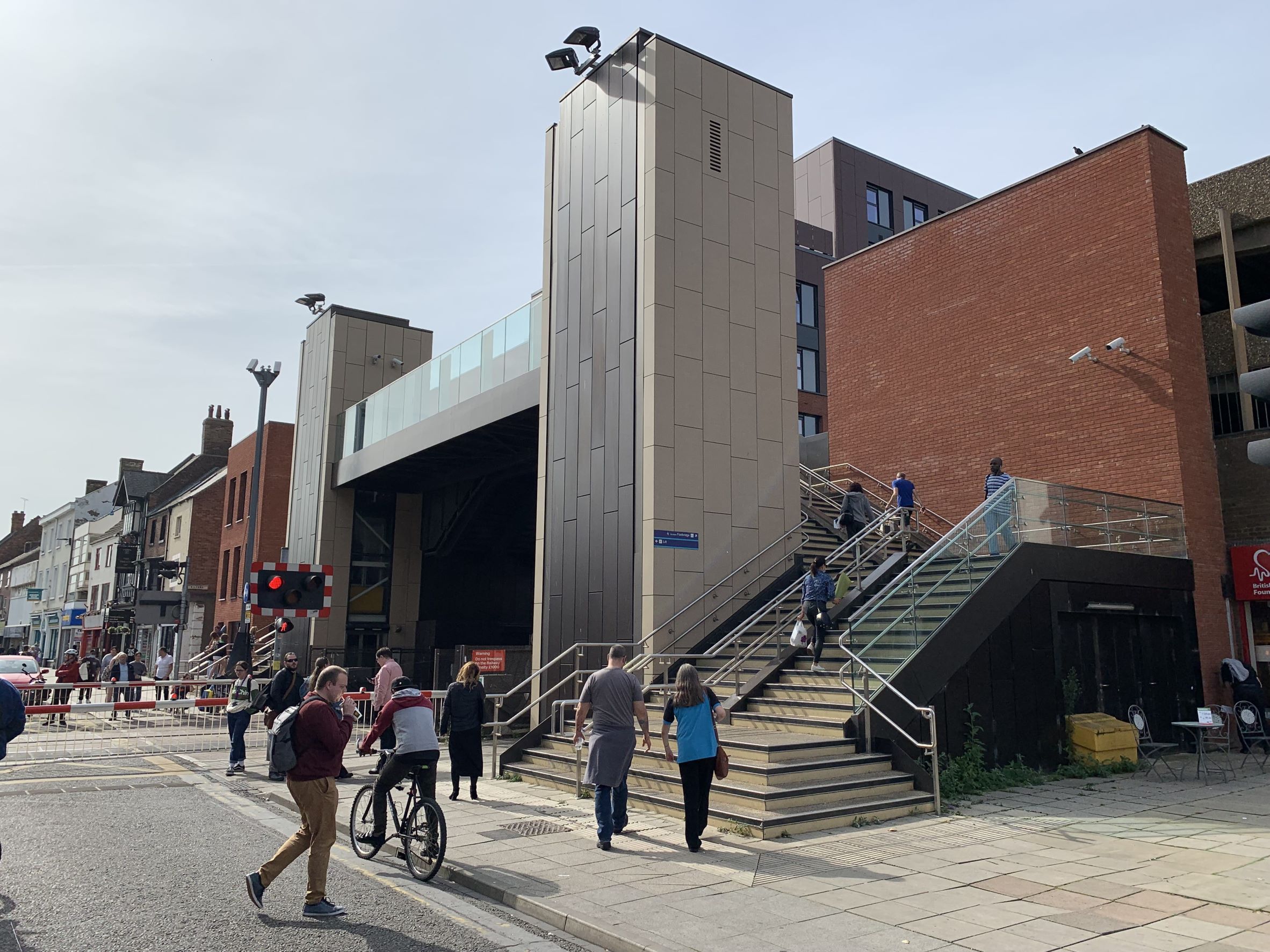
Surely a bridge can be provided and the crossing can then be opened in the event that the bridge is unusable?
Although I cannot see why these pedestrians are getting so annoyed about waiting to cross?
For the car crossing it is a bit different. However, driving through the centre of any town is not supposed to be easy. It also feels like a wait is not the end of the world.
In essence, a bridge if it is that important. Otherwise do nothing.
How to say you know nothing of the place being discussed without saying you know nothing of the place being discussed.
As
@norbitonflyer notes, the High Street has been the main thoroughfare through Lincoln for the last 2 millennia. It is the primary link between the centre and south Lincoln, and joins the three main segments of the city centre (the third, uphill, is reached on foot by the continuation up Steep Hill). The railway is regarded locally as an imposition on the road network, obstructing longstanding alignments - and any decision about congestion needs to bear that perception in mind.
Bridging in the city centre is impractical as there is no height difference to use on either side - both the Pelham and Brayford bridges have extensive embankments to allow them to get over the railway; ramps that on the High Street would require significant demolition on both sides. This extends to traffic, where the recent road layout changes (and associated land clearance) have allowed closure of the High Street crossing to vehicles, but the Brayford crossing remains necessary. The issue here is that some of the major out of town shopping areas in the city are to the south of the city centre on Tritton Road, and east-west access requires driving across the city, as do many north/south journeys (the hospital, for example, is on the northern edge of the city).
The bypass helps a lot (when I drive to Lincoln, I typically go round and then south), but that is an almighty great dog leg if living within the city, or accessing Tritton Road from the north side.
The role of the car is also important. Lincoln is a small city, but a genuine hub for a county that is ill-served by train or bus.
As I've previously noted, the changes made to roads in the city probably mean that an avoiding line, on whichever route, is no longer the necessity it was when I first had dealings with Lincoln 30-odd years ago. But that pressure will resume if (when?) Pelham and/or Brayford bridges are closed for work and the road network can no longer bear what's being demanded of it.