As I understand it, the £2bn is just the stadium, which United will have to find the finance for. (They haven’t said how either).So today saw plans outlined for what the new Man Utd stadium will look like as part of the wider Trafford regeneration, with the stadium reported to cost £2bn. Why this is relevant to Labour is because there have been a number of voices demanding that not a penny of taxpayer's money is spent on this (with a few extreme voices suggesting if any is there should be riots). But I cannot work out where this is coming from, as all I've seen is the government giving backing to the wider regeneration project, they haven't announced any taxpayer funding (and I'm sure they'd love not to spend any public money on it if a load of private investor money covers it all):
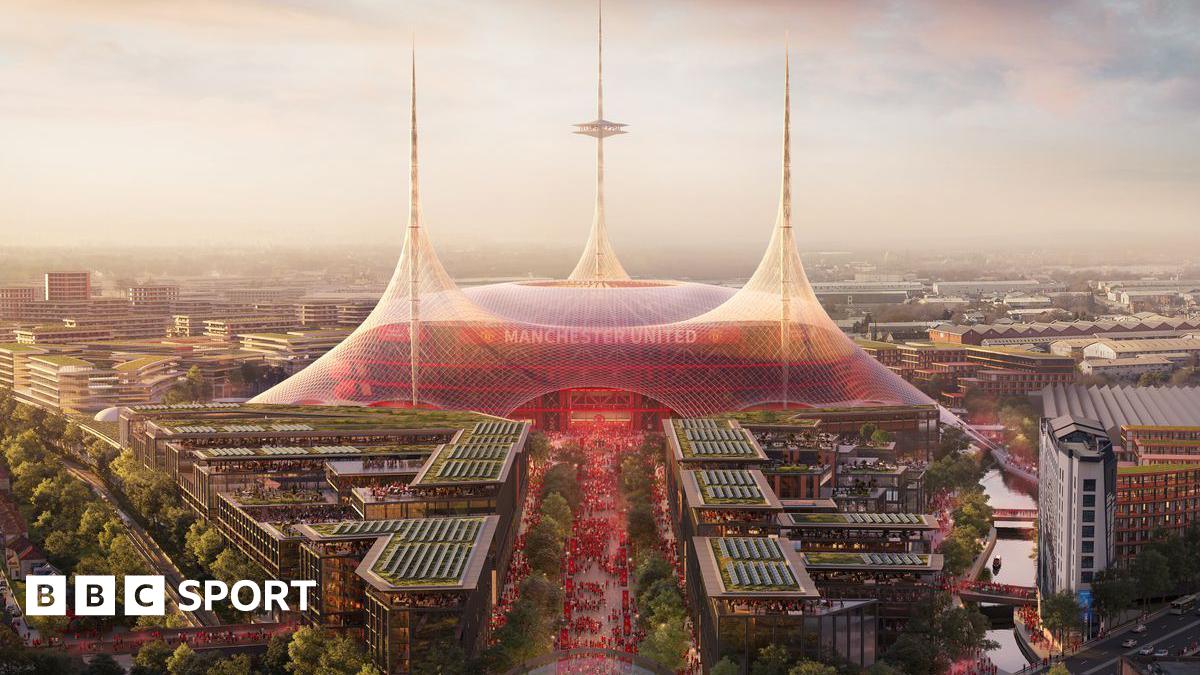
Man Utd to build 'iconic' £2bn 100,000-capacity stadium close to Old Trafford
Manchester United announce plans to build the biggest stadium in the UK - an "iconic" new £2bn 100,000-seater ground close to Old Trafford.www.bbc.co.uk

-
Our new ticketing site is now live! Using either this or the original site (both powered by TrainSplit) helps support the running of the forum with every ticket purchase! Find out more and ask any questions/give us feedback in this thread!
You are using an out of date browser. It may not display this or other websites correctly.
You should upgrade or use an alternative browser.
You should upgrade or use an alternative browser.
The Labour Party under Andy Burnham
- Thread starter Cowley
- Start date
Sponsor Post - registered members do not see these adverts; click here to register, or click here to log in
R
RailUK Forums
Could that not be turned around? ie why should the young get cash benefits which today's elderly did not receive?
We were all young once, and hopefully will all be elderly, sooner or later!
Do you want a list?
Much more social housing (it was at a time far more normal for people to live in social housing than it is now (1979 there were 5.5 million social homes whilst now it's about 4.1, however not only have the number reduced but the population has increased and average household sizes have shrunk). Whilst not a cash benefit, it reduced the amount of money needed to live.
Universal child benefits (i.e. no cap if you earned over a certain amount).
Free university education.
Free milk at school (again not a direct cash value, but would have helped families).
Given the perceived tightening of the rules around benefits, I suspect that it's probably now harder to be eligible for benefits than it once was.
opposition to spending public money to aid regeneration schemes that are likely to create and support many jobs seems silly especially when growth is so low.So today saw plans outlined for what the new Man Utd stadium will look like as part of the wider Trafford regeneration, with the stadium reported to cost £2bn. Why this is relevant to Labour is because there have been a number of voices demanding that not a penny of taxpayer's money is spent on this (with a few extreme voices suggesting if any is there should be riots). But I cannot work out where this is coming from, as all I've seen is the government giving backing to the wider regeneration project, they haven't announced any taxpayer funding (and I'm sure they'd love not to spend any public money on it if a load of private investor money covers it all):
Man Utd to build 'iconic' £2bn 100,000-capacity stadium close to Old Trafford
Manchester United announce plans to build the biggest stadium in the UK - an "iconic" new £2bn 100,000-seater ground close to Old Trafford.
Free university education was not affordable after Tony Blair expanded the sector with the aim of 50% of school leavers going to university.Do you want a list?
Much more social housing (it was at a time far more normal for people to live in social housing than it is now (1979 there were 5.5 million social homes whilst now it's about 4.1, however not only have the number reduced but the population has increased and average household sizes have shrunk). Whilst not a cash benefit, it reduced the amount of money needed to live.
Universal child benefits (i.e. no cap if you earned over a certain amount).
Free university education.
Free milk at school (again not a direct cash value, but would have helped families).
Given the perceived tightening of the rules around benefits, I suspect that it's probably now harder to be eligible for benefits than it once was.
Free school milk can be offset by breakfast clubs.
The level of social housing in 1979 may not have been inficative of need, since many tenants were able to buy their homes, admittedly at a discount under Thather's Right to Buy policy.

Tetchytyke
Veteran Member
A football stadium for a tax-dodger is not, never has been, and never will be a “regeneration scheme”.opposition to spending public money to aid regeneration schemes that are likely to create and support many jobs seems silly especially when growth is so low.
The land where the stadium is being proposed also doesn’t actually need “regenerating”, given that it already has a very successful and profitable rail freight business sitting on it.
Falcon1200
Established Member
Valid points made by @Class 317 and @The Ham, and I don't want to get into a 'times were 'ard back then' debate, but I would point out that my Mum, born in 1930, lived through the fear and deprivation of WW2 (and rationing, which continued long after the war was over), then when she was a young mother had for example the fun and games of power cuts in the 70s; I still remember playing cards by candlelight! It has not always been a bed of roses for the elderly.
Best outcome be to give naming rights to Butlins in return for them not suing Manchester United for copying the centrepiece of their Bognor Regis siteAs I understand it, the £2bn is just the stadium, which United will have to find the finance for. (They haven’t said how either).
Tetchytyke
Veteran Member
Sadly, I really do think it is heading that way.Are we going to try to be sensible? You are better than that.
Demonising immigrants, demonising disabled people as “lazy”, cutting support to the poorest people in order to give tax cuts to the rich, destroying all regulation in the pursuit of “growth”, massively increasing the amount of money given to the arms trade (sorry, “defence”), flag-waving xenophobia in lieu of an actual political identity.
Kemi Badenoch is having such a job getting noticed as a politician because the Tories agree with all of it.
I’ve referred to Starmer as a Karaoke Farage before. I was originally sort-of joking. I’m not now.
HE was expanding before 1997; Blair's 50 per cent target was just a soundbite. It was Major who allowed the polys to become universities, which some say weakened their traditional vocational focus.Free university education was not affordable after Tony Blair expanded the sector with the aim of 50% of school leavers going to university.
SourceIn the late 1980s, there was a vision and commitment among policymakers to enhance the availability of places to prospective students within the higher education sector. The UK subsequently witnessed a steep rise in participation during the late 1980s and early 1990s, primarily affecting those born in the early 1970s.
I don’t get the point of your list. As one of the (apparently) despised boomers, every item on your list has resulted in me subsidising the subsequent generations unfairly deprived of those privileges.Do you want a list?
There ain’t any winners!
Tetchytyke
Veteran Member
And now I'm depressed after today's pronouncements...
Last edited:
GatwickDepress
Established Member
Same here.And now I'm depressed after today's pronouncements...
Demonising immigrants is not aa modern thing.Sadly, I really do think it is heading that way.
Demonising immigrants, demonising disabled people as “lazy”, cutting support to the poorest people in order to give tax cuts to the rich, destroying all regulation in the pursuit of “growth”, massively increasing the amount of money given to the arms trade (sorry, “defence”), flag-waving xenophobia in lieu of an actual political identity.
I remember "paki-bashing" in the seventies and the "no dogs, no blacks, no Irish" notices
edwin_m
Veteran Member
It appears that with current demographics and a very non-proportional electoral system, the balance of power is (or Labour think it is) held by a sub-group of Red Wall voters who tend to be very socially conservative. Hence, I think, measures such as bearing down on people seen as disproportionately obtaining benefits, and sounding tough on immigration (but nowhere near as tough as the Rwanda plan or whatever Farage would do),

That seems more like an opinion than a fact. Graduates on average pay more tax and contribute more to the economy than non-graduates.Free university education was not affordable after Tony Blair expanded the sector with the aim of 50% of school leavers going to university.
How many of those homes are personally owned, and how many are now Private lets?The level of social housing in 1979 may not have been inficative of need, since many tenants were able to buy their homes, admittedly at a discount under Thather's Right to Buy policy.
Blair's target was higher education, not university. This could reasonably easily be afforded with a decent proportion of people going to HE colleges and getting BTECs, diplomas and ordinary degrees.Free university education was not affordable after Tony Blair expanded the sector with the aim of 50% of school leavers going to university.
The problem is that HE colleges all want to be universities offering prestige courses, and universities want to spend an extraordinary amount expanding research at the same rate as teaching, and nobody has had the guts to tell them no. That makes the whole thing 4 times more expensive than it needs to be. The argument for expanding research appears to be that Universities have to have prestige to attract foreign students, otherwise they won't be able to cover the costs, most of which are research, which is of course an endless and pointless loop.
We're forcing the majority of our young people into a lifetime of debt and bending the immigration system completely out of shape, just so that a group of ever-more mediocre academics can play at science. This is really no way to run an education system, or frankly to expand the sum of useful human knowledge.
As with quite a lot things, higher education has been in a state of extremely expensive decline since Cameron arrived. Successive governments, each weaker and lazier than the last, have appointed ambitious sociopaths to leadership positions in many public sector institutions, and failed to challenge them as they build expensive pointless empires on public (and student) money. The result here, as with many other areas is an extremely expensive system that just doesn't work.
Essentially the Conservatives, going back to Major and before, seem to be profoundly incapable of running public services. Starmer at least doesn't appear to be afraid to roll his sleeves up and offend as many people as it takes to start getting things under control.

Yes. And we have, apparently, made progress in ensuring equal rights and ensuring those at risk of violence and oppression because of their race/disability/gender/sexuality.Demonising immigrants is not aa modern thing.
I remember "paki-bashing" in the seventies and the "no dogs, no blacks, no Irish" notices
And after all that hard work we get Farage and Bad Enoch attacking ‘DEI’ or slamming anyone who gives a damn as ‘woke’.Yes. And we have, apparently, made progress in ensuring equal rights and ensuring those at risk of violence and oppression because of their race/disability/gender/sexuality.
Sad times.
Valid points made by @Class 317 and @The Ham, and I don't want to get into a 'times were 'ard back then' debate, but I would point out that my Mum, born in 1930, lived through the fear and deprivation of WW2 (and rationing, which continued long after the war was over), then when she was a young mother had for example the fun and games of power cuts in the 70s; I still remember playing cards by candlelight! It has not always been a bed of roses for the elderly.
Indeed, I was answering a specific question, and not saying that there weren't difficulties.
Even on one metric life is better now than it's ever been - that being the continuing reduction of infant mortality, which has continued to fall.
Whilst the rate of fall is slowing, because the numbers are getting that much closer to zero, it's still falling. For example between 1980 and 2010 the number of deaths fell from 12.1 deaths per 1,000 births to 4.3 and the current rate is 3.9 (both lower than the US at 5.1).
In 1950 it was 31.2 deaths per 1,000 births, which is higher than the current global average (28.0)
In 1920 it was 81.8 (on a par with the third worst country currently - Central African Republic 81.7) and 1910 it was 172.1 (that's way ahead of the worst country currently - Afghanistan 103.1).
To put those numbers in perspective that's roughly the equivalent of
1910, a family with 5 kids one will die
1950, a class of 30 one will die
1980, an infant school with one class per year one will die
2010, a primary school with one class per year one will die
Interesting and rather sudden 'We're completely axing NHS England!' move today, I work for the NHS so have several contacts at NHSE and knew there was a reduction in workforce on the cards but certainly not the entire lot...
They are boasting of a £500m saving but in typical NHS/government style they'll probably spend most of the savings on consultants to rebrand everything under the Department of Health and Social Care banner!
They are boasting of a £500m saving but in typical NHS/government style they'll probably spend most of the savings on consultants to rebrand everything under the Department of Health and Social Care banner!

43096
On Moderation
- Joined
- 23 Nov 2015
- Messages
- 18,845
Not sure it is sudden. Been on the cards since Labour came in.Interesting and rather sudden 'We're completely axing NHS England!' move today, I work for the NHS so have several contacts at NHSE and knew there was a reduction in workforce on the cards but certainly not the entire lot...
They are boasting of a £500m saving but in typical NHS/government style they'll probably spend most of the savings on consultants to rebrand everything under the Department of Health and Social Care banner!
Given that Alan Milburn has been advising I suspect he may have gone just one too many rounds of pointing out how much easier it was to get stuff done without NHSE. I bet if you tot it up then Andrew Lansley will turn out to have cost the taxpayer a lot more than Grayling ever managed.Interesting and rather sudden 'We're completely axing NHS England!' move today, I work for the NHS so have several contacts at NHSE and knew there was a reduction in workforce on the cards but certainly not the entire lot...
They are boasting of a £500m saving but in typical NHS/government style they'll probably spend most of the savings on consultants to rebrand everything under the Department of Health and Social Care banner!
Apparently she is "anti-semitic", unlike Keir Starmer's non-Jewish adviser who says that left wing Jews aren't really proper Jews and just really like the chicken soup.
I wonder when Keir will finally twig that people don't go and see the pub tribute act when the real band is in town.
I doubt it was to do with that issue specifically (but the low profile MP for High Peak appears to be firmly on the right of the party and is chair of the Labour Friends of Israel Group) although it would appear to be just general control freakery from the right of the Labour party/factionalism gone mad. The only thing Ruth George is guilty of is the sort of local bandwagon jumping that other councillors do. Anyway Ruth George is standing as an independent and has attracted support from a bunch of people inc chair of Whaley Bridge Town Council/ex Labour party members so I now think it's plausible she could get elected as an independent on a three way split pipping Con/Lab. She beat Edwina Currie by 14% in 2021 and gained Whaley Bridge at the same time Labour was hemorrhaging council seats in the rest of Derbyshire so there is reasonable evidence of a personal vote.
High Peak should be quite secure for Labour at the next election even if Jon Pearce doesn't do very much but this is local politics we are talking about.
Last edited:
Again there's been news stories about the impact of the NI changes:

 www.theguardian.com
£10 million is a lot of money, but how much is that of their total staff costs?
Well it's not that easy to find recent data, but in 2015 it was £195 million. Unless they've been making cuts since then the impact is around 5% (probably lower as last year they saw their costs - as lot related to staff costs - increase by about £35 million).
Yes that £10 million is making things worse, but again a 5% increase is far from the only factor and the fact the press are still portraying it as the main reason is a little disingenuous.
National Trust freezes recruitment after £10m jump in costs
Conservation charity is also pausing some projects because of labour costs stemming from the autumn budget
www.theguardian.com
National Trust freezes recruitment after £10m jump in costs
Conservation charity is also pausing some projects because of labour costs stemming from the autumn budget
The National Trust has frozen all but essential recruitment and is pausing some projects as it faces a £10m jump in labour costs this year as a result of higher employment costs stemming from last autumn’s budget.
£10 million is a lot of money, but how much is that of their total staff costs?
Well it's not that easy to find recent data, but in 2015 it was £195 million. Unless they've been making cuts since then the impact is around 5% (probably lower as last year they saw their costs - as lot related to staff costs - increase by about £35 million).
Yes that £10 million is making things worse, but again a 5% increase is far from the only factor and the fact the press are still portraying it as the main reason is a little disingenuous.

brad465
Veteran Member
Price increases and/or cutting/freezing staff recruitment/pay is never popular. Therefore anyone doing these things will look for an external source to blame in order to justify said unpopular actions. The NI tax increase is the perfect case-in-hand. This doesn't mean the increase hasn't had an impact, but I'm willing to bet at least a portion of actions by various companies using the budget to justify their actions would have happened even if the government actually handed them free money, let alone not increased their tax bill.£10 million is a lot of money, but how much is that of their total staff costs?
Well it's not that easy to find recent data, but in 2015 it was £195 million. Unless they've been making cuts since then the impact is around 5% (probably lower as last year they saw their costs - as lot related to staff costs - increase by about £35 million).
Yes that £10 million is making things worse, but again a 5% increase is far from the only factor and the fact the press are still portraying it as the main reason is a little disingenuous.
There was a similar situation in covid; several companies that went into administration, and/or made cutbacks blamed covid, even though many of them were by all likelihood failing in some form or another before covid. But blaming covid was a good cover for poor business management. So much so that this forum had an entire thread dedicated to companies claiming "because covid".
I don’t think comparing the NI rise with their overall staff costs is a particularly enlightening exercise.Again there's been news stories about the impact of the NI changes:
National Trust freezes recruitment after £10m jump in costs
Conservation charity is also pausing some projects because of labour costs stemming from the autumn budget
£10 million is a lot of money, but how much is that of their total staff costs?
Well it's not that easy to find recent data, but in 2015 it was £195 million. Unless they've been making cuts since then the impact is around 5% (probably lower as last year they saw their costs - as lot related to staff costs - increase by about £35 million).
Yes that £10 million is making things worse, but again a 5% increase is far from the only factor and the fact the press are still portraying it as the main reason is a little disingenuous.
You could perhaps compare it with their operating margin, which was £106.1m in their most recent accounts. Or their overall net surplus for the year, which was a loss of £43.6m. https://docs.nationaltrust.org.uk/national-trust-annual-report-2023-24/p/26
In either of those, an additional recurring £10m is a significant cost.
I don’t think it’s disingenuous that suddenly having this increased cost imposed could well have been the tipping point for many businesses when making investment decisions. I think that charge is much better aimed at a Labour Party that claimed they wouldn’t raise NI or “taxes on working people” before the election.
I don’t think comparing the NI rise with their overall staff costs is a particularly enlightening exercise.
You could perhaps compare it with their operating margin, which was £106.1m in their most recent accounts. Or their overall net surplus for the year, which was a loss of £43.6m. https://docs.nationaltrust.org.uk/national-trust-annual-report-2023-24/p/26
In either of those, an additional recurring £10m is a significant cost.
I don’t think it’s disingenuous that suddenly having this increased cost imposed could well have been the tipping point for many businesses when making investment decisions. I think that charge is much better aimed at a Labour Party that claimed they wouldn’t raise NI or “taxes on working people” before the election.
If this was an isolated case, or one of only a couple of cases I'd be minded to agree with you, however there's been a lot of news stories like this (where there's typically only mention of the NI costs) for example the case of TfL which I also linked to previously in this thread where there was a lot said about the increase in cost but nothing about how actually it wasn't impacting much as there wasn't really any cuts being made.
Likewise why did the story not mention any of the figures you did, the only number in the article is £10 million?

DarloRich
Veteran Member
The Labour government has faced a lot of on line and whopper commentary focused on an alleged 2 tier justice system.
Funny that this patriuts have been very silent about the, erm, two tier system created especially for their hero Tiny Tommy ten names.
It is odd that an actual two tier system has not been remarked upon by these people.
Funny that this patriuts have been very silent about the, erm, two tier system created especially for their hero Tiny Tommy ten names.
It is odd that an actual two tier system has not been remarked upon by these people.