• Our new ticketing site is now live! Using either this or the original site (both powered by TrainSplit) helps support the running of the forum with every ticket purchase! Find out more and ask any questions/give us feedback in this thread!

The Faroe Islands tunnels

Status
Not open for further replies.

Meerkat

Established Member
Joined
14 Jul 2018
Messages
9,276
Perhaps, but look what the Faroes have done with a 55k population. There's no excuse for Scotland to not build basic infrastructure,

mods note - split from this thread

The Faroes tunnelling is just mental, like an addiction. It’s presumably funded by Denmark but no idea how they keep the costs down, though I believe they and Norway have much laxer regulations than we have.
The excuse is that we aren’t talking about basic infrastructure, we are talking about incredibly expensive infrastructure for sparsely populated places.
 
Last edited by a moderator:
Sponsor Post - registered members do not see these adverts; click here to register, or click here to log in
R

RailUK Forums

Struner

Member
Joined
13 Dec 2018
Messages
923
Location
Ommelanden, EU
The Faroes tunnelling is just mental, like an addiction. It’s presumably funded by Denmark but no idea how they keep the costs down, though I believe they and Norway have much laxer regulations than we have. […]
indeed: “presumably” & “I believe” - no substantiation :rolleyes:
 

Meerkat

Established Member
Joined
14 Jul 2018
Messages
9,276
indeed: “presumably” & “I believe” - no substantiation :rolleyes:
Had a look around and it’s not totally clear but it looks like the Faroes tunnels are mainly funded by pretty high tolls - would those be accepted in Scotland considering the history of the Skye Bridge? Though the government put in a sizeable chunk of share capital at the start and I don’t think they get it back.
£100m for a near 11km undersea tunnel sounds a bit cheap - would you be allowed to build that as a single bore two way tunnel in this country? I have seen a vague plan somewhere for the Corran tunnel that had a concrete wall in the bore giving a walk/bike route that could be used as an emergency escape route but that’s going to add a lot of cost and bore size.
Norway don’t use the EU tunnel regs, and Faroes aren’t in the EU so don’t need to.
I know the Norwegians don’t routinely line their tunnels and have smaller cross sections.
A big question is geology of course…..
 
Last edited by a moderator:

Cloud Strife

Established Member
Joined
25 Feb 2014
Messages
2,962
Had a look around and it’s not totally clear but it looks like the Faroes tunnels are mainly funded by pretty high tolls - would those be accepted in Scotland considering the history of the Skye Bridge?

The problem with the Skye Bridge was that the Tory government of the day had paid very little attention to the facts on the ground. It wasn't known by locals that the Kyle-Kyleakin service was very profitable for CalMac, and many locals on both sides were informally allowed to travel for free, especially if they could speak Gaelic to the crew.

Had the bridge been built as an ordinary public project, tolls would probably have been no more than a pound, which wouldn't have attracted any hostility at all. To charge £5.40 was a complete disgrace, and the failure to implement a Skye+Lochalsh toll as part of the PFI agreement was something that the locals never forgave. The discounted tickets did come later, but the damage had been done. It didn't help that people were getting prosecuted for blocking the toll booth, which was completely out of order and caused even more resentment among the islanders.

The high tolls wouldn't be a problem in itself if the financing was clear. It would need a full and honest discussion with the communities about what it will actually cost, but I don't think there would be any hostility to a tolling system that was operated in the same way that the Norwegian or Danish tolls are. There, the tolls are removed once the bridge or tunnel is paid off, and it's already happened that some tolls were paid off far quicker than expected, such as at the Nordkapp tunnel. In the Faroes, the situation is a bit more complicated: the politicians can't decide whether to make the tunnels toll-free now that the investments have been paid off, to keep a limited toll to pay for infrastructure, or to keep them the same and use the money for other road investments.

Having said that, at least two of the Faroese tunnels have had their price reduced progressively as they were paid off.

£100m for a near 11km undersea tunnel sounds a bit cheap - would you be allowed to build that as a single bore two way tunnel in this country?

From what I understand, the Faroese tunnels aren't compliant with the relevant EU Directive, which probably explains why they were able to build it a bit cheaper than elsewhere. Having said that, I believe that the Mont Blanc solution, where the area underneath the roadway was transformed into an escape route that utilises small rescue vehicles is perfectly acceptable and complies with the Directive. There's no need for a separate bore or parallel escape tunnel, and this system would be perfectly fine for rural tunnels with low amounts of vehicles daily.

 

Shaw S Hunter

Established Member
Joined
21 Apr 2016
Messages
3,486
Location
Over The Hill
The recent tv series Martin Clunes' Islands of the Atlantic included a drive through one of these and featured the world's only undersea roundabout. Different coloured lighting is fitted to highlight the three different directions in case drivers become disorientated though of course Clunes deliberately went all the way round to demonstrate this. Brilliantly bonkers!
 

stuu

Established Member
Joined
2 Sep 2011
Messages
3,763
The Faroes tunnelling is just mental, like an addiction. It’s presumably funded by Denmark but no idea how they keep the costs down, though I believe they and Norway have much laxer regulations than we have.
The excuse is that we aren’t talking about basic infrastructure, we are talking about incredibly expensive infrastructure for sparsely populated places.
The Faroes are made of solid rock, so they can tunnel through them using drill and blast, which is the cheapest tunnelling method. Basically a few people, some dynamite and a JCB to clear up the mess. And repeat. The tiny traffic numbers mean that they don't really need to worry about ventilation or escape, and anything hazardous will be given it's own path through with anyone else stopped for the duration. We have a terrible insistence on sticking to the rules, and don't do pragmatism. A tunnel in the Shetlands does not need the same safety features as a tunnel on the M25, but our rules don't allow that
 

yorksrob

Veteran Member
Joined
6 Aug 2009
Messages
44,276
Location
Yorks
The Faroes are made of solid rock, so they can tunnel through them using drill and blast, which is the cheapest tunnelling method. Basically a few people, some dynamite and a JCB to clear up the mess. And repeat. The tiny traffic numbers mean that they don't really need to worry about ventilation or escape, and anything hazardous will be given it's own path through with anyone else stopped for the duration. We have a terrible insistence on sticking to the rules, and don't do pragmatism. A tunnel in the Shetlands does not need the same safety features as a tunnel on the M25, but our rules don't allow that

Definitely sounds like one of those things where we could learn from our European neighbours.

Presumably Orkney and Shetland are similar geologically to the Faroes ?
 

Baxenden Bank

Established Member
Joined
23 Oct 2013
Messages
4,743
The Lowari Tunnels (Wikipedia link) in Pakistan are a combined 10.4 kilometres (6.5 mile) long. Without ventilation or parallel escape tunnels as I understand it. I guess they apply different standards. It was originally planned as a railway tunnel which is the reason I came across it.

Some edited detail from Wikipedia:
A vehicular tunnel under the Lowari Pass of the Hindu Kush mountains, between Dir and Chitral in Khyber Pakhtunkhwa province of Pakistan.
Tunnel 1: 8.5 kilometres (5.3 mi)
Tunnel 2: 1.9 kilometres (1.2 mi)
 

Cloud Strife

Established Member
Joined
25 Feb 2014
Messages
2,962
I can't find anything, but I wonder if the Faroese tunnels have the same situation as the Mont Blanc tunnel had before the 1999, where the area beneath the roadway was used for ventilation ducts. Those ducts were how the firefighters stuck in Mont Blanc were able to escape, although they had to be rescued as the doors had been inexplicably locked from the tunnel side.

A tunnel in the Shetlands does not need the same safety features as a tunnel on the M25, but our rules don't allow that

And this is really a huge problem. It's idiocy to compare tunnels in urban areas with those that might only have a few hundred vehicles a day.
 

thejuggler

Established Member
Joined
8 Jan 2016
Messages
1,643
Having been to the Faeroes a few years ago (and experiencing one of the tunnels that had only just opened) it makes perfect sense to provide tunnels. Nowhere in the UK is comparable.

The Faeroes is largely a closed community for much of the year, you certainly don't 'pass through'!

In such a very harsh environment with limited opportunities on each island, inter island transport is vital - ferries don't work in the middle of winter storms - so tunnels will be making a huge difference to island life.
 

PaulLothian

Member
Joined
27 Sep 2010
Messages
695
Location
Linlithgow
Definitely sounds like one of those things where we could learn from our European neighbours.

Presumably Orkney and Shetland are similar geologically to the Faroes ?
Sorry that I missed out on recent discussions, during our 3 weeks in Orkney. Can't comment on Shetland, but much of Orkney is sandstone, which is notoriously porous.
 

Cloud Strife

Established Member
Joined
25 Feb 2014
Messages
2,962
Having been to the Faeroes a few years ago (and experiencing one of the tunnels that had only just opened) it makes perfect sense to provide tunnels. Nowhere in the UK is comparable.

The Western Isles and the Northern Isles are comparable, I'd say. While linking up the islands on Orkney and Shetland is a bit more involved, it's absolutely tragic that the Western Isles still rely on ferries to get between them. The Sound of Harris in particular should be bridged, not least because the route from Berneray to Harris is quite difficult and dangerous to navigate.
 

Mojo

Forum Staff
Staff Member
Administrator
Joined
7 Aug 2005
Messages
21,170
Location
0035
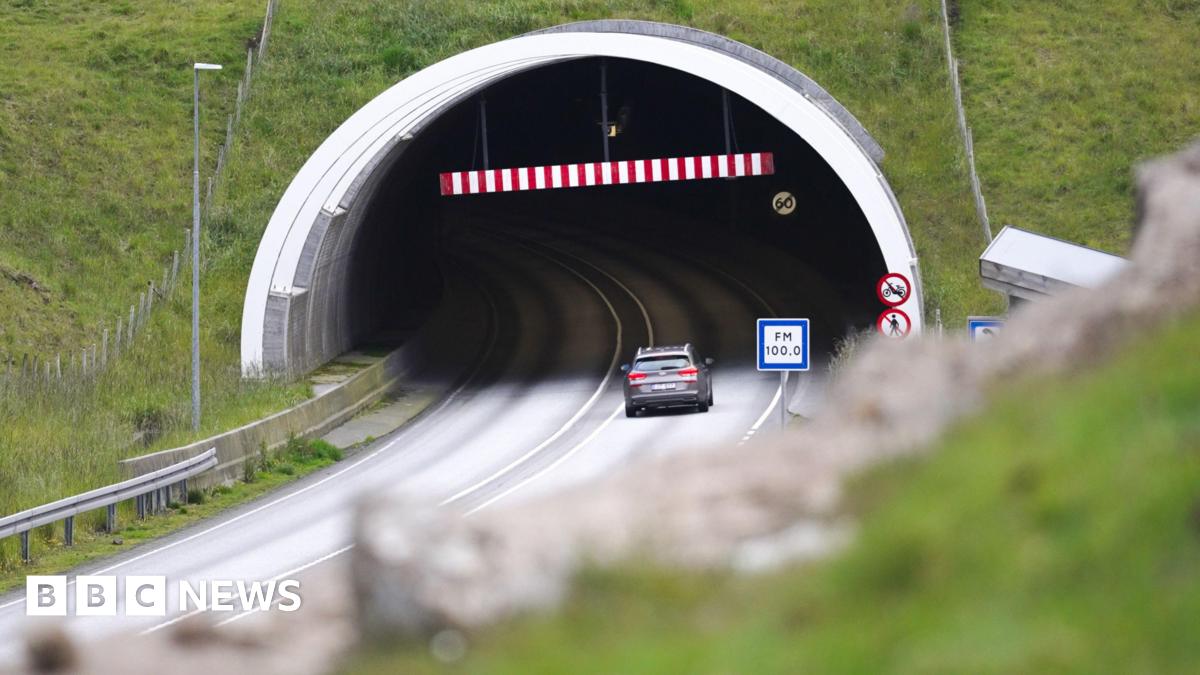
This BBC article I saw this morning may be of interest given some of the discussion in this thread

Shetland wants to ditch ageing ferries and replace them with undersea tunnels connecting five islands including Unst, the most northerly of the British Isles.

The plans sound grand but they have also been greeted with some scepticism.

Can the Shetland Isles really pull off such an ambitious plan, given the UK's struggles to deliver big projects such as high speed rail?

Yes, says the prime minister of the tiny Faroe Islands, which are 200 miles further out into the Atlantic.

Aksel Johannesen says Shetland could boost growth and revitalise island life by following the example of his country, which has been building tunnels since the 1960s.

The 18 islands, which make up the self-governing nation under the sovereignty of Denmark, are now connected by 23 tunnels, four of which run below the sea. More are under construction.
 

Shrop

Established Member
Joined
6 Aug 2019
Messages
1,350
Shetland wants to ditch ageing ferries and replace them with undersea tunnels connecting five islands including Unst, the most northerly of the British Isles.

The plans sound grand but they have also been greeted with some scepticism.

Can the Shetland Isles really pull off such an ambitious plan, given the UK's struggles to deliver big projects such as high speed rail?

Yes, says the prime minister of the tiny Faroe Islands, which are 200 miles further out into the Atlantic.

Aksel Johannesen says Shetland could boost growth and revitalise island life by following the example of his country, which has been building tunnels since the 1960s.

The 18 islands, which make up the self-governing nation under the sovereignty of Denmark, are now connected by 23 tunnels, four of which run below the sea. More are under construction.
I toured Norway by rail in 1995, and right back then I was very impressed by the way they had provided so many travel opportunities using tunnels.

At one point I discovered a road tunnel not too far from a railway station which was just a couple of hundred metres long. I walked through it just to see the view from the far end, and was amazed to see that the road served nothing more than a car park.

This was so far ahead of anything I'd ever seen in the UK in terms of tunnel length vs vehicular usage (given the impossibility that more than a couple of hundred vehicles could use it in a day), that it made me wonder if the Norwegians really did have a huge tunnel boring machine that was available at virtually zero cost.

Other tunnels were evident in many other places, with apparently pretty limited vehicular usage, and I began to wonder what it was about the UK that meant we couldn't do such things here.

Many Scottish islands are very comparable to the Faroe Islands in terms of geography, and although England has very few islands, I'd be pretty certain that if Norway had an Isle of Wight they would have tunnelled across to it many decades ago.

So what's stopping us? Is it really just geology, or costs, or is it more likely the somewhat sorry "can't do" attitude that so often seems to prevail in the UK?
 
Last edited by a moderator:

AlastairFraser

Established Member
Joined
12 Aug 2018
Messages
4,150
So what's stopping us? Is it really just geology, or costs, or is it more likely the somewhat sorry "can't do" attitude that so often seems to prevail in the UK?
Partly geology (Shetland is one of the areas where they can think of cheaper Faroe-style tunnelling, because I believe the underlying rock is similar), but it's also politics and economics.

Remember that Norway and a lot of the other Scandinavian countries have a decent sovereign wealth fund that pays large dividends that can fund these type of projects, as well as a governance culture that encourages continuous public investment, as opposed to the "big bang" boom and bust style investment policy that predominates here.

Additionally, although this attitude is less common in England, sometimes there is quite a lot of opposition to fixed links from islanders who are worried a fixed link will threaten culture and traditional society on the island, rather than bring overwhelming benefits.

I do think that is becoming a less prevalent view now, especially as a rapidly declining birth rate means many islands will have to be connected to survive as viable settlements, with the growing necessity of commuting for basic services like education and healthcare.
 

yorksrob

Veteran Member
Joined
6 Aug 2009
Messages
44,276
Location
Yorks
Sorry that I missed out on recent discussions, during our 3 weeks in Orkney. Can't comment on Shetland, but much of Orkney is sandstone, which is notoriously porous.

Ah thanks. Silly me for assuming one set of North Atlantic islands to be geologically similar to another !
 

Magdalia

Established Member
Joined
1 Jan 2022
Messages
7,342
Location
The Fens
This BBC article I saw this morning may be of interest given some of the discussion in this thread
I saw this too.

Remember that Norway and a lot of the other Scandinavian countries have a decent sovereign wealth fund that pays large dividends that can fund these type of projects
Shetland did do something like a wealth fund. The BBC article has a link to an older article from 2021 see here:


Nowhere else in the United Kingdom are the spoils of oil and gas more evident than on the Shetland Islands.

Wide roads which sweep along rugged clifftops and through lush valleys are so smooth you could play marbles on them.

In the centre of the main town, Lerwick, a stunning new school gleams in the September sunshine. Next door stands the Clickimin, an impressive leisure complex, one of eight on the islands - which are home to just 22,870 people.

There is one swimming pool for every 2,859 islanders.

Key parts of the article include these:

Previously known for fishing and farming, when the drills struck oil in the North Sea in the 20th Century, Shetland struck black gold.

It negotiated a canny deal for the construction of a giant terminal at Sullom Voe, an inlet on the north of the largest of its 16 inhabited islands, which is known locally as the mainland.

The first crude oil from the North Sea was piped ashore in November 1978, followed in later years by supplies from fields off to the west in the North Atlantic.

In return for the disruption, Zetland County Council - now Shetland Islands Council - was paid a fee for every barrel processed at Sullom Voe.

The money was invested in an oil fund which has so far disbursed more than £320m, external to social care and welfare programmes; the arts, sport and leisure; and the environment, natural history and heritage on the islands.

North Sea neighbour Norway, 190 miles to the east, took a similar approach to its oil reserves and now has one of the largest sovereign wealth funds on earth.

Although the oil boom is past its peak Shetland is still doing very well economically, see this from the article yesterday:

The archipelago of 100 islands at the confluence of the North Sea and Atlantic Ocean boasts the UK's only spaceport and a thriving fishing industry.

"We land more fish in Shetland than we do in the whole of England, Northern Ireland and Wales," says council leader Emma Macdonald.

"Tunnels could be incredibly transformational," she continues, adding: "We're really excited about the opportunity."

The 20th Century oil and gas boom brought Shetland riches but the islands have since embraced the shift to renewable energy and are home to the UK's most productive onshore wind farm.

If there is one place in the UK that is able to finance something like this, it is Shetland.
 

Xenophon PCDGS

Veteran Member
Joined
17 Apr 2011
Messages
35,392
Location
A typical commuter-belt part of north-west England
The Faroes are made of solid rock, so they can tunnel through them using drill and blast, which is the cheapest tunnelling method. Basically a few people, some dynamite and a JCB to clear up the mess. And repeat. The tiny traffic numbers mean that they don't really need to worry about ventilation or escape, and anything hazardous will be given it's own path through with anyone else stopped for the duration. We have a terrible insistence on sticking to the rules, and don't do pragmatism. A tunnel in the Shetlands does not need the same safety features as a tunnel on the M25, but our rules don't allow that
Geologically speaking, the Faroe Islands were formed about 55 million years ago when Greenland began to separate from the European land mass. The resulting volcanic emissions over a period of geological time laid down a huge volcanic plateau more than six kilometres in thickness, of which the Faroe Islands are in the above-sea-level part of that plateau,
 

AlastairFraser

Established Member
Joined
12 Aug 2018
Messages
4,150
I saw this too.


Shetland did do something like a wealth fund. The BBC article has a link to an older article from 2021 see here:


Key parts of the article include these:


Although the oil boom is past its peak Shetland is still doing very well economically, see this from the article yesterday:


If there is one place in the UK that is able to finance something like this, it is Shetland.
Oh I had no idea. Fair enough! That's great. Hopefully they go for tunnels, and,if they are successful financially and on budget, the Scottish government could consider funding tunnels between the Western Isles and from Caithness to Orkney.
 

yorksrob

Veteran Member
Joined
6 Aug 2009
Messages
44,276
Location
Yorks
I saw this too.


Shetland did do something like a wealth fund. The BBC article has a link to an older article from 2021 see here:

I'm glad that somewhere in this Kingdom had the sense to set one up !
 
Status
Not open for further replies.

Top