

Not every day that a railway project wins a top architectural prize:
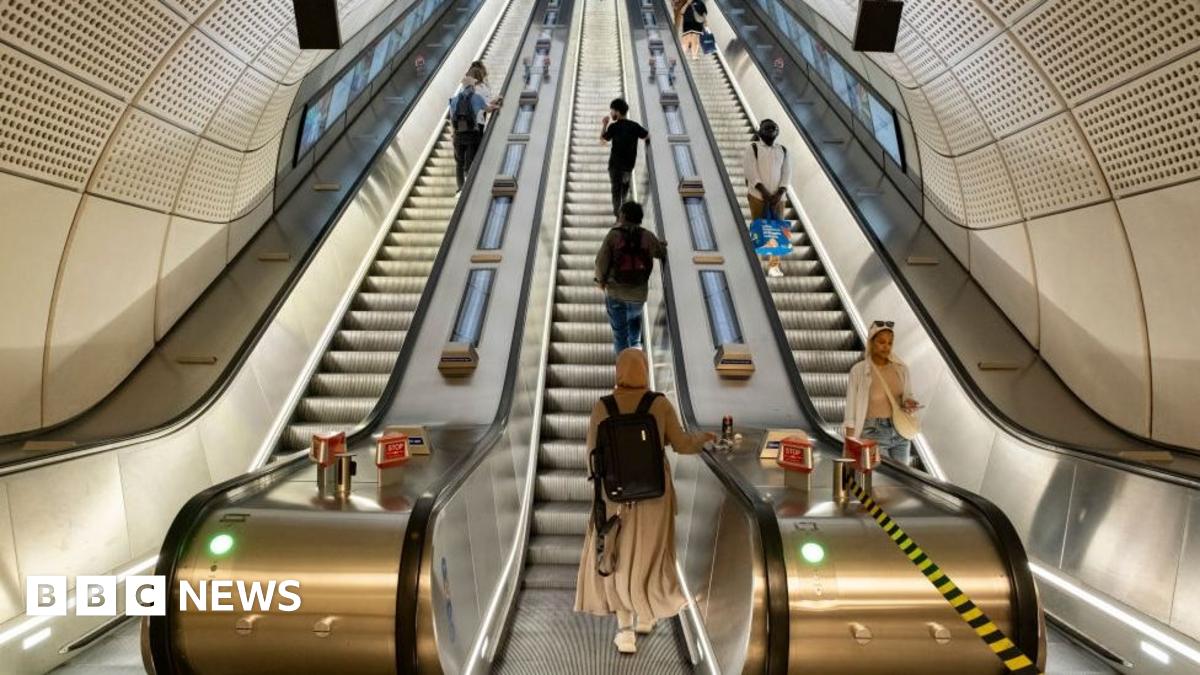
 www.bbc.co.uk
And the report by the RIBA:
www.bbc.co.uk
And the report by the RIBA:
https://www.architecture.com/awards...inners/2024/paddington-elizabeth-line-station
== Doublepost prevention - post automatically merged: ==
London's Elizabeth line wins 2024 Riba Stirling Prize for architecture
The Stirling Prize is normally awarded to a new building, but has gone to the entire train line.
www.bbc.co.uk
I was really rooting for this project, so I am very pleased that the judging panel also came to this conclusion.The Elizabeth Line – London’s new transport network – designed by Grimshaw, Maynard, Equation and AtkinsRéalis has been named as the winner of the 2024 RIBA Stirling Prize.
About The Elizabeth Line
The Elizabeth Line is the result of a remarkable collaboration between architects, engineers and designers. Together, Grimshaw, Maynard, Equation and AtkinsRéalis have designed a highly-inclusive, cohesive transport system that has already evidenced its social, environmental and economic value. By expanding capacity, reducing congestion, supporting Capital-wide regeneration, and creating employment opportunities – the Elizabeth Line continues to contribute to the city’s long-term growth.
The winning scheme comprises platform architecture, passenger tunnels, escalators, station concourses, signage, furniture, fittings, finishes and supporting technology. The 10 new stations have each been designed separately.
Speaking on behalf of the RIBA Stirling Prize jury, Muyiwa Oki, RIBA President and Jury Chair, said:
“The Elizabeth Line is a triumph in architect-led collaboration, offering a flawless, efficient, beautifully choreographed solution to inner-city transport."
It’s an uncluttered canvas that incorporates a slick suite of architectural components to create a consistent, line-wide identity – through which thousands of daily passengers navigate with ease.
Neill McClements, Partner, Grimshaw, on behalf of the line wide design team including Grimshaw, Atkins Realis, Equation and Maynard, said:
“The Elizabeth Line is a piece of infrastructure that has been transformative, not only for London’s transport network but also for many people’s lives, highlighting the role design plays in elevating our every day.
It is also a recognition of the challenges that our profession faces today – the responsibility we have to rapidly respond to the climate emergency, decarbonise our cities and prioritise social and economic equity. We know this is only achievable through collaboration and the Stirling Prize recognises all of the design and construction teams that have come together to make the project the success that it is.”
The Stirling Prize is sponsored by Autodesk.
Entries for the RIBA UK Awards 2025 open on 17 October
Visit the RIBA Stirling Prize 2024 shortlist exhibition at 66 Portland Place, London until 5 November
Buy tickets to the RIBA Stirling Prize winners talk
Find out more about Stirling and Special Awards and hear from the winners on RIBAJ
This award only considers the underground-y bits of the Elizabeth Line, and even then, not really stations like Paddington and Canary Wharf. Paddington actually did make the National Awards...London's Elizabeth line wins 2024 Riba Stirling Prize for architecture
The Stirling Prize is normally awarded to a new building, but has gone to the entire train line.
They obviously didn't take into account lift delays at Paddington or on balance felt even with those it deserved the win.
https://www.architecture.com/awards...inners/2024/paddington-elizabeth-line-station
...but no futher. One wonders if the judging panel also noted the interesting lift situation...Paddington Elizabeth Line Station is a remarkable addition to London's transport network, bringing daylight and fresh air to platform level, in contrast with most underground stations.
To create a seamless and uplifting transition from the Grade I listed Paddington railway station, much of which dates back to the 1850s, architects WW+P used some of the historic station’s motifs within the modern design. Accessibility is at the heart of the project, with lifts showcased at the centre of the station, allowing all to enjoy the same experience of its architecture.
Read the full citation from the RIBA Awards Jury on RIBA Journal.
Contractor Costain Skanska JV
Structural Engineer WSP
Environmental / M&E Engineer WSP
Quantity Surveyor / Cost Consultant WSP
Project Management Costain Skanska JV
Landscape Architect Gillespies
Gross internal area in m² 25000
== Doublepost prevention - post automatically merged: ==
To be fair, it is an architectural award, not a best lift award, or something like that.That does appear to be the preferred approach of the airline industry!
Reading the citation, I'm not convinced that it isn't an award for architects to tell other architects how clever architects are for making something that looks so fantastic. Something as quotidian as a lift doesn't give them the opportunity to boast about 'open sightlines' and 'clear visual language'. Which, to be fair, are important. But so is being able to get your suitcase on the train.
Last edited: