

O L Leigh
Established Member
If there was no compatible DOO equipment on the platforms and no staff to dispatch, it is likely that a Cl377 would not be permitted to run if the on-train DOO equipment was defective.
In this situation, the only dispatch alternative would be for the driver to get out and stand in a position where he/she can see the entire length of the train to self-dispatch or go down the train closing up each coach individually using the "porter buttons". Both are time consuming and will cause delay (I know as I've had to do both on ocassion where there is no staff at a staffed station), so if this had to be done as a matter of course at every station the train would quickly be pulled.
However, I don't believe this is going to be a problem for FCC as the DOO platform equipment still needs to be there for the Cl319's.
O L Leigh
In this situation, the only dispatch alternative would be for the driver to get out and stand in a position where he/she can see the entire length of the train to self-dispatch or go down the train closing up each coach individually using the "porter buttons". Both are time consuming and will cause delay (I know as I've had to do both on ocassion where there is no staff at a staffed station), so if this had to be done as a matter of course at every station the train would quickly be pulled.
However, I don't believe this is going to be a problem for FCC as the DOO platform equipment still needs to be there for the Cl319's.
O L Leigh
 Dispatch methods on Thameslink North these days are certainly different to the pre-BedPan EMU era, after which the line I understand was (one of) the first to become DOO but not without a fight from the trade unions.
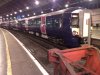
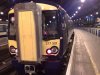

 Purely out of curiosity I do wonder how a FCC-spec interior would have turned out (2+3 throughout SC perhaps?).
 But there's still the next delivery to look forward to on Friday night...hopefully.