
• Our new ticketing site is now live! Using either this or the original site (both powered by TrainSplit) helps support the running of the forum with every ticket purchase! Find out more and ask any questions/give us feedback in this thread!

TfL wheelchair priority

SalopBuses

Member
Joined
26 Jul 2026
Messages
31
Location
Telford
Many clips have been going viral recently of TFL drivers refusing access to wheelchair users simply due to buggies and prams being in the legally designated wheelchair space.
I would like to know everyone else's opinion on this and how do we also get TFL to sort it out? Wheelchair users fought for that space, I believe if pram users want a space they should protest for it themself, I like to think of it like this: you choose to have a child, you need to be prepared for the consequences of having a child that you knew would happen, you don't choose to have a disability, you did not know of the consequences of you have a disability.

In my opinion unless the child in the pram is disabled or is being used as a mobility aid itself, the pram should be folded, I believe the pram should be folded before boarding the bus as this avoids issues later in the journey, I also believe if the bus is getting very busy and there are no seats left the pram should also be folded as to make more standing space and allow passengers to sit in the folding seats.
 
Sponsor Post - registered members do not see these adverts; click here to register, or click here to log in
R

RailUK Forums

Bletchleyite

Veteran Member
Joined
20 Oct 2014
Messages
112,941
Location
"Marston Vale mafia"
In my opinion unless the child in the pram is disabled or is being used as a mobility aid itself, the pram should be folded, I believe the pram should be folded before boarding the bus as this avoids issues later in the journey, I also believe if the bus is getting very busy and there are no seats left the pram should also be folded as to make more standing space and allow passengers to sit in the folding seats.

Personally I would rather all tip-up seats were removed from all modes of transport. They cause conflict, and if the bus or train is busy it's needed for standees anyway, sitting down takes the space of two people standing.
 

Mark L

Member
Joined
12 Dec 2023
Messages
313
Location
West London
Many clips have been going viral recently of TFL drivers refusing access to wheelchair users simply due to buggies and prams being in the legally designated wheelchair space.
I would like to know everyone else's opinion on this and how do we also get TFL to sort it out? Wheelchair users fought for that space, I believe if pram users want a space they should protest for it themself, I like to think of it like this: you choose to have a child, you need to be prepared for the consequences of having a child that you knew would happen, you don't choose to have a disability, you did not know of the consequences of you have a disability.

In my opinion unless the child in the pram is disabled or is being used as a mobility aid itself, the pram should be folded, I believe the pram should be folded before boarding the bus as this avoids issues later in the journey, I also believe if the bus is getting very busy and there are no seats left the pram should also be folded as to make more standing space and allow passengers to sit in the folding seats.
It’s all covered in The Big Red Book. See https://content.tfl.gov.uk/big-red-book.pdf

Page 73 onwards deals with buggies, wheelchairs etc. The problem for drivers is that if other passengers refuse to make space in the wheelchair bay there isn’t really much they can do. On London buses there is a pre-recorded announcement asking passengers to make room for a wheelchair which might shame people into moving. There is, of course, an unanswered question about what should be done on a full bus if a wheelchair user wants to board. Does this mean that other passengers have to get off to make room? There are occasions, particularly on routes operated with single deck buses where this may be an issue.

Interestingly, in your original post you argue that on a busy bus prams should be folded. I would assert that they must be folded to remove any scope for ambiguity.
 

mangad

Member
Joined
20 Jun 2014
Messages
707
Location
Stockport
I lived in London when my eldest child was born, and had no car so we went everywhere by bus, train, tube and tram. So I've experienced using buggies with babies. And I can hands down say this from experience: when you as a parent are alone with your child, it's far far far far far far far far far far far far far far far far far far far easier to wheel a buggy on than to take your child out of the buggy at the bus stop, try to hold them in one hand whilst you fold the buggy up with the other.

Now as it happened, most of the time I got on the bus with a buggy there was either no one occupying the space, or there was one buggy there so you could squeeze another one in. But there were times when there were already two buggies on board meaning a right royal faff to sort out. Meanwhile you have a bus load of passengers who just want to get to where they are going...

Now, I have no recollection of the space ever being needed or being in use by a wheelchair. I never experienced it. But had it happened, I would absolutely have folded my buggy up.

But let's go back to that scenario where there's three buggies already on board and a wheelchair user comes along. And the driver somehow manages to get all the buggy owners to fold their buggies up, and, well, there's a problem. Because where do those three folded buggies go? What about all the bags and shopping being held in the basket under the buggy? The one thing modern buses are not oversupplied with is luggage space. It's not impossible for a situation for the bus to have plenty of space but where the only way to get a wheelchair on is by turfing the buggy users off. I wouldn't want to be a driver who tried to do that.

I say none of this to excuse poor and inconsiderate behaviour. And I am certainly not saying that parents shouldn't be prepared to fold their buggy up to allow a wheelchair user to board. But it has to be said that even the act of folding up a buggy is not a trivial action. Especially when you've got a baby in one hand... Indeed if you want to drive parents off the buses and into cars, never to return to buses again, I'd say the way to do it is to insist they always fold buggies up.
 

computerSaysNo

Established Member
Joined
14 Dec 2018
Messages
1,666
I've edited your opening post to show my opinion:
In my opinion unless the child in the pram is disabled or is being used as a mobility aid itself, the pram should must be folded, I believe the pram should be folded before boarding the bus as this avoids issues later in the journey, I also believe if the bus is getting very busy and there are no seats left the pram should also be folded as to make more standing space and allow passengers to sit in the folding seats.
The other "should"s I agree with. I do think a lot of it comes down to the buggy operator's attitude. If they try to fold up the buggy and are just having trouble, personally I would absolutely offer to help fold it, and help find a safe place for it elsewhere on the bus.
As part of the "would you be able to leave the bus so that this wheelchair user can get on" I would also always offer them a ticket so that they can continue their journey on a following bus for free.
If the buggy operator refuses to engage or fold the buggy or vacate the space I would ask the wheelchair user whether they had to get this bus to avoid escalating the conflict as far as possible (i.e. can the wheelchair user take a following bus). I'm aware though that the wheelchair user is by definition vulnerable, and I don't want to put them under pressure to take a later bus as, as previously mentioned, legally the space on the bus is for them, and they might agree to take a later bus just to avoid conflict which isn't fair, so unless they give a positive answer ("yes that's fine no problem") (i.e. if they give a neutral or negative answer, or they hesitate, or they give a positive answer but their body language suggests they didn't want to), then I'll stand the bus (turn the bus off and not move it further) until the buggy moves from the space and the wheelchair can get on.
Wheelchair users likely experience other difficulties in their life and I'm going to do everything I can do to make bus travel as easy as possible for them.

These comments are my own feelings alone and may not reflect the position of my current, previous or any future employers.
 

Dwarfer1979

Member
Joined
24 Feb 2025
Messages
437
Location
Leicester
Personally I would rather all tip-up seats were removed from all modes of transport. They cause conflict, and if the bus or train is busy it's needed for standees anyway, sitting down takes the space of two people standing.
London has for a long time not had tip-ups but I believe it has started to move back because not having them makes it difficult for parents to remain in control of pushchairs, particularly on London spec dual-door buses where the bay is just before the step so there aren't the normal seats in the right place anyway - they either had to stand for the entire journey or leave the child somewhat unattended.

Requiring pushchairs to always be folded is a good way to make buses unattractive and drive away one of the areas of fare payer strength. It is one way buses have an advantage of cars is with parents with young children as they can wheel the child on and off without disturbing them whereas if they use their car they have to get the child in and out of a car seat. If they have to get the child in and out of a pushchair (& handle a child, folded pushchair & shopping on their own) they will just go back to the car or not be able to go out as often.

The legal position has always been somewhat grey but essentially I think the result of a legal case in West Yorkshire was that the driver should instruct and if the parent refuses to fold up to not move until compliance is achieved even though the driver doesn't have the legal right to force removal (though a case at a similar time in Darlington said the driver could not force compliance) - though this leaves all sorts of issues around passengers ganging up and pressuring either the parent or wheelchair user which were not addressed. Having a second bay, as is common on provincial spec vehicles (& I think is a requirement with some funded vehicles like the ZEBRA scheme), or a small buggy space with single seats at the front is a way to avoid or at least reduce this conflict but it is harder with dual-door vehicles where low floor seating space is already at a premium.
 

Mark L

Member
Joined
12 Dec 2023
Messages
313
Location
West London
Zebra 2 funded buses with a passenger capacity over 22 must have a second space that is large enough for a wheelchair or two unfolded buggies. The only dual door vehicles so funded that I’m aware of are the Electroliners recently delivered to Brighton & Hove.
 

AlterEgo

Verified Rep - Wingin' It! Paul Lucas
Joined
30 Dec 2008
Messages
29,175
Location
LBK
The legal position as per Paulley v FirstGroup is that while wheelchair users have priority, a driver cannot actually force a buggy user to vacate the space. The driver must however make more than a casual request for the space to be vacated. What additional steps those might be is unclear. This represented a limited victory for Paulley at the time.
 

styles

Established Member
Joined
7 Dec 2014
Messages
4,614
Location
Gwynedd
The legal position as per Paulley v FirstGroup is that while wheelchair users have priority, a driver cannot actually force a buggy user to vacate the space. The driver must however make more than a casual request for the space to be vacated. What additional steps those might be is unclear. This represented a limited victory for Paulley at the time.
Indeed, and simply refusing board to the wheelchair user without trying to persuade pram/buggy users to vacate it, as described by OP, isn't what they should be doing.

That said, there's nothing preventing TfL from going above what is legally required and implementing a rule which says non-wheelchair users must vacate it if a wheelchair user needs it. They would have to think about what to do if the bus is so rammed that there's nowhere for the parent and child to go with their buggy (folded or unfolded) but there's a couple of options they could go with.
 

Qwerty133

Established Member
Joined
7 Oct 2012
Messages
2,619
Location
Leicester/Sheffield
Indeed, and simply refusing board to the wheelchair user without trying to persuade pram/buggy users to vacate it, as described by OP, isn't what they should be doing.

That said, there's nothing preventing TfL from going above what is legally required and implementing a rule which says non-wheelchair users must vacate it if a wheelchair user needs it. They would have to think about what to do if the bus is so rammed that there's nowhere for the parent and child to go with their buggy (folded or unfolded) but there's a couple of options they could go with.
Surely at the point at which the bus is at capacity and no more passengers are able to board the common-sense approach would be simply to say that the bus is full and that no passengers are able to board regardless of disability status. Whilst it is reasonable to expect other passengers to move to other parts of the vehicle where space is available it is not reasonable to ask anybody to alight in order to make space for another customer.
The bigger challenge in many areas is the number of elderly people and others with reduced mobility who are not in wheelchairs often being greater than the amount of floor level seats, or even downstairs seats in general, if the tip up seats in the wheelchair space are unavailable to them as clearly it is not reasonable to expect many such people to be able to make their way to the seats upstairs or to stand for any distance.
 

AlterEgo

Verified Rep - Wingin' It! Paul Lucas
Joined
30 Dec 2008
Messages
29,175
Location
LBK
They would have to think about what to do if the bus is so rammed that there's nowhere for the parent and child to go with their buggy (folded or unfolded) but there's a couple of options they could go with.
Nothing, surely. If a bus is so rammed nobody else can board, the wheelchair user being told they cannot get on is not being treated disfavourably compared to an able bodied person.
 

styles

Established Member
Joined
7 Dec 2014
Messages
4,614
Location
Gwynedd
Nothing, surely. If a bus is so rammed nobody else can board, the wheelchair user being told they cannot get on is not being treated disfavourably compared to an able bodied person.
Of course, this would be my answer also, just saying it's something they'd have to formalise into a policy to prevent inconsistent experience e.g. drivers trying to remove existing passengers to make space for a wheelchair user etc
 

BuhSnarf

Member
Joined
22 May 2010
Messages
713
Location
Leicester
I lived in London when my eldest child was born, and had no car so we went everywhere by bus, train, tube and tram. So I've experienced using buggies with babies. And I can hands down say this from experience: when you as a parent are alone with your child, it's far far far far far far far far far far far far far far far far far far far easier to wheel a buggy on than to take your child out of the buggy at the bus stop, try to hold them in one hand whilst you fold the buggy up with the other.

Now as it happened, most of the time I got on the bus with a buggy there was either no one occupying the space, or there was one buggy there so you could squeeze another one in. But there were times when there were already two buggies on board meaning a right royal faff to sort out. Meanwhile you have a bus load of passengers who just want to get to where they are going...

Now, I have no recollection of the space ever being needed or being in use by a wheelchair. I never experienced it. But had it happened, I would absolutely have folded my buggy up.

But let's go back to that scenario where there's three buggies already on board and a wheelchair user comes along. And the driver somehow manages to get all the buggy owners to fold their buggies up, and, well, there's a problem. Because where do those three folded buggies go? What about all the bags and shopping being held in the basket under the buggy? The one thing modern buses are not oversupplied with is luggage space. It's not impossible for a situation for the bus to have plenty of space but where the only way to get a wheelchair on is by turfing the buggy users off. I wouldn't want to be a driver who tried to do that.

I say none of this to excuse poor and inconsiderate behaviour. And I am certainly not saying that parents shouldn't be prepared to fold their buggy up to allow a wheelchair user to board. But it has to be said that even the act of folding up a buggy is not a trivial action. Especially when you've got a baby in one hand... Indeed if you want to drive parents off the buses and into cars, never to return to buses again, I'd say the way to do it is to insist they always fold buggies up.
Agree with everything you've said there. I've been a frequent bus traveller with all three of mine both pre and post low floor buses and it is much easier to wheel the buggy on versus the old way, not to mention buggies now are much bulkier than the old flip up ones.

Again, I think maybe I had one occasion where a wheelchair user needed to get on and without question folded down and let them in - I've never seen people refuse myself but aware there has been a couple of incidents. I would imagine though that these incidents are few and far between as most will do the right thing, but I would imagine that these incidents just get prominence because they're click worthy.
Personally I would rather all tip-up seats were removed from all modes of transport. They cause conflict, and if the bus or train is busy it's needed for standees anyway, sitting down takes the space of two people standing.
Tip up seats are making use of a space that a lot of the time sits empty. Most bus journeys don't have a wheelchair or buggy on board and so the tip up seats give extra space for people to sit. Most people on a bus would prefer to sit rather than stand unless they're only going a few stops. Most buses aren't packed all day, there is maybe one or two trips a day in the rush hour that pack them out. For most of the day buses run quite empty other than on some key routes - even in London.
 

Mwanesh

Member
Joined
14 May 2016
Messages
947
Everyone is correct but most situations now are risky. Stabbings have also made it not worth worth while asking people to move. Its an easy situation to deal with but from a drivers security point of view cant really do much
 

speedy1

Member
Joined
1 Sep 2023
Messages
301
Location
Mossley
It's a kind of opportunity is it not? Record the video, order a taxi, send TfL the receipt for a taxi

(edit: pre-empting some responses: Yes I've assumed the availability of wheelchair taxis in London. Yes I know it would probably take longer to arrive than a bus. Yes buses /should/ be wheelchair accessible. 'Opportunity' also refers to the ability to make it hurt TfL financially)
 

SalopBuses

Member
Joined
26 Jul 2026
Messages
31
Location
Telford
Surely at the point at which the bus is at capacity and no more passengers are able to board the common-sense approach would be simply to say that the bus is full and that no passengers are able to board regardless of disability status. Whilst it is reasonable to expect other passengers to move to other parts of the vehicle where space is available it is not reasonable to ask anybody to alight in order to make space for another customer.
The bigger challenge in many areas is the number of elderly people and others with reduced mobility who are not in wheelchairs often being greater than the amount of floor level seats, or even downstairs seats in general, if the tip up seats in the wheelchair space are unavailable to them as clearly it is not reasonable to expect many such people to be able to make their way to the seats upstairs or to stand for any distance.
I personally think those who are able to in this situation should leave the vehicle and find another way, wheelchair users don't have much choice.

== Doublepost prevention - post automatically merged: ==

I personally think those who are able to in this situation should leave the vehicle and find another way, wheelchair users don't have much choice.
I know this may sound awful but in my area, the last bus of the night is rammed quite alot so if a wheelchair user cannot board that bus then it is unfair compared to an abled bodied person who on the last bus of the night can leave and simply find another way home which a wheelchair user may struggle with.
 

BuhSnarf

Member
Joined
22 May 2010
Messages
713
Location
Leicester
Surely in these situations both an able bodied user and wheelchair user would have the same "choice" if not being allowed to travel. Call up an Uber.

How do you know that the able bodied user can afford that anymore than the wheelchair user? Just because you're able to sit in a seat or stand up doesn't mean you're not vulnerable in other ways (financially, mentally etc.)
 

SalopBuses

Member
Joined
26 Jul 2026
Messages
31
Location
Telford
Surely in these situations both an able bodied user and wheelchair user would have the same "choice" if not being allowed to travel. Call up an Uber.

How do you know that the able bodied user can afford that anymore than the wheelchair user? Just because you're able to sit in a seat or stand up doesn't mean you're not vulnerable in other ways (financially, mentally etc.)
In most areas Ubers are not accessible and many Uber drivers refuse wheelchair users, I have mental health conditions myself and will happily get off the bus if it is rammed so a wheelchair user can safeley board, even if it was the last bus of the night, as an abled bodied person I have way more viable choices than a wheelchair user.
 

tutacre

Member
Joined
27 Feb 2026
Messages
57
Location
Cheshire
I think there is a viable argument too, that a baby is essentially disabled, after all, what really is the difference between a pram and a wheelchair? It is an assistance aid in both instances for humans who have limited or no mobility. Nobody would dare ask a wheelchair user to fold up their wheelchair just because they were with a carer. In any event, a wheelchair user or bus driver cannot possibly know (and cannot ask) a parent/carer whether they are themselves disabled - they may not even be able to fold a pram, or the pram may be just as much a mobility aid for them, as for the child in it. You end up in a very nasty place if you have a hierarchy of disability - what if someone with an even greater level of disability tries to board a bus with the space already occupied by someone else who needs it, but is less disabled, should they too be asked to vacate it? Certainly within rail, there are some wheelchair users who can actually sit elsewhere perfectly happily, but choose to remain in their wheelchair, simply to avail themselves of a discount scheme.

Simply being in a wheelchair does not necessarily make them either a nice or genuine person, nor automatically make them any more entitled or deserving to a particular space - it isn't something which can be (or should be) policed rigidly - if someone is in that space who feels they genuinely need it - who am I to challenge them forcefully, regardless of whether or not a wheelchair user also wants to use it later.
 

Mattplans

Member
Joined
27 Sep 2024
Messages
695
Location
London, UK
Personally I would rather all tip-up seats were removed from all modes of transport. They cause conflict, and if the bus or train is busy it's needed for standees anyway, sitting down takes the space of two people standing.
This is just a ridiculous suggestion. As this space can go un-used on a lot of train services, it is nonsensical to remove them for no reason. Operators need to ensure compliance, and people need to do the right thing and vacate the space where necessary (and they generally do, more than they don't).
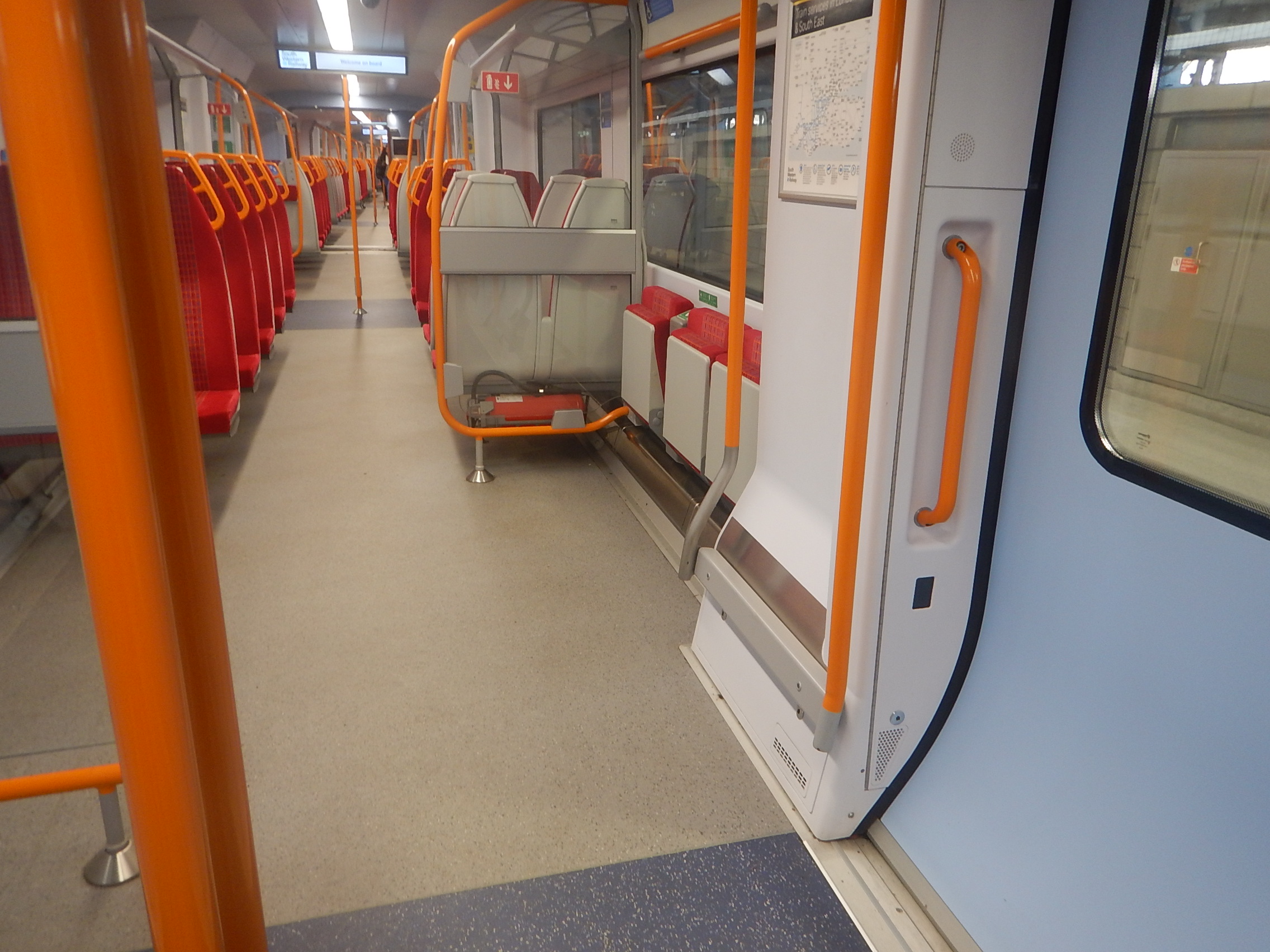
These are the tip-up seats on Class 707s:

dscn0273.jpg

No more standing passengers are going to fit on a service if these are removed. I also think you have not considered the need for carers to remain close to mobility-impaired passengers, and tip-up seats often uniquely allow for this. Perosnally, I actively seek out the tip-up seat on the left when on this class of train as there isn't a lot of leg room on most of the seats on this train.
 

Bletchleyite

Veteran Member
Joined
20 Oct 2014
Messages
112,941
Location
"Marston Vale mafia"
I think there is a viable argument too, that a baby is essentially disabled, after all, what really is the difference between a pram and a wheelchair? It is an assistance aid in both instances for humans who have limited or no mobility. Nobody would dare ask a wheelchair user to fold up their wheelchair just because they were with a carer. In any event, a wheelchair user or bus driver cannot possibly know (and cannot ask) a parent/carer whether they are themselves disabled - they may not even be able to fold a pram, or the pram may be just as much a mobility aid for them, as for the child in it. You end up in a very nasty place if you have a hierarchy of disability - what if someone with an even greater level of disability tries to board a bus with the space already occupied by someone else who needs it, but is less disabled, should they too be asked to vacate it? Certainly within rail, there are some wheelchair users who can actually sit elsewhere perfectly happily, but choose to remain in their wheelchair, simply to avail themselves of a discount scheme.

Simply being in a wheelchair does not necessarily make them either a nice or genuine person, nor automatically make them any more entitled or deserving to a particular space - it isn't something which can be (or should be) policed rigidly - if someone is in that space who feels they genuinely need it - who am I to challenge them forcefully, regardless of whether or not a wheelchair user also wants to use it later.

It is simply about human reasonableness. It is possible for a baby to be held in arms of the parent. It is not possible for a full sized disabled adult to be held in the arms of a carer if they are even with one. Thus the wheelchair user takes priority.

People who consider rights above reasonableness are a big problem in today's society. If for instance as an otherwise fully able bodied wheelchair user* I could transfer to a seat and fold my chair to let another wheelchair user who couldn't board, I would do that.

* I'm not a wheelchair user but you get the idea.

== Doublepost prevention - post automatically merged: ==

This is just a ridiculous suggestion. As this space can go un-used on a lot of train services, it is nonsensical to remove them for no reason.

The point is that (on a train where there's space for dedicated spaces) it must go unused unless a wheelchair user wants it. The "but I'll sit there if not" is no different from "but I'll put my bag there if not" or "but I'll put my bike there if not". Anything other than the absolute creates conflict and results in discrimination. We wouldn't have ended up there if people were reasonable and proactively moved or moved their stuff, but they don't, so an absolute rule is the only sensible option, and the non provision of stuff like tip ups helps.

A bus has less space, but even so I'm not convinced that having the tip ups is helpful overall. A companion can sit in the front row of normal seating which faces the wheelchair bay.
 
Last edited:

Mattplans

Member
Joined
27 Sep 2024
Messages
695
Location
London, UK
I like to think of it like this: you choose to have a child, you need to be prepared for the consequences of having a child that you knew would happen, you don't choose to have a disability, you did not know of the consequences of you have a disability.
I think this is an unnecessarily antagonistic attitude towards the issue, while I agree with the general sentiment of your post.
you choose to have a child, you need to be prepared for the consequences of having a child that you knew would happen
This is not always the case.
Wheelchair users fought for that space, I believe if pram users want a space they should protest for it themself
Which would never happen because it's only ever a temporary issue for parents.
The point is that it must go unused unless a wheelchair user wants it. The "but I'll sit there if not" is no different from "but I'll put my bag there if not" or "but I'll put my bike there if not". Anything other than the absolute creates conflict and results in discrimination.
Not really. A passenger can sit in these seats acknowledging they may need to relinquish their space if someone who needs it boards the service. There's no conflict in being asked to volunteer your seat and standing up and allowing someone else to have it. I wonder, if you consider sitting in 'priority seats' to be a conflict and potentially discriminatory as well? It's not a practical suggestion.

images

(Priority seat on a Southeastern train)

There isn't just an issue when it comes to buggies. Last year, a Croydon mother went viral online for complaining about a bus driver who would not lower the ramp to allow their disabled child in a wheelchair to board the bus. The space was vacant. It was speculated that the driver was worried about the temperamental ramp breakking, which would then cause the bus to be taken out of service. Of course, TfL wrre quick to condemn the behaviour of the driver, but they would have never behaved in this manner if it was not an aspect of their company's culture which would at least be partly attributable to TfL itself. Seems to me that these conflicts are only a symptom of wider issues (public transport that does not meet demand, ironically following a political culture that has encouraged PT use and made it very difficult to travel any other way in most parts of Inner London; lack of investment and maintenance) and these need to be tackled before we address this edge case issue.
 

Bletchleyite

Veteran Member
Joined
20 Oct 2014
Messages
112,941
Location
"Marston Vale mafia"
Not really. A passenger can sit in these seats acknowledging they may need to relinquish their space if someone who needs it boards the service. There's no conflict in being asked to volunteer your seat and standing up and allowing someone else to have it. I wonder, if you consider sitting in 'priority seats' to be a conflict and potentially discriminatory as well? It's not a practical suggestion.

Priority seats are not wheelchair spaces so this is not similar, there are many different reasons for wanting them and people who would need to sit in them can usually sit somewhere else too if another seat is available (though if there isn't the idea is that the priority seat user should be the first to volunteer theirs if sitting there by choice rather than need). A wheelchair may only be carried in the wheelchair space and there is usually only one or at most two, so keeping it available is more important.
 

lachlan

Member
Joined
11 Aug 2019
Messages
1,171
Chances are the able-bodied people blocking the wheelchair space would be able to squeeze on to the next bus or take a different route home that may require walking more. Appreciate buggies make this trickier but the point still stands that someone pushing a buggy is more likely to fit on the next service or be able to find an alternative route back.

This is why, in my view, those in the wheelchair space should disembark to allow the wheelchair user to board. This should be enforced by the driver, who can just refuse to move until people make room for the wheelchair user.
 

Edsmith

Member
Joined
21 Dec 2021
Messages
666
Location
Staplehurst
Chances are the able-bodied people blocking the wheelchair space would be able to squeeze on to the next bus or take a different route home that may require walking more. Appreciate buggies make this trickier but the point still stands that someone pushing a buggy is more likely to fit on the next service or be able to find an alternative route back.

This is why, in my view, those in the wheelchair space should disembark to allow the wheelchair user to board. This should be enforced by the driver, who can just refuse to move until people make room for the wheelchair user.
The driver cannot be expected to try and enforce such rules and turf a mother and toddler off the bus, imagine the possible repercussions of that. And what if the child in the buggy is disabled in some way?

It's first come first served although in most cases other passengers make every effort to accommodate the wheelchair but inevitably there will be situations where that isn't possible.
 

35B

Established Member
Joined
19 Dec 2011
Messages
5,362
Chances are the able-bodied people blocking the wheelchair space would be able to squeeze on to the next bus or take a different route home that may require walking more. Appreciate buggies make this trickier but the point still stands that someone pushing a buggy is more likely to fit on the next service or be able to find an alternative route back.

This is why, in my view, those in the wheelchair space should disembark to allow the wheelchair user to board. This should be enforced by the driver, who can just refuse to move until people make room for the wheelchair user.
There speaks someone who has never had to look after small children, and is making sweeping assumptions about the constraints that they may be under. An obvious one is school pick-up, which is not a negotiable timeslot

The reality is that there is a conflict of interests which relies on reasonableness to be made to work. If there is a genuine buggy or wheelchair issue, that should always be resolved in favour of the wheelchair. But there also needs to be acknowledgement that this is not always easy or straightforward. This has been litigated, and the requirement on the transport operator is to seek to clear the space - not to compel removal.

I would also suggest that one of the reasons why disabled access has been so successful is the way that campaigners have, rightly, sought to broaden their support base by making the point that wheelchair access also helps those with buggies (and indeed walkers).
 

mangad

Member
Joined
20 Jun 2014
Messages
707
Location
Stockport
This is why, in my view, those in the wheelchair space should disembark to allow the wheelchair user to board. This should be enforced by the driver, who can just refuse to move until people make room for the wheelchair user.
Nope. Just no. There are so many practical issues with this that it's hard to know where to begin. Not least that the driver would be put in an incredibly difficult position of trying to throw a passenger off the bus. No driver is going to want to do that, and frankly the risk to the driver is itself enough of a reason not to do it. There's a reason TfL drivers are told to stay in cabs. Then there's the fact a refund would need to be issued. And who is anyone to say anyone else is more worthy of being on the bus than someone else. You don't know the person you're turfing off. They may have a hidden disability.

No. It should never happen. It will never happen.
 

BuhSnarf

Member
Joined
22 May 2010
Messages
713
Location
Leicester
It is simply about human reasonableness. It is possible for a baby to be held in arms of the parent. It is not possible for a full sized disabled adult to be held in the arms of a carer if they are even with one. Thus the wheelchair user takes priority.
It is not always possible for a baby to be held in the arms of the parent, for example if you also have another toddler with you that you are holding.
The point is that (on a train where there's space for dedicated spaces) it must go unused unless a wheelchair user wants it. The "but I'll sit there if not" is no different from "but I'll put my bag there if not" or "but I'll put my bike there if not". Anything other than the absolute creates conflict and results in discrimination. We wouldn't have ended up there if people were reasonable and proactively moved or moved their stuff, but they don't, so an absolute rule is the only sensible option, and the non provision of stuff like tip ups helps.
It's absolutely fine to sit in a wheelchair space if there is no one using it, as long as you vacate the space if a wheelchair user needs it. On average how often is the wheelchair space required? You say that people are not reasonable, yet, I think this is just simply people being caught up in the social media frenzy of one or two incidents being the norm. As frequent users of the bus / train will tell you, in most cases people are very reasonable.
Chances are the able-bodied people blocking the wheelchair space would be able to squeeze on to the next bus or take a different route home that may require walking more. Appreciate buggies make this trickier but the point still stands that someone pushing a buggy is more likely to fit on the next service or be able to find an alternative route back.
And the bus driver will know this person's circumstances to know it's okay to turf them out? There's plenty of reasons why an able bodied person may actually require that bus. Maybe they're making a connection, maybe they're going to pick up their kid from school, maybe they're on the way to court, maybe it's the last bus...
In most areas Ubers are not accessible and many Uber drivers refuse wheelchair users, I have mental health conditions myself and will happily get off the bus if it is rammed so a wheelchair user can safeley board, even if it was the last bus of the night, as an abled bodied person I have way more viable choices than a wheelchair user.
And that is your choice to do so, but there are other people who have mental health conditions for which getting off their planned bus might cause an absolute issue. Other than the highlands of Scotland the majority of the bus network will also have a taxi service that can take the person. Certainly most of the "incidents" we've seen on social media have been in the middle of cities so this isn't an excuse.

It's really quite obvious that many people on this forum have never actually had kids and / or have had little parenting responsibility. Either that, or they just have little compassion for how other people's circumstances may not be the same as their own - and that is okay.
 

Bletchleyite

Veteran Member
Joined
20 Oct 2014
Messages
112,941
Location
"Marston Vale mafia"
It is not always possible for a baby to be held in the arms of the parent, for example if you also have another toddler with you that you are holding.

Perhaps not. But if it is possible, then they should do so. Reasonable adjustments only need to be made for those who cannot do the default, they are not and should not be offered to all.

It's absolutely fine to sit in a wheelchair space if there is no one using it, as long as you vacate the space if a wheelchair user needs it.

The problem is that people refuse to move or are rude about it. If there are no tip up seats the argument can't ensue. It makes disabled peoples' life easier and it makes the driver's life easier. It's only three seats, rarely will the bus be at exactly the level of capacity where they are necessary but where it wouldn't be better as standing space.

Some might happen to prefer side facing seats but that's a different issue. If that preference is so strong perhaps they should revert to the seats over the rear wheel arches being side facing, it would certainly reduce "feet on seats" issues!
 
Last edited:

Qwerty133

Established Member
Joined
7 Oct 2012
Messages
2,619
Location
Leicester/Sheffield
Chances are the able-bodied people blocking the wheelchair space would be able to squeeze on to the next bus or take a different route home that may require walking more. Appreciate buggies make this trickier but the point still stands that someone pushing a buggy is more likely to fit on the next service or be able to find an alternative route back.

This is why, in my view, those in the wheelchair space should disembark to allow the wheelchair user to board. This should be enforced by the driver, who can just refuse to move until people make room for the wheelchair user.
People don’t neatly split into ‘wheelchair users’ and ‘able bodied’ so this line of thinking completely forgets about disabled people who do not use a wheelchair (who may or may not be using other mobility aids). It’s also important to remember that many bus passengers may be unaccompanied minors, vulnerable adults, or people who know the area at either end of their journey but wouldn’t have a clue about how to get from one to the other without the bus or potentially even where they are half way through the journey.
I consider that the wheelchair space should be like accessible hotel rooms in that non-wheelchair users should only be using them when there is no other capacity but when it is the only space available it becomes first come first served.
 

Top