
-
Our new ticketing site is now live! Using either this or the original site (both powered by TrainSplit) helps support the running of the forum with every ticket purchase! Find out more and ask any questions/give us feedback in this thread!
You are using an out of date browser. It may not display this or other websites correctly.
You should upgrade or use an alternative browser.
You should upgrade or use an alternative browser.
Talgo AVRIL
- Thread starter finlaywilson2
- Start date

Sponsor Post - registered members do not see these adverts; click here to register, or click here to log in
R
RailUK Forums

Thanks @matt
 www.trenvista.net
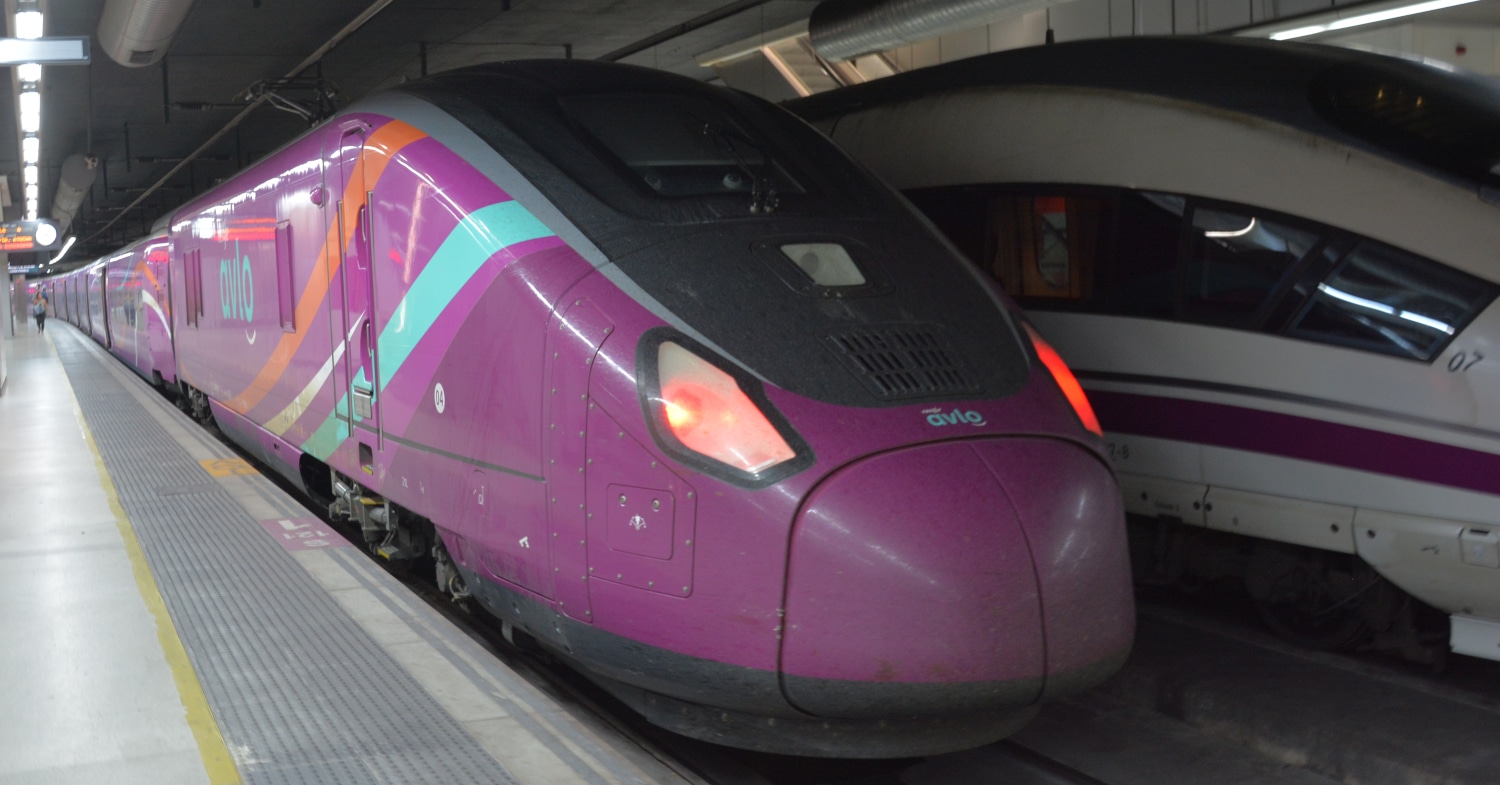
Another critical fault found in Avril stock, bogie cracks were found leading to a total Avlo (the low-cost service of Renfe) service suspension on the HSL, in the middle of the summer season, until the end of August
Rest of the article is paywalled
Cracks detected in the bogies of S106s (Talgo Avril) on the Madrid-Barcelona line
The anomalies that could have generated the cracks occur between Atocha and kp 190+000 of the HSL.
www.trenvista.net
Another critical fault found in Avril stock, bogie cracks were found leading to a total Avlo (the low-cost service of Renfe) service suspension on the HSL, in the middle of the summer season, until the end of August
Renfe has suspended ticket sales on the Avlo Madrid-Barcelona service until 31 August due to cracks detected in the bogies of one of the 106 series trains (Talgo Avril) it uses on the line.
An internal Renfe document to which Trenvista has had access indicates that the operator’s staff have reported vibrations, oscillations, and other anomalies when these trains run at maximum speed on the section between Madrid Puerta de Atocha and kp 190+000 of the 050 Madrid-Barcelona hig-speed line.
Due to these anomalies, the document states, there have been failures in the bogies, necessitating extraordinary maintenance work, during which these cracks were detected.
Rest of the article is paywalled
Fragezeichnen
Member
If only RENFE read RailUK Forums:
There's no paywall when I read it:
This is on the high-speed line right?
Because blimey... I hope its thoroughly investigated.
There's no paywall when I read it:
According to information provided by Renfe, the crack was detected in the frame of a tractor bogie during an inspection on July 21, which led to a thorough inspection of the five units and the suspension of ticket sales on the Avlo service in August while the affected elements were replaced.
Poor infrastructure and defective trains
In addition, on the recommendation of the maintenance company, Renfe Viajeros has limited the maximum speed of these trains to 250 km/h on the aforementioned section.
This temporary limitation must be maintained while Talgo analyses the extent of the anomalies and determines the maximum speed at which they can run on this section without affecting the structure of the bogies.
According to sources in the sector, the fact that the anomalies are centred between km 0+000 and 190+000 is a consequence of the poor state of the road due to, they claim, deficient maintenance of the infrastructure. A bad state of affairs that the train drivers have been denouncing for some time now. According to Renfe, these problems have not been detected on trains running on other lines.
HS2isgood
Member
Three units, 106-002, 106-004 and 106-005 are affected, out of the five allocated to Madrid - Barcelona.

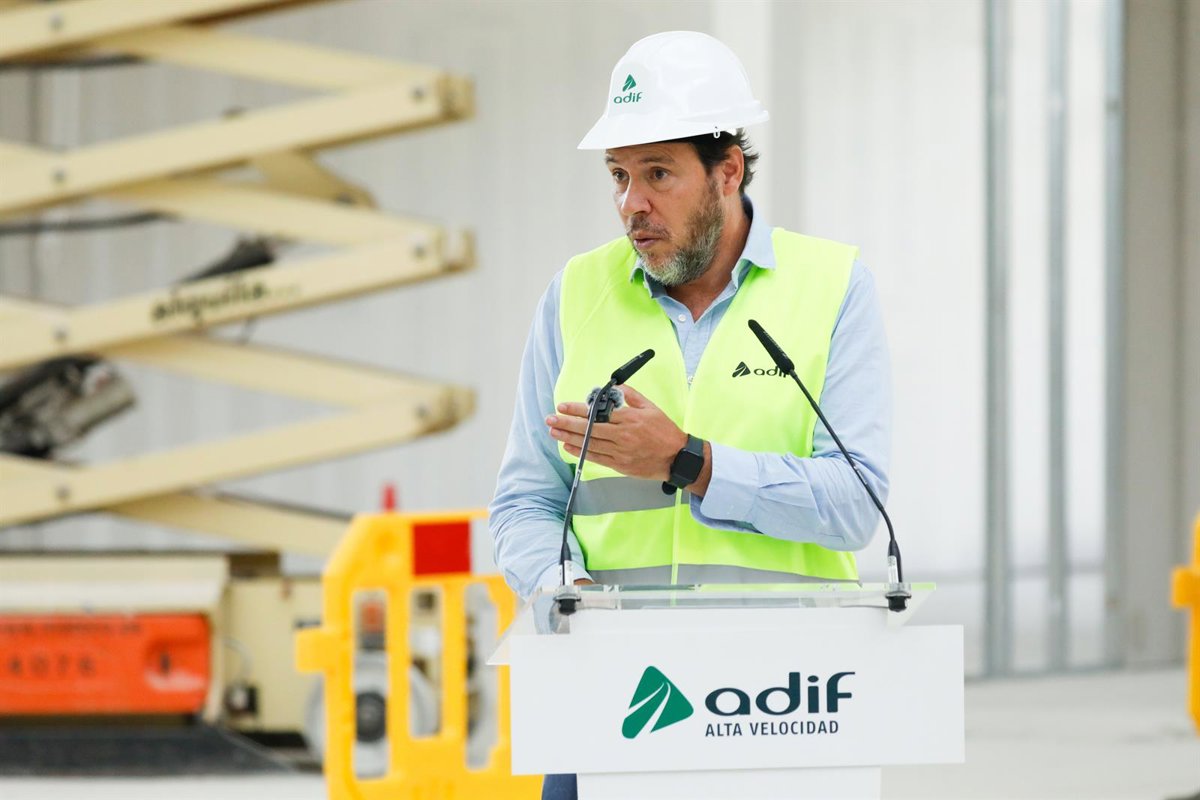
Óscar Puente irá a Alemania a buscar nuevos trenes de Siemens tras los problemas con Talgo
El ministro de Transportes y Movilidad Sostenible, Óscar Puente, ha anunciado este viernes que viajará la...
Óscar Puente will go to Germany to look for new Siemens trains after the problems with Talgo.
Europa Press Economy Finance
@epeconomia
MURCIA Aug. 29 (EUROPA PRESS) -
The Minister of Transport and Sustainable Mobility, Óscar Puente, announced this Friday that he will travel to Germany next week to visit the Siemens train factory, following the problems experienced with the latest high-speed trains delivered by Talgo.
This Friday, the minister visited the construction site of the new Murcia del Carmen train station, where the city's mayor, José Ballesta, asked Puente to increase the frequency of high-speed trains.
The minister has taken up the challenge, but admitted that more trains are needed, after emphasizing that the available equipment has remained the same since 2008, with the exception of the new 106 series trains (Talgo's Avrils), which he asserts "have not yielded the best possible results."
In this regard, Puente announced that he will travel to Germany next week to visit the Siemens factory with the goal of "trying to obtain railway equipment as soon as possible" to improve the service, although the Ministry has not provided further details on this matter.
Just this week, Renfe decided to withdraw its low-cost service on the Madrid-Barcelona line, which was operated with Talgo Avril trains, arguing that the AVE product that will replace the low-cost service "is better suited to the characteristics of the route and the needs of the corporate traveler profile, a frequent visitor on this corridor."
That corridor, the Madrid-Barcelona route, is the most established compared to its competitors, having been operating for more than four years with two operators (Renfe and Ouigo) and for almost three years with three operators (with the addition of Iryo). It is the line with the least "price war," and therefore the one where the "low-cost" product may be least necessary.
Regarding the new Murcia station, he said the project will be completed in 2026, following an investment of €600 million, two-thirds of which has been provided by the Ministry of Transport, through Adif Alta Velocidad, and the remainder by the regional government and the City Council.
Puente asserted that this project "should not be understood in isolation, but rather as a fundamental component of the national railway system and the Mediterranean Corridor," and praised the state of the work, which is in its "final stretch," with 95% completion.
Last edited:
if looking at Velaro wonder what they plan to do with dual gauge services?Óscar Puente irá a Alemania a buscar nuevos trenes de Siemens tras los problemas con Talgo
El ministro de Transportes y Movilidad Sostenible, Óscar Puente, ha anunciado este viernes que viajará la...www.europapress.es
Óscar Puente will go to Germany to look for new Siemens trains after the problems with Talgo.
Gag Halfrunt
Member
- Joined
- 23 Jul 2019
- Messages
- 970
The 406s were withdrawn in April 2025 and are now offered for sale.
Open tender would probably get bids from Hitachi and Alstom too.if looking at Velaro wonder what they plan to do with dual gauge services?
Dual gauge was Talgo’s only selling point and they blew it. The S.130 might now have a longer life with S.730 unconverted as electrification spreads. Or Stadler might fancy the challenge.
Sir Felix Pole
Established Member
RENFE are not strangers to Siemens, of course, with the S103 units, so is not totally surprising. Madrid to Murcia / Alicante is entirely standard gauge as will be Almería so again it is not an issue. I'm not surprised RENFE is abandoning its low-cost avlo service and concentrating on premium AVE services instead. Ouigo is not much of a threat with its limited service and tatty Duplex sets - and is reportedly losing money heavily. iryo is much better, but their fares are no better than RENFE's and there are strict luggage restrictions airline style.

Austriantrain
Established Member
- Joined
- 13 Aug 2018
- Messages
- 1,786
There is a fleet of DB 406 Velaro units sitting around with very little to do right now...
They won‘t be much more reliable than the AVRIL sets.

LNW-GW Joint
Veteran Member
I see the 5-car ICE-T class 415 fleet (11 sets?) are also being retired this year.The 406s were withdrawn in April 2025 and are now offered for sale.
Who owns these retired DB trains: manufacturer, DB or Rosco?
You wouldn't consult Siemens if they are not the owners.
Gag Halfrunt
Member
- Joined
- 23 Jul 2019
- Messages
- 970
They are owned by DB.
You would talk to Siemens if they need to be refurbished or modified for operation in Spain.
You would talk to Siemens if they need to be refurbished or modified for operation in Spain.
I cannot recall ever, in Europe at least, a fleet purchase process starting with a visit by a government minister to a manufacturer.
This looks more like theatre performance to me, we must be seen to be doing something NOW even though real solutions involve lead times of years.
That he has gone to Siemens rather than Alstom also looks political, considering RENFE's problems with France. But Hitachi also have a train already approved to run in Spain.
This looks more like theatre performance to me, we must be seen to be doing something NOW even though real solutions involve lead times of years.
That he has gone to Siemens rather than Alstom also looks political, considering RENFE's problems with France. But Hitachi also have a train already approved to run in Spain.
danshrimp
Member
Some thoughts on this by Jon Worth on Linkedin:They won‘t be much more reliable than the AVRIL sets.
Quickest solution for Renfe? Get Siemens to fix up some ex-DB 406 ICES that are for sale
And note there is some logic to my suggestion here.
ICE 406 is similar to AVE 103 in service with Renfe, 20-odd years old and built by Siemens. 406 is 4 voltage, and was unreliable under dc electrification in Belgium and Netherlands. Were these to run only in Spain it would only be using 25KV ac on high speed lines, so this problem would not apply. 406 is also ETCS equipped, and might even be the right baseline for Spain as well.
And if you pose the question the other way, where *else* would they run under ac only?
France, just about? But TVM430 signalling was removed from the few of these that had it, and avoiding 1.5kV means you can only really run north and east France.
Germany? DB doesn't want them, Flix doesn't. So who else would?
Somewhere south eastern Europe? Serbia maybe? 25kV, 200km/h line. But rail politics beset by other problems.
So Renfe buying them, removing the dc equipment, doing a minor refresh, and running them on Madrid-Barcelona to fill the gaps due to the Talgo 106 failures would make sense.
Austriantrain
Established Member
- Joined
- 13 Aug 2018
- Messages
- 1,786
Some thoughts on this by Jon Worth on Linkedin:
Is Atocha AVE now entirely 25 kV? It used to be 3 kV originally?
In any case, there must be a reason why DB sidelined the units as fast as possible. But I suppose if RENFE is a beggar, it can‘t be a choser.
Last edited:
Gag Halfrunt
Member
- Joined
- 23 Jul 2019
- Messages
- 970
In any case, there must be a reason why DB sidelined the units as fast as possible
After twenty-five years of service.
According to Open Railway Map, all standard gauge tracks at Atocha are 25 kV.Is Atocha AVE now entirely 25 kV? It used to be 3 kV originally?
And I agree that this seems like a good solution for Renfe, even if it's just temporary.
Amalie
Member
They were also incredibly unreliable and filled with problems.In any case, there must be a reason why DB sidelined the units as fast as possible.
That’s good news, but will they also be able to access workshops/sidings/depot solely on AC power?According to Open Railway Map, all standard gauge tracks at Atocha are 25 kV.
That’s good news, but will they also be able to access workshops/sidings/depot solely on AC power?
I thought that most of RENFE's current standard gauge only trains were 25 kV AC only.
HS2isgood
Member
Yeah, there's no problem with 25 kV only for most of Spain
The class 104 and 114 units used for the high speed Medium Distance "Avant" services are 25 kV only standard gauge only.I thought that most of RENFE's current standard gauge only trains were 25 kV AC only.
The original TGV-alike class 100 AVE trains are standard gauge only but dual voltage 25 kV ac and 3 kV dc (*). I think the only time they use their 3 kV capability (nowadays) is when they work services between Madrid Atocha and Castellon de la Plana. The track between Valencia and Castellon de la Plana is dual gauge but must be 3 kV for the suburban service. The use of a 100 on this route can be recognised by the train not calling at Sagunt, as the position of the 'third rail' doesn't allow standard gauge trains to call there (any AVE on the Castellon de la Plana route that calls at Sagunt must be a dual gauge 106 Avril unit; and they usually run to/from Galicia which is a give-away).
(*) some of the 100s have been converted to run on 1.5 kV instead of 3 kV, these get used on the RENFE trains into France.
The class 104 and 114 units used for the high speed Medium Distance "Avant" services are 25 kV only standard gauge only.
I thought the 102/112s and 103s were also 25 kV only.
(But then I also thought the 100s were 25 kV only until recently, which puzzled me as to how any standard gauge long distance train could use the line to Castellon)
Austriantrain
Established Member
- Joined
- 13 Aug 2018
- Messages
- 1,786
Yeah, there's no problem with 25 kV only for most of Spain
Yes, I Missed a beat there. I am pretty sure Atocha AVE was 3 kV in the beginning, but of course, if it still were, Most of the HS stock would not be able to work there. Must have changed two decades or more ago.
You're right on the 102s etc., I was in a bit of a rush at breakfast time..... and probably should have used 'examples' rather than trying to provide a 'complete list'.I thought the 102/112s and 103s were also 25 kV only.
(But then I also thought the 100s were 25 kV only until recently, which puzzled me as to how any standard gauge long distance train could use the line to Castellon)
Austriantrain
Established Member
- Joined
- 13 Aug 2018
- Messages
- 1,786
The facts are that only the 6 sets that were used exclusively on the Madrid to Barcelona LAV have been affected by this. All other S106 remain unaffected. They suspect it's an infrastructure problem causing it.
A spanish site claimed that all trains on the line suffer vibrations on a section out of Madrid. The 100s and 103s cope fine though, the 102s less so and the 106s don‘t. According to that site (https://www.trenvista.net/noticias/s102-talgo-350-madrid-barcelona/).
Sir Felix Pole
Established Member
The opening of the Madrid to Zaragoza section of the LAV was delayed for ages because of 'fissures' under the track bed - it sounds like the problem is returning. Having said that, I travelled on an AVRIL set on the brand new Galician LAV last year and the ride was appalling!
Having just experienced one of these contraptions for the first time, and only from Chamartin to Zamora, I can only say that everything that's been said and written about how shocking they are on pretty much every aspect of the passenger experience is entirely justified! I'm genuinely shocked that anybody could have allowed something like this into service.The opening of the Madrid to Zaragoza section of the LAV was delayed for ages because of 'fissures' under the track bed - it sounds like the problem is returning. Having said that, I travelled on an AVRIL set on the brand new Galician LAV last year and the ride was appalling!
And would I be right in guessing that, with the sets taken off the Barcelona LAV, Catalonia's, ahem, "loss" is Galicia's, err, "gain" - i.e. the 106s are being redeployed?
Genuinely one of the worst trains I have ever been on. And I live in West Yorkshire...!!