• Our new ticketing site is now live! Using either this or the original site (both powered by TrainSplit) helps support the running of the forum with every ticket purchase! Find out more and ask any questions/give us feedback in this thread!

Supermarkets discussion

Sonic1234

Member
Joined
25 Apr 2021
Messages
785
Location
Croydon
You’re lucky to get a staffed checkout of any description in some supermarkets these days so I doubt you’ll get fast and slow lanes!
Not just supermarkets, been surprised how much self checkout has spread to retail beyond supermarkets.

It feels quite retro to go to a staffed till now, the lack of control is a bit disconcerting.
 
Sponsor Post - registered members do not see these adverts; click here to register, or click here to log in
R

RailUK Forums

Peter Sarf

Established Member
Joined
12 Oct 2010
Messages
9,563
Location
Croydon
One thing I often think would be a good idea for tills is to have a designation of 'fast, efficient, in-and-out no frills' lanes, with operators who are speedy and hurl the shopping through at 200mph, and 'slow, calm, have a natter' lanes with the operators who are happy to have a chat and take their time. The customer could thus choose which option is preferred according to their own need.
Ah well in that case I will head for the fast till and then see if I can strike up a conversation with the "highly motivated till operator" !.
 

AM9

Veteran Member
Joined
13 May 2014
Messages
16,006
Location
St Albans
Not just supermarkets, been surprised how much self checkout has spread to retail beyond supermarkets.

It feels quite retro to go to a staffed till now, the lack of control is a bit disconcerting.
It just goes to show how much shrinkage* can be tolerated when the total charges for some employees are avoided.
* I assume that the term is generally known but for those that don't know, shrinkage is losses through theft, damage and some staff errors.
 

Hadders

Veteran Member
Associate Staff
Senior Fares Advisor
Joined
27 Apr 2011
Messages
18,096
It just goes to show how much shrinkage* can be tolerated when the total charges for some employees are avoided.
* I assume that the term is generally known but for those that don't know, shrinkage is losses through theft, damage and some staff errors.
I always define shrinkage as 'the loss of inventory, some of it deliberate some of it accidental'.

Consider a member of staff earning £13.50 an hour for 39 hours a week. That's an annual wage of £27,378
Add employers NI £3,357
Employer Pension Contribution £1,585 (statutory minimum is 3% but the big supermarkets generally match contributions up to 7.5%)
This gives an annual cost of £32,320

In addition you've got the cost of holiday pay, sick pay, training, uniform, recruitement, payroll processing etc.

A typical supermarket opens for around 90 hours a week. Let's say the move to self checkout has cut staff by 10 full time heads (and trust me it's much, much more than that in may stores).

That's a labour saving of around £350k per year. Shrinkage has increased but the labour saving still outweighs the increase in shrinkage.
 

BuhSnarf

Member
Joined
22 May 2010
Messages
713
Location
Leicester
I dunno, some of the larger supermarkets I've worked in that £350k per year wouldn't be anywhere near the amount of shrinkage (and assuming the increase would be more too, plus you're only saving that staff cost once as next year it'll be LFL figures.)

Although, of course, only around 40-50% of total shrinkage comes from customer theft. Shrinkage usually accounts for around 1% of a supermarkets gross sales and many large 'Extra' supermarkets are over £2m gross sales a week easily.
 

Hadders

Veteran Member
Associate Staff
Senior Fares Advisor
Joined
27 Apr 2011
Messages
18,096
I dunno, some of the larger supermarkets I've worked in that £350k per year wouldn't be anywhere near the amount of shrinkage (and assuming the increase would be more too, plus you're only saving that staff cost once as next year it'll be LFL figures.)

Although, of course, only around 40-50% of total shrinkage comes from customer theft. Shrinkage usually accounts for around 1% of a supermarkets gross sales and many large 'Extra' supermarkets are over £2m gross sales a week easily.
The £350k that I mentioned is the incremental shrink, not the full amount. Your Tesco Extra taking £2M per week has lost way more than 10 full time members of staff from their checkouts over the last 10 years. Probably nearer to 30, if not more. Also, if there's 30 less general staff employed fewer supervisors and members of management are required. The supermarkets have been very aggressive in cutting these position over the last few years.
 

Hadders

Veteran Member
Associate Staff
Senior Fares Advisor
Joined
27 Apr 2011
Messages
18,096
An industry oxymoron that always puzzles me. Retails short fare fraudsters?
I’m afraid it’s true that staff account for half of retail shrinkage.

I’m not saying that this is the case in every store, or that this amount is all down to staff theft but shrinkage is much, much more than what customers steal (although that is a significant factor)

== Doublepost prevention - post automatically merged: ==

I assume employee theft, damaged products, items that go unsold (primarily perishables) and missing items on a delivery .
Items that go out of date should be recorded as wastage, so they aren’t unknown loss (or shrinkage).

Of course, if staff don’t record it as waste (for whatever reason) then it becomes unknown loss and corrupts the store inventory file.
 

Harpo

Established Member
Joined
21 Aug 2024
Messages
3,731
Location
Newport
I’m afraid it’s true that staff account for half of retail shrinkage.
I did a stint in a big supermarket with a grown-up from HQ expected and an embarassing backlog of highish value items still not out on the shopfloor. They good ‘hidden’ in managers’ car boots……
 

Peter Sarf

Established Member
Joined
12 Oct 2010
Messages
9,563
Location
Croydon
I always define shrinkage as 'the loss of inventory, some of it deliberate some of it accidental'.

Consider a member of staff earning £13.50 an hour for 39 hours a week. That's an annual wage of £27,378
Add employers NI £3,357
Employer Pension Contribution £1,585 (statutory minimum is 3% but the big supermarkets generally match contributions up to 7.5%)
This gives an annual cost of £32,320

In addition you've got the cost of holiday pay, sick pay, training, uniform, recruitement, payroll processing etc.

A typical supermarket opens for around 90 hours a week. Let's say the move to self checkout has cut staff by 10 full time heads (and trust me it's much, much more than that in may stores).

That's a labour saving of around £350k per year. Shrinkage has increased but the labour saving still outweighs the increase in shrinkage.
Shrinkage from theft could be the thin end of the wedge. I say this as I feel theft is getting more and more common over time. So once a preventative measure is lost there is a steady increase of theft over several years.
 

BuhSnarf

Member
Joined
22 May 2010
Messages
713
Location
Leicester
Of course? What's the other 50-60%? :s
Employee theft (VERY big in some stores), missing items from deliveries (either intentional "it fell off the back of a lorry" or just basic picking errors) and one of the biggest ones in large stores is wastage which comes from many avenues - out of date stock, customers putting frozen items just on shelves when they decide they don't want it, damaged items and my personal favourite was staff damaging items so they can have it at a knock down price.

As you can imagine if you're a organised stealing ring, why send in people to the store who might get caught and can only carry a trolleys worth of goods when you can just pay off the manager to have the stock walking out the back door in much larger quantities.

If you work in loss prevention it can be very eye opening.
 

Peter Sarf

Established Member
Joined
12 Oct 2010
Messages
9,563
Location
Croydon
Employee theft (VERY big in some stores), missing items from deliveries (either intentional "it fell off the back of a lorry" or just basic picking errors) and one of the biggest ones in large stores is wastage which comes from many avenues - out of date stock, customers putting frozen items just on shelves when they decide they don't want it, damaged items and my personal favourite was staff damaging items so they can have it at a knock down price.

As you can imagine if you're a organised stealing ring, why send in people to the store who might get caught and can only carry a trolleys worth of goods when you can just pay off the manager to have the stock walking out the back door in much larger quantities.

If you work in loss prevention it can be very eye opening.
When I worked in Tescos as a Saturday boy there were at least two members of staff who collected the discarded cabbage etc leaves into boxes to take home for their rabbits. One day the head butcher and some other staff did not appear and never re-appeared. I found out quite quickly that the rabbits were not necessarily eating the prime cuts of meat hidden amongst the cabbage leaves !.
 

PeterC

Established Member
Joined
29 Sep 2014
Messages
4,765
I worked for an IT consultancy in the head office of a major supermarket for a while. I remember the story of a "customer" who had acquired a stock if the yellow sticky labels used for price reductions and printed there own (this was before they were barcoded). If they had stuck to high value perishables they would have had a much longer run of success. A trolly load of nappies, and wines & spirits was a bit of a giveaway.
 

The exile

Established Member
Joined
31 Mar 2010
Messages
9,305
Location
Somerset
Shrinkage from theft could be the thin end of the wedge. I say this as I feel theft is getting more and more common over time. So once a preventative measure is lost there is a steady increase of theft over several years.
I think this is a point often overlooked in lots of aspects of life in general. To stick with this example, you cut staff and thus security, shrinkage goes up by a small amount in the first year. The bean-counters are triumphant at the money they’ve saved (and proving the “prophets of doom” wrong). What they didn’t account for is behavioural inertia - that shrinkage is going to rise every year as fewer and fewer people are held back by their conscience.
 

BuhSnarf

Member
Joined
22 May 2010
Messages
713
Location
Leicester
I worked for an IT consultancy in the head office of a major supermarket for a while. I remember the story of a "customer" who had acquired a stock if the yellow sticky labels used for price reductions and printed there own (this was before they were barcoded). If they had stuck to high value perishables they would have had a much longer run of success. A trolly load of nappies, and wines & spirits was a bit of a giveaway.
Oh, yes... I remember this behaviour but from a member of staff and they'd been getting away for it for a few years until they "whoopsied" a TV down to £10. It is usually greed that ends up getting people caught. If you are clever and do just small amounts you can get away with it for ever as you'll never get caught.
 

Forty29

Member
Joined
10 Dec 2021
Messages
758
Location
Bicester
Yesterday Friday 14th had two major supermarkets closed at the same time for a while. Tesco Bicester( flooded)and Sainsbury's( car park closed).
Needless to say Aldi and Lidl rammed!
 

styles

Established Member
Joined
7 Dec 2014
Messages
4,614
Location
Gwynedd
Another day, another failure of Sainsbury's' facial recognition approach:


BBC News said:
Sainsbury's has suspended its use of live facial recognition technology at one of its London branches after a customer was wrongly challenged as a shoplifter and asked to leave.
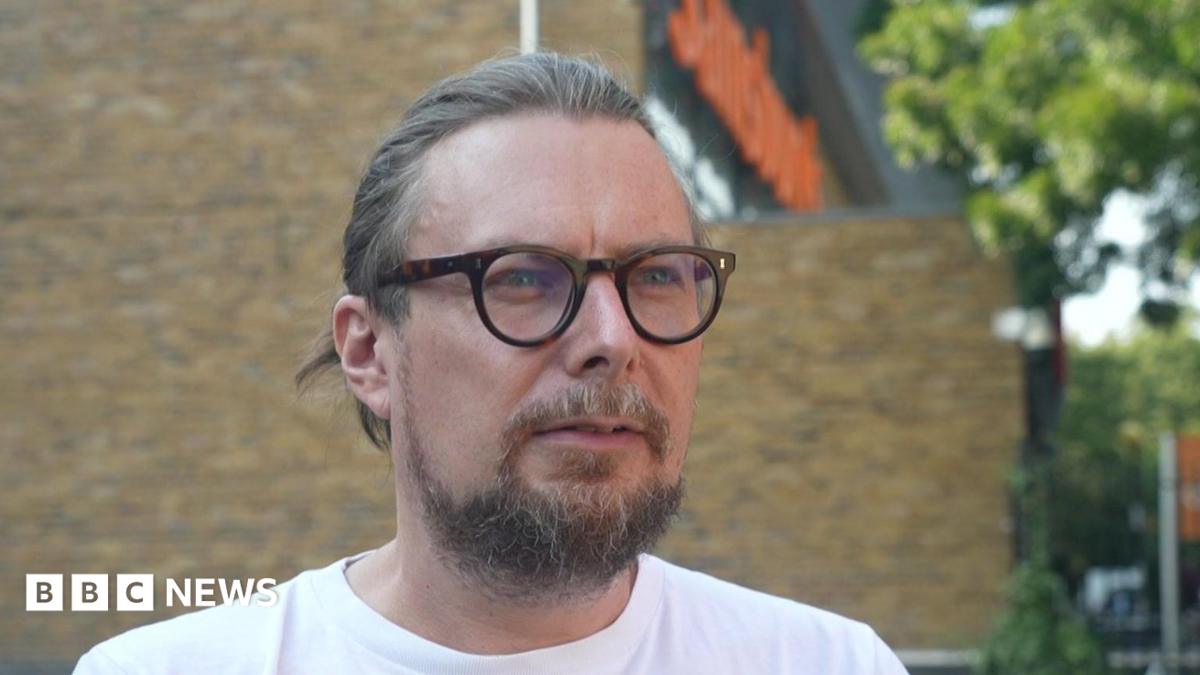
Matt Arnold, 46, was buying items at the East Dulwich store when he was stopped by management at a self-service till.
Describing the experience as a "terrifying glimpse of the future," he has warned that retail surveillance tech risks humiliating customers and creating a system where staff feel compelled to follow automated alerts without applying human logic.
The supermarket said it had apologised to Arnold and claimed the mistake was "caused by human error", but critics have called for the technology to be scrapped.
The incident happened on 6 August as Arnold - a comedy promoter getting supplies for a stand-up event hosted at the next door Dulwich Hamlet Football Club - was waiting for a staff member to approve an alcohol purchase.
Having already scanned his items alongside his Nectar loyalty card, he said he had waved an attendant over.
Instead, he said he was approached by two of the management staff and told he could not be served due to an incident "earlier in the week".

'People just listen to the machine'​

"They came over and said I had to leave. The staff member said I'd been identified by the AI, and the cameras had flagged me," he told BBC London.
"A shoplifter does not walk around with that much shopping, they don't scan it through, they don't put their Nectar card through.
"But what upset me was thinking this is what the future could be - people just listen to what the machine tells them to do without thinking about the consequences."
After being escorted off the premises, Arnold said he had looked back from the entrance and saw an overhead CCTV monitor alert with a red circle surrounding his face.
 

BuhSnarf

Member
Joined
22 May 2010
Messages
713
Location
Leicester
Appears to be more a failure with the customer service team rather than the AI.

Just because the software flags the person up, it shouldn't stop the in store team using their own skills to profile the customer. I mean, that's Retail 101.
 

styles

Established Member
Joined
7 Dec 2014
Messages
4,614
Location
Gwynedd
Appears to be more a failure with the customer service team rather than the AI.

Just because the software flags the person up, it shouldn't stop the in store team using their own skills to profile the customer. I mean, that's Retail 101.
Well, the AI has incorrectly flagged somebody up, and then the Sainsbury's policy has failed to prevent that instantly escalating to ejecting a customer rather than prompting a more rationale human response which attempts to identify whether the AI is correct or not.

The combination of the two is the failure.
 

BuhSnarf

Member
Joined
22 May 2010
Messages
713
Location
Leicester
Well, the AI has incorrectly flagged somebody up, and then the Sainsbury's policy has failed to prevent that instantly escalating to ejecting a customer rather than prompting a more rationale human response which attempts to identify whether the AI is correct or not.

The combination of the two is the failure.
I guess it depends on what exactly is displayed within the store. I've not used the Facewatch system myself, but certainly in systems I've used the way it's presented is that it says something along the lines of "potential "shoplifter" detected, x% accuracy" - if it presents in this way to Sainsbury's staff then I think it's staff error.

Certainly in the systems I've used it's always quoted how accurate it thinks that the face match is and then if it's over a certain %age it will generate an alert but then it's down to whoever has received the alert to verify. I've not used it in a shoplifter scenario but I'd hope it's a similar approach. Ones I've used also caveat it by reiterating that human verification is needed as AI can make mistakes.

However, if just a message that says "this is a shoplifter" then yeah, the AI software is definitely at fault.
 

Kite159

Veteran Member
Joined
27 Jan 2014
Messages
22,708
Location
West of Andover
Well, the AI has incorrectly flagged somebody up, and then the Sainsbury's policy has failed to prevent that instantly escalating to ejecting a customer rather than prompting a more rationale human response which attempts to identify whether the AI is correct or not.

The combination of the two is the failure.
They are probably the same staff who will refuse to sell an OAP a bottle of alcohol because she hasn't got ID and they lack the common sense to bypass the ID check
 

eyebrook1961

Member
Joined
13 Jul 2023
Messages
76
Location
loughborough
What I find odd (and I know it's not the staff's fault, but why do supermarkets insist on people showing I.D. for sales of alcohol free cider? My son, who is 24, likes the alcohol free kopperberg (as do I) and the one sold in Aldi, but both places insist on I.D. before they will sell it
I understand there's probably still a miniscule amount of alcohol left in it but it's less than what you get in a tinned or bottled shandy.
Just wondered if those of you in the industry knew why?
 

styles

Established Member
Joined
7 Dec 2014
Messages
4,614
Location
Gwynedd
What I find odd (and I know it's not the staff's fault, but why do supermarkets insist on people showing I.D. for sales of alcohol free cider? My son, who is 24, likes the alcohol free kopperberg (as do I) and the one sold in Aldi, but both places insist on I.D. before they will sell it
I understand there's probably still a miniscule amount of alcohol left in it but it's less than what you get in a tinned or bottled shandy.
Just wondered if those of you in the industry knew why?
I've always suspected that it's simply because they're lumped into the same 'beers, wines, and spirits' category, but I don't know this for sure.

Alcohol-free (up to 0.05%) and de-alcoholised (up to 0.5%) drinks can be sold to anyone, and no licence is required to sell them either. This is in England & Wales and in Scotland at least, not sure about Northern Ireland.

I had the same issue years ago when I was at uni. I quite fancied a few beers but had an exam the next day so got some Bavaria 0 (I'm glad there are loads better options these days!) and staff at the local Tesco Express refused my sale because I didn't have ID with me. I asked them why and they said it's because it could be a gateway to drinking alcohol :s I assume a lot of front-line staff members just make up the reason for it rather than actually knowing the answer or admitting they don't know.

Because yes, you're right, a can of Ben Shaw's Shandy from the soft drinks aisle is up to 0.5% alcohol and doesn't get flagged for ID/Challenge 25. You've got as much chance of getting drunk off white bread as you have drinking a case of Carlsberg 0.
 

Hadders

Veteran Member
Associate Staff
Senior Fares Advisor
Joined
27 Apr 2011
Messages
18,096
Another day, another failure of Sainsbury's' facial recognition approach:

Back in the day, when mug shots of people who were 'barred' were pinned up in the back areas of stores, and often circulated to neighbouring stores - how many people were incorrectly asked to leave a store.

I'd say it was rather higher than the errors that are seen with facial recognition systems.

There are several areas where the Dulwich incident could've gone wrong:

1. Was the person added to the 'watch list' incorrectly?
2. Did the system mis-identify the person?
3. Did the staff mis-identify the person following an alert?

My pocket money is on option 1 or option 3.
 

styles

Established Member
Joined
7 Dec 2014
Messages
4,614
Location
Gwynedd
Back in the day, when mug shots of people who were 'barred' were pinned up in the back areas of stores, and often circulated to neighbouring stores - how many people were incorrectly asked to leave a store.

I'd say it was rather higher than the errors that are seen with facial recognition systems.
Quite possibly, but I'd levy the same criticism on the policy or policy implementation of that also. You wouldn't just see someone who looks vaguely like a blurry photo you have on the wall and say we're not serving you and please leave. You'd presumably take the context into consideration, maybe ask them a couple of quick questions to help ascertain whether they are the person in the mugshot.
There are several areas where the Dulwich incident could've gone wrong:

1. Was the person added to the 'watch list' incorrectly?
2. Did the system mis-identify the person?
3. Did the staff mis-identify the person following an alert?

My pocket money is on option 1 or option 3.
I suspect it's a combination of 2 and 3. Without being rude to the chap, he looks like a fairly typical mid-40s Londoner. I can see how facial recognition may identify him as somebody else. I haven't worked in shops with this technology but I would hope that it would provide some sort of confidence score, not just match or no-match. Blindly trusting a mug shot or blindly trusting facial recognition software will continue to cause Sainsbury's problems if they don't change their approach. And honestly my bet is that Sainsbury's actually have a policy on handling flags from their facial recognition software and the multiple incidents they've had are a result of staff not following the policy.
 

Harpo

Established Member
Joined
21 Aug 2024
Messages
3,731
Location
Newport
Staying with Sainsburys but shopping, our local medium-size branch no longer sells (much cheaper) own brand stain remover powders, just (much more expensive, of course) Vanish.

Less, from Sainsburys.
 

dgl

Established Member
Joined
5 Oct 2014
Messages
3,039
What I find odd (and I know it's not the staff's fault, but why do supermarkets insist on people showing I.D. for sales of alcohol free cider? My son, who is 24, likes the alcohol free kopperberg (as do I) and the one sold in Aldi, but both places insist on I.D. before they will sell it
I understand there's probably still a miniscule amount of alcohol left in it but it's less than what you get in a tinned or bottled shandy.
Just wondered if those of you in the industry knew why?
Because, as I understand, it's the law and they can't sell alcohol free booze to under 18's so as not to promote drinking. They can, however, have an alcohol free drink in a pub when under 18.
 

styles

Established Member
Joined
7 Dec 2014
Messages
4,614
Location
Gwynedd
Because, as I understand, it's the law and they can't sell alcohol free booze to under 18's so as not to promote drinking. They can, however, have an alcohol free drink in a pub when under 18.
It's not the law.

Drinks up to 0.5% are out of scope of the Licensing Act in England & Wales, and also in Scotland, and I suspect Northern Ireland. You don't need a licence to sell them, and you can sell them to a 1 week old baby if you fancied it.


191Meaning of “alcohol”

(1)In this Act, “alcohol” means spirits, wine, beer, cider or any other fermented, distilled or spirituous liquor [F1(in any state)], but does not include—

(a)alcohol which is of a strength not exceeding 0.5% at the time of the sale or supply in question,

(b)perfume,

(c)flavouring essences recognised by the Commissioners of Customs and Excise as not being intended for consumption as or with dutiable alcoholic liquor,

(d)the aromatic flavouring essence commonly known as Angostura bitters,

(e)alcohol which is, or is included in, a medicinal product [F2or a veterinary medicinal product],

(f)denatured alcohol,

(g)methyl alcohol,

(h)naphtha, or

(i)alcohol contained in liqueur confectionery.

In certain circumstances, under-18s can have a regular alcoholic drink in a pub, though that's not really related to supermarkets so I'll leave that for another thread!

Edit to add: regarding binge drinking - you'd have to drink 100+ pints of 'alcohol-free' or 10+ pints of 'de-alcoholised' beer to get the same amount of alcohol as a single pint of regular beer. At this point, you've either spread it out over such a length of time that the alcohol has worn off by the time you've consumed the total amount, or you're in hospital from water intoxication.
 
Last edited:

Top