• Our new ticketing site is now live! Using either this or the original site (both powered by TrainSplit) helps support the running of the forum with every ticket purchase! Find out more and ask any questions/give us feedback in this thread!

Stratford Depot codes

Status
Not open for further replies.

crosscity

Member
Joined
5 Dec 2011
Messages
785
Location
Birmingham
According to the brdatabase website Stratford was 30A until 6/5/73 when, curiously, it became SX, but changed to SF on 2/9/73. Did any Stratford loco carry an SX sticker?

 
Sponsor Post - registered members do not see these adverts; click here to register, or click here to log in
R

RailUK Forums

Gloster

Veteran Member
Joined
4 Sep 2020
Messages
12,977
Location
Up the creek
Based on a very vague memory, were the adhesive depot code stickers introduced at the same time as the two-letter codes or a bit later? Would the codes have been painted on when they were introduced?

One would think that if the stickers had been quickly replaced there would have been a lot of surplus ones floating around. Particularly a ‘humourous’ one like SX (although they wouldn’t have been seen on Saturdays).
 

Cowley

Forum Staff
Staff Member
Global Moderator
Joined
15 Apr 2016
Messages
18,911
Location
Devon

33101

Member
Joined
22 May 2021
Messages
27
Location
Aridzona
Out of interest, where did the 'X' come from? Stratford (EsseX) or something like that?

And why did they apparently avoid the more obvious 'SF' in the first place?
Did somewhere already have that allocation at that time?
 

thesignalman

Member
Joined
9 Jan 2012
Messages
160
SX was an old telegraph code, which continued in use for reference long after telegraph instruments ceased to be used on the area. I would guess that is why it was adopted.

John
 

SargeNpton

Established Member
Joined
19 Nov 2018
Messages
1,728
SX was an old telegraph code, which continued in use for reference long after telegraph instruments ceased to be used on the area. I would guess that is why it was adopted.

John
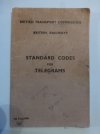
I have a 1958 "Standard Codes for Telegrams" and SX is not in that as an abbreviation for Stratford. Would be strange to see SX as an abbreviation in such messages in case it got confused with SX as the timetable description for a Monday-Friday service.
 

Gloster

Veteran Member
Joined
4 Sep 2020
Messages
12,977
Location
Up the creek
Shed by Shed, Part Seven (Walmsley, St Petroc, 2011) gives SX being used by Stratford from the introduction of the two letter code system in May 1973 to September of that year, when it changed to SF. (N.B. The months given are those in which the majority of the relevant four-week period fell.)
 

pdeaves

Established Member
Joined
14 Sep 2014
Messages
5,932
Location
Gateway to the South West
SX may have been an old telegraph code and may thus have influenced the use of SX as a TOPS code. The question to me is still 'why the X?' Someone somewhere must have thought it appropriate and obvious.
 

SargeNpton

Established Member
Joined
19 Nov 2018
Messages
1,728
SX may have been an old telegraph code and may thus have influenced the use of SX as a TOPS code. The question to me is still 'why the X?' Someone somewhere must have thought it appropriate and obvious.
Perhaps SF was originally to be for a stabling point at Stratford-upon-Avon?
 

thesignalman

Member
Joined
9 Jan 2012
Messages
160
I can try and explain, but I would emphasise I was on the GN and not the GE, and telegraph working at Stratford would have been dispensed with by the time of electrification and the abolition of all the semaphore signal boxes.

Taking Finsbury Park as a comparable example, the many signalboxes were allocated a range of codes which were all significantly different from each other. One could argue for years as to why (for example) No3 box was EO but the essential need was distinctive sounding codes on each telegraph circuit. Having every box at Finsbury Park as F-something would not be distinct enough to only alert the correct box. Here I am talking of communal telegraph circuits (like the old omnibus phones) where specified boxes wired certain types of train to other specified boxes to help with train regulating priorities. These did not however use that list of destination codes for the trains (too confusing!) but used the four character headcode. (The only exception I remember was "CB" for the 1B66 Cambridge Buffet trains).

The other type of telegraph instrument used at Finsbury Park (being a complex area) was a box-to-box one, adjacent to the signalling instruments. For these, immediately after signalling a train or engine, the destination code would be sent on the telegraph. So much quicker than picking up the phone and saying "engine for Stratford" to telegraph two letters - "SX". Quicker even than sending "0C01" because we didn't send numbers in morse (again too similar/confusing) but would have to spell it out: ZERO-C-ZERO-ONE".

My guess would be that amongst all the signal boxes that once existed at Stratford, SX could have been:
  1. The only box there with a code actually starting with S,
  2. The nearest one to Stratford Loco,
  3. The Telegraph Office (if there was one) - for instance PE was Peterborough TO.
  4. . . . or maybe something else.
It was not only signalmen that used that code, it would appear on drivers and stock diagrams too.

The suggestion that SF might have already been in use at Shenfield (or similar) is a distinct possibility, or, say, an HF nearby (one dot different in morse) would have been a good reason aswell. All of these codes would have probably evolved as the railway did in the 19th Century and never changed since.

Hope I haven't bored the pants off you.

John
 

Dave W

Member
Joined
27 Sep 2019
Messages
881
Location
North London
Possibly local instructions for that route.

Nothing remotely like that in this, or any later version of it that I ever encountered.

Based on the possibility it's local instructions, could that code be used to differentiate from HF (Hertford North) as thesignalman says? I'm assuming* there would have been little interaction with Stratford until at least grouping? So at that point someone has probably pointed out the likeness to HF and suggested an alternative for the local area only?

(* it's to my shame that despite living here for almost a decade and spending extensive hours up and down the south corner of the ECML, I've done very little to understand the history of railways round 'ere)
 
Status
Not open for further replies.

Top