• Our new ticketing site is now live! Using either this or the original site (both powered by TrainSplit) helps support the running of the forum with every ticket purchase! Find out more and ask any questions/give us feedback in this thread!

Special Signals

Status
Not open for further replies.

TiggCJ

Member
Joined
27 May 2014
Messages
8
Hello,

What do signals that read 'R' and 'RR' mean? For example, Signal No. 'UR575RR'.

I notice that these signals are positioned in advance of a junction or route indicator signal on a bi-directional line.

Thanks for reading my first post!

Merry Christmas,

TiggCJ
 
Sponsor Post - registered members do not see these adverts; click here to register, or click here to log in
R

RailUK Forums

Marklund

Member
Joined
18 Nov 2010
Messages
827
Repeater and Repeater Repeater.


¦--OOO UR575RR ¦--OO UR575R ¦--OO UR575
_______________v_________________________________________________v_________________________________________________v___________

So, UR575 is the main signal. In turn, UR575R repeats the aspect (although not a red) of UR575, and in turn UR575RR repeats UR575R.

In the example above, if UR575 is showing a Red aspect, UR575R will show a yellow, and UR575RR a Double Yellow
If UR575 shows Green, the R and the RR will also show green.

There can be other permutations in the real world, whether it is 2/3/4 aspect signalling or even Electro-Mechanically operated equipment
 
Last edited:

dtaylor84

Member
Joined
14 Apr 2013
Messages
128
Something more like this?

Code:
           ¦--OOO UR575RR                    ¦--OO UR575R                  ¦--OO UR575
___________v_________________________________v_____________________________v___________
 

edwin_m

Veteran Member
Joined
21 Apr 2013
Messages
28,616
Location
Nottingham
I notice that these signals are positioned in advance of a junction or route indicator signal on a bi-directional line.

This will be for the "wrong" direction on lines fitted with Simplified Bi-Directional Signalling (SIMBIDS). In this system trains diverted onto the "wrong" (right hand) line don't see any stop signals all the way to the next junction, whereas right direction moves generally have multi-aspect signals continuously at the normal spacing. The junction signal for wrong direction moves will have one or two repeaters depending whether the right direction signalling is three or four aspect, so as to give the driver warning to stop or slow down for the junction.

By the way, your use of "in advance of" is wrong in railway signalling terms - the repeater signals you refer to are "in rear of" the junction signal and the junction signal is "in advance of" the repeaters. These terms cause a great deal of confusion and while many will disagree I would recommend using the current terminology "on the approach to" and "beyond".
 
Last edited:

ComUtoR

Established Member
Joined
13 Dec 2013
Messages
9,562
Location
UK
So, UR575 is the main signal. In turn, UR575R repeats the aspect (although not a red) of UR575, and in turn UR575RR repeats UR575R.

"Repeaters" don't repeat signals. The R and RR on the signal plate is the identification suffix for a Distant Signal and Outer Distant.

If the signal to which the distant relates is on then then it will show at caution. Eg. if the signal is Red then it will show a single yellow.

Outer Distant are a little more complicated but they can show a red (I think) They are more a combination of a stop signal and a distant. Its a semaphore signalling system. You find distant signals ('R') in 2 aspect signalling. Distant-Stop-Distance-Stop-Distant-Stop...

SIMBIDS suffixes are X which usually signifies "Wrong Direction"


No doubt a Signaler will pop in soon and correct my errors and give a better overview.
 

Railsigns

Established Member
Joined
15 Feb 2010
Messages
2,754
Outer Distant are a little more complicated but they can show a red (I think)

Any signal that can show red isn't a distant. The most restrictive aspect shown by an outer distant is double yellow; they can't show red or single yellow.

SIMBIDS suffixes are X which usually signifies "Wrong Direction"

Only the Southern Region suffixed (some) wrong direction signals with an "X" (and not exclusively in SIMBIDS areas).
 
Last edited:

MarkyT

Established Member
Joined
20 May 2012
Messages
7,553
Location
Torbay
This will be for the "wrong" direction on lines fitted with Simplified Bi-Directional Signalling (SIMBIDS). In this system trains diverted onto the "wrong" (right hand) line don't see any stop signals all the way to the next junction, whereas right direction moves generally have multi-aspect signals continuously at the normal spacing. The junction signal for wrong direction moves will have one or two repeaters depending whether the right direction signalling is three or four aspect, so as to give the driver warning to stop or slow down for the junction.

Slightly wrong I'm afraid. SIMBIDS is a commonly misused term not relevent to the number of signals in the reverse direction, which is usually less than in the normal direction under 'FULLBIDS' too. SIMBIDS was a particular engineering solution devised in the 1980s for cost effective retrofitting of emergency bidirectional capability through formerly unidirectional lines equipped with relay-based automatic signalling. In particular, it saved significant equipment and cabling costs by not providing AWS inductors for the wrong direction moves and avoided suppressing the many opposite (normal) direction inductors for the wrong direction moves. That all 'simplified' the wiring changes no end, hence the name. The term itself seems to have fallen out of use in operational instructions. One example of this technique I know is between Thingley Junction and North Somerset Junction on the GWML. Whilst the rest of the route from Didcot to Thingley and from Wootton Bassett to Stoke Gifford was signalled in the 70s for full bidirectional working (albeit with only one block section between crossover sites in the reverse direction), the section west of Thingley on the Bath route had not been so modified. When that section came up for fitting in the 1980s, the SIMBIDS idea had been formulated and was applied to save money and hasten completion.

The following is an extract from the Western sectional appendix concerning 'reversibly signalled lines'. Note the passages I have marked bold concerning the section formerly described as SIMBIDS.

REVERSIBLY SIGNALLED LINES (as defined in Table‘A’)

Conditions of use

Reversible working can only be introduced when one line is not available because of:
• engineering work
• train failure
• infrastructure failure or damage
• obstruction of the line

Within the area shown as ‘reversibly signalled’, certain sections of line may be worked bi-directionally for traffic purposes.
Details must be published in the Working Timetable, Local Instructions to this Appendix, the Weekly Operating Notice or Special Signal Box instructions as appropriate.

Personnel working/walking on or near a reversibly signalled line must be prepared for reverse direction movements to be made at any time.

Notice of reversible working
If reversible working is likely to be in operation for some time and it has not been published in the Weekly Operating Notice, Operations Control must issue a suitable notice to TOC Controls and others concerned. TOC Controls must make arrangements for notices to be posted at Driver depots.

Signalling equipment failure
The standard arrangements for track circuit block bi-directional lines will apply. In the case of track circuit failure, the affected line(s) must be worked in one direction only until the failure is rectified. If any movement is to be made in the other direction, Working by Pilotman as shown in Rule Book Module P2 must be introduced.

Patrolman’s Protection Device
Lineside devices are provided as shown in Table ‘A’ and must only be used by competent persons. When operated, the device inhibits reverse direction signalling (but not the normal direction) between the crossovers concerned. The operator must always get the Signaller’s permission before turning the switch to either position.

Provided that the appropriate device has been operated, it is only necessary for detonators to be provided to protect the normal direction when blocking the line as shown in Rule Book, Module TS1, Regulation 13.2.4.

Between Thingley Junction and North Somerset Junction – AWS arrangements. In the reverse direction, AWS is provided only for temporary and emergency speed restrictions. AWS inductors for normal direction signals are not suppressed when reverse direction movements are signalled; Drivers must cancel all such warnings. Reminder signs as shown in AWS and TWPS Rulebook RS/521, Section 4.16 are provided at the start and finish of each reversible section.

Between Thingley Junction and North Somerset Junction – Signal post telephones. Many reverse direction signals in these sections do not have separate signal post telephones. Where this is so, traincrew must use the telephone at the parallel signal on the other line and must specially ensure that the Signaller understands which signal their train is detained at.


Western Route GI - Dated: 07/06/14

The SIMBIDS technique's incomplete AWS fitment is not allowed for new installations today and where it exists now it will be phased out with resignalling. In any case with modern signalling the savings in circuit complexity would not apply to the same extent.
 
Last edited:

Marklund

Member
Joined
18 Nov 2010
Messages
827
"Repeaters" don't repeat signals. The R and RR on the signal plate is the identification suffix for a Distant Signal and Outer Distant.

If the signal to which the distant relates is on then then it will show at caution. Eg. if the signal is Red then it will show a single yellow.

Outer Distant are a little more complicated but they can show a red (I think) They are more a combination of a stop signal and a distant. Its a semaphore signalling system. You find distant signals ('R') in 2 aspect signalling. Distant-Stop-Distance-Stop-Distant-Stop...

SIMBIDS suffixes are X which usually signifies "Wrong Direction"


No doubt a Signaler will pop in soon and correct my errors and give a better overview.

Thanks for that. I'll just forget my 30 years maintaining them then...
 

MarkyT

Established Member
Joined
20 May 2012
Messages
7,553
Location
Torbay
Just a quick comment on the original subject!

The suffix R or RR could only be used in an ID number for a signal not equipped with with a red aspect, and they are would generally be known as distants or repeaters. In some places such signals had the suffix P instead. That was from the signalling circuit nomenclature system where P refers to 'rePeat' (R having been used already for Reverse). Modern distant signals in new schemes that don't have red aspects must have their own unique number and don't use the R or P suffix system. The new style ID plates for such signals contain a white triangle symbol instead to indicate that no red aspect exists.
 

Marklund

Member
Joined
18 Nov 2010
Messages
827
Indeed, there are many signals in Track Circuit Block which display an R suffix and they are not "Distant" signals.

They could be seen as an equivalent of a Distant in an Absolute Block area, but you don't get Distants in TCB...
 

ComUtoR

Established Member
Joined
13 Dec 2013
Messages
9,562
Location
UK
Any signal that can show red isn't a distant. The most restrictive aspect shown by an outer distant is double yellow; they can't show red or single yellow.

Yup that much I knew. (distant not showing red) I was unsure on the Outer distant as I have never seen one and only know of them in passing. Soooo I googled it and found... http://www.signalbox.org/signals/semaphore5.htm

Whilst I will agree that on a more pedantic level that the semaphore has BOTH a stop and a distant arm and still follows the distant not showing red ruling under but with a colour light head the signal will show a red. (will it still be suffixed RR and be considered the outer distant ?)

Only the Southern Region suffixed (some) wrong direction signals with an "X" (and not exclusively in SIMBIDS areas).

I didn't know that X was specific to southern region but I was fully aware it isn't specific to SIMBIDS. AS the OP wasn't about SIMBIDS I didn't elaborate further apologies if you inferred any misunderstanding on my part.


Indeed, there are many signals in Track Circuit Block which display an R suffix and they are not "Distant" signals.

What are they ?

They could be seen as an equivalent of a Distant in an Absolute Block area, but you don't get Distants in TCB...

I'm sure there is a joke there but in the interest of helping folks who come here for some education and insight.

What is the "distant" in 2 aspect TCB ?
What does the white triangle represent ?
Where a Distant does appear in TCB why is it being used ?

I also found a term I've never heard of. "Isolated Distant" What is one of those :/
 

carriageline

Established Member
Joined
11 Jan 2012
Messages
1,897
I was always taught that the R signals in 2 aspect signalling are distants (any signal that cannot display a stop aspect) and (as far as being a signaller is concerned) they are a distant. Speaking technically to people in the S&T world they might not be, but they always have been referred to as that

Plus, the rule book confirms the same. R and triangle mean distant signals (specifically)


Sent from my iPhone using Tapatalk
 
Last edited:

Llama

Established Member
Joined
29 Apr 2014
Messages
1,959
An isolated distant isn't a term I have heard before but will possibly be a distant signal (correct in defining a distant signal as 'any signal that cannot show a stop aspect' btw) that is isolated within a run of consecutive stop signals, possibly to allow signal spacing to be reduced without affecting line speed, there are a couple on the Chat Moss line (Astley in the Down, Piccadilly's first in the Up) and one between Mossley and Stalybridge in the Up which has recently been resignalled.
 

Railsigns

Established Member
Joined
15 Feb 2010
Messages
2,754
Plus, the rule book confirms the same. R and triangle mean distant signals (specifically)

Agreed; a distant signal is any signal that cannot display a 'stop' aspect, even in a TCB area.
--- old post above --- --- new post below ---
I also found a term I've never heard of. "Isolated Distant" What is one of those :/

An isolated distant signal is just a distant signal that isn't combined with a stop signal.
 

MarkyT

Established Member
Joined
20 May 2012
Messages
7,553
Location
Torbay
I was always taught that the R signals in 2 aspect signalling are distants (any signal that cannot display a stop aspect) and (as far as being a signaller is concerned) they are a distant. Speaking technically to people in the S&T world they might not be, but they always have been referred to as that. Plus, the rule book confirms the same. R and triangle mean distant signals (specifically)

I think, pragmatically, that rule book terminology may have adjusted back to common usage, although there may have been a period in which distant term was not used officially in TCB areas.

In TCB, distant signals, in old money defined as a 'worked' signal operated by a separate lever or switch do not generally exist. In TCB they almost always work automatically, repeating the aspect of stop signals ahead of them in the direction of travel, but there is no harm in calling these 'distants' too rather than having to invent a different term to distinguish them.

However the automated distant is not confined to TCB. Aside from the clear case of a fixed distant where there's no state change to operate or automate, there are (or have been) cases where a colour light or motor actuated semaphore distant in AB mechanical territory has also been operated automatically by the state of stop signals ahead, although in those cases there is usually a replacement switch provided in the signal box to cover certain rule scenarios unique to AB. The reason in those cases was that boxes were often altered over the years and sometimes took on a greater control area, say a station North box might assume the former South Junction box's responsibilities, or the station layout just got bigger. Such modifications could easily use up the spare slots and bust the number of levers in the remaining box frame, so to avoid major reconstruction, methods to save levers, where there was little need for mechanical locking for the particular functions involved, might be explored. Typically, distants could be automated to save a lever, and intermediate block signals and their separate distant levers might be transferred to switches.
 

Tomnick

Established Member
Joined
10 Jun 2005
Messages
5,933
Indeed, the term 'isolated distant' is only really relevant in semaphore areas, where distant signals can also be found co-located with a stop signal on the same post.

Just to pick up on a couple of other things:
Yup that much I knew. (distant not showing red) I was unsure on the Outer distant as I have never seen one and only know of them in passing. Soooo I googled it and found... http://www.signalbox.org/signals/semaphore5.htm
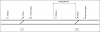
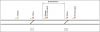
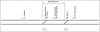
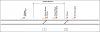
Again, things are a little bit different under mechanical signalling, although the driver should still see the same aspect (or equivalent semaphore indication) sequence. I've including below a sequence of my own diagrams which illustrate the necessity to provide two or more distant signals - it's broadly similar to the content of the link above, but might still be helpful to some. Where outer and inner distant signals are provided under mechanical signalling, though, they're almost always co-located with stop signals belonging to the signal box in rear, whereas the colour light equivalent (the 'distant signals' for each box just being a control on the green aspect of stop signals(s) at the box in rear) would just appear as the normal sequence of MAS signals to a driver.

Whilst I will agree that on a more pedantic level that the semaphore has BOTH a stop and a distant arm and still follows the distant not showing red ruling under but with a colour light head the signal will show a red. (will it still be suffixed RR and be considered the outer distant ?)
I think this one's mostly been dealt with already, but in either the semaphore example or a colour-light direct replacement, the signal will carry the number of the lever operating the stop signal (and the prefix appropriate to the box). Although the signal will act as (one of) the distant signal(s) for the next box, it's still primarily a stop signal belonging to the box in rear of the section.[/QUOTE]
 

Attachments

  • Course - Braking Distance 1.PNG
    Course - Braking Distance 1.PNG
    8.8 KB · Views: 29
  • Course - Braking Distance 2.PNG
    Course - Braking Distance 2.PNG
    8.9 KB · Views: 21
  • Course - Braking Distance 3.PNG
    Course - Braking Distance 3.PNG
    9.3 KB · Views: 24
  • Course - Braking Distance 4.PNG
    Course - Braking Distance 4.PNG
    9.6 KB · Views: 22

CyrusWuff

Established Member
Joined
20 May 2013
Messages
5,434
Location
London
Having just checked the Rule Book, the definitions of types of signal have been completely removed from the "core" Rule Book modules and put into a handbook (RS/521).

Said handbook has the following to say on the matter of what most people call Repeaters:

RSSB said:
A distant signal is a signal which cannot show a stop aspect or indication.

Some colour light distant signals are identified by a white triangle or the letters 'R' or 'RR' on the signal identification plate.

And for those who still haven't grasped the concept, they then provide a diagram of the various types of identification plate.
 

Llama

Established Member
Joined
29 Apr 2014
Messages
1,959
Up to ten years or so ago the rule book did refer to at least some distant signals (possibly TCB) as 'repeater' or 'related' signals, 'repeater' was a poor choice really because of possible confusion with banner repeaters. I suspect that is where the 'R' on the ID plates stems from?
 

edwin_m

Veteran Member
Joined
21 Apr 2013
Messages
28,616
Location
Nottingham
These were traditionally known as repeaters, because as stated they repeated another signal, albeit using different aspects, without having a separate control. Hence the use of "R" and "RR".

The use of "distant" seems to have appeared in the Rule Book more recently. This itself introduces an element of confusion because what used to be called a repeater would only repeat a single signal whereas a "Distant" in absolute block territory, whether itself a semaphore or a colour light, applies to a group of stop signals all of which have to be "off" before the distant can be cleared.

Just to confuse things there is also a "co-actor" which repeats the same aspects close to a signal when the primary signal isn't easy to see.
 

MarkyT

Established Member
Joined
20 May 2012
Messages
7,553
Location
Torbay
. . . a "Distant" in absolute block territory, whether itself a semaphore or a colour light, applies to a group of stop signals all of which have to be "off" before the distant can be cleared.

That group of stop signals to which a traditional distant applies might only contain one such signal for each direction of course, in the case of simple 'break section' or level crossing boxes. One thing to remember is that there must always be sufficient braking distance from the distant to the first stop signal; usually named the home or outer home. Spacing from stop signal to subsequent stop signal then relates much more to convenient junction and platform end positions rather than braking distance concerns, so an approaching train must be brought under control at the first home if the intention is to stop it at a subsequent signal.

Just to confuse things there is also a "co-actor" which repeats the same aspects close to a signal when the primary signal isn't easy to see.

Co-actors are often provided when good sighting is required under different approach conditions on the same track, say for instance flying through at 90MPH as well as pulled up very close for a platform stop. For very tight platforms at terminal station there have been some miniature co-actors provided recently, mounted lower down on the signal and designed for very short range viewing possibly from the cab side window.
 

W230

Established Member
Joined
6 Jan 2012
Messages
1,217
Only ones i'm familiar with is with the SIMBIDS on the Brighton mainline, where there are four SIMBIDS sections (both directions are signalled too).

For example, between Haywards Heath and Wivelsfield in the Down direction on the Up line we have:
T367RR (capable of showing G or YY)
T367R (capable of showing G, YY, Y)
T367 (capable of showing G, YY, Y, R and with a route indicator sending you back to the Down line).

If you look across to the adjacent line in normal everyday running with SIMBIDS not being used you will see:
T367RR (YY)
T367R (Y)
T367 (R).

In training I was told they were 'repeater' and 'repeater repeater/outer repeater'. I thought distant and outer distant made more sense but my manager picked me up on this and corrected me... :lol:
 
Last edited:

Tomnick

Established Member
Joined
10 Jun 2005
Messages
5,933
On a pedantic but relevant point, T367RR in that example will only be able to display YY or G (unless one of the yellows fails!), as the next signal in advance isn't capable of displaying a red aspect.
 

Railsigns

Established Member
Joined
15 Feb 2010
Messages
2,754
On another pedantic point, the bi-directional signalling on the Brighton line isn't SIMBIDS. It predates the invention of SIMBIDS by a few years and (unlike SIMBIDS) features normal AWS working in either direction.
 

W230

Established Member
Joined
6 Jan 2012
Messages
1,217
On a pedantic but relevant point, T367RR in that example will only be able to display YY or G (unless one of the yellows fails!), as the next signal in advance isn't capable of displaying a red aspect.
Agreed - it certainly is relevant! Serves me right for bashing the reply out without re-reading it! I shall edit it! :oops:
 

edwin_m

Veteran Member
Joined
21 Apr 2013
Messages
28,616
Location
Nottingham
Co-actors are often provided when good sighting is required under different approach conditions on the same track, say for instance flying through at 90MPH as well as pulled up very close for a platform stop. For very tight platforms at terminal station there have been some miniature co-actors provided recently, mounted lower down on the signal and designed for very short range viewing possibly from the cab side window.

Like this one, although it appears to be full size. I hope it's been dimmed somehow otherwise it would be pretty dazzling at a range of a couple of feet.

http://www.networkrailmediacentre.c...-allow-4-car-trains-into-platform-2-1c78.aspx
 

MarkyT

Established Member
Joined
20 May 2012
Messages
7,553
Location
Torbay
Like this one, although it appears to be full size. I hope it's been dimmed somehow otherwise it would be pretty dazzling at a range of a couple of feet.

Agree that looks like a full size unit, accompanied by a position light and route indicator so it looks exactly like the primary signal above it. I hope the main aspect is the medium range variant rather than the long range one!
 
Status
Not open for further replies.

Top