
• Our new ticketing site is now live! Using either this or the original site (both powered by TrainSplit) helps support the running of the forum with every ticket purchase! Find out more and ask any questions/give us feedback in this thread!

Solar Panels - Effectiveness?

Deepgreen

Established Member
Joined
12 Jun 2013
Messages
7,458
Location
Gomshall, Surrey
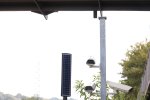
I often see railway equipment solar panels in positions which would seem to be sub-optimal. The attached photo shows one at my local station, Gomshall, and it is mounted vertically, under a large footbridge and facing roughly west.

My question is - are such panels generally over-sized to permit sufficient power production in such locations where direct sunlight will be minimal (although this one is pretty small)? This particular one can obviously receive some daylight but not very much actual sunlight!
 

Attachments

  • 115A8837.jpeg
    115A8837.jpeg
    872.8 KB · Views: 154
Sponsor Post - registered members do not see these adverts; click here to register, or click here to log in
R

RailUK Forums

AndrewE

Established Member
Joined
9 Nov 2015
Messages
7,302
One of the big Dutch railway stations has recently had a rebuild with lots of panels hanging vertically inside the glass-roofed train-shed... (Can't find a reference to it just now, of course!)
 

InTheEastMids

Established Member
Joined
31 Jan 2016
Messages
1,382
My question is - are such panels generally over-sized to permit sufficient power production in such locations where direct sunlight will be minimal (although this one is pretty small)? This particular one can obviously receive some daylight but not very much actual sunlight!

Yes, if you're trying to power a device from just a solar (and battery) solution across a whole year then you will need to think about the energy budget through a "reasonable worst case" scenario with 2-3 weeks in December that is consistently overcast and you get next to no output. That takes you to having a comparatively large battery. Given there are 3 CCTV cameras in your picture, and they might use in the region of 5W each when operating, so your energy demand is 15*24 = 0.36 kWh per day.

However, on those horrible murky days, my experience of our 4 kW rooftop system is that generation can be as low as 0.4 kWh per day, not too far apart. 4 kW is a 10-panel residential system.

So what you might do is optimise the overall system by increasing the battery size to increase the ability of the system to cope with low/no-sun days, and that gradually allows the solar array to get smaller. But to come back to your original point, the solar array would have to be much bigger still, if it is shaded for part/all of the day.

FWIW I think the solar panel in your picture is in the region of 50 watts and if it's connected to those cameras, it's rarely making a meaningful contribution to their power needs.
 

Deepgreen

Established Member
Joined
12 Jun 2013
Messages
7,458
Location
Gomshall, Surrey
Yes, if you're trying to power a device from just a solar (and battery) solution across a whole year then you will need to think about the energy budget through a "reasonable worst case" scenario with 2-3 weeks in December that is consistently overcast and you get next to no output. That takes you to having a comparatively large battery. Given there are 3 CCTV cameras in your picture, and they might use in the region of 5W each when operating, so your energy demand is 15*24 = 0.36 kWh per day.

However, on those horrible murky days, my experience of our 4 kW rooftop system is that generation can be as low as 0.4 kWh per day, not too far apart. 4 kW is a 10-panel residential system.

So what you might do is optimise the overall system by increasing the battery size to increase the ability of the system to cope with low/no-sun days, and that gradually allows the solar array to get smaller. But to come back to your original point, the solar array would have to be much bigger still, if it is shaded for part/all of the day.

FWIW I think the solar panel in your picture is in the region of 50 watts and if it's connected to those cameras, it's rarely making a meaningful contribution to their power needs.
Thanks - as I mentioned, another major factor to my mind is that it is under a bridge! I'm baffled as to its point, and why it couldn't have been placed better for sunlight reception, with a longer cable!
 

AndrewE

Established Member
Joined
9 Nov 2015
Messages
7,302
Yes, if you're trying to power a device from just a solar (and battery) solution across a whole year then you will need to think about the energy budget through a "reasonable worst case" scenario with 2-3 weeks in December that is consistently overcast and you get next to no output. That takes you to having a comparatively large battery. Given there are 3 CCTV cameras in your picture, and they might use in the region of 5W each when operating, so your energy demand is 15*24 = 0.36 kWh per day.

However, on those horrible murky days, my experience of our 4 kW rooftop system is that generation can be as low as 0.4 kWh per day, not too far apart. 4 kW is a 10-panel residential system.

So what you might do is optimise the overall system by increasing the battery size to increase the ability of the system to cope with low/no-sun days, and that gradually allows the solar array to get smaller. But to come back to your original point, the solar array would have to be much bigger still, if it is shaded for part/all of the day.

FWIW I think the solar panel in your picture is in the region of 50 watts and if it's connected to those cameras, it's rarely making a meaningful contribution to their power needs.
my experience of our 4kW west-facing system is that it starts generating a trickle right from dawn even though the sun is behind the ridge of the roof. I put this down to the amount of light reflected or diffracted off atmospheric particulate or thin cloud. In winter of course it makes no significant contribution to our useage (that's what the battery and Time of Use tariffs are for) but through the summer and most of the "shoulder" months it feeds the house and pays for itself in export earnings.
 

Belperpete

Established Member
Joined
17 Aug 2018
Messages
3,586
Thanks - as I mentioned, another major factor to my mind is that it is under a bridge! I'm baffled as to its point, and why it couldn't have been placed better for sunlight reception, with a longer cable!
I presume that it is mounted on the same pole as the cameras it is feeding? In which case, the pole will have been sited for optimal position of the cameras. Mounting the solar panel separately would involve providing a cable duct route between the panel and the cameras, which would considerably increase the cost, complexity and timescale for installation.
 

InTheEastMids

Established Member
Joined
31 Jan 2016
Messages
1,382
I presume that it is mounted on the same pole as the cameras it is feeding? In which case, the pole will have been sited for optimal position of the cameras. Mounting the solar panel separately would involve providing a cable duct route between the panel and the cameras, which would considerably increase the cost, complexity and timescale for installation.
Yes and any kind of civils work would completely undo any economic (and probably carbon) benefits for such as small array. You just want to be able to turn up, nail the panel to a sufficiently robust structure, connect the wires and go.

another major factor to my mind is that it is under a bridge! I'm baffled as to its point

There is some history (mostly 2010-2015ish in my experience) of things being done to enhance the appearance of sustainability. Suppliers, clients and the rest of the world had much less experience of this area back then. Relatedly, this was also the brief period when building-mounted small wind turbines were in fashion. People didn't really appreciate that they were, in most situations, hopeless.

It may also have been something the contractor threw into their technical proposal to win a few brownie points. Or perhaps the designer, working to a tight budget and schedule did not appreciate the panel would see no sunshine. The delivery team then just built the design with the kit they'd been issued, because stopping work and querying things also costs money.
 

sharpener

Member
Joined
4 Oct 2018
Messages
371
There is some history (mostly 2010-2015ish in my experience) of things being done to enhance the appearance of sustainability. Suppliers, clients and the rest of the world had much less experience of this area back then. Relatedly, this was also the brief period when building-mounted small wind turbines were in fashion. People didn't really appreciate that they were, in most situations, hopeless.

Yes, almost certainly pure greenwash. For reliable year round off-grid operation you need a really big battery. If grid is available that is usually the most economic choice by far.

For another instance see this thread.
 

Deepgreen

Established Member
Joined
12 Jun 2013
Messages
7,458
Location
Gomshall, Surrey
I presume that it is mounted on the same pole as the cameras it is feeding? In which case, the pole will have been sited for optimal position of the cameras. Mounting the solar panel separately would involve providing a cable duct route between the panel and the cameras, which would considerably increase the cost, complexity and timescale for installation.
No - separate poles (see photo in post 1), which is why I thought it could have been put in a better spot.
 

Noddy

Established Member
Joined
11 Oct 2014
Messages
1,631
Location
UK
Yes, if you're trying to power a device from just a solar (and battery) solution across a whole year then you will need to think about the energy budget through a "reasonable worst case" scenario with 2-3 weeks in December that is consistently overcast and you get next to no output. That takes you to having a comparatively large battery. Given there are 3 CCTV cameras in your picture, and they might use in the region of 5W each when operating, so your energy demand is 15*24 = 0.36 kWh per day.

However, on those horrible murky days, my experience of our 4 kW rooftop system is that generation can be as low as 0.4 kWh per day, not too far apart. 4 kW is a 10-panel residential system.

So what you might do is optimise the overall system by increasing the battery size to increase the ability of the system to cope with low/no-sun days, and that gradually allows the solar array to get smaller. But to come back to your original point, the solar array would have to be much bigger still, if it is shaded for part/all of the day.

FWIW I think the solar panel in your picture is in the region of 50 watts and if it's connected to those cameras, it's rarely making a meaningful contribution to their power needs.

Just remember that modern high efficiency commercial grade solar panels are much much more efficient at producing electricity than most (invariably large but cheap) home solar panels, especially in low light/poor angle conditions. I could well imagine that it would be able to power 15 watts of camera equipment in the summer and shoulder months with a modest battery. Not in the depths of winter.
 

Deepgreen

Established Member
Joined
12 Jun 2013
Messages
7,458
Location
Gomshall, Surrey
There are three cameras mounted on the pole adjacent to the pole on which the panel is mounted. I don't know if three would total 15w, and I don't even know if the panel is even connected to the cameras, or something lese. I'll try to see next time I'm there (tomorrow).

== Doublepost prevention - post automatically merged: ==

Double-checked again today as I alighted from my train (despite the 165's recorded announcements telling us we would run non-stop Dorking Deepdene to Guildford!) and, yes, separate poles for the cameras and the solar panel. I couldn't be positive that the panel feeds the cameras but it looks extremely likely.
 
Last edited:

Top