
mr_roggger
Member
My question specifically concerns signalling of trains back to the proper line, after travelling along a TCB single line (of a 2-track railway) in the wrong direction. For simplicity, let's assume it's good visibility.
My understanding of the current version of the rules is that unless the pilot travels with every train over the single line in the wrong direction, or a main aspect signal to control wrong direction movements trains back to the proper line from the single line is provided, then a handsignaller must be provided to control movements back to the proper line.
1. I've copied the picture showing the provision of a handsignaller from the current version of the rulebook below. Here, the handsignaller stands opposite the signal on the proper line which protects the crossover. In this instance, the pilot does not need to travel with every train over the single line in the wrong direction. Amongst other details, the pilot (at or opposite GR200) will tell the driver and give details on the RT3193 form that a handsignaller is provided opposite GR204 to control movements back to the proper line. When the driver arrives at the end of the single line section, they will stop at the handsignaller displaying a red hand signal, who will then inform the signaller that the train has arrived complete and get authority from the signaller for the train to proceed back to the proper line. Once authority had been given by the signaller, the handsignaller will show a yellow hand signal and the driver may proceed back to the proper line.
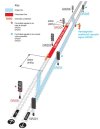
2.Now let's assume the pilot will travel with every train in the wrong direction. I've edited the picture below to remove the handsignaller. Amongst other details, the pilot (at or opposite GR200) will tell the driver and give details on the RT3193 form to stop opposite GR204. The pilot will then get into the cab with the driver. When the driver arrives at the end of the single line section, they will stop opposite GR204. The pilot will leave the train and inform the signaller that the train has arrived complete. The driver will then contact the signaller and get authority to proceed back to the proper line.

3. Finally, let's assume that a signal to control wrong-direction movements back to the proper line is provided. Again, I've edited the picture to show this, below. The pilot (at or opposite GR200) does not have to travel with every train in the wrong direction, but will tell the driver and give details on the RT3193 form to stop at GR404. When the driver arrives at GR404, they will stop and contact the signaller, informing them that their train has arrived complete and request permission to proceed back to the proper line. The signaller will clear GR404 and the driver will proceed back to the proper line (let's assume GR404 controls only this movement, hence no position 1 route indicator).
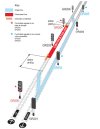
The whole reasoning behind this question is clarifying the definition of a main aspect signal to control wrong-direction movements returning to the proper line. My understanding of this is 3. above only. Is this correct? I have heard it described that GR204 could be used for this (example 1) without a hand signaller several times recently. I disagree with this as this signal is for movements on the other (obstructed) line in the proper direction. It protects the junction, but it does not control movements over the junction.
As an aside, I accept that example 3. above is quite rare; I can think of three locations of the routes which I sign where such a signal exists, but many more where there is a bi-directional platform line which you normally loop into/out of, but might then be able to make use of a signal like GR404 after travelling much further in the wrong-direction before reaching the bi-directional platform line. Thoughts?
My understanding of the current version of the rules is that unless the pilot travels with every train over the single line in the wrong direction, or a main aspect signal to control wrong direction movements trains back to the proper line from the single line is provided, then a handsignaller must be provided to control movements back to the proper line.
1. I've copied the picture showing the provision of a handsignaller from the current version of the rulebook below. Here, the handsignaller stands opposite the signal on the proper line which protects the crossover. In this instance, the pilot does not need to travel with every train over the single line in the wrong direction. Amongst other details, the pilot (at or opposite GR200) will tell the driver and give details on the RT3193 form that a handsignaller is provided opposite GR204 to control movements back to the proper line. When the driver arrives at the end of the single line section, they will stop at the handsignaller displaying a red hand signal, who will then inform the signaller that the train has arrived complete and get authority from the signaller for the train to proceed back to the proper line. Once authority had been given by the signaller, the handsignaller will show a yellow hand signal and the driver may proceed back to the proper line.
2.Now let's assume the pilot will travel with every train in the wrong direction. I've edited the picture below to remove the handsignaller. Amongst other details, the pilot (at or opposite GR200) will tell the driver and give details on the RT3193 form to stop opposite GR204. The pilot will then get into the cab with the driver. When the driver arrives at the end of the single line section, they will stop opposite GR204. The pilot will leave the train and inform the signaller that the train has arrived complete. The driver will then contact the signaller and get authority to proceed back to the proper line.
3. Finally, let's assume that a signal to control wrong-direction movements back to the proper line is provided. Again, I've edited the picture to show this, below. The pilot (at or opposite GR200) does not have to travel with every train in the wrong direction, but will tell the driver and give details on the RT3193 form to stop at GR404. When the driver arrives at GR404, they will stop and contact the signaller, informing them that their train has arrived complete and request permission to proceed back to the proper line. The signaller will clear GR404 and the driver will proceed back to the proper line (let's assume GR404 controls only this movement, hence no position 1 route indicator).
The whole reasoning behind this question is clarifying the definition of a main aspect signal to control wrong-direction movements returning to the proper line. My understanding of this is 3. above only. Is this correct? I have heard it described that GR204 could be used for this (example 1) without a hand signaller several times recently. I disagree with this as this signal is for movements on the other (obstructed) line in the proper direction. It protects the junction, but it does not control movements over the junction.
As an aside, I accept that example 3. above is quite rare; I can think of three locations of the routes which I sign where such a signal exists, but many more where there is a bi-directional platform line which you normally loop into/out of, but might then be able to make use of a signal like GR404 after travelling much further in the wrong-direction before reaching the bi-directional platform line. Thoughts?

