• Our new ticketing site is now live! Using either this or the original site (both powered by TrainSplit) helps support the running of the forum with every ticket purchase! Find out more and ask any questions/give us feedback in this thread!

Signalmen Standing to Attention

Status
Not open for further replies.

LNW-GW Joint

Veteran Member
Joined
22 Feb 2011
Messages
21,935
Location
Mold, Clwyd
Travelling in Ukraine last week, I was intrigued to see signalmen standing seemingly to attention outside their cabins, holding a yellow/orange flag or baton as my train passed at speed.
This on a main electrified line with apparently modern power signalling, although sometimes the cabins seemed to be protecting road crossings.
I've noticed similar procedures in places like Romania and Portugal, though then I think with manual signalling involved.
Is there any technical purpose to this practice, ie is it part of the signalling process?
Or is it what it looks like: operating staff saluting the train as it passes?
 
Sponsor Post - registered members do not see these adverts; click here to register, or click here to log in
R

RailUK Forums

Segedunum

Established Member
Associate Staff
International Transport
Joined
22 Dec 2013
Messages
4,754
Location
Up North
A similar sort of question too- but I've always noticed that the stationmaster at stations in Czechia, Slovakia and Hungary would come outside to watch a train pass.

Is this for safety reasons to make sure it passes safely, or just, again, a form of respect, etc.?
 

yorkie

Forum Staff
Staff Member
Administrator
Joined
6 Jun 2005
Messages
78,453
Location
Yorkshire
A similar sort of question too- but I've always noticed that the stationmaster at stations in Czechia, Slovakia and Hungary would come outside to watch a train pass.

Is this for safety reasons to make sure it passes safely, or just, again, a form of respect, etc.?
When I arrived at Praha Bubny this afternoon the station building was locked, so I was surprised to see a member of staff do this as the train departed.

(Even more bizarrely the train actually departs quite a long way from the station building but that's for another topic!)
 

LNW-GW Joint

Veteran Member
Joined
22 Feb 2011
Messages
21,935
Location
Mold, Clwyd
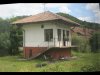
This was somewhere in Romania, between Oradea and Cluj in 2017.
In this case the signalman is not actually holding the flag, but he does look to be observing some rule or other.
 

Attachments

  • IMG_2549z.JPG
    IMG_2549z.JPG
    197.8 KB · Views: 98

Segedunum

Established Member
Associate Staff
International Transport
Joined
22 Dec 2013
Messages
4,754
Location
Up North
When I arrived at Praha Bubny this afternoon the station building was locked, so I was surprised to see a member of staff do this as the train departed.

(Even more bizarrely the train actually departs quite a long way from the station building but that's for another topic!)

Yes that'll be to do with the whole area getting long term work done- so Praha Bubny is in the middle of all of this and trains instead depart from a temporary Bubny Vltavska station.

I didn't see any staff about when I went in the evening peak though!
 

citycat

Member
Joined
18 Dec 2013
Messages
334
Location
Woerden, The Netherlands
This used to happen in Italy in the days of FS, grey liveried coaches and brown liveried locos.

I used to go on holiday with my parents to the Italian Riviera resort of Diano Marina. I would tend to find the holiday boring at some point and while away an hour or two at the station watching the trains. A few of the longer distance expresses or TEE’s from Milan to Avignon were not booked to call at the station.

The impending approach of a train would be initially signalled by the ting ting ting of a ringing bell. The bell would stop and then you would hear the distinct European style horn of the Italian loco in the distance. Meanwhile, I could see the stationmaster in his office stand up from his desk, carefully put on and button up his tunic, and then put his cap on, carefully adjusting it in the mirror on the wall so it was straight. He would then collect his flag and go and stand on the platform just as the approaching non stop express rounded the curve and passed through the station at about 40mph, the stationmaster giving a small salute to the train crew as it passed.

He would stay on the platform until the flashing tail lamps of the train receded into the distance before stepping back into his office, taking off his tunic and cap, and the sleepy station returned back to normal.

It was all a very formal process.
 

ChiefPlanner

Established Member
Joined
6 Sep 2011
Messages
8,333
Location
Herts
All part of the careful observation of passing trains , (that everything seems OK) , and the red, furled flag is there to be broken out as a hand danger signal if it is not.

Much like older signal boxes in Germany and elsewhere had downward pointing electric lights focused on the bottom half of a passing train in darkness , to allow observation of a passing train and that in particular there were no signs of dragging brakes , locked wheelsets etc.

We used to do such old fashioned things in the UK - and no longer so - which explains why a few years ago when a loaded tanker train shut down everything west of Carmarthen one night with a dropped suspension - having passed without challenge about 5 manned signal boxes. Line behind blocked for about 16 hours.
 

MarcVD

Established Member
Joined
23 Aug 2016
Messages
1,245
I first witnessed that about 40 years ago, on a train trip to Greece, at a time there was still a daily train from Koeln going that far. At any signal cabin, station, or guarded road crossing, there was the man, standing at attention, red flag in his right hand. Saw this for the wole length of Yugoslavia. Never saw that before, so quite surprised and still remember it.

Now I have been back to eastern Europe and Russia quite often in the last 10 years, and still noticed that, but less frequently. Also in China. So I suspect it is more a cultural thing.

Also, in USA, in the time of 5 person crews and cabboose, it was common practice for a crew member to get out on the rear platform to observe and check each train that crossed. Now less feasable of course, but the crew of a train waiting in a loop for another one to pass would frequently dismount from the loc and inspect the crossing train.
 
Last edited:

ChiefPlanner

Established Member
Joined
6 Sep 2011
Messages
8,333
Location
Herts
I first witnessed that about 40 years ago, on a train trip to Greece, at a time there was still a daily train from Koeln going that far. At any signal cabin, station, or guarded road crossing, there was the man, standing at attention, red flag in his right hand. Saw this for the wole length of Yugoslavia. Never saw that before, so quite surprised and still remember it.

Now I have been back to eastern Europe and Russia quite often in the last 10 years, and still noticed that, but less frequently. Also in China. So I suspect it is more a cultural thing.

Also, in USA, in the time of 5 person crews and cabboose, it was common practice for a crew member to get out on the rear platform to observe and check each train that crossed. Now less feasable of course, but the crew of a train waiting in a loop for another one to pass would frequently dismount from the loc and inspect the crossing train.

That is correct , known as a running / or rolling check , and they would radio "OK" or not to the passing train. Excellent stuff.
 

MarcVD

Established Member
Joined
23 Aug 2016
Messages
1,245
Yeah, in those days when, for example, hot boxes detectors were still a rarity, noticing the puff of smoke coming out of a hot box in a crossing train and radioing an alarm would probably save it from a big time derailment.

Sometimes this desperate seek for eliminating manpower led to terrible damage, like for example this train on the Dinant-Athus line which derailed just one axle and as a consequence massacred 20 km worth of brand new concrete ties before being noticed... The track remained out of service for weeks.
 

Polrail

Member
Joined
12 Oct 2014
Messages
83
Here in Poland you will still see that at signal boxes and manned stations with a signalman. Such locations also have a spotlight aimed at the running gear.
 

etr221

Established Member
Joined
10 Mar 2018
Messages
1,605
Another consideration is that in those parts, traditionally, railways were a part of the state (not just a state owned company), so trains were - in some sense - the monarch's (or replacement's) trains, to be saluted as such, quite apart from any running inspection. And such old habits die hard...
 

LNW-GW Joint

Veteran Member
Joined
22 Feb 2011
Messages
21,935
Location
Mold, Clwyd
I suppose it goes along with wheel-tapping, something else that only seems to happen in eastern Europe these days.
 

axlecounter

Member
Joined
23 Feb 2016
Messages
403
Location
Switzerland
This used to happen in Italy in the days of FS, grey liveried coaches and brown liveried locos.

I used to go on holiday with my parents to the Italian Riviera resort of Diano Marina. I would tend to find the holiday boring at some point and while away an hour or two at the station watching the trains. A few of the longer distance expresses or TEE’s from Milan to Avignon were not booked to call at the station.

The impending approach of a train would be initially signalled by the ting ting ting of a ringing bell. The bell would stop and then you would hear the distinct European style horn of the Italian loco in the distance. Meanwhile, I could see the stationmaster in his office stand up from his desk, carefully put on and button up his tunic, and then put his cap on, carefully adjusting it in the mirror on the wall so it was straight. He would then collect his flag and go and stand on the platform just as the approaching non stop express rounded the curve and passed through the station at about 40mph, the stationmaster giving a small salute to the train crew as it passed.

He would stay on the platform until the flashing tail lamps of the train receded into the distance before stepping back into his office, taking off his tunic and cap, and the sleepy station returned back to normal.

It was all a very formal process.


Yes, it was an obligation for every signalman to get out and watch the passing trains. Doing it in uniform was just an obvious consequence. There were fines for those that didn’t had the right getup, forgot their cap, didn’t button up, or similar things...

There were operational reasons (too?) for that though. As said above by others watching that everything was ok with the train. If not, the signalman had to try to stop the train with a red flag and/or by repeatedly manouvreing the home signal.
On lines withouth a block or with the typical FS electric block the signalman needed to look for the tail lights to be sure the section was free.

I suppose it goes along with wheel-tapping, something else that only seems to happen in eastern Europe these days.

Still happens on western europe too.
 

SHD

Member
Joined
18 Jul 2012
Messages
572
In France, the Surveillance des trains en marche (Monitoring of running trains) is still a mandatory duty not only for signalmen but for all employees of the infrastructure manager who work on the tracks, provided that it does not interfere with their other duties.

The items to be monitored (and obviously reported) notably include:

- Hot boxes
- Locked brake shoes
- Anomalies regarding wheels and bogies
- Any shifting of the trainload that would cause it to bust the gauge or endanger other installations e.g. a floating tarp
- Loose parts
- Any sign of fire
- Leaks from trainload (e.g. liquids)
- Absence or dysfunction of train signals (e.g. no reds at the end, or illuminated intermediate reds)
- unstable wagons or coaches
- Open door(s) for passenger trains.
 

LowLevel

Established Member
Joined
26 Oct 2013
Messages
8,925
In particularly rudimentary signalling systems in Europe, some of which are still in action, the person is the actual authority to proceed. If they aren't there the train stops. The station master or equivalent (often with red cap) sets the points etc and then stands on the platform to observe the passage of the train and form the authority to proceed.
 
Status
Not open for further replies.

Top